
Stuart Sim
Author of Introducing Critical Theory
About the Author
Stuart Sim is a sharp critic of our times, always on top of the latest issues. His many books include Empires of Belief, Manifesto for Silence, The Carbon Footprint Wars and The End of Modernity. He is currently a Professor in the Department of English and Creative Writing at Northumbria University.
Works by Stuart Sim
The Routledge Companion to Postmodernism (Routledge Companions) (2001) — Editor; Contributor, some editions — 122 copies, 1 review
Empires of Belief: Why We Need More Skepticism and Doubt in the Twenty-First Century (2006) 35 copies
Post-Marxism: An Intellectual History (Routledge Studies in Social and Political Thought) (2001) 11 copies
Melancholy Experience in Literature of the Long Eighteenth Century: Before Depression, 1660-1800 (2011) 10 copies
The End of Modernity: What the Financial and Environmental Crisis is Really Telling Us (2010) 7 copies
Beyond Aesthetics: Confrontations With Postructuralism and Postmodernism (Theory/Culture) (1992) 6 copies
The discourse of sovereignty, Hobbes to Fielding : the state of nature and the nature of the state (2017) 3 copies
Impérios da Crença 2 copies
Lyotard Dictionary 2 copies
Associated Works
Tagged
Common Knowledge
- Birthdate
- 1943
- Gender
- male
- Occupations
- Professor in Critical Theory and Long Eighteenth-Century English Literature
- Organizations
- Fellow of the English Association
Member of the Advisory Board, International John Bunyan Society - Nationality
- UK
- Associated Place (for map)
- UK
Members
Reviews
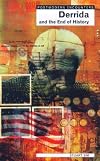
Stuart Sim's very short (75-page) 1995 exploration of Jacques Derrida's politics as we moved towards the Millennium is still well worth reading for its clarity of exposition (which is a lot more than can be said about Derrida himself).
It is about a riposte to Fukyama's neo-Hegelian notion that history was coming to an end (in the wake of the collapse of the Soviet Union), a thesis that was ridiculous if fashionable then and looks even more so as we survey the world of 2025.
There is not much show more point any more in engaging with Fukuyama any more than one might engage with 'Mein Kampf' - except as an historical curiosity that helped fuel an unbalanced ideology (in his case the variants of liberal internationalism and neo-conservatism that have plagued us ever since).
However, such interventions at least have the virtue of provoking a reaction. Sim's account of Derrida's response is not merely lucid. It managed to trigger in this reader a degree of respect for Derrida who I had pigeon-holed previously as a rather useless and obscure navel-gazer.
In 'Specters of Marx' (1994), Derrida comes down from his ivory tower long enough to apply his insights about how language operates to the political sphere. It seems, thirty years on, that he was more right than not.
It is also a lesson that Marx still has something to say to us about power relations in the world even if there is no cause to 'believe in him'. When Fukuyama is long forgotten, the spectre that is Marx will continue to haunt our world.
Unfortunately Derrida's use of his deconstructionist form of thinking is not something that can affect more than a very few people active in the world. Sartre perhaps was the only philosopher capable of creating a potentially mass level activist philosophy after Marx and even that was never truly mass.
Derrida's Marx is also a shorn of the simplicities of any ideology that can mobilise humanity. His considerations tend to descend into word play and the game. Marx has 'right' things to say (though not to be wholly 'right) but it is left to us to decide how to say these things on our own terms.
It is an excellent and lucid little pamphlet that captures the atmosphere of the intellectual life of the 1990s as left-inclined thinkers fought against the pessimism that had emerged as a Sovietism that they never really liked in any case no longer offered a counterweight to neo-liberalism and empire.
Most intellectuals simply went with the flow and became what we would now call 'liberal-left', a sad travesty of the liberatory thought of the bulk of the twentieth century, but we get a hint in this book that there was a baby to be saved from going out with the bath water. show less
It is about a riposte to Fukyama's neo-Hegelian notion that history was coming to an end (in the wake of the collapse of the Soviet Union), a thesis that was ridiculous if fashionable then and looks even more so as we survey the world of 2025.
There is not much show more point any more in engaging with Fukuyama any more than one might engage with 'Mein Kampf' - except as an historical curiosity that helped fuel an unbalanced ideology (in his case the variants of liberal internationalism and neo-conservatism that have plagued us ever since).
However, such interventions at least have the virtue of provoking a reaction. Sim's account of Derrida's response is not merely lucid. It managed to trigger in this reader a degree of respect for Derrida who I had pigeon-holed previously as a rather useless and obscure navel-gazer.
In 'Specters of Marx' (1994), Derrida comes down from his ivory tower long enough to apply his insights about how language operates to the political sphere. It seems, thirty years on, that he was more right than not.
It is also a lesson that Marx still has something to say to us about power relations in the world even if there is no cause to 'believe in him'. When Fukuyama is long forgotten, the spectre that is Marx will continue to haunt our world.
Unfortunately Derrida's use of his deconstructionist form of thinking is not something that can affect more than a very few people active in the world. Sartre perhaps was the only philosopher capable of creating a potentially mass level activist philosophy after Marx and even that was never truly mass.
Derrida's Marx is also a shorn of the simplicities of any ideology that can mobilise humanity. His considerations tend to descend into word play and the game. Marx has 'right' things to say (though not to be wholly 'right) but it is left to us to decide how to say these things on our own terms.
It is an excellent and lucid little pamphlet that captures the atmosphere of the intellectual life of the 1990s as left-inclined thinkers fought against the pessimism that had emerged as a Sovietism that they never really liked in any case no longer offered a counterweight to neo-liberalism and empire.
Most intellectuals simply went with the flow and became what we would now call 'liberal-left', a sad travesty of the liberatory thought of the bulk of the twentieth century, but we get a hint in this book that there was a baby to be saved from going out with the bath water. show less
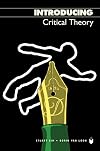
Icon Books' "Introducing..." series is an ever-growing collection of graphic guides on a variety of subjects, particularly in the fields of philosophy, art and culture. They provide a fun way of approaching quite cerebral topics, the concise, lucid texts accompanied by striking cartoons by surrealist illustrator Boris van Loon brimming with visual gags.
In the series's strengths, however, lie also its weaknesses. Sometimes, the subjects covered are simply too vast to be comprehensively show more approached in such a book. Such is the case with Stuart Sim's volume on critical theory. On the whole, Sim makes a good job of condensing complex arguments, but unless one already has some background in the subject, the quick succession of contradictory views may be rather confusing. There is also quite a bombardment of technical terms (half of which I'll have forgotten in a few weeks). This is not surprising - some of the major figures (such as Barthes, Baudrillard, Foucault, Derrida) who are tackled in a couple of pages in this book, get a volume all to themselves in the same series.
That said, provided one takes the book for what it is meant to be - a brief, tentative dip into a vast waters - it is certainly worth reading. For instance, as a non-specialist, it made me realise what a strong link there is between political ideologies and modern literary theory, and also what a major influence Marx was (and still is) both on his supporters and his critics. This volume would probably be handy also for students preparing for exams who need a quick, enjoyable refresher on the subject. show less
In the series's strengths, however, lie also its weaknesses. Sometimes, the subjects covered are simply too vast to be comprehensively show more approached in such a book. Such is the case with Stuart Sim's volume on critical theory. On the whole, Sim makes a good job of condensing complex arguments, but unless one already has some background in the subject, the quick succession of contradictory views may be rather confusing. There is also quite a bombardment of technical terms (half of which I'll have forgotten in a few weeks). This is not surprising - some of the major figures (such as Barthes, Baudrillard, Foucault, Derrida) who are tackled in a couple of pages in this book, get a volume all to themselves in the same series.
That said, provided one takes the book for what it is meant to be - a brief, tentative dip into a vast waters - it is certainly worth reading. For instance, as a non-specialist, it made me realise what a strong link there is between political ideologies and modern literary theory, and also what a major influence Marx was (and still is) both on his supporters and his critics. This volume would probably be handy also for students preparing for exams who need a quick, enjoyable refresher on the subject. show less
Icon Books' "Introducing..." series is an ever-growing collection of graphic guides on a variety of subjects, particularly in the fields of philosophy, art and culture. They provide a fun way of approaching quite cerebral topics, the concise, lucid texts accompanied by striking cartoons by surrealist illustrator Boris van Loon brimming with visual gags.
In the series's strengths, however, lie also its weaknesses. Sometimes, the subjects covered are simply too vast to be comprehensively show more approached in such a book. Such is the case with Stuart Sim's volume on critical theory. On the whole, Sim makes a good job of condensing complex arguments, but unless one already has some background in the subject, the quick succession of contradictory views may be rather confusing. There is also quite a bombardment of technical terms (half of which I'll have forgotten in a few weeks). This is not surprising - some of the major figures (such as Barthes, Baudrillard, Foucault, Derrida) who are tackled in a couple of pages in this book, get a volume all to themselves in the same series.
That said, provided one takes the book for what it is meant to be - a brief, tentative dip into a vast waters - it is certainly worth reading. For instance, as a non-specialist, it made me realise what a strong link there is between political ideologies and modern literary theory, and also what a major influence Marx was (and still is) both on his supporters and his critics. This volume would probably be handy also for students preparing for exams who need a quick, enjoyable refresher on the subject. show less
In the series's strengths, however, lie also its weaknesses. Sometimes, the subjects covered are simply too vast to be comprehensively show more approached in such a book. Such is the case with Stuart Sim's volume on critical theory. On the whole, Sim makes a good job of condensing complex arguments, but unless one already has some background in the subject, the quick succession of contradictory views may be rather confusing. There is also quite a bombardment of technical terms (half of which I'll have forgotten in a few weeks). This is not surprising - some of the major figures (such as Barthes, Baudrillard, Foucault, Derrida) who are tackled in a couple of pages in this book, get a volume all to themselves in the same series.
That said, provided one takes the book for what it is meant to be - a brief, tentative dip into a vast waters - it is certainly worth reading. For instance, as a non-specialist, it made me realise what a strong link there is between political ideologies and modern literary theory, and also what a major influence Marx was (and still is) both on his supporters and his critics. This volume would probably be handy also for students preparing for exams who need a quick, enjoyable refresher on the subject. show less
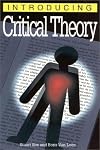
Sim's survey of critical theory did exactly what I wanted it to do, that is, contextualized the chronology of thinking in the field and provided some context around different schools and terms that I've heard a lot but usually in a way that's disconnected from a larger academic conversation.
You May Also Like


Associated Authors
Statistics
- Works
- 39
- Also by
- 1
- Members
- 1,032
- Popularity
- #24,951
- Rating
- 3.7
- Reviews
- 7
- ISBNs
- 115
- Languages
- 4
- Favorited
- 1
