
Tim Ferriss
Author of The 4-Hour Work Week
About the Author
Timothy Ferriss is an American author and public speaker. In 2007, he published The 4-Hour Workweek: Escape 9-5, Live Anywhere, and Join the New Rich, which was a New York Times, Wall Street Journal and USA Today bestseller. Ferriss grew up in East Hampton, NY and graduated from St. Paul's School. show more He received a degree in Neuroscience and East Asian Studies from Princeton University. Before the release of the 4HWW, Ferriss was an unknown. He marketed the book heavily through bloggers with whom he created personal relationships. He has since been praised for this technique. He has also taken the position that technology such as email, instant messaging and internet-enabled PDAs complicate life rather than simplify it. His teachings fit under the umbrella of what he calls "Lifestyle Design," which he positions as an alternative to the "deferred-life" career path where one would work a 9 to 5 job until retirement in their 60s. (Bowker Author Biography) show less
Image credit: Timothy Ferriss - Modernista
Works by Tim Ferriss
The 4-Hour Body: An Uncommon Guide to Rapid Fat-Loss, Incredible Sex, and Becoming Superhuman (2010) 2,062 copies, 47 reviews
Tools of Titans: The Tactics, Routines, and Habits of Billionaires, Icons, and World-Class Performers (2016) 1,826 copies, 19 reviews
The 4-Hour Workweek: Escape 9-5, Live Anywhere, and Join the New Rich (Expanded and Updated) (2009) 1,052 copies, 17 reviews
The 4-Hour Chef: The Simple Path to Cooking Like a Pro, Learning Anything, and Living the Good Life (2012) 908 copies, 9 reviews
Secrets of the 4-Hour Workweek - How To Work Less, Make a Lot More Money And Live Like A Millionaire (Genius Network Interview of Tim Ferriss) (2009) 6 copies
人生給的答案II: 你的掙扎,他們都經歷過,世界最強當你最堅強的後盾 2 copies
5 morning rituals 1 copy
Les outils des géants: Milliardaires, leaders, créateurs et champions vous livrent leurs secrets 1 copy
Push Vs. Pull Processes — Author — 1 copy
MJETET E TITANEVE 1 copy
Associated Works
The Tao of Seneca: Practical Letters from a Stoic Master, Volume 1 (2016) — Foreword — 43 copies, 1 review
Tagged
Common Knowledge
- Canonical name
- Ferriss, Tim
- Birthdate
- 1977
- Gender
- male
- Education
- Princeton University (Electrical Engineering)
- Awards and honors
- Guinness Book of World Records' record for the most consecutive tango-spins in one minute (2005)
Fast Company's "Most Innovative Business People of 2007"
Wired Magazine's "Greatest Self Promoter of All-Time" (2008) - Nationality
- USA
- Associated Place (for map)
- USA
Members
Reviews
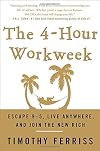
I listen to Ferriss' podcast and have often been amused at the "living life hacker." I also hear his confessions about his habits, struggles, addictions, and how sometimes he gets razzed by his friends for still working a 60 hour week. The point of the book, he said recently, is that you can get 40 hours worth of work done in a time closer to four hours than 40. After reading the book I'd say the main thesis is that you can gain "freedom from what you dislike, freedom to pursue your dreams show more without reverting to work for work's sake (W4W)." You can be among the "New Rich" that gave up their high-paying desk jobs and commutes and found ways to delegate and automate their activities and now travel the world, partying and learning languages or whatever strikes their fancy.
"Less is not laziness...doing less meaningless work, so that you can focus on things of greater personal importance, is NOT laziness." Ferriss stresses doing the "minimum necessary for maximum effect ('minimum effective load')." This type of thinking is missing from the theology of work literature. How about a theology of productivity and efficiency?
Ferriss gives plenty of tips for how to get this done. Find ways to automate routine tasks, like responding to emails or processing orders. Outsource some menial activities to virtual assistants in India (I followed his tip and outsourced a menial task to someone in Pakistan this week, was a good decision). Schedule your day--focus on accomplishing two separate tasks and do not allow distractions during their completion. Compress your tasks with tight deadlines so that you rev up your effort (if you had a gun to your head, you would do everything faster and more effeciently). Check email once or twice a day, never answer voicemails. Follow the 80/20 rule: Elminate the 20% of your customers that create 80% of your headaches, focus on the 20% that generate 80% of your revenue.
Give free lectures on your local university campus, put that on your CV, list yourself places where journalists can find you, give interviews and write books and articles that will lead to greater fame and income. Don't invent things and make yourself busy to feel important. Busyness is not productivity or desirable. Stop reading the news and be selectively ignorant. If you do read, follow his tips for reading faster. Find ways to get out of meetings, don't hold them yourselves, and negotiate with your boss for permission to work remotely.
Once you go remote, make it abroad. Learn languages, party, and enjoy life.
"Retirement is worst-case scenario insurance." People work hard, save up, and then retire hoping to do activities to "enjoy life" when it would have been much more enjoyable in their 20s and 30s when they had health. Why not do it now, is his point.
There is a great deal of selfishness is Ferriss' thinking. While he gives examples of people who have kids, most examples--including his own-- do not; there appear to be no considerations of love in his life other than to satisfy his own physical desires. He has never had to wake up at 3am to change a diaper or sacrifice his time to sit with a sick daughter-- you can't delegate or outsource those activities, and they have a major impact on all else that you do. He does not appear curious about the meaning of his work, or the purpose of life. I believe everyone looks to be part of a cause greater than themselves in some way, which is why we respond to leadership. There is no aspect of that in this book, it is basically how to lead yourself into being an island (albeit a very productive one) to one's self. While Ferriss fills his time with accomplishments in martial arts, cooking, language, and dancing one wonders if he's not just trying really hard to fill a void in his soul that others fill with relationships, family, and community.
I have read 90 books so far this year because I've found ways to make my day more efficient. But I free up time for personal enjoyment in activities-- like reading the news-- that Ferriss says I should avoid. I also have a family that is dependent on my success for health insurance but is also demanding/deserving of a large chunk of my time that I would love to selfishly spend elsewhere. That's what love is, and that's what is missing from this book.
So, I enjoyed the book and recommend it with the above paragraph as my caveat. 3 stars out of 5.I will check out his other books on fitness and cooking for some tips. show less
"Less is not laziness...doing less meaningless work, so that you can focus on things of greater personal importance, is NOT laziness." Ferriss stresses doing the "minimum necessary for maximum effect ('minimum effective load')." This type of thinking is missing from the theology of work literature. How about a theology of productivity and efficiency?
Ferriss gives plenty of tips for how to get this done. Find ways to automate routine tasks, like responding to emails or processing orders. Outsource some menial activities to virtual assistants in India (I followed his tip and outsourced a menial task to someone in Pakistan this week, was a good decision). Schedule your day--focus on accomplishing two separate tasks and do not allow distractions during their completion. Compress your tasks with tight deadlines so that you rev up your effort (if you had a gun to your head, you would do everything faster and more effeciently). Check email once or twice a day, never answer voicemails. Follow the 80/20 rule: Elminate the 20% of your customers that create 80% of your headaches, focus on the 20% that generate 80% of your revenue.
Give free lectures on your local university campus, put that on your CV, list yourself places where journalists can find you, give interviews and write books and articles that will lead to greater fame and income. Don't invent things and make yourself busy to feel important. Busyness is not productivity or desirable. Stop reading the news and be selectively ignorant. If you do read, follow his tips for reading faster. Find ways to get out of meetings, don't hold them yourselves, and negotiate with your boss for permission to work remotely.
Once you go remote, make it abroad. Learn languages, party, and enjoy life.
"Retirement is worst-case scenario insurance." People work hard, save up, and then retire hoping to do activities to "enjoy life" when it would have been much more enjoyable in their 20s and 30s when they had health. Why not do it now, is his point.
There is a great deal of selfishness is Ferriss' thinking. While he gives examples of people who have kids, most examples--including his own-- do not; there appear to be no considerations of love in his life other than to satisfy his own physical desires. He has never had to wake up at 3am to change a diaper or sacrifice his time to sit with a sick daughter-- you can't delegate or outsource those activities, and they have a major impact on all else that you do. He does not appear curious about the meaning of his work, or the purpose of life. I believe everyone looks to be part of a cause greater than themselves in some way, which is why we respond to leadership. There is no aspect of that in this book, it is basically how to lead yourself into being an island (albeit a very productive one) to one's self. While Ferriss fills his time with accomplishments in martial arts, cooking, language, and dancing one wonders if he's not just trying really hard to fill a void in his soul that others fill with relationships, family, and community.
I have read 90 books so far this year because I've found ways to make my day more efficient. But I free up time for personal enjoyment in activities-- like reading the news-- that Ferriss says I should avoid. I also have a family that is dependent on my success for health insurance but is also demanding/deserving of a large chunk of my time that I would love to selfishly spend elsewhere. That's what love is, and that's what is missing from this book.
So, I enjoyed the book and recommend it with the above paragraph as my caveat. 3 stars out of 5.I will check out his other books on fitness and cooking for some tips. show less
Tools of Titans: The Tactics, Routines, and Habits of Billionaires, Icons, and World-Class Performers by Tim Ferriss
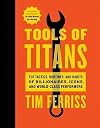
This is going to be a polarizing book. Some folks will find a lot of inspiration in this book. To them I say "go forth and be inspired".
And then there are the folks who will read this and think "this is essentially an advertisement for Tim's podcast and things that he's invested in".
There are a lot of notable folks in this book, but it started becoming a drinking game of how Timothy was related to the person invited to speak. Take a drink if Timothy invested in that person's company. Make it show more a double if he was an early investor.
Ultimately I was glad I borrowed this from the library because it's not something I want on my shelf. The signal to noise ratio isn't great for a book that purports to be a notebook of great advice. Worse: the interstitial pieces that Timothy writes aren't as much about how folks can re-use the advice but how he coped with whatever problem he had. It's akin to the person who tells you how to make a project for $5 and the first step is "I lucked into a rare thing that nobody else can manage to get for under $500".
This might be the book for you, but it definitely wasn't the book for me. show less
And then there are the folks who will read this and think "this is essentially an advertisement for Tim's podcast and things that he's invested in".
There are a lot of notable folks in this book, but it started becoming a drinking game of how Timothy was related to the person invited to speak. Take a drink if Timothy invested in that person's company. Make it show more a double if he was an early investor.
Ultimately I was glad I borrowed this from the library because it's not something I want on my shelf. The signal to noise ratio isn't great for a book that purports to be a notebook of great advice. Worse: the interstitial pieces that Timothy writes aren't as much about how folks can re-use the advice but how he coped with whatever problem he had. It's akin to the person who tells you how to make a project for $5 and the first step is "I lucked into a rare thing that nobody else can manage to get for under $500".
This might be the book for you, but it definitely wasn't the book for me. show less
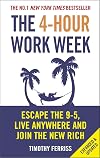
I love this book because it completely challenges conventional ideas about work and lifestyle. The 4-Hour Work Week by Timothy Ferriss is an eye-opening guide to redesigning life for freedom, mobility, and productivity. Ferriss shares strategies for outsourcing, automating, and prioritizing effectively, encouraging readers to focus on what truly matters while escaping the endless grind of the traditional 9-to-5.
What resonated most with me is Ferriss’s bold, unconventional approach and the show more practical tools he provides. From creating passive income streams to negotiating remote work arrangements, the book feels both aspirational and actionable. It inspires you to rethink assumptions about time, money, and success while providing step-by-step guidance for reclaiming your life.
If there’s a critique, it’s that some strategies may feel extreme or unrealistic for everyone, especially those in careers that require physical presence or strict schedules. Additionally, the book was first published over a decade ago, so some examples feel dated. Yet, the underlying principles of lifestyle design, efficiency, and prioritization remain highly relevant. I recommend this book to anyone seeking more freedom, creative control, and smarter ways to work without sacrificing life’s pleasures. show less
What resonated most with me is Ferriss’s bold, unconventional approach and the show more practical tools he provides. From creating passive income streams to negotiating remote work arrangements, the book feels both aspirational and actionable. It inspires you to rethink assumptions about time, money, and success while providing step-by-step guidance for reclaiming your life.
If there’s a critique, it’s that some strategies may feel extreme or unrealistic for everyone, especially those in careers that require physical presence or strict schedules. Additionally, the book was first published over a decade ago, so some examples feel dated. Yet, the underlying principles of lifestyle design, efficiency, and prioritization remain highly relevant. I recommend this book to anyone seeking more freedom, creative control, and smarter ways to work without sacrificing life’s pleasures. show less
Helping people to leave the rat race, express themselves, etc. is a noble aim - helping them to bum around the workd while on their employer's time quite another. I had picked up this book from Mozfest and then read about it in A.J. Jacobs' "My Experimental Life", where Ferriss asks to - and ineed does - lift an entire chapter on outsourcing straight into his book, and this is seemingly typical behaviour. Ferriss boasts of using loopholes to "achieve", but is pushing people off a platform show more really achieving in Chinese wrestling? - I found this generally a bit unsavoury, to be honest. He does admit that one of his case studies was not keen on some of his methods, which is honest and fair enough. And I have taken an interest in some of the milder versions of his efficiency measures, such as checking email less often (but telling people you are going to do this: used today when I have a big work project in). I'm glad I didn't buy this book - but then the author would probably approve of that! show less
Lists
Awards


You May Also Like


Associated Authors
Statistics
- Works
- 26
- Also by
- 4
- Members
- 12,309
- Popularity
- #1,902
- Rating
- 3.6
- Reviews
- 207
- ISBNs
- 186
- Languages
- 20
- Favorited
- 11

