
Francesca Segal
Author of The Innocents
About the Author
Series
Works by Francesca Segal
Associated Works
Tagged
Common Knowledge
- Canonical name
- Segal, Francesca
- Birthdate
- 1980
- Gender
- female
- Education
- University of Oxford (St Hugh's College)
- Occupations
- journalist
writer - Relationships
- Segal, Erich (father)
- Nationality
- UK
- Birthplace
- London, England, UK
- Associated Place (for map)
- England, UK
Members
Reviews

From the very first page to the final chapter of the book, the reader knows that Francesca Segal’s The Innocents is a deft modern retelling of Edith Wharton’s Age of Innocence. Adam Newman and Newland Archer are two peas in a pod: both trapped within the social constraints of their communities; blindly at first, then angrily and resentfully later in the story. Both are engaged to sweet, innocent, and somewhat bland women; and both have their eyes opened to the harsh, messy, beautiful and show more electrifying possibilities of the world by “ruined” and unsuitable cousins. Segal does a lovely job of updating the cultural circumstances of the story. The Innocents is set in a close-knit Jewish community in London, where conservative elders are still shocked and disapproving of promiscuity and scandal. In our world divorce is so common that it’s almost expected, but the reader has no trouble believing that Adam is trapped in an engagement, with the responsibility for the happiness and well-being of an entire community resting on his shoulders. This isn’t to say that Segal’s book is an exact replica of Wharton’s. Segal’s characters are more self-aware than Wharton’s, and the reader gets the impression that these modern characters are trapped more by their own indecision than by any vulnerability to social rise or ruin. Also (not to give anything away) Segal chooses to end her story somewhat differently than Wharton did. In conclusion, fans of The Age of Innocence should enjoy the parallels, while Wharton newbies will look forward to every new plot twist Segal brings to the page. show less

[On page 70: Not sold on this yet but I'm going to keep reading anyway. So far it seems like a thin copy of Wharton's The Age of Innocence, but Newland Archer's dilemma doesn't transpose well to modern-day Adam Newland's. Also, the author's attempt to create a North London Jewish atmosphere does not compare to the New York atmosphere that pervaded The Age of Innocence; I don't feel absorbed by the setting or the (somewhat flat) characters. However, I keep reading...]
[Finished] It did show more improve, and I'm glad I continued reading it. However, my criticism of the first half of the book still stands: the characters seemed stiff and unconvincing. Adam's concerns seemed manufactured, and the reader gets very little insight into Rachel at all. Eventually, however, I became absorbed, and there is more action in the book's second half. Segal deviated from Wharton's outline, but only slightly.
Quotes:
[An example of caricature, not character, p. 77]:
Lawrence smiled and clapped him on the back. "Adam, sonny, I've got a job for you."
Adam smacked a palm to his forehead. "Really? Must I?"
"You must," said Lawrence firmly.
[Really? Really??]
p. 85 He must be drunk, he realized, and she was frustrating his attempts to show her that he was different. That men could be different. He wanted her to trust him so that he could take charge and give her the help she so clearly needed, whether she was aware that she needed it or not. [Patronizing!]
p. 89 She stayed where she was, looking up at him. "I trust you. Whatever you tell me to do, I'll do." [Ellie's unconvincing echo of Ellen Olenska]
p. 114 ...and if he'd lived those years he so envied...if he'd had those things he would not have these.
p. 126 Adam fought the urge to go to each man he saw [wearing a wedding band] and shake him and demand to be told, How did you know? Are you happy? What might you have had instead?
p. 135 For a people whose history is one of exodus and eviction, the luxury of repetition is precious.
p. 200 With Ellie, always, he had a simple compunction to speak his thoughts aloud, uncensored. It drew him to her.
p. 207 "I like to evolve with the author. I don't want to know their futures before they do and if I'm really reading a writer, like, committed to reading their whole oeuvre, then I want to move through their life with them and their work. If I love someone I want to walk beside them from the first to the last." (Ellie)
p. 215 Others thought they could imagine, but no one else could know. (Ziva)
p. 239 "Perhaps it is that one experiences time as a fraction of what one has left rather than what has gone before." (Ziva) show less
[Finished] It did show more improve, and I'm glad I continued reading it. However, my criticism of the first half of the book still stands: the characters seemed stiff and unconvincing. Adam's concerns seemed manufactured, and the reader gets very little insight into Rachel at all. Eventually, however, I became absorbed, and there is more action in the book's second half. Segal deviated from Wharton's outline, but only slightly.
Quotes:
[An example of caricature, not character, p. 77]:
Lawrence smiled and clapped him on the back. "Adam, sonny, I've got a job for you."
Adam smacked a palm to his forehead. "Really? Must I?"
"You must," said Lawrence firmly.
[Really? Really??]
p. 85 He must be drunk, he realized, and she was frustrating his attempts to show her that he was different. That men could be different. He wanted her to trust him so that he could take charge and give her the help she so clearly needed, whether she was aware that she needed it or not. [Patronizing!]
p. 89 She stayed where she was, looking up at him. "I trust you. Whatever you tell me to do, I'll do." [Ellie's unconvincing echo of Ellen Olenska]
p. 114 ...and if he'd lived those years he so envied...if he'd had those things he would not have these.
p. 126 Adam fought the urge to go to each man he saw [wearing a wedding band] and shake him and demand to be told, How did you know? Are you happy? What might you have had instead?
p. 135 For a people whose history is one of exodus and eviction, the luxury of repetition is precious.
p. 200 With Ellie, always, he had a simple compunction to speak his thoughts aloud, uncensored. It drew him to her.
p. 207 "I like to evolve with the author. I don't want to know their futures before they do and if I'm really reading a writer, like, committed to reading their whole oeuvre, then I want to move through their life with them and their work. If I love someone I want to walk beside them from the first to the last." (Ellie)
p. 215 Others thought they could imagine, but no one else could know. (Ziva)
p. 239 "Perhaps it is that one experiences time as a fraction of what one has left rather than what has gone before." (Ziva) show less
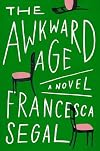
In this beautifully written, haunting book about the clash of family and desire, and about love and its obstacles, its triumphs and devastations, Francesca Segal presents a thoroughly modern family: Julia Alden has fallen in love and is living with the love of her life, James Fuller. James and Julia both have teenage children, and they merge their family homes, bringing James, Julia, Julia's daughter Gwen, and James's son Nathan, under the same roof, with all the challenges and obstacles to show more peace that such a living arrangement suggests. The teens at first clash and collide, resentful of their respective parents; they come, however, to develop a different relationship, one which threatens to tear this "family" apart.
This is brilliantly written and superbly described. The point of view alternates between all the subjects, so we get almost a therapist's individualized view of the perspectives of those involved. Segal's writing is lovely, and she has a knack for describing the heartbreaking with humor, and the comedic with tragic undertones. The novel is sympathetic towards all the characters; no one person here is to blame for the chaos inflicted on each and every person.
If anything, the upheaval that tosses everyone about is mostly an indictment of the modern "family." Julia's and Gwen's loss of Gwen's dad years before the novel opens is the catalyst for an unhealthy relationship that has developed between mother and daughter and which is partly to blame for Julia's coddling of Gwen; James's divorce from his children's mother and their living on different continents accounts for the upheaval in their lives; James and Julia's decision to live together and merge households presupposes an emotional hardiness and adaptability in the children, but which verges on the callous. The throwing together of all the parties here can be seen as a modern maneuver which has disastrous effects. It's hard not to shift the weight of this calamity on the two adults who decide that their own happiness trumps that of their children. If anything is to blame, it seems to be the mistaken notion that so many of us seem to have today, that the shifting of familial tectonic plates that occurs to children when their parents adjust their own love lives is something kids can and should, be able to adjust to with ease.
Complicating the relationships here is Julia's connection to her former in-laws, the parents of her dead husband, with whom Julia shares not only Gwen as a blood relative, but also a close tie. Her in-laws have their own complicated relationship: they are no longer married to each other, yet are themselves deeply connected, sharing daily conversations, outings to cultural events, and even a bank account.
The issues raised by this dilemma are deep, universal and touching: are adults expected to curb their own desires and put their own lives on hold to accommodate their children? How do you recompense your child for a tragedy that took one parent away? How do you convince a grown child of the right path if she refuses to walk it?
Very moving book from a very gifted writer.
Thank you to the author and publisher for a review copy. show less
This is brilliantly written and superbly described. The point of view alternates between all the subjects, so we get almost a therapist's individualized view of the perspectives of those involved. Segal's writing is lovely, and she has a knack for describing the heartbreaking with humor, and the comedic with tragic undertones. The novel is sympathetic towards all the characters; no one person here is to blame for the chaos inflicted on each and every person.
If anything, the upheaval that tosses everyone about is mostly an indictment of the modern "family." Julia's and Gwen's loss of Gwen's dad years before the novel opens is the catalyst for an unhealthy relationship that has developed between mother and daughter and which is partly to blame for Julia's coddling of Gwen; James's divorce from his children's mother and their living on different continents accounts for the upheaval in their lives; James and Julia's decision to live together and merge households presupposes an emotional hardiness and adaptability in the children, but which verges on the callous. The throwing together of all the parties here can be seen as a modern maneuver which has disastrous effects. It's hard not to shift the weight of this calamity on the two adults who decide that their own happiness trumps that of their children. If anything is to blame, it seems to be the mistaken notion that so many of us seem to have today, that the shifting of familial tectonic plates that occurs to children when their parents adjust their own love lives is something kids can and should, be able to adjust to with ease.
Complicating the relationships here is Julia's connection to her former in-laws, the parents of her dead husband, with whom Julia shares not only Gwen as a blood relative, but also a close tie. Her in-laws have their own complicated relationship: they are no longer married to each other, yet are themselves deeply connected, sharing daily conversations, outings to cultural events, and even a bank account.
The issues raised by this dilemma are deep, universal and touching: are adults expected to curb their own desires and put their own lives on hold to accommodate their children? How do you recompense your child for a tragedy that took one parent away? How do you convince a grown child of the right path if she refuses to walk it?
Very moving book from a very gifted writer.
Thank you to the author and publisher for a review copy. show less
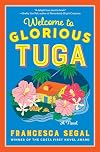
Oh. my gosh. I turned the first few pages of Welcome to Glorious Tuga - and I knew I wouldn't be able to put Francesca Segal's book down until I turned the last page!
Why you ask? Well the wonderfully imagined setting was somewhere I wanted to be. A very, very small island that's more than a bit of a paradise.
There's a large group of characters and there is list of their names and connections at the front of the book, but I found that I really didn't need to refer to it. The characters are show more just as richly described as the setting. I easily picked up on who was who. People do come and leave, and everyone has a place and job on the island. Charlotte is one of those coming in - she'll be studying the gold coin tortoises in the jungle.
And the plotting? Excellent! As readers, we're privy to everyone's inner thoughts and actions. And we're unable to point them in the right direction. (Or what we think is right). Segal also gives us a yes, no, maybe so romantic subplot.
What's also wonderful is the caring on the island. Everyone knows your business, but for the most part, that's not a bad thing. I hated to leave Tuga - I wanted to sit in the sun and watch the waves roll in.
Definitely recommended show less
Why you ask? Well the wonderfully imagined setting was somewhere I wanted to be. A very, very small island that's more than a bit of a paradise.
There's a large group of characters and there is list of their names and connections at the front of the book, but I found that I really didn't need to refer to it. The characters are show more just as richly described as the setting. I easily picked up on who was who. People do come and leave, and everyone has a place and job on the island. Charlotte is one of those coming in - she'll be studying the gold coin tortoises in the jungle.
And the plotting? Excellent! As readers, we're privy to everyone's inner thoughts and actions. And we're unable to point them in the right direction. (Or what we think is right). Segal also gives us a yes, no, maybe so romantic subplot.
What's also wonderful is the caring on the island. Everyone knows your business, but for the most part, that's not a bad thing. I hated to leave Tuga - I wanted to sit in the sun and watch the waves roll in.
Definitely recommended show less
Lists
Awards


You May Also Like


Statistics
- Works
- 6
- Also by
- 1
- Members
- 703
- Popularity
- #36,024
- Rating
- 4.1
- Reviews
- 53
- ISBNs
- 58
- Languages
- 2
