
Nell Freudenberger
Author of The Newlyweds
About the Author
Nell Freudenberger has taught English in Bangkok and New Delhi, and currently lives in New York City
Works by Nell Freudenberger
The Tutor - story 1 copy
An Arranged Marriage - story 1 copy
Associated Works
Tagged
Common Knowledge
- Birthdate
- 1975
- Gender
- female
- Awards and honors
- PEN/Malamud Award (2004)
Whiting Writers' Award (2005)
Granta's Best Of Young American Novelists (2007) - Nationality
- USA
- Places of residence
- New York, New York, USA
- Associated Place (for map)
- New York, USA
Members
Reviews
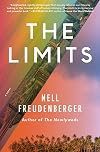
Co-parenting a teenager on an extreme scale: Nathalie, a French scientist, is researching coral in Tahiti, while her ex-husband Stephen, a cardiologist, battles COVID in a New York hospital, and his wife Kate, a high school teacher, worries through her pregnancy. Pia leaves Tahiti for New York with an agenda of her own: though both her parents think she is eager to return to her friends at the Lycee, she actually plans to collect some specialized equipment to help Tahitian Raffi with a bold show more plan to discourage deep-sea mining that could affect the coral. The story is not told in linear fashion: first comes a phone call from Kate to Nathalie, telling her that Pia is missing, then their stories are filled in, hopscotch fashion. Pia meets one of Kate's students, Athyna, a high school senior with anxiety, and briefly impersonates her; Athyna proves the key to letting the adults in on Pia's secret flight back to Tahiti.
Quotes
It's weird how when you're a kid you can think something for a long time after it's logical....and then suddenly realize, Oh right, no. (Pia, 130)
You can't choose what you remember. (Pia, 195)
It's weird how the wrong things get remembered. (Pia, 197) show less
Quotes
It's weird how when you're a kid you can think something for a long time after it's logical....and then suddenly realize, Oh right, no. (Pia, 130)
You can't choose what you remember. (Pia, 195)
It's weird how the wrong things get remembered. (Pia, 197) show less
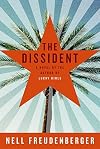
The dissident in question is a controversial Chinese artist, who comes to California on an exchange programme, living with a local family and giving art classes at a girls' school during his stay. But the story is at least as much about the family he stays with, well-off but dysfunctional, and their extended circle. Despite the differences in their backgrounds, many of the same themes run through both halves of the story - art, creation and fakery, the closeness and simultaneous tension of show more family relationships, intergenerational misunderstandings, reality and image, and the role of chance in defining your life.
At the same time, the story is not at all heavy - it's very readable, and funny. The use of language to differentiate the characters is another delight - the prissy, short-story writing older sister is very precise and hates cliche, the dissident speaks precise but slightly formal and long-winded sentences. This lifts the story and stops it being dominated by its symbology - for example, the father of the family could be a real stereotype, the psychology professor who has no idea how to interact with his wife or children, but he is drawn with accuracy, economy and wit.
The only fault, for me, was the final chapter, which tried to tie up at least a couple of loose ends, but felt like a cop-out - a tacked-on happy ending which didn't follow on from what came before. But as that was only the last three pages, I only docked it half a point. show less
At the same time, the story is not at all heavy - it's very readable, and funny. The use of language to differentiate the characters is another delight - the prissy, short-story writing older sister is very precise and hates cliche, the dissident speaks precise but slightly formal and long-winded sentences. This lifts the story and stops it being dominated by its symbology - for example, the father of the family could be a real stereotype, the psychology professor who has no idea how to interact with his wife or children, but he is drawn with accuracy, economy and wit.
The only fault, for me, was the final chapter, which tried to tie up at least a couple of loose ends, but felt like a cop-out - a tacked-on happy ending which didn't follow on from what came before. But as that was only the last three pages, I only docked it half a point. show less

How are we supposed to feel when we learn of the death of a friend who had slowly drifted out of our day-to-day life? As Nell Freudenberger shows in her latest novel, it's complicated.
Helen Clapp and Charlotte "Charlie" Boyce were as close as it is possible for two people to be when they were students at Harvard despite being as different as chalk and cheese. Helen is a studious science nerd from a white working-class family, while Charlie is supermodel-level gorgeous, the only child in an show more affluent African-American family. After college, they drifted apart: Helen stayed in academia, eventually landing at MIT as a professor of physics; Charlie moved to L.A. to work as a television producer, where she married a surfer dude and had a daughter, Simmi. Helen remained single but had a son, Jack.
Helen and Charlie haven't spoken for some time when Helen unexpectedly gets a cryptic text message from Charlie. Before she has a chance to follow up on this unexpected communication, Charlie's husband calls to tell her that Charlie has died — before the text message was sent. What's going on here?
That question seems as though it will be the heart of a modern-day ghost story, but in the end the answer is less important than what Helen learns about herself, about friendship, and about grief. As she struggles to process her emotions and remembers the high and low points of her and Charlie's friendship, Helen expresses herself using the language she is most comfortable with: physics. I really struggled with these bits, as I have the most rudimentary of science backgrounds. I still felt able to enjoy the story but I'm sure someone who could relate to the scientific concepts would feel a much deeper connection to the story.
Once I gave myself permission to stop trying to make the scientific connections, I found myself absorbed in Helen's journey of re-discovery. The ways in which she interacts with the people around her who also knew Charlie felt completely organic, and her need to re-interpret her memories of Charlie through the lens of new information learned after her death was compelling. As Helen muses at Charlie's memorial service, "... love was particular even though it was directed at the same person, that we hadn't lost just one Charlie but as many as the number of people who were seated here today." show less
Helen Clapp and Charlotte "Charlie" Boyce were as close as it is possible for two people to be when they were students at Harvard despite being as different as chalk and cheese. Helen is a studious science nerd from a white working-class family, while Charlie is supermodel-level gorgeous, the only child in an show more affluent African-American family. After college, they drifted apart: Helen stayed in academia, eventually landing at MIT as a professor of physics; Charlie moved to L.A. to work as a television producer, where she married a surfer dude and had a daughter, Simmi. Helen remained single but had a son, Jack.
Helen and Charlie haven't spoken for some time when Helen unexpectedly gets a cryptic text message from Charlie. Before she has a chance to follow up on this unexpected communication, Charlie's husband calls to tell her that Charlie has died — before the text message was sent. What's going on here?
That question seems as though it will be the heart of a modern-day ghost story, but in the end the answer is less important than what Helen learns about herself, about friendship, and about grief. As she struggles to process her emotions and remembers the high and low points of her and Charlie's friendship, Helen expresses herself using the language she is most comfortable with: physics. I really struggled with these bits, as I have the most rudimentary of science backgrounds. I still felt able to enjoy the story but I'm sure someone who could relate to the scientific concepts would feel a much deeper connection to the story.
Once I gave myself permission to stop trying to make the scientific connections, I found myself absorbed in Helen's journey of re-discovery. The ways in which she interacts with the people around her who also knew Charlie felt completely organic, and her need to re-interpret her memories of Charlie through the lens of new information learned after her death was compelling. As Helen muses at Charlie's memorial service, "... love was particular even though it was directed at the same person, that we hadn't lost just one Charlie but as many as the number of people who were seated here today." show less
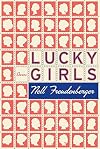
"The Orphan"
This is the short story of a family splintering in different directions. The parents are separated and on the verge of getting a divorce. The nearly adult children are in Thailand and Bangor, Maine - worlds apart from one another. When the family converges in Bangkok it is an orphan that shifts the tide for them all, individually and as a family.
I can't decide if I like Alice or not. As a mother, what should she have done when her kid calls up and says not only has she been show more assaulted, but raped as well? That's not the sort of thing you let drop when the kid suddenly changes her story and says it's no big deal.
Lines I liked, "She drops the dog, possibly robbing him mother of his life" (p 31) and "...often, when you step around the conventional way of doing things, you end up with something worse" (p 56).
"Outside the Eastern Gates"
The protagonist in "Outside the Eastern Gate" is like any 40 year old person facing the deteriorating aging of a parent. There is a sense of bafflement at the role reversal; a sense of sadness about being away for so long. Upon returning to Delhi she remembers the desperate longing for her mother's love while simultaneously coping with her father's Alzheimer diagnosis.
A line to like, "The bogeyman appears in the first forty seconds after nightfall" (p 68). Good to know. show less
This is the short story of a family splintering in different directions. The parents are separated and on the verge of getting a divorce. The nearly adult children are in Thailand and Bangor, Maine - worlds apart from one another. When the family converges in Bangkok it is an orphan that shifts the tide for them all, individually and as a family.
I can't decide if I like Alice or not. As a mother, what should she have done when her kid calls up and says not only has she been show more assaulted, but raped as well? That's not the sort of thing you let drop when the kid suddenly changes her story and says it's no big deal.
Lines I liked, "She drops the dog, possibly robbing him mother of his life" (p 31) and "...often, when you step around the conventional way of doing things, you end up with something worse" (p 56).
"Outside the Eastern Gates"
The protagonist in "Outside the Eastern Gate" is like any 40 year old person facing the deteriorating aging of a parent. There is a sense of bafflement at the role reversal; a sense of sadness about being away for so long. Upon returning to Delhi she remembers the desperate longing for her mother's love while simultaneously coping with her father's Alzheimer diagnosis.
A line to like, "The bogeyman appears in the first forty seconds after nightfall" (p 68). Good to know. show less
Lists
Awards


You May Also Like


Associated Authors
Statistics
- Works
- 7
- Also by
- 9
- Members
- 1,881
- Popularity
- #13,680
- Rating
- 3.5
- Reviews
- 88
- ISBNs
- 60
- Languages
- 5
