
Philip Schultz
Author of Failure
About the Author
Image credit: Courtesy of the Pulitzer Prizes.
Works by Philip Schultz
Associated Works
Tagged
Common Knowledge
- Canonical name
- Schultz, Philip
- Birthdate
- 1945
- Gender
- male
- Occupations
- poet
- Organizations
- The Writers' Studio (founder/director)
New York University - Awards and honors
- American Academy of Arts and Letters Academy Award (Literature ∙ 1979)
Guggenheim Fellowship (2005) - Relationships
- Banks, Monica (wife)
- Nationality
- USA
- Birthplace
- Rochester, New York, USA
- Places of residence
- East Hampton, New York, USA
- Associated Place (for map)
- New York, USA
Members
Reviews
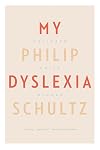
By almost every available measure, poet Philip Schultz has led a successful life with words. A lover of books and a winner of the Pulitzer Prize, he has pursued from a young age his dream of being a writer. Yet Schultz has always had to work hard to compensate for his hidden disability, dyslexia. This disorder is commonly known as an inability to read, but Schultz points out that it causes difficulties with processing both written and auditory language. He carries with him painful memories show more of being stuck in the "Dummy Class" at school, and of being beaten by bullies because of his supposed stupidity. Even as a successful adult poet and educator, he still finds that the disorder causes him great anxiety and gets in the way of his spiritual life, as he is a Jew who can't learn Hebrew.
This slender volume (I read it in an evening) provides a moving look at life with an often misunderstood disability. Highly recommended, especially to the friends and family of those with dyslexia. show less
This slender volume (I read it in an evening) provides a moving look at life with an often misunderstood disability. Highly recommended, especially to the friends and family of those with dyslexia. show less
Philip Schultz’s story will inspire and encourage anyone whose life has been impacted by dyslexia. Schultz, who did not learn to read until he was eleven, did not discover he was himself dyslexic until he compared his own reading difficulties to those of his young son, a confirmed sufferer of the condition. Today, despite his continuing struggle with language skills, Philip Schultz is a Pulitzer Prize-winning poet. His remarkable story and insights into dealing with dyslexia can be found show more in My Dyslexia the memoir in which he recounts his early schooling struggles, how he overcame the condition, and what his life is like today.
Much of what Schultz describes will be heartbreaking to the parents and grandparents of children struggling to keep up with their peers in the classroom. Learning disabilities are difficult to cope with – as parents and grandparents of children who suffer from them, we already know that. What most of us probably fail to understand fully is the emotional pain our children are suffering as they deal with the social stigma of being different from the majority of their friends and classmates. Tragically, as Schultz stresses, these emotional scars are likely to last a lifetime.
Schultz, poet that he is, has a beautiful way with words that allows him to describe in vivid images what he has gone through, how he very suddenly learned to read at age eleven, and how he must compensate for his poor reading skills even today. Consider, for instance, his description of what reading is like for him now:
"As I read, a kind of subtle bartering between uncertainty and hunger for knowledge goes on in my mind, in which I must conquer a feeling of hopelessness and anxiety. I’ve learned to read the way a runner learns to expect and find his second and third winds, the way an athlete pushes himself beyond where it is comfortable to go. I read word by word, sometimes congratulating myself on the completion of a sentence, each paragraph and chapter."
Or this description of what it was like for him in the classroom:
"I understood that I was different from other kids. I lived in a world of differences measured not by appearances, wealth, or even intelligence. The world I lived in involved struggle for control over my thoughts and actions. My differentness felt freakish. My brain wouldn’t obey me, nor my parents or my teachers. If I had trouble learning to read a clock, know my left from my right, hearing instructions – things everyone else seem to do easily – how could I trust my own thoughts or anything about myself?"
The topics addressed by My Dyslexia should help parents and grandparents better understand what their children are experiencing. Among subjects addressed are: why the children often prefer being alone; why they so often attract the attention of bullies; their difficulty with poor self-image; and the disintegration reaction experienced when such a child feels great pressure to explain himself. Books like this one will make it easier for parents, grandparents, and teachers to find the patience and understanding needed to help their children and students cope successfully with a condition that will so critically impact the rest of their lives.
The good news is that there is hope for them – and Philip Schultz proves it.
Rated at: 4.0 show less
Much of what Schultz describes will be heartbreaking to the parents and grandparents of children struggling to keep up with their peers in the classroom. Learning disabilities are difficult to cope with – as parents and grandparents of children who suffer from them, we already know that. What most of us probably fail to understand fully is the emotional pain our children are suffering as they deal with the social stigma of being different from the majority of their friends and classmates. Tragically, as Schultz stresses, these emotional scars are likely to last a lifetime.
Schultz, poet that he is, has a beautiful way with words that allows him to describe in vivid images what he has gone through, how he very suddenly learned to read at age eleven, and how he must compensate for his poor reading skills even today. Consider, for instance, his description of what reading is like for him now:
"As I read, a kind of subtle bartering between uncertainty and hunger for knowledge goes on in my mind, in which I must conquer a feeling of hopelessness and anxiety. I’ve learned to read the way a runner learns to expect and find his second and third winds, the way an athlete pushes himself beyond where it is comfortable to go. I read word by word, sometimes congratulating myself on the completion of a sentence, each paragraph and chapter."
Or this description of what it was like for him in the classroom:
"I understood that I was different from other kids. I lived in a world of differences measured not by appearances, wealth, or even intelligence. The world I lived in involved struggle for control over my thoughts and actions. My differentness felt freakish. My brain wouldn’t obey me, nor my parents or my teachers. If I had trouble learning to read a clock, know my left from my right, hearing instructions – things everyone else seem to do easily – how could I trust my own thoughts or anything about myself?"
The topics addressed by My Dyslexia should help parents and grandparents better understand what their children are experiencing. Among subjects addressed are: why the children often prefer being alone; why they so often attract the attention of bullies; their difficulty with poor self-image; and the disintegration reaction experienced when such a child feels great pressure to explain himself. Books like this one will make it easier for parents, grandparents, and teachers to find the patience and understanding needed to help their children and students cope successfully with a condition that will so critically impact the rest of their lives.
The good news is that there is hope for them – and Philip Schultz proves it.
Rated at: 4.0 show less
There were times when I thought I would have to give this book only 1 star and I felt bad because the author was so vulnerable to slights that I felt he needed my protection. It was the last chapter which saved it for me.
It is the story of a man at odds with his culture believing the culture is right and that he is wrong. With insufficient insight into his situation, he attributes all his difficulties to his dyslexia when actually, most of them were the result of the horrible 50s American show more culture. He and I were born the same year so I know these times well. I too was at odds with my culture and like him, I suffered accordingly. Where we differed was that he fought for himself while I submitted. And my family rejected the culture so I , though isolated from my peers, at least wasn't judged by my immediate family (though they weren't much help otherwise).
I was hoping he would give me some insight into dyslexia but he did not. You could have swapped in almost any other (so called) learning disability or even undiagnosed bad vision/hearing and the story would have gone the same way. I know this world and I know about the Churchill School at which he starts the story. Like him, I have a son with a diagnosis (ADHD), and like him, I probably have the same one only back then they weren't diagnosing such things.
For much of the book, Mr. Schultz is desperate for someplace to belong and for much of the book he fails to find one. He is accepted in Judaism (though doesn't feel like he should be) and he is accepted in the "dummy" class. Finally, he is accepted is the learning disabled community. His diagnosis is also an identity. He is unaware of the price he pays for this last membership. It is the belief that his brain is broken. In return he gets to no longer feel like his suffering is his own fault.
But his brain isn't broken. It is merely different in a culture that rejects difference. We are still in such a culture, but it was much worse in the 50s. Now we have gay marriage. We also have AllKindsofMinds.org, a group that understands the plight of those whose ways of functioning are outside the norm. We are living at a time when many people brag about being "on the spectrum" and companies think about hiring them as employees to work in high tech development.
In the last chapter, he notices that his son doesn't hate himself for his "disability." Mr. Schultz, it appears, still hates himself, but he recognizes that his son might have found a way out.
I'm still waiting for a book that has insight into dyslexia. show less
It is the story of a man at odds with his culture believing the culture is right and that he is wrong. With insufficient insight into his situation, he attributes all his difficulties to his dyslexia when actually, most of them were the result of the horrible 50s American show more culture. He and I were born the same year so I know these times well. I too was at odds with my culture and like him, I suffered accordingly. Where we differed was that he fought for himself while I submitted. And my family rejected the culture so I , though isolated from my peers, at least wasn't judged by my immediate family (though they weren't much help otherwise).
I was hoping he would give me some insight into dyslexia but he did not. You could have swapped in almost any other (so called) learning disability or even undiagnosed bad vision/hearing and the story would have gone the same way. I know this world and I know about the Churchill School at which he starts the story. Like him, I have a son with a diagnosis (ADHD), and like him, I probably have the same one only back then they weren't diagnosing such things.
For much of the book, Mr. Schultz is desperate for someplace to belong and for much of the book he fails to find one. He is accepted in Judaism (though doesn't feel like he should be) and he is accepted in the "dummy" class. Finally, he is accepted is the learning disabled community. His diagnosis is also an identity. He is unaware of the price he pays for this last membership. It is the belief that his brain is broken. In return he gets to no longer feel like his suffering is his own fault.
But his brain isn't broken. It is merely different in a culture that rejects difference. We are still in such a culture, but it was much worse in the 50s. Now we have gay marriage. We also have AllKindsofMinds.org, a group that understands the plight of those whose ways of functioning are outside the norm. We are living at a time when many people brag about being "on the spectrum" and companies think about hiring them as employees to work in high tech development.
In the last chapter, he notices that his son doesn't hate himself for his "disability." Mr. Schultz, it appears, still hates himself, but he recognizes that his son might have found a way out.
I'm still waiting for a book that has insight into dyslexia. show less
I listened to the audiobook version read by William Hughes. This created quite an enveloping story to hear and experience. I was drawn to this book because I have a son who is battling the challenges of dyslexia. I was hopeful and encouraged to find a Pulitzer Prize winning author who could accurately and deeply express these struggles. This book pulses with Schultz's poetic vocabulary. It is rich and substantial while being tender and vulnerable. There were several metaphors and show more elaborations that have made a permanent impression on me. He explains that being dyslexic is painful and one is at constant war with his own mind for control. How this breaks my heart for my son! But Schultz provides hope too. Being dyslexic is a gift and as Schultz's son has discovered "other kids were different from him" not the other way around. I am eager to teach my son this perspective.
As a parent of a dyslexic child, I am constantly searching for answers, encouragement, advice, and positive role models. I wanted this book to provide all of these, but unfortunately this was not the case. While the book is beautiful and personal it lacks application for others. I wanted to learn a secret formula for overcoming dyslexia. I was searching for steps or tips to build on. I was waiting for that climatic moment that would weave Philip Schultz's experience into my home and my son. Schultz is an inspiring example of hope for all dyslexic children, but this book did not satisfy my personal quest for information or guidance on the subject. Essentially it is an expressive memoir that includes being a dyslexic. It was entertaining to read (or listen to) but I was hoping for more useful information. show less
As a parent of a dyslexic child, I am constantly searching for answers, encouragement, advice, and positive role models. I wanted this book to provide all of these, but unfortunately this was not the case. While the book is beautiful and personal it lacks application for others. I wanted to learn a secret formula for overcoming dyslexia. I was searching for steps or tips to build on. I was waiting for that climatic moment that would weave Philip Schultz's experience into my home and my son. Schultz is an inspiring example of hope for all dyslexic children, but this book did not satisfy my personal quest for information or guidance on the subject. Essentially it is an expressive memoir that includes being a dyslexic. It was entertaining to read (or listen to) but I was hoping for more useful information. show less
Awards


You May Also Like


Associated Authors
Statistics
- Works
- 15
- Also by
- 6
- Members
- 322
- Popularity
- #73,504
- Rating
- 3.9
- Reviews
- 11
- ISBNs
- 37
- Languages
- 1
