

J. M. Robert (1928–2003)
Author of History of the World
About the Author
Works by J. M. Robert
Aula wereldgeschiedenis 6 Het einde van de wereld der Europeanen : naar een onzekere toekomst 6 copies
Antiquity Unveiled: Ancient Voices from the Spirit Realms Proving Christianity to be of Heathen Origin (1996) 3 copies
The Pelican History of the World 2 copies
A Europa a conquista do mundo 2 copies
Verdenshistorie bd. 7 1 copy
Ilustrowana historia świata 1 copy
History of the 20th century 1 copy
Mittelalter und frühe Neuzeit : die Entwicklung Europas, Amerikas und der asiatischen Reiche (2001) 1 copy
Vorgeschichte und Antike : von den Ursprüngen der Menschheit bis zum Untergang der Römischen Welt (2001) 1 copy
Vespasian A Roman Emperor Who Stated There Was No Such Person Among The Jews As Jesus Of Nazareth (2006) 1 copy
O Século XIX: África e Ásia 1 copy
Historia universal 1 1 copy
Associated Works
England Under the Norman and Angevin Kings, 1075-1225 (2000) — Preface, some editions — 447 copies, 3 reviews
Tagged
Common Knowledge
- Canonical name
- Robert, J. M.
- Legal name
- Roberts, John Morris
- Birthdate
- 1928-04-14
- Date of death
- 2003-05-30
- Gender
- male
- Education
- Keble College, Oxford (BA, Modern History)
Magdalen College, Oxford (PhD)
Taunton School - Occupations
- historian
Vice Chancellor, University of Southampton (1979-85)
Warden of Merton College, Oxford University (1989-94)
television presenter - Organizations
- Merton College, Oxford
University of Southampton - Awards and honors
- Order of the British Empire (Officer)
Commonwealth Fund Fellowship - Nationality
- UK
- Birthplace
- Bath, Somerset, England, UK
- Places of residence
- Somerset, England, UK
USA - Place of death
- Roadwater, Somerset, England, UK
- Map Location
- England, UK
Members
Reviews

How do you cover the history of the world in 1100 pages or so? By being very careful in what you cover of course.
The previous editions of J. M. Roberts's book had been around since 1976 (for the first edition) and had long be considered one of the better one volume histories out there. For the 6th edition Odd Arne Westad rewrites the first and last parts of the book (prehistory had changed a lot in the last decades and adding the collapse of USSR and its aftermath could not have been done show more earlier) and revised the rest. The result is an uptodate book (or mostly uptodate - things keep changing with new discoveries).
You will not find a list of battles here or a list of all the rulers of a country or an empire. You won't find the list of political entries in certain territories listed anywhere. The book starts with an introduction which is important - it tells you how the authors built the book and explain what you are about to read. It is all about influence - an empire existing for 300 years and leaving no traces in the history or culture of the area (or outside of it); a ruler who was there for 10 years and conquered everyone will get more space than that empire.
The book is not a political history or a cultural history; neither it is the history of the English speaking world. If one believes their country to be considered the best in the world, they will get disappointed - while some countries have outsized influence, they are not the only ones covered and they are not just praised (looking at the British) and Americans may be a bit disappointed that until the very last section, USA is pretty much ignored - and even there, it is its foreign influence that matters so it is not that prominent.
It sounds almost disjointed in parts, it feels like it omits too much and covers weird things in detail but it all adds up to a narrative history that works. It has a lot of maps but I wish that there were a lot more (and even an Atlas to accompany it - with maps of the different areas in different times). It also can make you laugh in places - for example when the Portuguese and the Spanish split the known world between each other, the Pope agreed, all was going well and then a Portuguese ship swings too wide on the way back from Asia to work around some winds and hits land - and Brazil's history is changed forever. The way it is written is almost like an old joke - with a pun line and all. The serious and the curious coexist and the analysis added allows for connections to be seen where they are almost hidden.
It is not easy to summarize a history that usually takes 200 pages in a page (or less). Things need to be missed, priorities need to be set. And somehow it works here. It made me read more about a lot of times and places (and people and cultures) but it is a great overview. And thinking on what it covered, all the places and battles and people it actually covered, you wonder how exactly that happened on this number of pages. It is a dense text, it requires attention and the more you know about the history of the places and times you are reading about, the more you will see in these sections. I suspect I will be returning to this book over and over.
It is a narrative history - it flows as one story, parts relies on what you already read about before. While different sections can be read on their own, you will miss a lot if you do not keep what was already said in mind. The important comparisons and connections are spelled out but the details are not.
If you are looking for a one volume history of the world and you can read dense texts, this is a marvelous choice - although it requires a lot of patience and focus. show less
The previous editions of J. M. Roberts's book had been around since 1976 (for the first edition) and had long be considered one of the better one volume histories out there. For the 6th edition Odd Arne Westad rewrites the first and last parts of the book (prehistory had changed a lot in the last decades and adding the collapse of USSR and its aftermath could not have been done show more earlier) and revised the rest. The result is an uptodate book (or mostly uptodate - things keep changing with new discoveries).
You will not find a list of battles here or a list of all the rulers of a country or an empire. You won't find the list of political entries in certain territories listed anywhere. The book starts with an introduction which is important - it tells you how the authors built the book and explain what you are about to read. It is all about influence - an empire existing for 300 years and leaving no traces in the history or culture of the area (or outside of it); a ruler who was there for 10 years and conquered everyone will get more space than that empire.
The book is not a political history or a cultural history; neither it is the history of the English speaking world. If one believes their country to be considered the best in the world, they will get disappointed - while some countries have outsized influence, they are not the only ones covered and they are not just praised (looking at the British) and Americans may be a bit disappointed that until the very last section, USA is pretty much ignored - and even there, it is its foreign influence that matters so it is not that prominent.
It sounds almost disjointed in parts, it feels like it omits too much and covers weird things in detail but it all adds up to a narrative history that works. It has a lot of maps but I wish that there were a lot more (and even an Atlas to accompany it - with maps of the different areas in different times). It also can make you laugh in places - for example when the Portuguese and the Spanish split the known world between each other, the Pope agreed, all was going well and then a Portuguese ship swings too wide on the way back from Asia to work around some winds and hits land - and Brazil's history is changed forever. The way it is written is almost like an old joke - with a pun line and all. The serious and the curious coexist and the analysis added allows for connections to be seen where they are almost hidden.
It is not easy to summarize a history that usually takes 200 pages in a page (or less). Things need to be missed, priorities need to be set. And somehow it works here. It made me read more about a lot of times and places (and people and cultures) but it is a great overview. And thinking on what it covered, all the places and battles and people it actually covered, you wonder how exactly that happened on this number of pages. It is a dense text, it requires attention and the more you know about the history of the places and times you are reading about, the more you will see in these sections. I suspect I will be returning to this book over and over.
It is a narrative history - it flows as one story, parts relies on what you already read about before. While different sections can be read on their own, you will miss a lot if you do not keep what was already said in mind. The important comparisons and connections are spelled out but the details are not.
If you are looking for a one volume history of the world and you can read dense texts, this is a marvelous choice - although it requires a lot of patience and focus. show less

This book is now forty years old but it still stands as excellent basic background to the history of secret societies and political conspiracy in the eighteenth and first quarter of the nineteenth centuries.
Of course, much of the detail will have been overtaken by the work of two generations of scholar. Roberts is also contesting his case during a period when the grand narrative of Marxism was treated with more respect than it is today.
He is writing as part of the very serious business of show more countering the persistence of conspiracy in political discourse, especially on the radical right and amongst anti-semites. He writes only thirty years after a holocaust whose raison d'etre was based on a conspiracy theory.
A mildly conservative pessimism – as in the best of the British school of historiography – questions delicately whether conspiracy theory will ever be removed from political discourse by rational men. History, in the age of 9/11 and the New World Order, has shown that his concerns were valid.
The book is measured and serious and there is so much meat in it – essential to understanding why, even today, Europe is ‘different’ in political culture from Britain – that we can only pinpoint three themes here.
The first is to argue cogently that, with the exception of the radicalism of the Illuminati, most esoteric activity in the eighteenth century was political only insofar as it shared the mood of the time. Claims by Barruel and others of a deliberate Enlightenment conspiracy against Kings and Church are untenable.
The second is that the creation of the myth of conspiracy resulted in the creation of political conspiracy after the French Revolution and not the other way around.
Political conspiracies, almost entirely ineffective, were no serious threat to the State during this later period but developed in a sort of call-and-response to the paranoia of States about their very existence. Roberts is illuminating (excuse the pun) on the lack of success of the Carbonari.
The third theme comes late in the book and is only touched upon because its denouement comes after the collapse of utopian socialism and the rise of Marxism.
This is the myth of Buonarroti and, through him, Babeuf spinning a tale of professional revolutionary fervour that was later redrafted to serve history.
Bounarroti, an Italian aristocrat turned radical, was a singular failure during his life time, like (in political terms) Cagliostro and Weisshaupt before him.
However, his obsessive plotting and tradecraft fuelled an anarchist and, subsequently, Leninist reality of secret cadres planning the overthrow of States.
When Lenin spoke of the necessity of a revolutionary cadre to effect a revolution (when economic crisis and a collapse in the ruling order had enabled a seizure of power), he was re-inventing the French Revolution along conspiratorial lines - no less than Nesta Webster and Barruel.
Anarchist revolutionaries, especially the Nihilists, continued to demonstrate the utter ineffectiveness of secrecy and plotting as more than the occasion of violence and murder (and of intensified repression such as Metternich might have approved).
Lenin, a political genius, turned the myth into reality through intellectual discipline. But that is another story ... this book ends in the late 1820s just before the Revolutions of the 1830s would switch our attention back to the great tidal waves of history that Marx and Engels were more interested in.
In that context, Lenin is a sort of synthesis between European political narratives. He 'industrialises' secret conspiracy.
Where I have my doubts about the book is where I have my doubts about nearly all formal academic writing on conspiracy – an imaginative inability to understand or explore the psychological importance of such theories in filling a vacuum of knowledge in times of fear and insecurity.
To be fair, this is a book of history and not psychology and Roberts does touch at the end on the psychological aspects, if all too briefly.
I would argue that conspiracy theory and paranoia are legitimate actors (if with tragic consequences) under conditions where Power holds all the informational cards.
The difference between Roberts’ and our world is the internet - and Roberts is, of course, closer to the mental world of Lenin than that of Assange.
The establishment’s fear of the internet as the basis for a revival of the worst sort of conspiracy theory may be misplaced for a curious reason.
When the internet first appears, it appears suddenly in the face of an Authority (Power) that has defined the political narratives of the population, with diminishing competition, over the whole industrialising process.
The grand narratives of the elite have succeeded one another with little contribution from below except as walk-on parts as rioters or lobby fodder. The Arab World is going through this process now.
Suddenly, Power's ability to define narrative collapses from above with the arrival of the internet and the first reaction of the population is to flood the vacuum with alternative stories based on poor critical faculties, natural distrust, limited experience of Power (except as subjects of it) and very poor reasoning ability.
Although this condition persists across much of the world (and 9/11 and the Iraq War hit the internet formation process at a critical juncture in this respect), the internet is rapidly becoming self-organising through rational hacktivism, community management and a responsiveness on the part of the more intelligent parts of Power
The information vacuum that fed paranoia is beginning to fill with real information. That information is being pumped into a market that is learning not only to be more critical but to argue a critical stance within itself against its more ignorant members.
The social networks are becoming huge political education machines rather than, as originally thought, huge machines for political mobilisation (the rioter and outraged NGO model).
The next stage is actual political organisation which we are beginning to see with the Pirate Party and, conceivably though uncertainly, Zero State. Occupy will feel very naive, the last gasp of Obama-ism, against the rise of new organisations from below that can capture electoral space.
Wikileaks is only part of this massive revolution which embraces the coming semantic web and the creation of focused ‘gardens’ of accessible knowledge.
The numbers of the truly ignorant and passive are still large but the informationally engaged and active population is increasingly in command of its own analysis while selected non-elite leadership groups are self-teaching themselves politics under new conditions.
There is no need for grand conspiracy theory today because we now know that Power largely consists of surprisingly incompetent people only with access to force and the passive complicity of the population between them and dissolution.
If the population becomes questioning and resists force from a sense of its own potential and a cessation of socially constructed fear of consequences, it has no need for a myth justifying its own impotence.
Yes, there are still ‘conspiracies’ but these are the small-scale conspiracies that are practical, rational ones of interest – of bankers, vote-grabbers and special interests.
Adam Smith referred to these and they will always be with us. Indeed, they will replicate within the new self-organising politics because no utopian idealist can escape the actuality of the human condition.
The current political machine can now be seen as ramshackle, so ramshackle that the brutal failure of the Leninist seizure of power can now be explained. Anyone who seizes the levers of power without having built a popular base of some sort can do little than use terror and rely on zombie-like habit to get anything useful done.
Bolsheviks could ignore an election because they could seize a State with a monopoly of information - today, no State can expect to hold onto that monopoly for long.
Conspiracy theory is thus the product of impotence in the face of rapid change. The question becomes today whether the internet will change the situation by transferring new potencies to the masses. If so, there may be much less need for paranoia.
If anything, it is the State that has now become paranoid, what with drones, terror alerts and mass surveillance and nudge strategies to hold back, Canute-like, the spread of questioning and community organisation. Roles are being reversed. show less
Of course, much of the detail will have been overtaken by the work of two generations of scholar. Roberts is also contesting his case during a period when the grand narrative of Marxism was treated with more respect than it is today.
He is writing as part of the very serious business of show more countering the persistence of conspiracy in political discourse, especially on the radical right and amongst anti-semites. He writes only thirty years after a holocaust whose raison d'etre was based on a conspiracy theory.
A mildly conservative pessimism – as in the best of the British school of historiography – questions delicately whether conspiracy theory will ever be removed from political discourse by rational men. History, in the age of 9/11 and the New World Order, has shown that his concerns were valid.
The book is measured and serious and there is so much meat in it – essential to understanding why, even today, Europe is ‘different’ in political culture from Britain – that we can only pinpoint three themes here.
The first is to argue cogently that, with the exception of the radicalism of the Illuminati, most esoteric activity in the eighteenth century was political only insofar as it shared the mood of the time. Claims by Barruel and others of a deliberate Enlightenment conspiracy against Kings and Church are untenable.
The second is that the creation of the myth of conspiracy resulted in the creation of political conspiracy after the French Revolution and not the other way around.
Political conspiracies, almost entirely ineffective, were no serious threat to the State during this later period but developed in a sort of call-and-response to the paranoia of States about their very existence. Roberts is illuminating (excuse the pun) on the lack of success of the Carbonari.
The third theme comes late in the book and is only touched upon because its denouement comes after the collapse of utopian socialism and the rise of Marxism.
This is the myth of Buonarroti and, through him, Babeuf spinning a tale of professional revolutionary fervour that was later redrafted to serve history.
Bounarroti, an Italian aristocrat turned radical, was a singular failure during his life time, like (in political terms) Cagliostro and Weisshaupt before him.
However, his obsessive plotting and tradecraft fuelled an anarchist and, subsequently, Leninist reality of secret cadres planning the overthrow of States.
When Lenin spoke of the necessity of a revolutionary cadre to effect a revolution (when economic crisis and a collapse in the ruling order had enabled a seizure of power), he was re-inventing the French Revolution along conspiratorial lines - no less than Nesta Webster and Barruel.
Anarchist revolutionaries, especially the Nihilists, continued to demonstrate the utter ineffectiveness of secrecy and plotting as more than the occasion of violence and murder (and of intensified repression such as Metternich might have approved).
Lenin, a political genius, turned the myth into reality through intellectual discipline. But that is another story ... this book ends in the late 1820s just before the Revolutions of the 1830s would switch our attention back to the great tidal waves of history that Marx and Engels were more interested in.
In that context, Lenin is a sort of synthesis between European political narratives. He 'industrialises' secret conspiracy.
Where I have my doubts about the book is where I have my doubts about nearly all formal academic writing on conspiracy – an imaginative inability to understand or explore the psychological importance of such theories in filling a vacuum of knowledge in times of fear and insecurity.
To be fair, this is a book of history and not psychology and Roberts does touch at the end on the psychological aspects, if all too briefly.
I would argue that conspiracy theory and paranoia are legitimate actors (if with tragic consequences) under conditions where Power holds all the informational cards.
The difference between Roberts’ and our world is the internet - and Roberts is, of course, closer to the mental world of Lenin than that of Assange.
The establishment’s fear of the internet as the basis for a revival of the worst sort of conspiracy theory may be misplaced for a curious reason.
When the internet first appears, it appears suddenly in the face of an Authority (Power) that has defined the political narratives of the population, with diminishing competition, over the whole industrialising process.
The grand narratives of the elite have succeeded one another with little contribution from below except as walk-on parts as rioters or lobby fodder. The Arab World is going through this process now.
Suddenly, Power's ability to define narrative collapses from above with the arrival of the internet and the first reaction of the population is to flood the vacuum with alternative stories based on poor critical faculties, natural distrust, limited experience of Power (except as subjects of it) and very poor reasoning ability.
Although this condition persists across much of the world (and 9/11 and the Iraq War hit the internet formation process at a critical juncture in this respect), the internet is rapidly becoming self-organising through rational hacktivism, community management and a responsiveness on the part of the more intelligent parts of Power
The information vacuum that fed paranoia is beginning to fill with real information. That information is being pumped into a market that is learning not only to be more critical but to argue a critical stance within itself against its more ignorant members.
The social networks are becoming huge political education machines rather than, as originally thought, huge machines for political mobilisation (the rioter and outraged NGO model).
The next stage is actual political organisation which we are beginning to see with the Pirate Party and, conceivably though uncertainly, Zero State. Occupy will feel very naive, the last gasp of Obama-ism, against the rise of new organisations from below that can capture electoral space.
Wikileaks is only part of this massive revolution which embraces the coming semantic web and the creation of focused ‘gardens’ of accessible knowledge.
The numbers of the truly ignorant and passive are still large but the informationally engaged and active population is increasingly in command of its own analysis while selected non-elite leadership groups are self-teaching themselves politics under new conditions.
There is no need for grand conspiracy theory today because we now know that Power largely consists of surprisingly incompetent people only with access to force and the passive complicity of the population between them and dissolution.
If the population becomes questioning and resists force from a sense of its own potential and a cessation of socially constructed fear of consequences, it has no need for a myth justifying its own impotence.
Yes, there are still ‘conspiracies’ but these are the small-scale conspiracies that are practical, rational ones of interest – of bankers, vote-grabbers and special interests.
Adam Smith referred to these and they will always be with us. Indeed, they will replicate within the new self-organising politics because no utopian idealist can escape the actuality of the human condition.
The current political machine can now be seen as ramshackle, so ramshackle that the brutal failure of the Leninist seizure of power can now be explained. Anyone who seizes the levers of power without having built a popular base of some sort can do little than use terror and rely on zombie-like habit to get anything useful done.
Bolsheviks could ignore an election because they could seize a State with a monopoly of information - today, no State can expect to hold onto that monopoly for long.
Conspiracy theory is thus the product of impotence in the face of rapid change. The question becomes today whether the internet will change the situation by transferring new potencies to the masses. If so, there may be much less need for paranoia.
If anything, it is the State that has now become paranoid, what with drones, terror alerts and mass surveillance and nudge strategies to hold back, Canute-like, the spread of questioning and community organisation. Roles are being reversed. show less
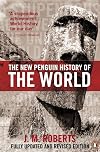
Roberts is a master of the broad brush, managing to make world history a page-turner and 1200 pages seem like 300 (or so). Because the subject’s so large, it always feels like you’re moving at high speed and observing from high above. There’s little room for detail, but that’s the nature of world history. The beauty of it is that Roberts makes connections and observations of patterns, and we’re able to do the same, which wouldn’t be possible in a history of smaller scope with show more more detail (of course, we need both). One particularly valuable example is the context in which he places the American Revolution and subsequent US expansion. At the time, the revolution was a relatively small matter and Europe was focused on more important things. After the war, Britain controlled the seas and also controlled the territory north of the new nation. With a weak power (Spain) controlling much of the areas south and west, and with France checked by Britain in North America, the US was able to expand in an essentially invisible bubble of protection created by Britain. It was in Britain’s interests to let this weak little English-speaking upstart expand rather than allowing another European power to fill the relative void of North America (it doesn’t make it right, but one of the European powers would have done it if the US hadn’t). A little deflating for our national mythology, but isn’t that one of the purposes of history done well? show less

"In spreading revolutionary principles the French often put a rod in the pickle for their own backs."
That is an actual sentence from this book. I have no idea what it means. I have also just passed the third time the author has referred to something from history as being "scotched in the egg". I know what a scotched egg is, I could probably even cook one, but I have no idea what the writer is talking about or why he is so proud of coming up with that phrase that he keeps using it.
I am 2/3s show more of the way through this book and honestly can think of no reason that I persist other than just stubbornness. At first I just thought that maybe it had been a while since I read a book at this reading level, but that was too generous of me. The author uses weird sentence structures and contrived language in such a way that I have to reread almost every sentence and then analyse it, "is he using a that as a noun or an adjective? What was the verb". Every sentence is a puzzle to be solved. There's a spot in there where I'm not sure, but I think he used "outstanding" as a noun.
Even a few commas in the right places would make things so much easier, but instead he spent all his punctuation money on $10 words. Don't get me wrong, I'm all for using words that are specific and add to the meaning of the thought. However, this guy uses words in an almost nonsensical way. My guess is he's just showing off. And I am left thinking "I know what the words mean, I just don't know what they mean the way he wrote them". show less
That is an actual sentence from this book. I have no idea what it means. I have also just passed the third time the author has referred to something from history as being "scotched in the egg". I know what a scotched egg is, I could probably even cook one, but I have no idea what the writer is talking about or why he is so proud of coming up with that phrase that he keeps using it.
I am 2/3s show more of the way through this book and honestly can think of no reason that I persist other than just stubbornness. At first I just thought that maybe it had been a while since I read a book at this reading level, but that was too generous of me. The author uses weird sentence structures and contrived language in such a way that I have to reread almost every sentence and then analyse it, "is he using a that as a noun or an adjective? What was the verb". Every sentence is a puzzle to be solved. There's a spot in there where I'm not sure, but I think he used "outstanding" as a noun.
Even a few commas in the right places would make things so much easier, but instead he spent all his punctuation money on $10 words. Don't get me wrong, I'm all for using words that are specific and add to the meaning of the thought. However, this guy uses words in an almost nonsensical way. My guess is he's just showing off. And I am left thinking "I know what the words mean, I just don't know what they mean the way he wrote them". show less
Lists
You May Also Like


Associated Authors
Statistics
- Works
- 105
- Also by
- 1
- Members
- 6,742
- Popularity
- #3,631
- Rating
- 3.8
- Reviews
- 54
- ISBNs
- 252
- Languages
- 17