
Galsan Tschinag
Author of The Blue Sky
About the Author
Image credit: Photo by user Elian / Wikimedia Commons.
Series
Works by Galsan Tschinag
Der singende Fels: Schamanismus, Heilkunde, Wissenschaft. Galsan Tschinag im Gespräch mit Klaus Kornwachs und Maria Kaluza (2010) 5 copies
Kennst du das Land: Leipziger Lehrjahre (Unionsverlag Taschenbücher) (German Edition) (2018) 2 copies
Verteidigung des Steins gegenüber dem Beton ; Die Mongolei zwölf Jahre nach dem Umbruch (2005) 1 copy
Sógen jóka (草原情歌) 1 copy
Associated Works
Die Geschichtenerzähler: Neues und Unbekanntes von Allende bis Zafón (suhrkamp taschenbuch) (2008) — Contributor — 5 copies
Ich habe eine fremde Sprache gewählt. Ausländische Schriftsteller schreiben deutsch (1998) — Contributor — 2 copies
Tagged
Common Knowledge
- Canonical name
- Galsan Tschinag
- Legal name
- Irgit Schynykbai-oglu Dshurukuwaa
- Birthdate
- 1943-12-26
- Gender
- male
- Education
- University of Leipzig
- Occupations
- shaman
- Awards and honors
- Marburger Literaturpreis (2012)
Heimito von Doderer-Literaturpreis (2001)
Adelbert-von-Chamisso-Preis (1992) - Nationality
- Mongolia
- Birthplace
- Bayan-Ölgii Province, Mongolia
- Places of residence
- Ulaanbaatar, Mongolia
Germany - Associated Place (for map)
- Mongolia
Members
Reviews
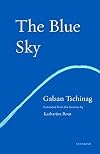
The Blue Sky is narrated by a young boy, the youngest of three children in a family of nomadic herders. They are Tuvans, indigenous people living in the High Altai mountains in the far north-west of Mongolia, sharing the land with the Kazakhs. Their way of life is dying as the Soviet system takes over. The two older children are removed to a boarding school in the city, and that will be the fate of this little boy too, but for now he's helping his family and managing his own herd of sheep show more with the help of his devoted dog Aryslan. The most important person in his life is his grandmother, an old woman cheated and left almost destitute by her own family and taken in by the boy's. show less

A lyrical yurt-opera in three acts, with the recently widowed Shumuur thrown off-balance when he hears that his old flame Gulundshaa has set up camp next to his own winter quarters, and a symbolism-rich subplot in which Shumuur’s adolescent daughter tries to persuade their mare to foster an orphaned foal. Galsan ties this into the mid-20th-century history of Mongolia, with both Shumuur and Gulundshaa having lived through war and invasion, and an epilogue in which the narrator meets show more Shumuur’s son many years later, when both have become urbanised and relinquished their ties with their nomad heritage. The past is important, but we don’t own it, seems to be the message.
A bit mystical for my taste, but fine writing, and it was interesting to get a taste of Mongolian life. show less
A bit mystical for my taste, but fine writing, and it was interesting to get a taste of Mongolian life. show less

Dshurukawaa is a young Tuvan shepherd boy growing up in the Altai mountains of Mongolia. Life is hard, but he has a loving family and a loyal dog. His adopted Grandmother is his favorite person in the world, and she dotes on him. When his brother and sister go off to boarding school, Dshurukawaa takes on more responsibilities for the lambs and bonds even more with Aryslan, his dog.
I loved this story, based on the author's childhood as a Tuvan nomad. The descriptions of life in the ail, or show more settlement of his extended family's yurts, were fascinating, and the story is told with warmth. The author uses dialect for certain objects and concepts, and there is a helpful glossary at the end (which I wish I had known about sooner). I also enjoyed the translator's introduction where she discusses how she took on this project and her trip to Mongolia to stay with Galsang. I do wish there had been a map in the edition of the book that I read. It's the first in a trilogy of autobiographical novels, and I have already ordered the next one. show less
I loved this story, based on the author's childhood as a Tuvan nomad. The descriptions of life in the ail, or show more settlement of his extended family's yurts, were fascinating, and the story is told with warmth. The author uses dialect for certain objects and concepts, and there is a helpful glossary at the end (which I wish I had known about sooner). I also enjoyed the translator's introduction where she discusses how she took on this project and her trip to Mongolia to stay with Galsang. I do wish there had been a map in the edition of the book that I read. It's the first in a trilogy of autobiographical novels, and I have already ordered the next one. show less
A fictionalised account of the author's childhood in 1950s Mongolia, The Blue Sky is at its best when Galsan Tschinag is both showing us the rich texture of nomadic daily life and how much the child narrator doesn't understand about what's going on around him. As a Soviet satellite, mid-20th-century Mongolia underwent a process of livestock collectivisation and political purges, and passing references to "kulaks" clues in the reader to what the narrator's parents are so worried about. The show more pacing is slow, but occasionally feels too deliberately so, and the ending smacks too much of "Book 1 of 3." Still, the writing is often beautifully evocative, and the build up to the ending works very well. show less
Lists
Awards


You May Also Like


Associated Authors
Statistics
- Works
- 37
- Also by
- 3
- Members
- 534
- Popularity
- #46,619
- Rating
- 3.7
- Reviews
- 27
- ISBNs
- 99
- Languages
- 7