
Yuri Rytkheu (1930–2008)
Author of A Dream in Polar Fog
About the Author
Works by Yuri Rytkheu
Abschied von den Göttern 1 copy
Maģiskie skaitļi : romāns 1 copy
Люди северного сияния 1 copy
Peoples of the Long Spring 1 copy
鯨が消える日―現代の伝説― 1 copy
Чукотская сага 1 copy
Associated Works
Reader's Digest Auswahlbücher 183 : Letzter Anflug auf Kansas Citiy. Ein Lied gegen die Finsternis. Spiel mit der Angst. Traum im Polarnebel (1992) — Author — 10 copies
They found their voice : stories from Soviet nationalities with no written language before the 1917 October Revolution (1977) — Contributor — 3 copies
イワン ИВАНУШКА 26号 2007.6 — Contributor — 1 copy
イワン ИВАНУШКА 21号 2001.2 — Contributor — 1 copy
イワン ИВАНУШКА 20号 1998.12 — Contributor — 1 copy
イワン ИВАНУШКА 19号 1997.11 — Contributor — 1 copy
イワン ИВАНУШКА 36号 2019.4 — Contributor — 1 copy
イワン ИВАНУШКА 27号 2008.7 — Contributor — 1 copy
イワン ИВАНУШКА 29号 2010.9 — Contributor — 1 copy
イワン ИВАНУШКА 35号 2017.5 — Contributor — 1 copy
イワン ИВАНУШКА 32号 2013.12 — Contributor — 1 copy
イワン ИВАНУШКА 37号 2021.8 — Contributor — 1 copy
The Malahat Review: number sixty-one / February 1982 — Contributor — 1 copy
イワン ИВАНУШКА 22号 2002.8 — Contributor — 1 copy
イワン ИВАНУШКА 33号 2015.2 — Contributor — 1 copy
イワン ИВАНУШКА 31号 2012.12 — Contributor — 1 copy
イワン ИВАНУШКА 30号 2011.12 特集 ともに祝おう、「イワン」創刊30周年を! — Contributor — 1 copy
イワン ИВАНУШКА 25号 2006.4 — Contributor — 1 copy
イワン ИВАНУШКА 34号 2015.12 — Contributor — 1 copy
イワン ИВАНУШКА 24号 2005.4 — Contributor — 1 copy
季刊 ソヴェート文学 Советская Литература 1980年 冬季号 通巻74号 — Contributor — 1 copy
ソヴェート文学 Советская Литература No.32 / 1970 9月号 — Contributor — 1 copy
季刊 ソヴェート文学 Советская Литература 1976年 春季号 通巻55号 — Contributor — 1 copy
季刊 ソヴェート文学 Советская Литература 1982年 冬 No. 82 — Contributor — 1 copy
季刊 ソヴェート文学 Советская Литература 1984年 No. 88 — Contributor — 1 copy
イワン ИВАНУШКА 28号 2009.8 — Contributor — 1 copy
Tagged
Common Knowledge
- Canonical name
- Rytkheu, Yuri
- Legal name
- Rytkheu, Yuri Sergeevich
- Other names
- Рытхэ́у, Ю́рий Серге́евич
Rytcheu, Juri Sergejewitsch - Birthdate
- 1930-03-08
- Date of death
- 2008-05-14
- Gender
- male
- Education
- Leningrad State University
- Occupations
- writer
- Cause of death
- multiple myeloma
- Nationality
- Russia
- Birthplace
- Uelen, Tschukotka, Russia
- Places of residence
- Anadyr, Chukotka, USSR
Leningrad, Russia
St. Petersburg, Russia
Magadan, Soviet Union - Place of death
- Saint Petersburg, Russia
- Burial location
- Komorovskoe Cemetery, St. Petersburg, Russia
- Map Location
- Russia
Members
Reviews
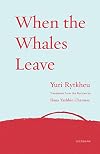
What an AMAZING book. When the Whales Leave is a Chukchi creation story set in Uelen, Siberia that reflects the time period that the author, Yuri Rytkheu, lived through, when his people's traditions were being thrown aside and replaced. From the introduction, "He follows the downward spiral from respect for the power of the natural world, modesty in front of the weather, and group effort, to the general shift that produced, finally, a vain bully and gloating brute…" and "the novel stands show more as a renewal of faith in his Chukotka homeland. It is a song that celebrates, illuminates, warns, and finally exposes what were once the moral principles of village life that were traded down for the furious power-mongering and 'me-ism' of today." (Gretel Ehrlich)
Yuri's creation story is a multigenerational novel beginning with the woman, Nau, who lives during the "ancestor times," when "animal-human transformations were common; when time and lifespans were elastic…" She falls in love with a whale who becomes human. There are four points of view: the first follows Nau; the second is her son Enu, who eventually leaves to find a land without winter; the third is Kliau's, a hunter who goes with Enu; and the last follows Givu, Enu's grandson.
This small story is so thoughtful, so insightful, that I almost don't want to get into everything that's discussed to let people discover it for themselves. This story was decades and decades before it's time. It's written in a gorgeous folktale-like style that's captivating and spare in equal parts.
Absolutely stunning.
content warnings for rape (not shown), and EXTREME animal cruelty (with purpose) show less
Yuri's creation story is a multigenerational novel beginning with the woman, Nau, who lives during the "ancestor times," when "animal-human transformations were common; when time and lifespans were elastic…" She falls in love with a whale who becomes human. There are four points of view: the first follows Nau; the second is her son Enu, who eventually leaves to find a land without winter; the third is Kliau's, a hunter who goes with Enu; and the last follows Givu, Enu's grandson.
This small story is so thoughtful, so insightful, that I almost don't want to get into everything that's discussed to let people discover it for themselves. This story was decades and decades before it's time. It's written in a gorgeous folktale-like style that's captivating and spare in equal parts.
Absolutely stunning.
content warnings for rape (not shown), and EXTREME animal cruelty (with purpose) show less
This book seems sort of metamythic because part 1 is a creation myth and then the rest of the book is about how people engage with that myth (while its subject is still living!) and eventually become myths themselves. It makes you wonder, in reading this, will it make you part of the story? Probably, because of how universally applicable this story is, and considering how this predates the “Tragedy of the Commons” by a few millennia. Instead of the typical Western hopelessness, When the show more Whales Leave is a cautionary tale that has hope for humanity even though the ending is quite bleak. That being said, it doesn’t feel like it was written for a white audience, it’ll meet you halfway but won’t spoon feed you or guide you through understanding.
Rytkeu talks a lot about the difference between ancestor worship and the gods, with Nau being the living embodiment humanity’s earliest ancestors (she’s a really old lady who lives through like at least 5 generations). The escalation from the first few generations doubting her story to the last guy who just totally starts fucking up everything seems really drastic, but maybe that slippery slope is realistic. At first the misogyny was bothering me but I dont think that depiction of something is necessarily an avowal of it, and that perhaps the patriarchal society that develops is just another symptom of human hubris. But that’s the thing, this book is so deceptively simple but it won’t give you a straight answer on anything and will linger with you for a lot longer than it takes to actually read it.
The translator's note and introduction are definitely interesting, but read them after you read the story because both spoil it and it's a lot better to go in with no idea of what's coming next. I thought the prose in this was so easy to read and yet so flowery, in the translator's note Rytkheu says, "Write it like a song. Like you could sing it if you wanted to." which is honestly the best way anyone could put it. show less
Rytkeu talks a lot about the difference between ancestor worship and the gods, with Nau being the living embodiment humanity’s earliest ancestors (she’s a really old lady who lives through like at least 5 generations). The escalation from the first few generations doubting her story to the last guy who just totally starts fucking up everything seems really drastic, but maybe that slippery slope is realistic. At first the misogyny was bothering me but I dont think that depiction of something is necessarily an avowal of it, and that perhaps the patriarchal society that develops is just another symptom of human hubris. But that’s the thing, this book is so deceptively simple but it won’t give you a straight answer on anything and will linger with you for a lot longer than it takes to actually read it.
The translator's note and introduction are definitely interesting, but read them after you read the story because both spoil it and it's a lot better to go in with no idea of what's coming next. I thought the prose in this was so easy to read and yet so flowery, in the translator's note Rytkheu says, "Write it like a song. Like you could sing it if you wanted to." which is honestly the best way anyone could put it. show less
I was not prepared for how heartbreaking this book is. I was lulled into false hope by phrases on the back cover like "buoyantly translated" and "vibrant retelling." Was not prepared for the second half of the book to be all red flags. (CW for graphic animal cruelty, brief mention of sexual assault).
I never know how to rate a book like this. It was wildly effective, vivid, beautiful. But acutely painful.
I never know how to rate a book like this. It was wildly effective, vivid, beautiful. But acutely painful.
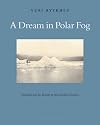
I really enjoyed this novel. It's about an American man who is on a ship in the Arctic, on the coast of far eastern Russian where the Chukchi people live. He has an accident that causes him to lose his hands, and while he is healing, the boat departs without him. He eventually assimilates into the Chukchi culture and this novel is the story of him doing that. As the story progresses, outside influences begin to creep in, and this reintroduction of western culture and people shows just how show more deeply John has adapted to this new way of living.
I thought this was really well done. Sometimes books that are this foreign in culture and setting are hard for me to connect with, but I think because there was a well-drawn American character experiencing this way of life, I was able to really get what the author was trying to say.
Highly recommended - a great look at a different culture and way of life, and also a good exploration of what matters in life. show less
I thought this was really well done. Sometimes books that are this foreign in culture and setting are hard for me to connect with, but I think because there was a well-drawn American character experiencing this way of life, I was able to really get what the author was trying to say.
Highly recommended - a great look at a different culture and way of life, and also a good exploration of what matters in life. show less
Lists
Awards


You May Also Like


Associated Authors
Statistics
- Works
- 30
- Also by
- 36
- Members
- 602
- Popularity
- #41,740
- Rating
- 4.1
- Reviews
- 24
- ISBNs
- 71
- Languages
- 7
- Favorited
- 5