
Frigyes Karinthy (1887–1938)
Author of A Journey Round My Skull
About the Author
Works by Frigyes Karinthy
Palun, härra õpetaja! 5 copies
Az emberke tragédiája : Madách Imrike után Istenkéről, Ádámkáról és Luci Ferkóról (1994) 5 copies, 1 review
Propagande 4 copies
Csodapók 3 copies
Utazás Faremidóba Capillária 2 copies
Az elátkozott munkáskisasszony : válogatás az író kötetben még nem publikált írásaiból (1992) 2 copies
Norda vento: novelkolekto 2 copies
Moartea hipnotica 2 copies
Budapesti tavasz II 1 copy
A nõsténykentaur 1 copy
Cirkusz válogatott írások 1 copy
Gyermekkori naplók 1 copy
Följelentem az emberiséget 1 copy
Napiparancs 1 copy
Voyage to Faremido 1 copy
Derr Zirkus /The circus 1 copy
Összegyűjtött művei 17. - Paródiák II. (Még mindig igy irtok ti, Amiről a vászon mesél, Igy irtok ti) (2004) 1 copy
Összegyűjtött művei 16. - Versek (Martinovics, Nem mondhatom el senkinek, Üzenet a palackban) (2003) 1 copy
Összegyűjtött művei 14. - Komédiák II. (Hököm-Szinház, Visszakérem az iskolapénzt, Vitéz László szinháza) (2003) 1 copy
Összegyűjtött művei 12. - Humoreszkek IV. ( Írói intimitások, Ne bántsuk egymást, Panoráma) (2002) 1 copy
Összegyűjtött művei 10. - Esszék, kritikák II. (írók és könyvek, Előszók könyvekhez, Színház) (2002) 1 copy
Összegyűjtött művei 20. - Szatírák III. (Szatirikus tárcák, esszék), Minden másképpen van (Ötvenkét vasárnap) (2004) 1 copy
Összegyűjtött művei 2. - Elbeszélések I. (Esik a hó, Ballada a néma férfiakról, Találkozás egy fiatalemberrel, Két hajó) (2001) 1 copy
Omnibusz 1 copy
Viccelnek velem 1 copy
Összegyűjtött művei 1. - Regények I. (Utazás Faremidóba, Capillária, Az ezerarcú lélek, Kötéltánc) (2002) 1 copy
Naplóm : 1899-900 1 copy
Naplóm életem 1 copy
Összegyűjtött művei 19. - Szatírák II (Szatirikus esszék, aforizmák), "Ki kérdezett?...", Notesz (2004) 1 copy
Contos Húngaros 1 copy
Hököm-színház 1 copy
Haditanács anthroposban 1 copy
Így írtok ti-II 1 copy
Válogatott művei 1 copy
Esik a hó : novellák 1 copy
Színház : [színművek] 1 copy
Harun al Rasid 1 copy
Két hajó : [elbeszélések] 1 copy
Associated Works
Curiosities of medicine;: An assembly of medical diversions, 1552-1962 (1963) — Contributor — 25 copies
Tagged
Common Knowledge
- Canonical name
- Karinthy, Frigyes
- Legal name
- Karinthy, Frigyes Ernő
- Other names
- Frigyes, Karinthy
- Birthdate
- 1887-06-25
- Date of death
- 1938-08-29
- Gender
- male
- Occupations
- author
playwright
poet
journalist
translator - Relationships
- Karinthy, Ferenc (son)
Karinthy, Ada (sister)
Karinthy, Gábor (son) - Short biography
- Karinthy was the person who came up with the notion of six degrees of separation.
- Nationality
- Hungary
- Birthplace
- Budapest, Hungary, Austro-Hungarian Empire
- Place of death
- Siófok, Lake Balaton, Hungary
- Associated Place (for map)
- Hungary
Members
Reviews

Some of the last melancholy pages of Simon Winder’s Danubia read as a lament for the dissolution of Hungarian intellectual life in the conflagration that consumed the Habsburg Dynasty, and before I read Karinthy’s story I imagined it in that milieu. Taken on its own terms, though, A Journey Around My Skull is a report of one man's disorientation and resignation and resilience, with moments of poetic self-awareness and wry humor and poignant insight and absurd silliness.
In 1930s Hungary, show more all eras and ages exist at the same time. After alerting his friends to his strange symptoms, Karinthy imagines them in the corner of a café, like a scrum of gyulas, the ancient Magyar counselors who met before a decisive battle to consult auguries and omens and advise the chieftain on the prudent course of action. A beggar with a hurdy gurdy passes by the window; a mechanic at the armaments factory devises a new surgical blade mounted on a swivel. Another friend reminds Karinthy that 20 years before he had written a play about an engineer who invents an aeroplane to fly without a pilot. Before the test flight, as he is wrestling with his fear, he is visited by his alter ego, a doctor from the north who proposes to remove by a delicate operation the part of the brain responsible for the fear of death, located at the back of the skull in the cerebellum. Laid up in his sick room later, Karinthy comforts himself by recalling how Silvio Pellico, jailed for 10 years by the Holy Roman Emperor Francis II, stoically resigned himself to his fate. After losing his sight, Silvio decides that he can endure a life of blindness, since he is old enough to have drawn from the world of light all he needs to sustain himself in darkness. Besides, he could finally work in peace without being disturbed.
A short interlude in the middle of the book relates a series of dreams Karinthy has while waiting for treatment: high up in a swaying skyscraper in New York City (a place he has never been) he sits across the table from someone he knows is Al Capone, who Karinthy suspects of having stolen it and hidden it in a wooden box—but it is unclear whether the two of them are pretending to ignore a tumor or the Lindbergh baby; a banquet of tasteless, chewy meat is held in his honor in Ankara; in the Alhambra, hunched over, he studies an anatomical atlas with a glass-like illustration of the human circulatory system that seems to throb and wobble the table.
The cover of the NYRB edition of A Journey Around My Skull by Alice Attie shows a moon-scape head sutured with wire and clamped with threaded knobs to a hatch-marked contraption suggestive of railroad tracks. The cranial-machine vibe carries through the passage describing Karinthy’s surgery at the hands of a renowned surgeon in Stockholm (the whir of electric trephine, ‘the silent rush of liquid over a glass slab,’ ‘the sound of pumping and draining’) like a steampunk version of Ted Chiang’s “Exhalation,” or a scene from Terry Gilliam's "Brazil." show less
In 1930s Hungary, show more all eras and ages exist at the same time. After alerting his friends to his strange symptoms, Karinthy imagines them in the corner of a café, like a scrum of gyulas, the ancient Magyar counselors who met before a decisive battle to consult auguries and omens and advise the chieftain on the prudent course of action. A beggar with a hurdy gurdy passes by the window; a mechanic at the armaments factory devises a new surgical blade mounted on a swivel. Another friend reminds Karinthy that 20 years before he had written a play about an engineer who invents an aeroplane to fly without a pilot. Before the test flight, as he is wrestling with his fear, he is visited by his alter ego, a doctor from the north who proposes to remove by a delicate operation the part of the brain responsible for the fear of death, located at the back of the skull in the cerebellum. Laid up in his sick room later, Karinthy comforts himself by recalling how Silvio Pellico, jailed for 10 years by the Holy Roman Emperor Francis II, stoically resigned himself to his fate. After losing his sight, Silvio decides that he can endure a life of blindness, since he is old enough to have drawn from the world of light all he needs to sustain himself in darkness. Besides, he could finally work in peace without being disturbed.
A short interlude in the middle of the book relates a series of dreams Karinthy has while waiting for treatment: high up in a swaying skyscraper in New York City (a place he has never been) he sits across the table from someone he knows is Al Capone, who Karinthy suspects of having stolen it and hidden it in a wooden box—but it is unclear whether the two of them are pretending to ignore a tumor or the Lindbergh baby; a banquet of tasteless, chewy meat is held in his honor in Ankara; in the Alhambra, hunched over, he studies an anatomical atlas with a glass-like illustration of the human circulatory system that seems to throb and wobble the table.
The cover of the NYRB edition of A Journey Around My Skull by Alice Attie shows a moon-scape head sutured with wire and clamped with threaded knobs to a hatch-marked contraption suggestive of railroad tracks. The cranial-machine vibe carries through the passage describing Karinthy’s surgery at the hands of a renowned surgeon in Stockholm (the whir of electric trephine, ‘the silent rush of liquid over a glass slab,’ ‘the sound of pumping and draining’) like a steampunk version of Ted Chiang’s “Exhalation,” or a scene from Terry Gilliam's "Brazil." show less
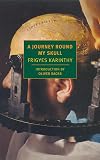
Who did the photo editing for this particular New York Review Book? My God, it's dreadful, and by far the most off-putting aspect of the book. The book itself is a fascinating autobiographical account by a well-known member of Hungary's pre-WW II literati who discovers that he has a brain tumor. The text itself is an interesting blend of travel writing, medical memoir, cultural observation, and philosophical inquiry. Karinthy is interested in the effect of his tumor on everything, not just show more himself. There's an interesting passage on the reporting of his surgery in the Budapest newspapers, and the effect it has on a number of his friends and coworkers. He was a popular figure at the time in Hungary (1936) because of both his books and journalism. In fact, because so many physicians were in his circle, he was actually impeded from getting a speedy diagnosis. Karinthy self-diagnosed rather early on. His medical friends, including his wife, when he told them of his conclusions were always 'Oh, come off it!' Today we have MRIs and CT scans. Diagnosis is fairly easy, if not simple. For Karinthy in his day there were no such technologies. The diagnosis was made by inference and it took a long time. The neurologist Oliver Sacks provides the introduction here. For him, a clinician who writes highly readable popular books about the brain, Karinthy's penchant for "long digressions, philosophical and literary" and "a certain amount of fanciful contrivance and extravagance" are faults. My view is otherwise. I see these flights as providing fascinating insight into the mental and emotional status of the writer. I adore Sacks' own books and have read them avidly, but here is a more literary alternative to his staunchly clinical narratives that I find both compelling and page-turning. Especially enjoyable are the glimpses of cafe society before WW II in Budapest, Hungary; the walks Karinthy takes through its streets. Karinthy survived his surgery and lived another two years before dying in 1938 of a stroke. He did not live to see the Anschluss or the German entry into the Sudetenland. He was never to know how the Nazi threat would unfold and all but destroy the continent. Naturally, he was seriously preoccupied; nevertheless, I find his obliviousness to the growing threat of fascism fascinating and it has made me wonder if it wasn't perhaps indicative of a broader mindset. The Spanish Civil War is never mentioned. There is no criticism of the Nazis here, just a sense of eerie foreboding when he finds himself passing through Germany on his way to Stockholm for the surgery (performed by the pioneering Olivecrona). Highly recommended though not for the squeamish or faint of heart. show less

Karinthy elbeszélései rendszerint egyetlen ötletre épülnek, amit a szerző megpróbál úgy kifordítani, olyan szögben bemutatni, hogy teljesen újdonatújnak látszódjon – aztán a végén kapunk egy frenetikus viccet, egy avantgárd kísérletet, egy sci-fi remeklést, egy könnyes-lázas-patetikus balladát, vagy egy erkölcsi példázatot a háborúról, esetleg ember voltunk egyéb hanyatlásáról… szóval valamit kapunk a végén, csak éppen nem lehet előre kitalálni, show more mit. Néha ez a valami egészen zseniális, igazi gyöngyházfény a magyar irodalom telt ajkain*, ugyanakkor nem tudok szabadulni bizonyos kétségektől. Attól, hogy bár Karinthy vitathatatlanul a földkerekség utolérhetetlen irodalmi karikaturistája, a paródia Paganinije – de talán épp ez a vénája akadályozta meg, hogy novellistaként egy egységesnek ható, koherens kötetet hozzon össze. Mert aki hivatalból folyton álbajuszt és hamis hajat ölt magára, az egyszer csak elfelejti, melyik is az ő igazi arca: a vicces, az avantgárd, a tudományos-fantasztikus, a lázasan patetikus, vagy talán az erkölcsprédikátor… túl sokat váltogatja stílusát ahhoz, hogy folyamatosan igazán magas színvonalat tudjon biztosítani. De kikapartam belőle 5-10 gyöngyszemet, és ezért már egyértelműen megérte .
* Itt van például a Barabbás, ami olyasmit mond el a tömegről kereken, szépen, hogy abba még ezer év múlva is beleborzong majd az olvasó. Vagy a Kacsapecsenye, ami élből bele kell kerüljön az összes Hogyan legyek vegán? irodalmi antológiába (már ha lesz ilyen – és miért ne lenne), mert nekem úgy elment tőle a kedvem a kacsapecsenyétől, hogy még. És ne feledkezzünk meg az Új Iliászról sem, amivel tulajdonképpen a Terminátor alapsztoriját előlegezi meg a szerző – nagyon remélem, hogy James Cameron csengetett az ötletért némi pénzt a Karinthy-örökösöknek, mert bizony jár. És a többi. És a többi. show less
* Itt van például a Barabbás, ami olyasmit mond el a tömegről kereken, szépen, hogy abba még ezer év múlva is beleborzong majd az olvasó. Vagy a Kacsapecsenye, ami élből bele kell kerüljön az összes Hogyan legyek vegán? irodalmi antológiába (már ha lesz ilyen – és miért ne lenne), mert nekem úgy elment tőle a kedvem a kacsapecsenyétől, hogy még. És ne feledkezzünk meg az Új Iliászról sem, amivel tulajdonképpen a Terminátor alapsztoriját előlegezi meg a szerző – nagyon remélem, hogy James Cameron csengetett az ötletért némi pénzt a Karinthy-örökösöknek, mert bizony jár. És a többi. És a többi. show less
In this book, Karinthy, a Hungarian writer, describes his diagnosis of and surgery to remove a brain tumor. Strangely enough, given the subject matter, it is a delightful read. Karinthy's sparkling personality and self-deprecating humor never desert him. He is a talented writer with an original way of saying things, and he never bores.
Poking a little fun at the world-reknowned surgeon who will operate on him he says, tongue in cheek: 'I found it a little humiliating that he was not show more interested in my own views about my condition. He probably regarded me as a layman who had no opinions on such matters, or perhaps, having heard that I was some kind of poet, he was on his guard against the vagaries of an overheated imagination.'
In fact, Karinthy tries to keep his imagination in check: 'When I put my questions, I used medical terms....I did not ask her what the cowering, terrified Being that lurked somewhere behind my tumour was so plaintively asking below the threshold of consciousness. I did not ask whether the patient screamed like a wild beast and struggled to escape when they split her skull open, whether her blood and brains came pouring out of the wound or whether at last the victim fainted on the torture rack, gasping for breath, with mouth open and staring eyes. Instead, I questioned her about the operation as if it had been some delicate experiment in physics or a job of repairs by a watchmaker.'
(This is about as gorey as the book gets, BTW).
As a writer, he came to realize that, 'for the first time in my life, I was to observe not for the sake of recording that personal vision which the artist calls 'truth'...but for the sake of reality, which remains reality even if we have no means of communicating its message. Never had I been so far from a lyrical state of mind as in this, the most subjective phase of my life. show less
Poking a little fun at the world-reknowned surgeon who will operate on him he says, tongue in cheek: 'I found it a little humiliating that he was not show more interested in my own views about my condition. He probably regarded me as a layman who had no opinions on such matters, or perhaps, having heard that I was some kind of poet, he was on his guard against the vagaries of an overheated imagination.'
In fact, Karinthy tries to keep his imagination in check: 'When I put my questions, I used medical terms....I did not ask her what the cowering, terrified Being that lurked somewhere behind my tumour was so plaintively asking below the threshold of consciousness. I did not ask whether the patient screamed like a wild beast and struggled to escape when they split her skull open, whether her blood and brains came pouring out of the wound or whether at last the victim fainted on the torture rack, gasping for breath, with mouth open and staring eyes. Instead, I questioned her about the operation as if it had been some delicate experiment in physics or a job of repairs by a watchmaker.'
(This is about as gorey as the book gets, BTW).
As a writer, he came to realize that, 'for the first time in my life, I was to observe not for the sake of recording that personal vision which the artist calls 'truth'...but for the sake of reality, which remains reality even if we have no means of communicating its message. Never had I been so far from a lyrical state of mind as in this, the most subjective phase of my life. show less
Lists
Awards

You May Also Like


Associated Authors
Statistics
- Works
- 145
- Also by
- 5
- Members
- 830
- Popularity
- #30,756
- Rating
- 3.9
- Reviews
- 22
- ISBNs
- 192
- Languages
- 9
- Favorited
- 6