
Anastasia Higginbotham
Author of Not My Idea: A Book About Whiteness
About the Author
Image credit: Publicity photo
Series
Works by Anastasia Higginbotham
Associated Works
Yes Means Yes!: Visions of Female Sexual Power and A World Without Rape (2008) — Contributor — 636 copies, 12 reviews
Tagged
Common Knowledge
- Gender
- female
Members
Reviews
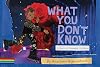
"Like its protagonist, this thick picture book with an unusually small trim defies stereotype.
Demetrius, a queer Black kid whose “superpower” is “sensitivity,” feels “free” only before kindergarten. For years after that, schoolkids taunt Demetrius with homophobic slurs (represented with asterisks), and even some teachers bully Demetrius for wearing flowered clothes and giggling with girls. The unconditional acceptance of family feels far away as “scared [and] scarred” people show more terrorize the child. Demetrius’ fiercely protective mother confronts those who criticize her child’s gender expression, frequently with profanity (also asterisked in dialogue) and even in church, which she abandons after telling a woman there to mind her own business. During a church daydream, Demetrius converses midair with Black Jesus about love of all kinds—a conversation interrupted (still in the daydream) by Billy Porter, Tony winner for the Broadway musical Kinky Boots and Emmy winner for his role as Pray Tell in FX’s Pose, a drama about New York’s gender-norm–defying ballroom culture. Demetrius’ father also unfailingly affirms his child, as do some adults at school along with schoolmate and podcast partner Moxie, who’s also a queer kid of color. With minimal text per page, this book feels handmade, from the lettering to the eclectic collages, composed of photos, fabrics, hair, sequins, and more. Characters resemble paper dolls and often appear identical on consecutive pages, which sometimes creates an odd sense of stasis that slows the story’s momentum. Nevertheless, queer parents and kids alike will appreciate the book’s uplifting message.
A visually rich story that speaks truth to power for LGBTQ+ kids and their families and allies. " Kirkus Reviews show less
Demetrius, a queer Black kid whose “superpower” is “sensitivity,” feels “free” only before kindergarten. For years after that, schoolkids taunt Demetrius with homophobic slurs (represented with asterisks), and even some teachers bully Demetrius for wearing flowered clothes and giggling with girls. The unconditional acceptance of family feels far away as “scared [and] scarred” people show more terrorize the child. Demetrius’ fiercely protective mother confronts those who criticize her child’s gender expression, frequently with profanity (also asterisked in dialogue) and even in church, which she abandons after telling a woman there to mind her own business. During a church daydream, Demetrius converses midair with Black Jesus about love of all kinds—a conversation interrupted (still in the daydream) by Billy Porter, Tony winner for the Broadway musical Kinky Boots and Emmy winner for his role as Pray Tell in FX’s Pose, a drama about New York’s gender-norm–defying ballroom culture. Demetrius’ father also unfailingly affirms his child, as do some adults at school along with schoolmate and podcast partner Moxie, who’s also a queer kid of color. With minimal text per page, this book feels handmade, from the lettering to the eclectic collages, composed of photos, fabrics, hair, sequins, and more. Characters resemble paper dolls and often appear identical on consecutive pages, which sometimes creates an odd sense of stasis that slows the story’s momentum. Nevertheless, queer parents and kids alike will appreciate the book’s uplifting message.
A visually rich story that speaks truth to power for LGBTQ+ kids and their families and allies. " Kirkus Reviews show less

"A necessary children’s book about whiteness, white supremacy, and resistance.
Higginbotham’s text includes both dialogue among white adults and a white girl grappling with her growing race consciousness and additional text that references and unpacks the ideas in that dialogue. The connective tissue between these two essential pieces of the book can be weak, but the book as a whole is sure to spark conversations, and its collage art and DIY aesthetic may encourage creative expression. show more The dialogue begins when the girl overhears snippets of a news story about a police officer (whose white hand is shown holding a gun) killing an unarmed black man. “Oh no, not again,” says her mother, covering her eyes, and the girl asks “What? Mom. What ‘not again’?” Instead of responding, Mom turns off the TV and dodges questions, asserting, “Our family is kind to everyone. We don’t see color.” The girl grows increasingly frustrated and eventually seeks information independently while also asserting that she does see color and knows “that what that police officer did was wrong!” Precisely how she came to this raised consciousness isn’t clear, and no adults seem sympathetic or overtly supportive. Narrative text directed at readers (perhaps also absorbed by the girl as she reads?) highlights white people engaged in anti-racist activism, and it avoids undermining itself by also placing historical and contemporary black activism at the center. Curiously, however, the text excludes people of other races from its discussion.
Important, accessible, needed. (Picture book. 5-12)" www.kirkusreviews.com show less
Higginbotham’s text includes both dialogue among white adults and a white girl grappling with her growing race consciousness and additional text that references and unpacks the ideas in that dialogue. The connective tissue between these two essential pieces of the book can be weak, but the book as a whole is sure to spark conversations, and its collage art and DIY aesthetic may encourage creative expression. show more The dialogue begins when the girl overhears snippets of a news story about a police officer (whose white hand is shown holding a gun) killing an unarmed black man. “Oh no, not again,” says her mother, covering her eyes, and the girl asks “What? Mom. What ‘not again’?” Instead of responding, Mom turns off the TV and dodges questions, asserting, “Our family is kind to everyone. We don’t see color.” The girl grows increasingly frustrated and eventually seeks information independently while also asserting that she does see color and knows “that what that police officer did was wrong!” Precisely how she came to this raised consciousness isn’t clear, and no adults seem sympathetic or overtly supportive. Narrative text directed at readers (perhaps also absorbed by the girl as she reads?) highlights white people engaged in anti-racist activism, and it avoids undermining itself by also placing historical and contemporary black activism at the center. Curiously, however, the text excludes people of other races from its discussion.
Important, accessible, needed. (Picture book. 5-12)" www.kirkusreviews.com show less

This book goes over some of the things you may experience as a child when your parents divorce. It covers complex emotions, like emotional numbness, fight, flight or freeze reactions etc.
This book was a little disappointing. It was fairly straightforward and didn't make me feel much. I think there is a big difference between straight-forwardly describing an emotion and showing it in a more nuanced way. I think this is a great topic, I just wish the author had gone about it a different way. show more But who knows, it may be very helpful for some kids! show less
This book was a little disappointing. It was fairly straightforward and didn't make me feel much. I think there is a big difference between straight-forwardly describing an emotion and showing it in a more nuanced way. I think this is a great topic, I just wish the author had gone about it a different way. show more But who knows, it may be very helpful for some kids! show less
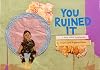
I had to get a counselor to read this book because I didn't know if all students should have access. It struck me as a book that needs to be shared with someone helping a person overcome sexual abuse. Four adults have now read it, and I know people will disagree; but, we placed it in professional section for counselors to know who it would help in recovery from incest.
The book takes about 10 minutes to read and is listed for grades 3 - 6 or 4 - 8, depending on who did the review. In the show more book, a girl tells how she feels about seeing her cousin whom she used to like (and still does) but also doesn't want to see him because he raped her. There are many layers and difficulties that I do not have knowledge about. It's very well done and will relate to kids in the same situation, but they need guidance as well. It doesn't tell HOW to deal or HOW to feel--a kid would need someone to help. The book shows empathy. show less
The book takes about 10 minutes to read and is listed for grades 3 - 6 or 4 - 8, depending on who did the review. In the show more book, a girl tells how she feels about seeing her cousin whom she used to like (and still does) but also doesn't want to see him because he raped her. There are many layers and difficulties that I do not have knowledge about. It's very well done and will relate to kids in the same situation, but they need guidance as well. It doesn't tell HOW to deal or HOW to feel--a kid would need someone to help. The book shows empathy. show less
Lists
Awards


You May Also Like


Associated Authors
Statistics
- Works
- 6
- Also by
- 2
- Members
- 492
- Popularity
- #50,225
- Rating
- 4.1
- Reviews
- 40
- ISBNs
- 23