
Timothy Severin (1940–2020)
Author of The Brendan Voyage
About the Author
Acclaimed adventure writer and explorer Tim Severin was born in 1940 and educated at Tonbridge School and Oxford University. He has made a career of retracing the storied journeys of mythical and historical figures in replica vessels. These experiences have been turned into a body of captivating show more and illuminating books, including The Brendan Voyage, In Search of Genghis Khan, Crusader, The Jason Voyage, and In Search of Moby Dick. He has received numerous awards for exploration and geographic history, including the Founder's Medal of England's Royal Geographic Society and the Livingstone Medal of the Royal Scottish Geographical Scoiety. When not travelling, he lives in County Cork, Ireland show less
Series
Works by Timothy Severin
The African adventure;: Four hundred years of exploration in the dangerous continent (1973) 62 copies
The Voyage of Brendan 1 copy
Odin'in Oglu - Viking 1 copy
Viking Tek Cilt 1 copy
The Quest for Ulysses 1 copy
Jason's Voyage 1 copy
Associated Works
Tagged
Common Knowledge
- Other names
- Watkins, Giles Timothy (birth name)
- Birthdate
- 1940-09-25
- Date of death
- 2020-12-18
- Gender
- male
- Education
- Tonbridge School, Kent, England
Keble College, Oxford - Occupations
- explorer
historian
writer - Cause of death
- cancer
- Nationality
- UK
- Birthplace
- Assam, India
- Places of residence
- County Cork, Ireland
London, Middlesex, England, UK
Tonbridge, Kent, England, UK
Oxford, Oxfordshire, England, UK - Place of death
- West Cork, County Cork, Ireland
- Associated Place (for map)
- UK
Members
Reviews
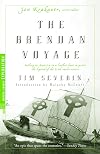
This fantastic book has been languishing on my shelves for far too long. After I read Haven by Emma Donoghue about three monks venturing off the west coast of Ireland (7th century) to establish a retreat on the outer islands, I was intrigued with the notion of ocean travel in skin boats. There is a theory that the Irish monks traveled in skin boats to North America in the 500's A.D. so Tim Severin figured out how these boats would have been made from tanned skins, flax thread and sheep fat show more as a sealant and ventured in the 1970s in a replica boat built to make the same trip. The trip was a nail biter going north along the coast to the Hebrides, the Faroe Islands, Iceland, past Greenland and finally to Newfoundland with 4 sailors and with success. It managed severe gale force storms, ruined food, harsh elements of driving rain and plunging temperatures and frightening battles with sea ice that punctured their boat. What a great book! The book has a number of amazing photographs and drawings. Many years ago I saw Severin's boat, the curragh, at at the Craggaunowen open-air museum in County Clare, Ireland. show less
“...this might be what Odinn was intending -- that I should be an honest chronicler of the Old Ways and the truth about the far-flung world of the Norsemen.”
Authentic is the word that springs to mind. It’s stitched together from sagas, as he tells us in his author’s note, and from the story set-up, with Odinn the Wanderer, the acquirer of knowledge, as his chosen god and patron, you can see the above is the aim: a universal look at the Norse world. I appreciate how trustworthy he is show more on the history, and when he uses the genuine saga-stuff as he does, there’s going to be enough tale. It goes from episode to episode, as he travels, which I enjoy – always new things on the horizon.
Want to mention a couple of things:
There’s a large uncanny content. Of our main, Thorgils, Erik the Red's Saga tells, “... there seemed to be something uncanny about him his whole life.” He has to do with seidr (as a true Odinn’s child), and besides that, there’s a lot of fun with things that go bump in the night. In a group this year I read The Saga of Grettir the Strong – luckily, as Grettir features in #2, and I went Grettir-crazy in the saga – and that had as much fetch or ghost activity as Severin includes. So, genuine to the mind of the times, and like I said, fun.
Great women. I’m tempted to attribute these to his faithfulness to the sagas too, since Grettir’s Saga had great women. The majority of Severin’s seem to be large-framed, ‘formidable’ and not necessarily presented as attractive; perhaps he has reason to think Norse women were built on this model (I wouldn’t put it past him to have measured the skeletons); at any rate, they were fully involved in the story in a way that… they aren’t always.
And real. He may not go into great depths with the characters, but I thought them often unusual and not the stock cast; there were several I liked or who interested me.
I look forward to the next, and not only for Grettir. show less
Authentic is the word that springs to mind. It’s stitched together from sagas, as he tells us in his author’s note, and from the story set-up, with Odinn the Wanderer, the acquirer of knowledge, as his chosen god and patron, you can see the above is the aim: a universal look at the Norse world. I appreciate how trustworthy he is show more on the history, and when he uses the genuine saga-stuff as he does, there’s going to be enough tale. It goes from episode to episode, as he travels, which I enjoy – always new things on the horizon.
Want to mention a couple of things:
There’s a large uncanny content. Of our main, Thorgils, Erik the Red's Saga tells, “... there seemed to be something uncanny about him his whole life.” He has to do with seidr (as a true Odinn’s child), and besides that, there’s a lot of fun with things that go bump in the night. In a group this year I read The Saga of Grettir the Strong – luckily, as Grettir features in #2, and I went Grettir-crazy in the saga – and that had as much fetch or ghost activity as Severin includes. So, genuine to the mind of the times, and like I said, fun.
Great women. I’m tempted to attribute these to his faithfulness to the sagas too, since Grettir’s Saga had great women. The majority of Severin’s seem to be large-framed, ‘formidable’ and not necessarily presented as attractive; perhaps he has reason to think Norse women were built on this model (I wouldn’t put it past him to have measured the skeletons); at any rate, they were fully involved in the story in a way that… they aren’t always.
And real. He may not go into great depths with the characters, but I thought them often unusual and not the stock cast; there were several I liked or who interested me.
I look forward to the next, and not only for Grettir. show less
This is in essence, a different look at the Viking 'swords and shields' books that I like reading so much (Robert Low, Giles Kristian, etc). If you're simply after swords and shields and bucket-loads of bloody raping and pillaging, this isn't for you. This is much more. More a thorough tour round the 11th Century Viking world, wrapped in an really engaging and in the latter stages especially, thought-provoking story.
It is clear from this, the third and final book in the 'Viking' series, that show more the whole story hinges on the 'threat' of the coming of Christianity (the 'White Christ') to the previously Pagan Scandinavian lands. A coming which pretty much was the reason for the end of the Viking era. We have followed someone called Thorgills, throughout the series, but it is really first here, in number three, that it becomes clear that he too can see the writing on the wall, that Christianity is probably unstoppable. At the same time, a lot of his motivation in making the decisions he makes, is in the hope of finding a way of halting that flow of Christianity and turning the good, honest, hard-working ordinary Viking people, back to 'the old ways'. In Harald Hardrada, he thinks he had found 'the symbol of my yearning that it might be possible to restore the glories of the past.' Problem is, Harald does want to restore the glories of the past, just different glories to those of Thorgills'. Both want to be a new Knud/Knut (if you're a Scandinavian reader), Canute (if you're English). Harald wants to be the Scandinavian Knud, who ruled Norway, Denmark and large parts of England, while Thorgills is really in essence like what we English remember Canute for - trying to hold back the waves, in this case, of Christanity.
The honesty and quiet nobility of the Pagan ways as practiced by ordinary people, is many times contrasted with the corrupt, power-hungry, un-forgiving and elitist new Christianity. Especially in the contrast between Thorgills' life in the Varangian guard in Constantinople and his later living on a poor farm, with his wife, on the Swedish border with Norway. Yet the underlying similarities in all religions, to the ordinary man or woman in the street or field are also stressed. The only thing that is different in a lot of cases, is the names - and in 'Viking', the people following those religions.
Whilst it had been a while since I had read number two, and had read several others in the same field in between, I had no difficulty re-picturing the main character, previous events and where we were now. He clearly has done his research exceptionally well (I have, down the years, built up a reasonable knowledge of Viking history, and I do now, after all, live in a Viking country!) and if you know anything about the Varangian Guard in Constantinople, Scandinavia in the 10th Century (you'd be surprised, you do!), King Harold, the Bayeux Tapestry, William 'the Conqueror' and the preparation for and the events of, 1066...you'll find it all woven in here. There was only once where I thought I was going to have to suspend belief about Thorgills' being in the right Viking place at the right time in Viking history - and you probably need to know your Shakespeare - where I raised an eyebrow slightly, but without looking into the facts and the dates, I'm not going to be too hard on him for it.
For anyone with even a passing interest in the 'real' Viking world and history, this will be a wonderfully rewarding read. A textbook with a story wrapped around it isn't such a bad thing, when it's done so well as this Viking saga. I thoroughly enjoyed 'The Kings Man' and found it the best of the 'Viking' volumes (I did wonder if a compendium (?) single volume edition might be a nice idea). The whole story is interesting, involving and well-written, the main characters are fully-realised and believable - I was genuinely upset with one development towards the end of the story - and the final passages are a poignant and thought-provoking look at the ending of the Viking world, seen by a believer in 'the old ways'; a true 'Viking'. show less
It is clear from this, the third and final book in the 'Viking' series, that show more the whole story hinges on the 'threat' of the coming of Christianity (the 'White Christ') to the previously Pagan Scandinavian lands. A coming which pretty much was the reason for the end of the Viking era. We have followed someone called Thorgills, throughout the series, but it is really first here, in number three, that it becomes clear that he too can see the writing on the wall, that Christianity is probably unstoppable. At the same time, a lot of his motivation in making the decisions he makes, is in the hope of finding a way of halting that flow of Christianity and turning the good, honest, hard-working ordinary Viking people, back to 'the old ways'. In Harald Hardrada, he thinks he had found 'the symbol of my yearning that it might be possible to restore the glories of the past.' Problem is, Harald does want to restore the glories of the past, just different glories to those of Thorgills'. Both want to be a new Knud/Knut (if you're a Scandinavian reader), Canute (if you're English). Harald wants to be the Scandinavian Knud, who ruled Norway, Denmark and large parts of England, while Thorgills is really in essence like what we English remember Canute for - trying to hold back the waves, in this case, of Christanity.
The honesty and quiet nobility of the Pagan ways as practiced by ordinary people, is many times contrasted with the corrupt, power-hungry, un-forgiving and elitist new Christianity. Especially in the contrast between Thorgills' life in the Varangian guard in Constantinople and his later living on a poor farm, with his wife, on the Swedish border with Norway. Yet the underlying similarities in all religions, to the ordinary man or woman in the street or field are also stressed. The only thing that is different in a lot of cases, is the names - and in 'Viking', the people following those religions.
Whilst it had been a while since I had read number two, and had read several others in the same field in between, I had no difficulty re-picturing the main character, previous events and where we were now. He clearly has done his research exceptionally well (I have, down the years, built up a reasonable knowledge of Viking history, and I do now, after all, live in a Viking country!) and if you know anything about the Varangian Guard in Constantinople, Scandinavia in the 10th Century (you'd be surprised, you do!), King Harold, the Bayeux Tapestry, William 'the Conqueror' and the preparation for and the events of, 1066...you'll find it all woven in here. There was only once where I thought I was going to have to suspend belief about Thorgills' being in the right Viking place at the right time in Viking history - and you probably need to know your Shakespeare - where I raised an eyebrow slightly, but without looking into the facts and the dates, I'm not going to be too hard on him for it.
For anyone with even a passing interest in the 'real' Viking world and history, this will be a wonderfully rewarding read. A textbook with a story wrapped around it isn't such a bad thing, when it's done so well as this Viking saga. I thoroughly enjoyed 'The Kings Man' and found it the best of the 'Viking' volumes (I did wonder if a compendium (?) single volume edition might be a nice idea). The whole story is interesting, involving and well-written, the main characters are fully-realised and believable - I was genuinely upset with one development towards the end of the story - and the final passages are a poignant and thought-provoking look at the ending of the Viking world, seen by a believer in 'the old ways'; a true 'Viking'. show less
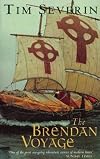
This is the first of Severin's great sea stories, recreating the ships and voyages of ancient and medieval times. Brendan in this case is the 6th Century Irish monk who was said to have traveled to Paradise in the far west of the Atlantic Ocean in a leather boat. Severin is aware that leather (stretched on wood frames) boats are still in use in the west of Ireland and commissions a full scale ocean-going re-creation of Brendan's. His intention is to prove (or disprove) that the legendary show more voyage of St Brendan might actually have occurred and that an Irish monk may have been the first European discoverer of the Americas, 800 years before Columbus.
Severin mixes a little bit of scholarly history with his account of an extraordinary voyage, using his considerable talents as a story teller to take the reader along on a journey through the freezing North Atlantic. His descriptions of cold wet misery in rough seas are amongst the best - or worst - I've ever read. Severin's real achievement though is to introduce the reader to different cultures and places through the stories of people he meets and journeys with along the way. You get a sense that Severin loves his boats and his history, but he loves his crew most of all - in a very taciturn, very British kind of way. And in the end his discovery is not so much a continent or the plausible core of an ancient legend, but rather of a community of people who live alongside and on the the North Atlantic Ocean transcending locality and language, bound by their common hardships and generosity towards all who sail on the seas.
This book is a great introduction to Severin, or as a tale of the North Atlantic. It would be beautifully paired with W.Hodding Carter's 'A Viking Voyage', a tale of an equally obsessed (and eccentric) captain and crew who set out to sail an authentic Viking long boat from Greenland to America. Highly recommended. If you happen to be passing through Ireland some day, the 'Brendan' is on display at Craggaunowen in what looks like a very impressive living history museum, and if you can't make that you might be able to catch a rerun of the National Geographic Explorer series (No.95) 1985 television documentary of the voyage. show less
Severin mixes a little bit of scholarly history with his account of an extraordinary voyage, using his considerable talents as a story teller to take the reader along on a journey through the freezing North Atlantic. His descriptions of cold wet misery in rough seas are amongst the best - or worst - I've ever read. Severin's real achievement though is to introduce the reader to different cultures and places through the stories of people he meets and journeys with along the way. You get a sense that Severin loves his boats and his history, but he loves his crew most of all - in a very taciturn, very British kind of way. And in the end his discovery is not so much a continent or the plausible core of an ancient legend, but rather of a community of people who live alongside and on the the North Atlantic Ocean transcending locality and language, bound by their common hardships and generosity towards all who sail on the seas.
This book is a great introduction to Severin, or as a tale of the North Atlantic. It would be beautifully paired with W.Hodding Carter's 'A Viking Voyage', a tale of an equally obsessed (and eccentric) captain and crew who set out to sail an authentic Viking long boat from Greenland to America. Highly recommended. If you happen to be passing through Ireland some day, the 'Brendan' is on display at Craggaunowen in what looks like a very impressive living history museum, and if you can't make that you might be able to catch a rerun of the National Geographic Explorer series (No.95) 1985 television documentary of the voyage. show less
Lists
Awards


You May Also Like


Associated Authors
Statistics
- Works
- 44
- Also by
- 5
- Members
- 4,524
- Popularity
- #5,545
- Rating
- 3.7
- Reviews
- 73
- ISBNs
- 229
- Languages
- 17
- Favorited
- 11