

William H. Brock
Author of The Norton History of Chemistry
About the Author
William H. Brock is Reader in the History of Science at the University of Leicester.
Works by William H. Brock
Science for All: Studies in the History of Victorian Science and Education (Variorum Collected Studies) (1996) 3 copies
H. E. Armstrong and the Teaching of Science 1880-1930 (Cambridge Texts and Studies in the History of Education) (1973) 3 copies
Historia de la Quimica / Chemistry History (El Libro Universitario. Ensayo) (Spanish Edition) (2007) 2 copies
Associated Works
The Correspondence of John Tyndall, Volume 5: The Correspondence, January 1855-October 1856 (Volume 5) (2018) — Editor — 3 copies
Tagged
Common Knowledge
- Legal name
- Brock, William Hodson
- Other names
- Brock, Bill (nickname)
- Birthdate
- 1936-12-16
- Gender
- male
- Education
- Hove County Grammar School
University College London
University of Leicester - Occupations
- academic
science historian - Organizations
- University of Leicester
Arnold & Mabel Beckman Center for History of Chemistry - Nationality
- UK
- Birthplace
- Brighton, Sussex, England, UK
- Places of residence
- Brighton, Sussex, England, UK
London, England, UK
Leicester, Leicestershire, England, UK
Seaford, East Sussex, England, UK - Map Location
- England, UK
Members
Reviews
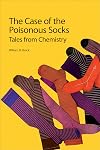
I picked up this book at the ACS National Meeting in Philadelphia in August, expecting that it would be a compilation of interesting chemistry anecdotes, organized around the chemistry involved. That is true of the first chapter, which is about the investigation of a dye that was causing skin reactions and even ulcers in the feet and ankles of some sock-wearers in the England of 1868. It was a puzzling case because it did not affect every person who bought the new socks. While we cannot be show more absolutely sure about what the dye was, William Brock describes the best evidence available, which leads to the probable conclusion that it was an acidic azo dye, possibly "Field's Orange", which reacted on when the wearer's perspiration was basic. This essay is different from nearly all others in the book because they are organized around personalities rather than phenonomena. Most of the persons who are foci have been active in Britain, with the exception of a notable few, such as Amedeo Avogadro, Fritz Haber, George Olah, August Kekule, and Justus von Liebig. Brock writes in a lively and convincing manner about some of the most colorful characters in chemistry - the famous ones, of course, but also some of those often neglected. Henry Armstrong was one of those, Armstrong was an inveterate writer of letters to Chemistry and Industry, most often complaining about some newfangled idea - such as electron arrows, ion dissociation, atom bombardment, or quantum mechanics. Armstrong also famously claimed that Ramsay had mistaken an allotrope of nitrogen for his noble gas, argon. Chemists with any interest at all in history will find real nuggets throughout "Poisonous Socks". While we were in Philadelphia, we visited the marvelous Barnes Institute art gallery there. I learned from Brock that Albert C. Barnes made his fortune from selling a bactericide named Argyrol. Barnes' enterprise later merged with Henry Crookes' company to become Crookes-Barnes Laboratories. Barnes' wealth multiplied fabulously, allowing him to become a world-renown art collector and philanthropist. show less
Lists
Chemistry (1)
You May Also Like


Associated Authors
Statistics
- Works
- 14
- Also by
- 1
- Members
- 285
- Popularity
- #81,814
- Rating
- 3.4
- Reviews
- 1
- ISBNs
- 28
- Languages
- 2