
Otis Webb Brawley
Author of How We Do Harm: A Doctor Breaks Ranks About Being Sick in America
About the Author
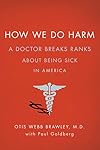
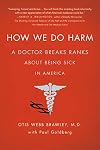
Dr. Otis Webb Brawley is the chief medical and scientific officer of the American Cancer Society and an oncologist with a dazzling clinical, research, and policy career. In How We Do Harm, he pulls back the curtain on how medicine is really practiced in America: doctors who select treatment based show more on payment they will receive, rather than on demonstrated scientific results; hospitals and pharmaceutical companies that seek out patients to treat even if they are not actually ill (but as long as their insurance will pay); a public primed to swallow the latest pill, no matter the cost; and rising health-care costs for unnecessary-and often unproven-treatments that we all pay for. A passionate view of medicine and the politics of illness in America with a deep understanding of health care today, How We Do Harm is a well-reasoned manifesto for change. show less
Image credit: American Cancer Society pressroom
Works by Otis Webb Brawley
Tagged
Common Knowledge
- Gender
- male
Members
Reviews
I don't know that I've ever read anything that came so close to summing up my years in health care. That said, there's one thing to get out of the way. The title is misleading (shocker). The appropriate title would be: Dr. Otis' Thoughts on a Broken Health Care System and His Career in Medicine. Back to reality. Since Dr. Otis is African-American, male, from a prestigious family, trained as an epidemiologist as well as a medical doctor, and a national healthcare leader, we clearly have show more different relationships to the health system. But we've both spent years in oncology, done stints in the ER and have met many of the same types of patients and unfortunately, have noticed many of the same types of problems, so minus the Dr. Otis part, there's a lot here that I will attest to as being absolutely, sadly, totally true.
It's an extremely readable book, particularly considering the health-care focus and non-fiction aspect. Granted, I've been in the field, but compared to I Contain Multitudes, which was excellent but idea-dense, this flew by. I was halfway through the book in a day. No doubt, Otis' co-writer, Goldberg, gets much of the credit. As a journalist, he's probably comfortable conveying his ideas at a generalist level.
Otis has worked for much of his career at Grady, an Atlanta hospital known for providing care to the poor. The chapter 'Chief Complaint' discusses a working-class woman, Edna, who comes in with a case of breast cancer so severe that her breast has actually fallen off (okay, this I have never heard of, being in a relatively high-healthcare-using population). He discusses the ins and outs of late stages versus early stage and points out that "Had she come early in the course of her disease, it would have cost about $30k to cure her. She could have remained a taxpayer. Her kids could have had a mother. Now, a cure is not an option. Still we’ll fight... give chemotherapy that will cost more than $150k, even though chances are that she will still die in less than two years." Otis talks about some of the specifics of breast cancer (see blog), but if you haven't heard it by now, 25% of Medicare costs are for people in their last year of life, so this concept of preventative versus "heroic" care is hardly unique.
'Brawleyism' is a short chapter on Otis Brawley, the author, and his family history as rebels. He then discusses the overall economics of the American health care system, and the fact that we're 50th in life expectancy world-wide. Again, this isn't new, but what is interesting is that he states "A rational system of health care has to have the ability to say no, and to have it stick." Very powerful stuff, and he shows how people that wanted "more" got it, basically from unscrupulous or less-caring doctors ("If I didn't do it, someone with less expertise would have"). He does talk about about how financial incentives are (were? The ACA did give incentives for these small practices to become part of big systems) built in for doctors who own/profit-share in labs, pharmacies, and imaging centers. At the very least, many have a professional and implicit bias where they believe their profession can help, although evidence may be slight.
'Cadillac Care' discusses how even people who have access to advanced care can be steered wrong. Brawley spills the beans on how bone marrow transplant programs for breast cancer were money-makers in the 1990s -20s until they were proved useless. This treatment was based based on four randomized trials, with less than 1500 people, one of which was found later to be fraudulent.
There are some similarities going on right now with CAR-T cell therapy, hailed as the next cure for cancer, only current studies are based on about 150 people. Though roughly a third of the people died. But half of them were cured (and half of those with complications), so full speed ahead.
'Red Juice' talks about a drug called Procrit, another potential lifesaver on the cancer scene back in the 2000s that turned out to be deadly (more on blog) Otis shares a bit about a woman's personal experience with it (I think she might have had 200 doses during her treatments) and how it was a money-maker, with $4.9 billion in sales in 2006 (so you can stop the bullshit about research costs, Amgen).
So it feels a little like same snake oil, different decade. People wonder how I'm old and cynical. It's because of this reading thing. I tell you, don't do it.
A couple of chapters--and again, an unfortunately common refrain in my experience--was the story of Mr. Huzjak, a 78-year old who had stage 4 non-small-cell-lung cancer (with a 5 year survival rate of about 6% for distant mets). He was comatose when brought in, but his children wanted "everything" done. The family practice doctor couldn't convince them. Otis couldn't convince them. He finally died after enduring pain (the only thing he reacted to) of LPs, CTs, chest tubes, tube feedings, a MI and chest compressions. End result: same. He passed on. Except it was traumatic for all concerned, particularly Mr. Huzjak. Oh, and expensive as well. I can't even tell you how upset I get with Americans and their concepts about death (see Death Panel Discussions, Health Care Reform). Personal example: my own mom is 74 and won't even talk about it like a reality, plan for it, whatever. Frigging baby boomers think they are going to live forever.
Some of his story is more about himself, particularly towards Part III, and about population statistics, epidemiology and preventative medicine. He uses the example of poor Ralph, who stopped in for a "free PSA screening" at a local mall, had a high PSA, had surgery, then radiation, then medical complications. (continued at blog)
TL; dr: The summation: use science-based medicine (not just evidence-based guidelines from societies, who have a vested interest); don't let your fears guide you into excessive treatment (as a patient or as a practitioner); preventative medicine costs less than curative; don't be afraid of death. There's many, many worse things than dying largely pain-free with people you love around you. Okay, I made that last part up. Otis didn't explicitly say that. He calls it "Rational Health Care."
Overall, I'd highly recommend it for people in hospitals and clinics. It should make practitioners think about what we recommend and why, and what and who is behind our recommendations. Likewise, as a consumer, it might help us understand that asking questions is good. Not just "have you done this before," or "what do other people do," but, "what does the evidence say?" Yes, there's an art to medicine, where careful assessment and questioning can get a good doctor far. A good practitioner should be able to couple that with cost-effectiveness and risk-analysis when it comes to exposure (if our cancer patients live, the odds of getting secondary cancers is quite high. We aren't helping with all the radioactive scans to 'reassure' on progress).
Reasons against five stars: It really should have left out the beginning bits of Otis' career, especially his training in epidemiology. I don't know that it was germane. There's a little tension in this story between the need to make it The Otis Story and the Breaks Ranks About Being Sick.
My blog has longer paragraphs with detail if you like, and links to stats. https://clsiewert.wordpress.com/2019/03/13/how-we-do-harm-a-doctor-breaks-ranks-... show less
It's an extremely readable book, particularly considering the health-care focus and non-fiction aspect. Granted, I've been in the field, but compared to I Contain Multitudes, which was excellent but idea-dense, this flew by. I was halfway through the book in a day. No doubt, Otis' co-writer, Goldberg, gets much of the credit. As a journalist, he's probably comfortable conveying his ideas at a generalist level.
Otis has worked for much of his career at Grady, an Atlanta hospital known for providing care to the poor. The chapter 'Chief Complaint' discusses a working-class woman, Edna, who comes in with a case of breast cancer so severe that her breast has actually fallen off (okay, this I have never heard of, being in a relatively high-healthcare-using population). He discusses the ins and outs of late stages versus early stage and points out that "Had she come early in the course of her disease, it would have cost about $30k to cure her. She could have remained a taxpayer. Her kids could have had a mother. Now, a cure is not an option. Still we’ll fight... give chemotherapy that will cost more than $150k, even though chances are that she will still die in less than two years." Otis talks about some of the specifics of breast cancer (see blog), but if you haven't heard it by now, 25% of Medicare costs are for people in their last year of life, so this concept of preventative versus "heroic" care is hardly unique.
'Brawleyism' is a short chapter on Otis Brawley, the author, and his family history as rebels. He then discusses the overall economics of the American health care system, and the fact that we're 50th in life expectancy world-wide. Again, this isn't new, but what is interesting is that he states "A rational system of health care has to have the ability to say no, and to have it stick." Very powerful stuff, and he shows how people that wanted "more" got it, basically from unscrupulous or less-caring doctors ("If I didn't do it, someone with less expertise would have"). He does talk about about how financial incentives are (were? The ACA did give incentives for these small practices to become part of big systems) built in for doctors who own/profit-share in labs, pharmacies, and imaging centers. At the very least, many have a professional and implicit bias where they believe their profession can help, although evidence may be slight.
'Cadillac Care' discusses how even people who have access to advanced care can be steered wrong. Brawley spills the beans on how bone marrow transplant programs for breast cancer were money-makers in the 1990s -20s until they were proved useless. This treatment was based based on four randomized trials, with less than 1500 people, one of which was found later to be fraudulent.
There are some similarities going on right now with CAR-T cell therapy, hailed as the next cure for cancer, only current studies are based on about 150 people. Though roughly a third of the people died. But half of them were cured (and half of those with complications), so full speed ahead.
'Red Juice' talks about a drug called Procrit, another potential lifesaver on the cancer scene back in the 2000s that turned out to be deadly (more on blog) Otis shares a bit about a woman's personal experience with it (I think she might have had 200 doses during her treatments) and how it was a money-maker, with $4.9 billion in sales in 2006 (so you can stop the bullshit about research costs, Amgen).
So it feels a little like same snake oil, different decade. People wonder how I'm old and cynical. It's because of this reading thing. I tell you, don't do it.
A couple of chapters--and again, an unfortunately common refrain in my experience--was the story of Mr. Huzjak, a 78-year old who had stage 4 non-small-cell-lung cancer (with a 5 year survival rate of about 6% for distant mets). He was comatose when brought in, but his children wanted "everything" done. The family practice doctor couldn't convince them. Otis couldn't convince them. He finally died after enduring pain (the only thing he reacted to) of LPs, CTs, chest tubes, tube feedings, a MI and chest compressions. End result: same. He passed on. Except it was traumatic for all concerned, particularly Mr. Huzjak. Oh, and expensive as well. I can't even tell you how upset I get with Americans and their concepts about death (see Death Panel Discussions, Health Care Reform). Personal example: my own mom is 74 and won't even talk about it like a reality, plan for it, whatever. Frigging baby boomers think they are going to live forever.
Some of his story is more about himself, particularly towards Part III, and about population statistics, epidemiology and preventative medicine. He uses the example of poor Ralph, who stopped in for a "free PSA screening" at a local mall, had a high PSA, had surgery, then radiation, then medical complications. (continued at blog)
TL; dr: The summation: use science-based medicine (not just evidence-based guidelines from societies, who have a vested interest); don't let your fears guide you into excessive treatment (as a patient or as a practitioner); preventative medicine costs less than curative; don't be afraid of death. There's many, many worse things than dying largely pain-free with people you love around you. Okay, I made that last part up. Otis didn't explicitly say that. He calls it "Rational Health Care."
Overall, I'd highly recommend it for people in hospitals and clinics. It should make practitioners think about what we recommend and why, and what and who is behind our recommendations. Likewise, as a consumer, it might help us understand that asking questions is good. Not just "have you done this before," or "what do other people do," but, "what does the evidence say?" Yes, there's an art to medicine, where careful assessment and questioning can get a good doctor far. A good practitioner should be able to couple that with cost-effectiveness and risk-analysis when it comes to exposure (if our cancer patients live, the odds of getting secondary cancers is quite high. We aren't helping with all the radioactive scans to 'reassure' on progress).
Reasons against five stars: It really should have left out the beginning bits of Otis' career, especially his training in epidemiology. I don't know that it was germane. There's a little tension in this story between the need to make it The Otis Story and the Breaks Ranks About Being Sick.
My blog has longer paragraphs with detail if you like, and links to stats. https://clsiewert.wordpress.com/2019/03/13/how-we-do-harm-a-doctor-breaks-ranks-... show less
I think this book could actually have been better written, but regardless, I think it's a vastly needed book and thesis, and one that's very overdue in the US. I've had years to formulate my own theories and conclusions about the entire interrelated industries, from pharmaceuticals, R&D, medical ethics, medical practices, insurance, Medicare/Medicaid, "socialized" medicine elsewhere in the world and American opposition to it, death, end-of-life care, doctor's treatment of patients, medical show more records, the diagnosis, the increasing lack of sympathy, empathy, or frankly giving a shit at all on the part of the vast majority of medical offices, if not hospitals as well, of having to be one's own advocate, of how litigation and governmental changes in various policies and guidelines have led to many doctors feeling practically paralyzed in terms of providing the help they once did for their patients, and the one that chaps my butt -- the total disregard for the Hippocratic oath on the part of more and more doctors. The healthcare industry in the US is a pathetic fraud, drowning in having sold its soul to far too many devils and I wish to hell I was able to return to other countries I have lived where they actually have sane and competent healthcare treatment readily available since fewer and fewer people in the US care while more and more get sicker and die. This book is a start is admitting the truth. There needs to be many more following until true, actual bipartisan, intelligent change is effected in this country. Otherwise, soon there will be little difference between the US and Ethiopia when it comes down to most middle and lower middle class Americans (and obviously those unfortunate enough to be lower down the rungs still). Book recommended, changes recommended, partisanship not recommended. show less
A truly excellent book dissecting the problems with the American medical system. Everybody knows that uninsured and underinsured people don't get care they need; Brawley focuses more on insured, informed people getting care they absolutely don't need, from men whose lives were ruined by overtreatment for prostate cancer that may have been harmless to women whose deaths may have been hastened by treatment that was supposed to improve their quality of life but might have caused their tumors to show more grow instead. In all these cases, Brawley points out, evidence existed to indicate that these treatments were a bad idea, or at least not necessarily a good one - but doctors made money off them, and patients demanded more action rather than less, and we all end up paying for it: most of us with higher insurance premiums and cost of care, and patients frequently with their lives.
Brawley is a scientist above all; he wants doctors to rely on evidence, not instinct or habit or the unconscious pressure of a $40,000 reimbursement, when making decisions for care. He seems a little optimistic for me; my instinct is to say that this book is a bad idea in the environment that produced the whole "death panels" argument against socialized health care, because he is saying that sometimes patients shouldn't get the care that they demand, because patients don't know what's best for them and their doctors should, and should be able to say no to irrational demands. I agree with him, but I think he might overestimate how easy it will be to change these patients' minds, especially when these patients are the people making the laws. show less
Brawley is a scientist above all; he wants doctors to rely on evidence, not instinct or habit or the unconscious pressure of a $40,000 reimbursement, when making decisions for care. He seems a little optimistic for me; my instinct is to say that this book is a bad idea in the environment that produced the whole "death panels" argument against socialized health care, because he is saying that sometimes patients shouldn't get the care that they demand, because patients don't know what's best for them and their doctors should, and should be able to say no to irrational demands. I agree with him, but I think he might overestimate how easy it will be to change these patients' minds, especially when these patients are the people making the laws. show less
I only read a handful of non-fiction a year because it can take me so long to get through it. My interests wanes or it just becomes tedious. This was not the case for this book. It keep my interest with real cases that demonstrate how the system is failing. I read it almost as fast as a fiction paperback once I started, about 3 days.
Otis Browley's writing has wit and heart. Along with that he points to real statistics and tells it like it is. Some of these things I already knew, like the show more kick backs doctors get for prescribing certain drugs and using their own facilities. Browley points out how it is done and how it is pushed by profit and greed but sometimes by well meaning groups.
While reading, you get to know the people Browley writes about, and you feel for them. There are descriptions that some people may feel squeamish about eg. a woman whose breast is so rotted by cancer it literally falls off, a man whose prostate radiation creates a hole between the rectum and bladder and causes infection from stool in the urine. but you get the gist early on and if you have a problem with the first story, about a poor black woman coming in for breast cancer, you should probably not read the book. There is much more story than the small graphic parts. All of the stories are engaging and really show how harm is done. That is the name of this book.
Most of the harm that Browley points to is backtracked to profits and greed in the system. Some harm is that doctors don't police their own; Instead it is a club that many continue on in their careers even after blatant abuse. He shows many very interesting cases that you can imagine happening to someone you know. Perhaps it has happened to someone you know.
I enjoyed how well he pointed out the problems in the broken system we have, at the same time as getting real stories told with emotion and at times humor. I wish I had the book with me as I would quote just one of the many witty things he says. Alas it was due at the library.
Anybody who is not too squeamish and is concerned about health, healthcare, an older relative, a sick friend, healthcare costs, the deficit in America, should read this book. We spend 52% more per person than the next country down on the list, and it is about the same for per capita of the GDP. The list is of OECD member countries but if you look at the 190 WHO member countries, it has very similar figures. Yet, we are 50th in life expectancy and around 45th in infant mortality. Healthcare is the biggest problem for a balanced budget but it is not due to paying for older people and their RXs on Medicare but paying too much for poor service, overpriced drugs and frequently unnecessary procedures and medications. We need control of costs and create some true over-site in the system. Browley points this out in a way that doesn't make your eyes cross nor make you feel like you are being preached to.
Otis Browley is a doctor and one of color. He points this out and how it has affected him and how it affects his patients. This in itself is a reason to read this book. He is personable in his writing and you feel like you know him after reading just a while. He doesn't use his title of Dr. but instead introduces himself as Otis Browley a doctor. While writing this review I kept his title from his name as he does in the book but truly Dr Otis Browley deserves the title. show less
Otis Browley's writing has wit and heart. Along with that he points to real statistics and tells it like it is. Some of these things I already knew, like the show more kick backs doctors get for prescribing certain drugs and using their own facilities. Browley points out how it is done and how it is pushed by profit and greed but sometimes by well meaning groups.
While reading, you get to know the people Browley writes about, and you feel for them. There are descriptions that some people may feel squeamish about eg.
Most of the harm that Browley points to is backtracked to profits and greed in the system. Some harm is that doctors don't police their own; Instead it is a club that many continue on in their careers even after blatant abuse. He shows many very interesting cases that you can imagine happening to someone you know. Perhaps it has happened to someone you know.
I enjoyed how well he pointed out the problems in the broken system we have, at the same time as getting real stories told with emotion and at times humor. I wish I had the book with me as I would quote just one of the many witty things he says. Alas it was due at the library.
Anybody who is not too squeamish and is concerned about health, healthcare, an older relative, a sick friend, healthcare costs, the deficit in America, should read this book. We spend 52% more per person than the next country down on the list, and it is about the same for per capita of the GDP. The list is of OECD member countries but if you look at the 190 WHO member countries, it has very similar figures. Yet, we are 50th in life expectancy and around 45th in infant mortality. Healthcare is the biggest problem for a balanced budget but it is not due to paying for older people and their RXs on Medicare but paying too much for poor service, overpriced drugs and frequently unnecessary procedures and medications. We need control of costs and create some true over-site in the system. Browley points this out in a way that doesn't make your eyes cross nor make you feel like you are being preached to.
Otis Browley is a doctor and one of color. He points this out and how it has affected him and how it affects his patients. This in itself is a reason to read this book. He is personable in his writing and you feel like you know him after reading just a while. He doesn't use his title of Dr. but instead introduces himself as Otis Browley a doctor. While writing this review I kept his title from his name as he does in the book but truly Dr Otis Browley deserves the title. show less
You May Also Like


Associated Authors
Statistics
- Works
- 1
- Members
- 191
- Popularity
- #114,254
- Rating
- 4.3
- Reviews
- 12
- ISBNs
- 4