
Kathleen Alcott
Author of Infinite Home
Works by Kathleen Alcott
Associated Works
6 Shorts 2017: The Finalists for the Sunday Times EFG Short Story Award (2017) — Contributor — 6 copies
Tagged
Common Knowledge
- Birthdate
- 1988
- Gender
- female
- Nationality
- USA
- Places of residence
- Brooklyn, New York, USA
- Associated Place (for map)
- New York, USA
Members
Reviews
4.6⭐
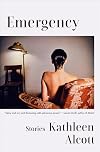
Emergency by Kathleen Alcott is an exceptionally well-written collection of seven short stories that revolve around themes of marriage and relationships, friendship, regret, conscience and guilt, poverty and addiction, and ambition and compromise to name a few.
The title story, “Emergency” (4/5) revolves around a woman whose life post her divorce creates a ripple in her former circle of acquaintances. In “Worship” (4.5/5) we meet a woman who moves halfway across the country only show more to discover that there was a lot she did know about the man with whom she was about to begin a new life. A woman finds a photograph of her late mother in a compromising position on display in a museum exhibit that compels her to reflect on her own life and choices in Natural Light (5/5). “A World Without Men” (5/5) follows a couple, married for over forty years, as they are forced to take stock of their relationship while forced to shelter in place during the pandemic. In “Part of the Country” (4/5) we follow a woman who strikes out on her own as she contemplates ending her marriage. In Reputation Management (4.5/5) a young woman experiences a moral dilemma when torn between her professional commitment and personal accountability. We follow her as she is plagued by feelings of guilt and finds it increasingly difficult to remain detached when she learns of a tragedy that she feels could have been prevented. The final story in this collection, Temporary Housing (5/5), revolves around the complex feelings of nostalgia, guilt and despair our protagonist, now a successful adult, experiences as she reflects on the friends and the life she has behind.
The women in these stories are flawed and real and the situations they find themselves in are believable and relatable as are their reactions. Not all of these characters might come across as particularly likable (some will find it easy to judge them) and while we may find some of their choices questionable and express disbelief at the poor judgment they exhibit in crucial moments, the author provides enough insight to allow us to attempt to understand them and their motivations. The tone of these stories varies between reflective, melancholic and defiant with a few moments of dry humor peppered in between.
Do not mistake these stories to be easy or light reading. Despite the length of these stories, the author achieves a level of depth to these characters and the storylines that I could not believe could be possible in a short story format. Each of these stories is thought-provoking, insightful and intense. Exquisite prose, complex characters and the varied themes that are explored make for an absorbing read.
My favorite quote:
“We’re born knowing everything, which is why we wail. We begin to forget, which is how we can stop. And here’s the thing: here’s the thing: here’s the strangest, loving thing, which helps until it doesn’t, which is kind until it’s wicked: At the end of your life, you’ve forgotten the most.” (Temporary Housing)
Many thanks to W.W. Norton & Company and NetGalley for the digital review copy. All opinions expressed in this review are my own. The book is due to be released on July 18, 2023.
Connect with me!
Instagram
My Blog
The StoryGraph show less
Emergency by Kathleen Alcott is an exceptionally well-written collection of seven short stories that revolve around themes of marriage and relationships, friendship, regret, conscience and guilt, poverty and addiction, and ambition and compromise to name a few.
The title story, “Emergency” (4/5) revolves around a woman whose life post her divorce creates a ripple in her former circle of acquaintances. In “Worship” (4.5/5) we meet a woman who moves halfway across the country only show more to discover that there was a lot she did know about the man with whom she was about to begin a new life. A woman finds a photograph of her late mother in a compromising position on display in a museum exhibit that compels her to reflect on her own life and choices in Natural Light (5/5). “A World Without Men” (5/5) follows a couple, married for over forty years, as they are forced to take stock of their relationship while forced to shelter in place during the pandemic. In “Part of the Country” (4/5) we follow a woman who strikes out on her own as she contemplates ending her marriage. In Reputation Management (4.5/5) a young woman experiences a moral dilemma when torn between her professional commitment and personal accountability. We follow her as she is plagued by feelings of guilt and finds it increasingly difficult to remain detached when she learns of a tragedy that she feels could have been prevented. The final story in this collection, Temporary Housing (5/5), revolves around the complex feelings of nostalgia, guilt and despair our protagonist, now a successful adult, experiences as she reflects on the friends and the life she has behind.
The women in these stories are flawed and real and the situations they find themselves in are believable and relatable as are their reactions. Not all of these characters might come across as particularly likable (some will find it easy to judge them) and while we may find some of their choices questionable and express disbelief at the poor judgment they exhibit in crucial moments, the author provides enough insight to allow us to attempt to understand them and their motivations. The tone of these stories varies between reflective, melancholic and defiant with a few moments of dry humor peppered in between.
Do not mistake these stories to be easy or light reading. Despite the length of these stories, the author achieves a level of depth to these characters and the storylines that I could not believe could be possible in a short story format. Each of these stories is thought-provoking, insightful and intense. Exquisite prose, complex characters and the varied themes that are explored make for an absorbing read.
My favorite quote:
“We’re born knowing everything, which is why we wail. We begin to forget, which is how we can stop. And here’s the thing: here’s the thing: here’s the strangest, loving thing, which helps until it doesn’t, which is kind until it’s wicked: At the end of your life, you’ve forgotten the most.” (Temporary Housing)
Many thanks to W.W. Norton & Company and NetGalley for the digital review copy. All opinions expressed in this review are my own. The book is due to be released on July 18, 2023.
Connect with me!
My Blog
The StoryGraph show less

I knocked a little bit off my rating because of a rocky start which almost caused me to abandon the book. I'm glad I didn't, though, as I ended up being completely absorbed in this story of 4 tenants in a converted Brooklyn brownstone and their elderly landlady. They all have problems relating to the world and to other people, but they've each managed to build a home in this building and to forge tentative connections to each other. When that home is threatened, their individual responses show more and journeys take them to unexpected places, both literally and figuratively.
"Oh, no. No need to bring home with me, dear. I know what it feels like." (page 274)
4 stars show less
"Oh, no. No need to bring home with me, dear. I know what it feels like." (page 274)
4 stars show less
‘’Skeletons of lovers slumped toward each other in embraces beneath the earth, almost parts of the roots but not quite assimilated, their backs, you could tell, broken. Sad-looking monsters with jugged triangles of teeth, trying to hold the too delicate in their large claws: pretty little boxes ruined, birds dead or dying.’’
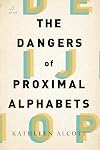
Ida tells a simple story. The tale of a childhood in the company of her friends, Jackson and James, her brothers in spirit. They are her partners in crime, in show more games, in joys and sorrows, during a childhood that Ida must face without her mother, supported by her gentle, wise father. And she falls in love with her best friend. She and Jackson must cope with a reality where demons are lurking, waiting to devour them and tear them to pieces.
This novel spoke to my heart in ways I never thought possible, given the fact that I am not exactly sentimental. Yet, I cried. I cried reading about the places of our childhood that have been fenced off and are now out of access. Either for safety reasons or because of monetary motives, the sites that disappear demonstrate what we love to call our ‘’coming of age’’. Ever the pessimist, I tend to call it our ‘’loss of innocence.’’ There is a deep, moving nostalgia in the story, the memories of long, lazy summer afternoons and golden autumn days, when everything was simple, life waiting to be discovered.
But now you need to help the one you love fight their demons. What can you do when they do not want to leave the world of their sleepwalking, but succumb to it with hungry frenzy?
This is a novel that offers an honest, realistic and respectful look on sexuality and the relationships we form at an early age, only for them to be thwarted once we become ‘’responsible’’ adults.
‘’Officially, I’m Ida, though Jackson has called me I as long as I remember. The symbolism is sickening. Even in the worst of it, even in phases where I spoke almost exclusively in monosyllables and guttural sounds and sat around lost in the worn flannel shirt he left behind, I would never bring this up to anyone: and he calls me I. Like I. As in myself.’’
My reviews can also be found https://theopinionatedreaderblog.wordpress.com/ show less
Ida tells a simple story. The tale of a childhood in the company of her friends, Jackson and James, her brothers in spirit. They are her partners in crime, in show more games, in joys and sorrows, during a childhood that Ida must face without her mother, supported by her gentle, wise father. And she falls in love with her best friend. She and Jackson must cope with a reality where demons are lurking, waiting to devour them and tear them to pieces.
This novel spoke to my heart in ways I never thought possible, given the fact that I am not exactly sentimental. Yet, I cried. I cried reading about the places of our childhood that have been fenced off and are now out of access. Either for safety reasons or because of monetary motives, the sites that disappear demonstrate what we love to call our ‘’coming of age’’. Ever the pessimist, I tend to call it our ‘’loss of innocence.’’ There is a deep, moving nostalgia in the story, the memories of long, lazy summer afternoons and golden autumn days, when everything was simple, life waiting to be discovered.
But now you need to help the one you love fight their demons. What can you do when they do not want to leave the world of their sleepwalking, but succumb to it with hungry frenzy?
This is a novel that offers an honest, realistic and respectful look on sexuality and the relationships we form at an early age, only for them to be thwarted once we become ‘’responsible’’ adults.
‘’Officially, I’m Ida, though Jackson has called me I as long as I remember. The symbolism is sickening. Even in the worst of it, even in phases where I spoke almost exclusively in monosyllables and guttural sounds and sat around lost in the worn flannel shirt he left behind, I would never bring this up to anyone: and he calls me I. Like I. As in myself.’’
My reviews can also be found https://theopinionatedreaderblog.wordpress.com/ show less
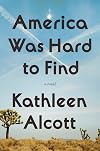
What drives people to achieve greatness or infamy? In America Was Hard to Find, Kathleen Alcott tells the story of a brief love affair and the child who resulted. It beings in the late Fifties where Vincent Kahn, a married jet pilot marking time while hoping to join the space program has an affair with a young woman named Fay Wren. Fay does not tell him she is pregnant, aware of the harm they have done Vincent’s wife and, perhaps, realizing how unworthy he is. Strangely both of them will show more become famous, one for walking on the moon and the other for political terrorism.
The story is told in three parts. First the love story, then the story of Vincent and Fay achieving the fame and infamy that seem fated. Fay raises their child Wright in precarity, with the future uncertain, often on the run and underground. Vincent achieves his goal, but seems to be emptied out, an empty man.
Wright grows up longing for normalcy. One of his big rebellions against his mom is going to a public school for a day. He gets that normalcy when he goes to live with his grandparents, but it’s not all he hoped for. No one has ever told him who his father is, but time and again, people tell him he looks like the famous astronaut, the first man who walked on the moon. He suspects they may be on to something He seems alienated from himself, even as he begins his own self-discovery in the San Francisco of the Eighties.
I liked America Was Hard to Find a lot even though it left me with so many questions. I cared about Fay and Wright and even Vincent. I wondered how differently their lives would have progressed if they had been honest about their emotions. That is what I want from a book, the questions and sometimes the anger about how a character behaves. I was angry with Vincent, Fay, and even Wright.
Alcott does a great job of setting the stage in terms of the history and the social milieu. She based Shelter on Weather Underground and did a lot of research and interviews with astronauts to get an authentic sense of who Vincent would be. The main characters seem emotionally broken and I wonder if that is the point, that they cannot be so obsessed with their causes if they were not broken.
America Was Hard to Find will be released on May 14th. I received an e-galley from the publisher through Edelweiss.
America Was Hard to Find at Ecco Books | Harper Collins
Kathleen Alcott author site
★★★★
https://tonstantweaderreviews.wordpress.com/2019/05/10/9780062662521/ show less
The story is told in three parts. First the love story, then the story of Vincent and Fay achieving the fame and infamy that seem fated. Fay raises their child Wright in precarity, with the future uncertain, often on the run and underground. Vincent achieves his goal, but seems to be emptied out, an empty man.
Wright grows up longing for normalcy. One of his big rebellions against his mom is going to a public school for a day. He gets that normalcy when he goes to live with his grandparents, but it’s not all he hoped for. No one has ever told him who his father is, but time and again, people tell him he looks like the famous astronaut, the first man who walked on the moon. He suspects they may be on to something He seems alienated from himself, even as he begins his own self-discovery in the San Francisco of the Eighties.
I liked America Was Hard to Find a lot even though it left me with so many questions. I cared about Fay and Wright and even Vincent. I wondered how differently their lives would have progressed if they had been honest about their emotions. That is what I want from a book, the questions and sometimes the anger about how a character behaves. I was angry with Vincent, Fay, and even Wright.
Alcott does a great job of setting the stage in terms of the history and the social milieu. She based Shelter on Weather Underground and did a lot of research and interviews with astronauts to get an authentic sense of who Vincent would be. The main characters seem emotionally broken and I wonder if that is the point, that they cannot be so obsessed with their causes if they were not broken.
America Was Hard to Find will be released on May 14th. I received an e-galley from the publisher through Edelweiss.
America Was Hard to Find at Ecco Books | Harper Collins
Kathleen Alcott author site
★★★★
https://tonstantweaderreviews.wordpress.com/2019/05/10/9780062662521/ show less
Lists
Awards


You May Also Like


Associated Authors
Statistics
- Works
- 4
- Also by
- 3
- Members
- 542
- Popularity
- #45,992
- Rating
- 3.5
- Reviews
- 31
- ISBNs
- 36

