
Delmer Daves (1904–1977)
Author of An Affair to Remember [1957 film]
About the Author
Works by Delmer Daves
20th Century Fox Studio Classics Collection: Volume 4 (The Agony and the Ecstasy / The Bible: In the Beginning / Demetrius and the Gladiators / The Robe) (2010) — Director — 18 copies
TCM Greatest Classic Films Collection: War Collection Battlefront Asia (2009) — Director; Director — 14 copies
The Warner Brothers Romance Classics Collection: Palm Springs Weekend (1963) / Parrish (1961) / Rome Adventure (1962) / Susan Slade (1961) (2013) — Director — 4 copies
Bird of Paradise [1961 film] 3 copies
Hombre [and] Broken Arrow (Double Feature Video) — Director — 1 copy
The Red House 1 copy
Edward G. Robinson Triple Feature Movie Marathon: The Red House/Scarlet Street/The Stranger (2002) 1 copy
Biblical Classics Quadruple Feature: The Bible In The Beginning / The Greatest Story Ever Told / The Robe / Demetrius and the Gladiators (2017) — Director — 1 copy
4 Western Film Favorites: Undefeated / Broken Arrow / The Big Trail / In Old Ariona (2014) — Director — 1 copy
Kings Go Forth HD 1 copy
Epic Film Collection: David & Bathsheba / Alexander the Great / Demetrius and the Gladiators — Director — 1 copy
Movie Classics Collector's Edition: Gangsters — Director — 1 copy
Associated Works
Tagged
Common Knowledge
- Canonical name
- Daves, Delmer
- Legal name
- Daves, Delmer Lawrence
- Birthdate
- 1904-07-24
- Date of death
- 1977-08-17
- Gender
- male
- Nationality
- USA
- Birthplace
- San Francisco, California, USA
- Place of death
- La Jolla, California, USA
- Associated Place (for map)
- California, USA
Members
Discussions
Delmer Daves estate in George Macy devotees (April 2024)
Reviews
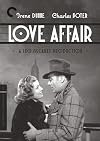
The depth and charm of Leo McCarey’s 1939 film, Love Affair places it a notch above most love stories. It is easy to understand why he himself felt this version had the edge over his own remake, starring Cary Grant and Deborah Kerr. Irene Dunne really shines in this film, giving one of her finest performances. A fine script by Delmer Daves and Donald Ogden Stewart takes us from sparkling wit to bittersweet love with ease, thanks to McCarey’s fine direction and the performances of Dunne show more and Charles Boyer.
Terry McKay (Dunne) and Michel Marnet (Boyer) are on an ocean cruise aboard the S.S. Napoli, both contemplating their impending marriages; she to a decent fellow who is more a friend than anything, and he to a very wealthy industrial heiress who doesn't excite him much but can afford his playboy lifestyle. They meet by chance — or fate — and soon must avoid prying eyes when a charming romance begins taking shape. His engagement, in fact, has been touted profusely in all the society papers.
Dunne is a witty hoot as the very American girl from New York and Boyer gives a very charming performance as Michel Marnet, a man squandering his talents by living in the moment. Terry gets a glimpse of what Michael might be when she meets his charming elderly grandmother in a beautiful rose-covered villa in Porto Santo, Madeira. The chapel there moves her deeply and she connects with his grandmother, who fears there will soon be a price to pay for her grandson's way of life.
The couple promise to meet in six months on top of the Empire State building at 5:00 to see if Michel can earn a living through his painting and be worthy to ask her hand in marriage. If you’ve seen the remake, which nearly everyone has, you know one of them doesn’t show up, but only due to tragic circumstances. An unexpected sighting, and a chain of events involving a painting will lead Michael to the truth, and perhaps a second chance at romantic heaven.
A love story of rare beauty, the original version of this film is a neglected treasure in American cinema. The lovely Irene Dunne gets to sing “Spring in My Heart” in this film, and the Oscar nominated “Wishing” is sung by her group of orphans. A nice score by the always reliable — and very underrated — Roy Webb enhances the mood of another RKO classic. A truly memorable romance with great charm. show less
Terry McKay (Dunne) and Michel Marnet (Boyer) are on an ocean cruise aboard the S.S. Napoli, both contemplating their impending marriages; she to a decent fellow who is more a friend than anything, and he to a very wealthy industrial heiress who doesn't excite him much but can afford his playboy lifestyle. They meet by chance — or fate — and soon must avoid prying eyes when a charming romance begins taking shape. His engagement, in fact, has been touted profusely in all the society papers.
Dunne is a witty hoot as the very American girl from New York and Boyer gives a very charming performance as Michel Marnet, a man squandering his talents by living in the moment. Terry gets a glimpse of what Michael might be when she meets his charming elderly grandmother in a beautiful rose-covered villa in Porto Santo, Madeira. The chapel there moves her deeply and she connects with his grandmother, who fears there will soon be a price to pay for her grandson's way of life.
The couple promise to meet in six months on top of the Empire State building at 5:00 to see if Michel can earn a living through his painting and be worthy to ask her hand in marriage. If you’ve seen the remake, which nearly everyone has, you know one of them doesn’t show up, but only due to tragic circumstances. An unexpected sighting, and a chain of events involving a painting will lead Michael to the truth, and perhaps a second chance at romantic heaven.
A love story of rare beauty, the original version of this film is a neglected treasure in American cinema. The lovely Irene Dunne gets to sing “Spring in My Heart” in this film, and the Oscar nominated “Wishing” is sung by her group of orphans. A nice score by the always reliable — and very underrated — Roy Webb enhances the mood of another RKO classic. A truly memorable romance with great charm. show less

“Dark Passage" is a hugely underrated and stylish film-noir that sees Vincent Parry (Humphrey Bogart), as an innocent man falsely convicted of killing his wife, breaking out of San Quentin in an effort to prove his innocence... or perhaps to get revenge. He’s assisted by the beautiful Irene Jansen (Lauren Bacall) who may have her own particular motivations in regard Parry. Directed with a real flourish by Delmer Daves who shoots the first forty minutes of the film from Parry’s show more perspective, which means that we don’t actually see Bogart’s face until well into the movie. That Daves manages to keep this approach riveting says much about his skilful direction and Bogart’s power as an actor. The views of 1940s San Francisco and the Golden Gate Bridge are splendidly captured giving a real feeling of place and locale. Sidney Hickox's stylish cinematography adds finesse to look of the city as it does to the interiors and in particularly to Irene’s apartment and it modernist look. Franz Waxman's swing score is also a powerful presence in the film adding to that palpable sense of time and place. Bogart is excellently supported by the rest of the cast - the radiant Bacall who easily holds her own with her powerful leading man. Perhaps the strongest performance, however, is from Agnes Moorehead who is suitably grating as Parry's nemesis, the twisted Madge Rapf. A great performance that helps elevate “Dark Passage” into the pantheon of classic noir. show less
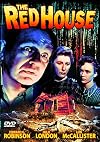
Delmer Daves wrote and directed this engrossing film about a long-hidden secret in the woods haunting a young farm girl’s happiness and future. Beautiful cinematography from Bery Glennon and an atmospheric score from Miklos Rozsa set a very special mood as young rural love struggles against buried secrets in the woods.
Daves does an excellent job balancing the tender romance of a lonely young girl with a noir drama of stark intensity. Allene Roberts stands out as the sweet young girl trying show more to blossom, giving a memorable performance. Lon McCallister is also quite good as the young farm boy who comes to slowly care for her against his shallow but sultry girlfriend’s (Julie London) wishes. The centerpiece of the film is an ominous red house deep in the woods that holds a paralyzing fear for Edward G. Robinson. Sort of a cross between Our Town and The Strange Love of Martha Ivers in mood, it all works somehow, creating a memorable film experience.
Daves captures both the sweetness and beauty of country life using Glennon’s camera and a lovely score by Rozsa to frame young Meg. Allene Roberts is the real star of this film despite fine performances from screen veterans like Robinson and Judith Anderson. She gives her character depth and sweetness that wins over the viewer, who hopes that it is enough to win over Nath (Lon McCallister).
Pete Morgan (Edward G. Robinson) hires Nath on as help to Meg’s delight, but soon Pete’s strange and paranoid behavior regarding the woods intrudes on all their lives. Only his sister, Ellen (Judith Anderson) knows the truth, and she isn’t talking. Anderson is fine as a woman who has sacrificed any happiness she might once have had with the town doctor to stay on the farm with her brother and help raise the adopted Meg. Warnings and even threats from Pete about the woods and the red house only heighten the curiosity of Nath and Meg, and of course the viewer.
A rural atmosphere and innocent romance complicated by a dark mystery make for engrossing viewing. Julie London is good as Nath’s shallow and fickle girlfriend, lured by the danger of Teller (Rory Calhoun), the guy Pete has hired to keep everyone away from the red house and those ominous woods that scream.
Fine performances, good direction, and a very special mood augment a good story. Allene Roberts is wonderful here and it is her performance as the sweet Meg viewers will remember most. A forgotten classic. show less
Daves does an excellent job balancing the tender romance of a lonely young girl with a noir drama of stark intensity. Allene Roberts stands out as the sweet young girl trying show more to blossom, giving a memorable performance. Lon McCallister is also quite good as the young farm boy who comes to slowly care for her against his shallow but sultry girlfriend’s (Julie London) wishes. The centerpiece of the film is an ominous red house deep in the woods that holds a paralyzing fear for Edward G. Robinson. Sort of a cross between Our Town and The Strange Love of Martha Ivers in mood, it all works somehow, creating a memorable film experience.
Daves captures both the sweetness and beauty of country life using Glennon’s camera and a lovely score by Rozsa to frame young Meg. Allene Roberts is the real star of this film despite fine performances from screen veterans like Robinson and Judith Anderson. She gives her character depth and sweetness that wins over the viewer, who hopes that it is enough to win over Nath (Lon McCallister).
Pete Morgan (Edward G. Robinson) hires Nath on as help to Meg’s delight, but soon Pete’s strange and paranoid behavior regarding the woods intrudes on all their lives. Only his sister, Ellen (Judith Anderson) knows the truth, and she isn’t talking. Anderson is fine as a woman who has sacrificed any happiness she might once have had with the town doctor to stay on the farm with her brother and help raise the adopted Meg. Warnings and even threats from Pete about the woods and the red house only heighten the curiosity of Nath and Meg, and of course the viewer.
A rural atmosphere and innocent romance complicated by a dark mystery make for engrossing viewing. Julie London is good as Nath’s shallow and fickle girlfriend, lured by the danger of Teller (Rory Calhoun), the guy Pete has hired to keep everyone away from the red house and those ominous woods that scream.
Fine performances, good direction, and a very special mood augment a good story. Allene Roberts is wonderful here and it is her performance as the sweet Meg viewers will remember most. A forgotten classic. show less

People are held hostage at a desert diner.
Good. It's fun, despite being a tragedy with a central character disposed to give philosophical speeches. I've seen Bogart in more good movies than I can remember, but I think this is the first time I've seem him really improve a movie.
Good. It's fun, despite being a tragedy with a central character disposed to give philosophical speeches. I've seen Bogart in more good movies than I can remember, but I think this is the first time I've seem him really improve a movie.
Awards


You May Also Like


Associated Authors
Statistics
- Works
- 52
- Also by
- 4
- Members
- 1,210
- Popularity
- #21,233
- Rating
- 3.6
- Reviews
- 20
- ISBNs
- 80
- Languages
- 2