
Seamus Deane (1940–2021)
Author of Reading in the Dark
About the Author
Seamus Deane is Professor of English and Donald and Marilyn Keough Professor of Irish Studies in the Keough Institute for Irish Studies, University of Notre Dame.
Works by Seamus Deane
Associated Works
A Portrait of the Artist as a Young Man (1916) — Contributor, some editions — 23,504 copies, 251 reviews
Amid Our Troubles: Irish Versions of Greek Tragedy (Plays and Playwrights) (2002) — Contributor — 4 copies
Tagged
Common Knowledge
- Canonical name
- Deane, Seamus
- Birthdate
- 1940-02-09
- Date of death
- 2021-05-12
- Gender
- male
- Organizations
- University of Notre Dame
- Nationality
- Ireland
- Birthplace
- Derry, Northern Ireland, UK
- Places of residence
- Indiana, USA
Derry, Northern Ireland, UK
Dublin, Ireland
Members
Reviews
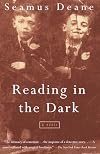
Twenty-six years of sporadic journal entries from a young man growing up in post WWII Northern Ireland eventually come together to form a tapestry detailing the joys and sufferings of one Catholic family saddled with a horrible secret. Wonderfully written with candour and touches of humour to offset its more tragic passages.
Deane has produced a number of non-fiction works and this is his only novel (1996) which is a great pity because it is a very fine; it won a number of awards and I would say they are well deserved.
The story, told through the eyes of an unnamed boy, stretches in vignettes from 1945-1971; it almost reads like a memoir, but it is not. Deane reminds me of John McGahern, another Irish writer whom I like very much, in the sense that he explores the extraordinary in ordinary life, and he weaves it show more with a gentle, deft hand, with empathy, with wonderful descriptions (“…we looked blindly at the shivery furrows the wind opened in the hissing corn…”), wonderful characters--- people just living their lives, making choices voluntarily or, more often, involuntarily as life and circumstances impose. It is a novel about the complications of family love and the depths that it can have. It is about knowing and not knowing, about how different people understand a particular incident or happening quite differently from others because everyone has a different angle and no one knows everything. Or it is about knowing and suppressing knowledge because of the consequences of truth. It is about secrets learned, secrets told, secrets suppressed, and the corrosive effects of either course of action. It is about memory: “Hauntings are, in their way, very specific. Everything has to be exact, even the vaguenesses. My family’s history was like that too. It came to me in bits, from people who rarely recognized all they had told. Some of the things I remember, I don’t really remember. I’ve just been told about them so now I feel I remember them, and want to the more because it is so important for to others to forget them.”
Deane, like McGahern, has the ability to capture a mood, a moment, a lifetime in an economy of words and descriptions: “At that thought, they would weep. ‘Unforgiven, unforgiven’, they would cry. I would have a sudden sense of the scale of the lives these women lived as I watched them dab at their eyes, or sit with their hands over their faces, their shoes wrinkled and turned inward toward one another, in a circle. The dimensions of that other world opened around me and my stomach contracted. It was no use saying to myself that I believed none of this. There it was, a vast universe in which Grandfather’s spirit moved lightless, for ever extinct, for ever alive to its own extinction, while his daughters mourned within the tiny globe of this kitchen and the world he had so austerely left. They would sit silent then, while the lids of the saucepans trembled on the range and the bubbling water gargled.” The wrinkled shoes turned inwards, the saucepans trembling and the water gargling: this is perfect.
It is also a novel about Ireland. I don’t think those of us who never lived it can really grasp what it meant to live in a society, in a town, in a neighbourhood, where religion and politics and history so completely define and dominate one’s existence. A place where going to the police (if you were Catholic) was the most traitorous thing you could do. A place of generational curses, and ghosts that walk and torment the living, and priests whose hair turns white overnight as they fight the devil in what is described as almost hand-to-hand combat. A limiting world but one so alive and teeming with emotions and relations.
Deane also writes with a great sense of humour. The description of our young protagonist receiving sex education from a celibate priest is hilarious: “ A moment later he said ‘vagina’ and was asking me if I knew that word, and what it was. I knew what it must be but I couldn’t envisage it and when he asked me if I knew where it was, I gave a slightly hysterical smile and said yes, yes, I did, but I was telling myself, no, you don’t, not really, ask him, you stupid shit, ask him, that’s what you’re here for, but I couldn’t do anything except stare at him….”
This is a very fine novel. Strongly recommended. show less
The story, told through the eyes of an unnamed boy, stretches in vignettes from 1945-1971; it almost reads like a memoir, but it is not. Deane reminds me of John McGahern, another Irish writer whom I like very much, in the sense that he explores the extraordinary in ordinary life, and he weaves it show more with a gentle, deft hand, with empathy, with wonderful descriptions (“…we looked blindly at the shivery furrows the wind opened in the hissing corn…”), wonderful characters--- people just living their lives, making choices voluntarily or, more often, involuntarily as life and circumstances impose. It is a novel about the complications of family love and the depths that it can have. It is about knowing and not knowing, about how different people understand a particular incident or happening quite differently from others because everyone has a different angle and no one knows everything. Or it is about knowing and suppressing knowledge because of the consequences of truth. It is about secrets learned, secrets told, secrets suppressed, and the corrosive effects of either course of action. It is about memory: “Hauntings are, in their way, very specific. Everything has to be exact, even the vaguenesses. My family’s history was like that too. It came to me in bits, from people who rarely recognized all they had told. Some of the things I remember, I don’t really remember. I’ve just been told about them so now I feel I remember them, and want to the more because it is so important for to others to forget them.”
Deane, like McGahern, has the ability to capture a mood, a moment, a lifetime in an economy of words and descriptions: “At that thought, they would weep. ‘Unforgiven, unforgiven’, they would cry. I would have a sudden sense of the scale of the lives these women lived as I watched them dab at their eyes, or sit with their hands over their faces, their shoes wrinkled and turned inward toward one another, in a circle. The dimensions of that other world opened around me and my stomach contracted. It was no use saying to myself that I believed none of this. There it was, a vast universe in which Grandfather’s spirit moved lightless, for ever extinct, for ever alive to its own extinction, while his daughters mourned within the tiny globe of this kitchen and the world he had so austerely left. They would sit silent then, while the lids of the saucepans trembled on the range and the bubbling water gargled.” The wrinkled shoes turned inwards, the saucepans trembling and the water gargling: this is perfect.
It is also a novel about Ireland. I don’t think those of us who never lived it can really grasp what it meant to live in a society, in a town, in a neighbourhood, where religion and politics and history so completely define and dominate one’s existence. A place where going to the police (if you were Catholic) was the most traitorous thing you could do. A place of generational curses, and ghosts that walk and torment the living, and priests whose hair turns white overnight as they fight the devil in what is described as almost hand-to-hand combat. A limiting world but one so alive and teeming with emotions and relations.
Deane also writes with a great sense of humour. The description of our young protagonist receiving sex education from a celibate priest is hilarious: “ A moment later he said ‘vagina’ and was asking me if I knew that word, and what it was. I knew what it must be but I couldn’t envisage it and when he asked me if I knew where it was, I gave a slightly hysterical smile and said yes, yes, I did, but I was telling myself, no, you don’t, not really, ask him, you stupid shit, ask him, that’s what you’re here for, but I couldn’t do anything except stare at him….”
This is a very fine novel. Strongly recommended. show less
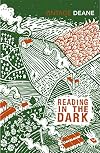
This is a fine Northern Irish novel that was a real grower. Set in Nationalist Derry during the 40s and 50s, at first this book reads like a series of vignettes in a young Irish Catholic boy's life, but as the novel gathers pace a connection begins to emerge between what had initially seemed like disconnected snapshots of growing up and the truth behind a series of family tragedies relating back to the the divided politics of a new Northern Ireland beginning to emerge.
There are a number of show more recommendations on LT linking this to some of Frank McCourt's books, but beyond them both being set in Ireland during a certain era the similarities stop there for me. Whilst McCourt's Angela's Ashes is firmly in the misery lit territory of impoverished Ireland, Reading in the Dark is a window to Catholic Nationalist sentiment before The Troubles and dark family secrets born out of loyalty to 'the cause'.
This novel really evoked a sense of a forgotten rural Northern Ireland for me. Whether it would touch readers outside of Northern Ireland as much I can't say, but for me this is a work of tragic loss conveyed through pitch perfect prose.
4 stars - devastating yet so deftly sewn together. show less
There are a number of show more recommendations on LT linking this to some of Frank McCourt's books, but beyond them both being set in Ireland during a certain era the similarities stop there for me. Whilst McCourt's Angela's Ashes is firmly in the misery lit territory of impoverished Ireland, Reading in the Dark is a window to Catholic Nationalist sentiment before The Troubles and dark family secrets born out of loyalty to 'the cause'.
This novel really evoked a sense of a forgotten rural Northern Ireland for me. Whether it would touch readers outside of Northern Ireland as much I can't say, but for me this is a work of tragic loss conveyed through pitch perfect prose.
4 stars - devastating yet so deftly sewn together. show less
Snapshots of memory are displayed by the Northern Irish narrator between his childhood from 1945 into adulthood in 1971 as he explores a family tension of secrets, closed and open, against the backdrop of the ever present Troubles. In often luminous writing, the tender despair of human frailties in a world without heroes or villains is gently presented. The story meanders at times, like all family stories, and the reveal is not particularly revealing. At the heart of the story is the idea of show more conflicted loyalties and the collateral damages they can generate: the truth can set one person free but sometimes only after it has driven another person into a permanent cage. show less
Lists
Awards


You May Also Like


Associated Authors
Statistics
- Works
- 28
- Also by
- 12
- Members
- 1,547
- Popularity
- #16,645
- Rating
- 3.8
- Reviews
- 20
- ISBNs
- 74
- Languages
- 14