
B. B. Warfield (1851–1921)
Author of The Inspiration and Authority of the Bible
About the Author
Series
Works by B. B. Warfield
Christology and Criticism (The Works of Benjamin B. Warfield, Volume 3) (1932) — Author — 110 copies
The Works of Benjamin B. Warfield, Vol. 8: Perfectionism Part 2 (2000) — Author — 76 copies, 1 review
Are They Few That Be Saved? 18 copies
The Confessional Presbyterian: A Journal for Discussion of Presbyterian Doctrine & Practice (2010) 11 copies
The Prodigal Son 5 copies
Biblical And Foundations. With An Introduction By D. Martyn Lloyd Jones. Hardback In Jacket : 1958 (1958) 5 copies
On the Seminary 5 copies
Christianity and Our Times 5 copies
Edwards and the New England Theology 5 copies
On the Sacraments 5 copies
On the Person and Work of Christ 5 copies
On Calvin and Calvinism 5 copies
On Providence and Predestination 5 copies
Person and Work of Christ 3 copies
The Lord of Glory 3 copies
What is Calvinism? 2 copies
The Journal Writings of B. B. Warfield, Volume 2: "Miserable Sinner" Christianity and Christian Perfectionism (2018) 2 copies
BIBLE DOCTRINES 2 copies
Calvin and the Reformation: Four Studies by Émile Doumergue, August Lang, Herman Bavinck, Benjamin B. Warfield (2015) 2 copies
Inspiration & Authority of the Bible 2 copies
Warfield: Selected Works 1 copy
Critical Reviews - Volume 10 1 copy
The Allotment of Time to the Several Professors. Where Does the Responsibility Lie? An Inquiry. 1 copy
Christian Baptism. 1 copy
Collected Works of BB Warfield, Volume 2 (Annotated) (Trinity Classical Library, BB Warfield) (2013) 1 copy
Presbyterianism 1 copy
Calvin as a theologian 1 copy
Articles on the Holy Spirit 1 copy
Associated Works
Institutes of the Christian Religion (1536) — Introduction, some editions — 8,418 copies, 34 reviews
O Love That Will Not Let Me Go: Facing Death with Courageous Confidence in God (2011) — Contributor — 243 copies, 2 reviews
The Trials of Theology: Becoming a 'Proven Worker' in a Dangerous Business (2010) — Contributor — 196 copies, 2 reviews
Tagged
Common Knowledge
- Canonical name
- Warfield, B. B.
- Legal name
- Warfield, Benjamin Breckinridge
- Other names
- Warfield, Benjamin B.
- Birthdate
- 1851-11-05
- Date of death
- 1921-02-16
- Gender
- male
- Education
- Princeton University
Princeton Seminary - Occupations
- professor
theologian
college president - Organizations
- Princeton Theological Seminary
Western Theological Seminary (now Pittsburgh Theological Seminary) - Relationships
- Breckinridge, Robert J. (grandfather)
Warfield, Ethelbert Dudley (brother)
Windsor, Wallis Warfield (fourth cousin, twice removed) - Nationality
- USA
- Birthplace
- Kentucky, USA
- Places of residence
- Concord, Kentucky, USA
Dayton, Ohio, USA
Germany
Baltimore, Maryland, USA
Pittsburgh, Pennsylvania, USA
Princeton, New Jersey, USA - Place of death
- Princeton, New Jersey, USA
- Map Location
- USA
Members
Reviews
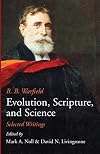
Summary: A collection of the writings of B.B. Warfield consisting of lectures, articles, and reviews showing his engagement with evolutionary writers and his conviction that scripture and science need not be in conflict.
B. B. Warfield (1851-1921) was know as a staunch advocate of the inspiration, infallibility, and authority of the Bible, and as a "Princeton theologian," trained by Charles Hodge. What is lesser known was that he closely followed the scientific literature of his day show more concerning the developing theory of evolution and did not see that evolution and scripture inherently in conflict.
Mark Noll and David N. Livingstone have collected the writings of Warfield on the subject of evolutionary science. This includes lectures, articles, and excerpts from Warfield's own writings as well as numerous reviews of articles and books by various writers on the subject. There are several things that impress me about Warfield:
1. He both affirms the truthfulness of the Genesis accounts but is open to interpretations that do not insist on literal days, or use genealogical records to date when Adam was created.
2. He insists on ex nihilo creation of the stuff of the cosmos, allows for providentially guided development, but insists on the creation of the human soul.
3. His views develop over the course of his life. At one point, while allowing for evolutionary development under God's providence, he advocated mediate creation. Later, after studying Calvin, he abandoned the idea of mediate creation and allowed for development and speciation.
4. At the same time, he was willing to both affirm and critique various aspects of the writers of his day. His big issues were not evolution per se, but rather evolutionism that denied God's providential involvement and the idea of randomness that denied teleology, the evidence of purpose in the development of life.
5. He is, if anything more challenging in his remarks on theological writers when they deviate from orthodoxy than with science writers.
6. He is unwilling to accept the fact/value dichotomy. He insists that theology and biology are both sciences, both are concerned with facts. Theology cannot be relegated to the subjective world of faith and emotion.
The editors provide an excellent essay on Warfield as a "conservative evolutionist." Also each of the works are preceded by a brief summary.
It is sad that Andrew Dickson White's History of the Warfare of Science with Theology shaped the public conception about Christianity's response to evolutionary theory and science more generally, one sadly that even many Christians have adopted. Warfield called White's work "special pleading," projecting present controversies into a past when Christians were on the forefront of science and saw their investigations as giving glory to God, studying his revelation in the books of scripture and nature. It is sad that Warfield's ideas did not gain greater currency in the culture and in the church.
At very least, this collection suggests that thoughtful Christians with a high view of scripture need not be at war with science. The state of evolutionary theory is far advanced from the time of Warfield and the discussions concern discarded aspects of the theory. Nevertheless, the model of respectful engagement, a theologian abreast with scientific research, a foundation of conviction with an openness to grow all commend Warfield as a model for those who would engage discussions between scripture and science. Wipf & Stock is to be commended for re-printing this work and keeping it in circulation.
________________________________
Disclosure of Material Connection: I received a complimentary review copy of this book from the publisher. The opinions I have expressed are my own. show less
B. B. Warfield (1851-1921) was know as a staunch advocate of the inspiration, infallibility, and authority of the Bible, and as a "Princeton theologian," trained by Charles Hodge. What is lesser known was that he closely followed the scientific literature of his day show more concerning the developing theory of evolution and did not see that evolution and scripture inherently in conflict.
Mark Noll and David N. Livingstone have collected the writings of Warfield on the subject of evolutionary science. This includes lectures, articles, and excerpts from Warfield's own writings as well as numerous reviews of articles and books by various writers on the subject. There are several things that impress me about Warfield:
1. He both affirms the truthfulness of the Genesis accounts but is open to interpretations that do not insist on literal days, or use genealogical records to date when Adam was created.
2. He insists on ex nihilo creation of the stuff of the cosmos, allows for providentially guided development, but insists on the creation of the human soul.
3. His views develop over the course of his life. At one point, while allowing for evolutionary development under God's providence, he advocated mediate creation. Later, after studying Calvin, he abandoned the idea of mediate creation and allowed for development and speciation.
4. At the same time, he was willing to both affirm and critique various aspects of the writers of his day. His big issues were not evolution per se, but rather evolutionism that denied God's providential involvement and the idea of randomness that denied teleology, the evidence of purpose in the development of life.
5. He is, if anything more challenging in his remarks on theological writers when they deviate from orthodoxy than with science writers.
6. He is unwilling to accept the fact/value dichotomy. He insists that theology and biology are both sciences, both are concerned with facts. Theology cannot be relegated to the subjective world of faith and emotion.
The editors provide an excellent essay on Warfield as a "conservative evolutionist." Also each of the works are preceded by a brief summary.
It is sad that Andrew Dickson White's History of the Warfare of Science with Theology shaped the public conception about Christianity's response to evolutionary theory and science more generally, one sadly that even many Christians have adopted. Warfield called White's work "special pleading," projecting present controversies into a past when Christians were on the forefront of science and saw their investigations as giving glory to God, studying his revelation in the books of scripture and nature. It is sad that Warfield's ideas did not gain greater currency in the culture and in the church.
At very least, this collection suggests that thoughtful Christians with a high view of scripture need not be at war with science. The state of evolutionary theory is far advanced from the time of Warfield and the discussions concern discarded aspects of the theory. Nevertheless, the model of respectful engagement, a theologian abreast with scientific research, a foundation of conviction with an openness to grow all commend Warfield as a model for those who would engage discussions between scripture and science. Wipf & Stock is to be commended for re-printing this work and keeping it in circulation.
________________________________
Disclosure of Material Connection: I received a complimentary review copy of this book from the publisher. The opinions I have expressed are my own. show less

I think it is safe to say that you cannot speak of the Reformed doctrine of Scripture without invoking B. B. Warfield. He remains the preeminent scholar defending the Bible's infallibility, inerrancy, and authority against its critics, in his day and our own.
Though this book is a collection of individual essays, there is a common thread that runs throughout Warfield's work: What Scripture says, God says. So the Bible is inerrant, authoritative, and immanent.
In 2 Timothy 3:16, the Apostle show more Paul says all Scripture (thus, we're talking about plenary inspiration) is breathed out (theoneustos) by God. As Warfield painstakingly proves, to say Scripture is inspired is to say it originates from God. It is a divine product. Therefore, it must be without error in all its parts since God Himself is truth and cannot lie. Scripture's divine origin also means it is authoritative; it compels the obedience of creatures to their Creator. Finally, and often overlooked as a key aspect of Scripture, the Bible is immanent. What does that mean? God is the living God and his word is so closely attached to his character and action that to read the Bible is to actually hear God speaking to us now. It is, as the author of Hebrews says, a living and active word (Hebrews 4:12). show less
Though this book is a collection of individual essays, there is a common thread that runs throughout Warfield's work: What Scripture says, God says. So the Bible is inerrant, authoritative, and immanent.
In 2 Timothy 3:16, the Apostle show more Paul says all Scripture (thus, we're talking about plenary inspiration) is breathed out (theoneustos) by God. As Warfield painstakingly proves, to say Scripture is inspired is to say it originates from God. It is a divine product. Therefore, it must be without error in all its parts since God Himself is truth and cannot lie. Scripture's divine origin also means it is authoritative; it compels the obedience of creatures to their Creator. Finally, and often overlooked as a key aspect of Scripture, the Bible is immanent. What does that mean? God is the living God and his word is so closely attached to his character and action that to read the Bible is to actually hear God speaking to us now. It is, as the author of Hebrews says, a living and active word (Hebrews 4:12). show less

With its William Morris cover and its bijou presentation, this work is a joy to hold and the content deserves such treatment. With a foreword by Sinclair Ferguson and the briefest of biographical notes, this piece by Warfied, which is not in his published works, is a real gem. In his usual surefooted style, he explores the Gospel references to Christ's emotions or affections and draws careful conclusions. It is a blessing to read such warm and sober reflection on matters that lie at the show more heart of the faith. I must check out the other items in the series. show less
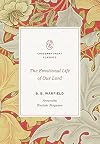
Great Survey of the Emotional Life of Christ
BB Warfield does a great job mining the differences between those that would try and die fly the emotional life of Christ as to not make him Human, and those that would try and humanize the emotional life of Christ as to make him irreverent. A great primer for those looking to dive into the emotions of Christ.
BB Warfield does a great job mining the differences between those that would try and die fly the emotional life of Christ as to not make him Human, and those that would try and humanize the emotional life of Christ as to make him irreverent. A great primer for those looking to dive into the emotions of Christ.
Lists
You May Also Like


Associated Authors
Statistics
- Works
- 145
- Also by
- 5
- Members
- 8,471
- Popularity
- #2,842
- Rating
- 4.4
- Reviews
- 24
- ISBNs
- 207
- Languages
- 4
- Favorited
- 12
