
Tony Horwitz (1958–2019)
Author of Confederates in the Attic: Dispatches from the Unfinished Civil War
About the Author
Anthony Lander Horwitz was born in Washington, D. C. on June 9, 1958. He received a bachelor's degree in history from Brown University and a master's degree from the Columbia University Graduate School of Journalism in 1983. After working as a union organizer in Mississippi, he became a newspaper show more reporter. He was an education reporter for The Fort Wayne News-Sentinel in Indiana from 1983 to 1984 and a general assignment reporter for The Sydney Morning Herald in Australia from 1985 to 1987. He joined The Wall Street Journal in 1990 as a foreign correspondent in Europe and the Middle East. He and his wife Geraldine Brooks won the Overseas Press Club's Hal Boyle Award in 1990 for their coverage of the Persian Gulf war. He returned to the United States in 1993 and was assigned to The Journal's Pittsburgh bureau. He won the 1995 Pulitzer Prize for national reporting for his accounts of working conditions in low-wage jobs. He later wrote for The New Yorker on the Middle East before becoming an author of nonfiction books. His first book, Confederates in the Attic: Dispatches from the Unfinished Civil War, was published in 1998. His other books included Blue Latitudes: Boldly Going Where Captain Cook Has Gone Before, A Voyage Long and Strange: Rediscovering the New World, Midnight Rising: John Brown and the Raid That Sparked the Civil War, and Spying on the South: An Odyssey Across the American Divide. He died on May 27, 2019 at the age of 60. (Bowker Author Biography) show less
Disambiguation Notice:
Tony Horwitz was born Anthony Horwitz, not to be confused with British author Anthony Horowitz (sometimes misspelled as Horwitz), the author of Stormbreaker.
Image credit: Courtesy of Allen and Unwin
Works by Tony Horwitz
Blue Latitudes: Boldly Going Where Captain Cook Has Gone Before (2002) — Author — 1,851 copies, 47 reviews
Associated Works
The Civil War Monitor. Volume 5, Number 3, Fall 2015 — Contributor — 2 copies
MHQ: The Quarterly Journal of Military History — Winter 2012 (2011) — Author "John Brown's Blood Oath" — 2 copies
Tagged
Common Knowledge
- Canonical name
- Horwitz, Tony
- Legal name
- Horwitz, Anthony Lander
- Birthdate
- 1958-06-09
- Date of death
- 2019-05-27
- Gender
- male
- Education
- Brown University (BA|History|1981)
Columbia University Graduate School of Journalism (MA|1983)
Sidwell Friends School - Occupations
- journalist
author - Organizations
- The Wall Street Journal
New Yorker magazine
New York Times
Society of American Historians - Awards and honors
- Pulitzer Prize (National Reporting ∙ 1995)
James Aronson Award (1994) - Agent
- Kris Dahl
- Relationships
- Brooks, Geraldine (1) (wife)
- Cause of death
- cardiac arrest
- Nationality
- USA
- Birthplace
- Washington, D.C., USA
- Places of residence
- Martha's Vineyard, Massachusetts, USA
Waterford, Virginia, USA
Sydney, New South Wales, Australia - Place of death
- Washington, D.C., USA
- Map Location
- Washington DC, USA
- Disambiguation notice
- Tony Horwitz was born Anthony Horwitz, not to be confused with British author Anthony Horowitz (sometimes misspelled as Horwitz), the author of Stormbreaker.
Members
Reviews
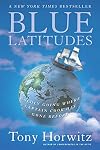
"Cook’s greatest feat . . . was the three epic voyages of discovery he made in his forties—midlife today, closer to the grave in the eighteenth century.
"In 1768, when Cook embarked on the first, roughly a third of the world’s map remained blank, or filled with fantasies: sea monsters, Patagonian giants, imaginary continents. Cook sailed into the void in a small wooden ship and returned, three years later, with charts so accurate that some of them stayed in use until the 1990s.
"On his show more two later voyages, Cook explored from the Arctic to the Antarctic, from Tasmania to Tierra del Fuego, from the northwest shore of America to the far northeast coast of Siberia. By the time he died, still on the job, Cook had sailed over 200,000 miles in the course of his career—roughly equivalent to circling the equator eight times, or voyaging to the moon."
Tony Horowitz’s Blue Latitudes: Boldly Going Where Captain Cook Has Gone Before is an odd, oddly appealing mix of history and somewhat humorous travel writing. Horowitz weaves the story of his own travels along parts of Captain Cook’s routes from his three Pacific voyages with the story of Cook himself. Throughout runs the theme of how the impact of Cook’s contact with islands and people previously unknown to Europe has reverberated throughout the intervening centuries.
Most of my prior knowledge of Cook comes from what I’ve read about Joseph Banks, the wealthy naturalist and botanist (President of the Royal Society for over 40 years), who accompanied Cook on his first journey. Horwitz relied on Banks’s journals, in addition to Cook’s and some of the other crew, for the history in this book.
Horwitz starts his adventures with a physically exhausting week volunteering on a replica of Cook’s ship the Endeavour. Later, he travels with his wife (Geraldine Brooks) and their son to his wife’s native Australia, which he plans to use as a home base for his research and travel. An old (often inebriated) friend, Roger, offers to join him on his journeys. Roger, a keen sailor, provides much of the comic relief throughout the book. On their visit to Matavai Bay, Cook’s landing site in Tahiti, Horwitz and Roger dress in wigs, white stockings and knee breeches, splash in the water, and unfurl a Union Jack, while nearby sunbathers ignore them. This humor, though, is counterpointed with how far removed Tahiti and Bora-Bora are from the paradise described by Cook and Joseph Banks (Horwitz particularly cites the environmental damage in Bora-Bora), and how the native populations were decimated by disease and the introduction of guns and other weaponry into their society. Missionaries in the 19th century completed the destruction by successfully convincing the people to let go of their native customs and folklore, much of which has now been forgotten forever.
Cook’s reputation in the Pacific is primarily negative, particularly among the native population. While in New Zealand, Horwitz learns that a visit by the Endeavour replica four years prior was greeted by death threats for the captain, and refusals by tribal elders to guarantee the ship’s safety. As one activist said, “We wonder at those who would honour the scurvy, the pox, the filth, and the racism that Cook’s arrival brought to this beautiful land.” Monuments to Cook, where they exist, are often vandalized.
In Australia, where Cook’s ship was probably the first contact the Aborigines had had with the outside world in eight thousand years, the European legacy is particularly problematic. A population estimated at the time to number between 300,000 and a million, who merely wanted to be left alone (the first group he encountered ignored the ship, and when most fled upon the ship coming close to land, two men stood their ground and called out to the sailors to “Go away”), was reduced by 1901 to 94,000.
In many places, Horwitz points out, Cook has mostly been eliminated from the history books, and Horwitz struggles with what he sees as an emphasis on trying to find politically correct ways of discussing the “encounters” between the native populations and the Europeans rather than facing head-on the seizure of lands (Cook’s orders were to get the consent of the natives before taking possession of any land, orders he consistently disregarded) and the negative impact on people, environment, and culture.
Horwitz decided not to follow fully in the path of Cook’s second and third voyages like he did the first, because he felt that Antarctica and the Arctic Circle would be too cold and bleak, and wouldn’t give him enough people to talk with. Instead, he decides to try to experience Cook’s sense of newness and uncertainly by selecting the island of Niue, which Cook called “Savage Island”, and traveling there blind, with no knowledge of the country. Later, he visits Tonga, England (where again, it’s hard to find representations of Cook’s legacy, although he does visit a delightful museum created and run by another Cook obsessive), and Alaska, before ending up at the site of Cook’s death in Hawaii.
Horwitz presents the history in an accessible, fascinating way, and his own travels and encounters with people from all walks of life with humor and respect. He raises questions with no easy answers (and perhaps no answers at all) that I know I will continue to spend a long time pondering. show less
"In 1768, when Cook embarked on the first, roughly a third of the world’s map remained blank, or filled with fantasies: sea monsters, Patagonian giants, imaginary continents. Cook sailed into the void in a small wooden ship and returned, three years later, with charts so accurate that some of them stayed in use until the 1990s.
"On his show more two later voyages, Cook explored from the Arctic to the Antarctic, from Tasmania to Tierra del Fuego, from the northwest shore of America to the far northeast coast of Siberia. By the time he died, still on the job, Cook had sailed over 200,000 miles in the course of his career—roughly equivalent to circling the equator eight times, or voyaging to the moon."
Tony Horowitz’s Blue Latitudes: Boldly Going Where Captain Cook Has Gone Before is an odd, oddly appealing mix of history and somewhat humorous travel writing. Horowitz weaves the story of his own travels along parts of Captain Cook’s routes from his three Pacific voyages with the story of Cook himself. Throughout runs the theme of how the impact of Cook’s contact with islands and people previously unknown to Europe has reverberated throughout the intervening centuries.
Most of my prior knowledge of Cook comes from what I’ve read about Joseph Banks, the wealthy naturalist and botanist (President of the Royal Society for over 40 years), who accompanied Cook on his first journey. Horwitz relied on Banks’s journals, in addition to Cook’s and some of the other crew, for the history in this book.
Horwitz starts his adventures with a physically exhausting week volunteering on a replica of Cook’s ship the Endeavour. Later, he travels with his wife (Geraldine Brooks) and their son to his wife’s native Australia, which he plans to use as a home base for his research and travel. An old (often inebriated) friend, Roger, offers to join him on his journeys. Roger, a keen sailor, provides much of the comic relief throughout the book. On their visit to Matavai Bay, Cook’s landing site in Tahiti, Horwitz and Roger dress in wigs, white stockings and knee breeches, splash in the water, and unfurl a Union Jack, while nearby sunbathers ignore them. This humor, though, is counterpointed with how far removed Tahiti and Bora-Bora are from the paradise described by Cook and Joseph Banks (Horwitz particularly cites the environmental damage in Bora-Bora), and how the native populations were decimated by disease and the introduction of guns and other weaponry into their society. Missionaries in the 19th century completed the destruction by successfully convincing the people to let go of their native customs and folklore, much of which has now been forgotten forever.
Cook’s reputation in the Pacific is primarily negative, particularly among the native population. While in New Zealand, Horwitz learns that a visit by the Endeavour replica four years prior was greeted by death threats for the captain, and refusals by tribal elders to guarantee the ship’s safety. As one activist said, “We wonder at those who would honour the scurvy, the pox, the filth, and the racism that Cook’s arrival brought to this beautiful land.” Monuments to Cook, where they exist, are often vandalized.
In Australia, where Cook’s ship was probably the first contact the Aborigines had had with the outside world in eight thousand years, the European legacy is particularly problematic. A population estimated at the time to number between 300,000 and a million, who merely wanted to be left alone (the first group he encountered ignored the ship, and when most fled upon the ship coming close to land, two men stood their ground and called out to the sailors to “Go away”), was reduced by 1901 to 94,000.
In many places, Horwitz points out, Cook has mostly been eliminated from the history books, and Horwitz struggles with what he sees as an emphasis on trying to find politically correct ways of discussing the “encounters” between the native populations and the Europeans rather than facing head-on the seizure of lands (Cook’s orders were to get the consent of the natives before taking possession of any land, orders he consistently disregarded) and the negative impact on people, environment, and culture.
Horwitz decided not to follow fully in the path of Cook’s second and third voyages like he did the first, because he felt that Antarctica and the Arctic Circle would be too cold and bleak, and wouldn’t give him enough people to talk with. Instead, he decides to try to experience Cook’s sense of newness and uncertainly by selecting the island of Niue, which Cook called “Savage Island”, and traveling there blind, with no knowledge of the country. Later, he visits Tonga, England (where again, it’s hard to find representations of Cook’s legacy, although he does visit a delightful museum created and run by another Cook obsessive), and Alaska, before ending up at the site of Cook’s death in Hawaii.
Horwitz presents the history in an accessible, fascinating way, and his own travels and encounters with people from all walks of life with humor and respect. He raises questions with no easy answers (and perhaps no answers at all) that I know I will continue to spend a long time pondering. show less
Tony Horwitz, one of my favorite authors, presents a compelling history of John Brown and his followers and the keystone event of their raid on Harpers Ferry. Brown's life and family are discussed from childhood, to his involvement in Utopian abolition movements, and their targeted assassinations of pro-slavery advocates in "Bleeding Kansas." It's eerie that the rhetoric and tactics of Brown and his followers while targeting the noble cause of abolition still resemble those of today's Tea show more Party/2nd Amendment activists.The raid on Harpers Ferry took considerable planning and secrecy, although curiously it is uncertain what result Brown expected. Did he really expect it to spark a nation-wide uprising, or did he intend a blood sacrifice? Similarly, his changes in tactics during the raid itself contradict the planning. What's interesting is that while the raid was widely condemned, even by ardent abolitionists, Brown's real influence came in his words and letters while in jail and on trial. Even people who despised Brown and all he stood for came to admire his bravery and determination. Horwitz's book is an interesting account on this key event in American history and the ripples it would have throughout the country. show less

In Confederates in the Attic, journalist Tony Horwitz tours many historic southern Civil War battle sites and towns, struck by how alive and important the Civil War remains for so many Southerners. I can't believe it took this long for me to read this one; I loved his Blue Latitudes, about the voyages of Captain Cook, and I'd thought about this one many times. It took my LT brother Mark singing its praises on the phone to get me in gear.
Among other things, Horwitz becomes involved in Civil show more War enactments, where "hardcore" participants will go to great lengths for authenticity:
“Look at these buttons,” one soldier said, fingering his gray wool jacket. “I soaked them overnight in a saucer filled with urine.” Chemicals in the urine oxidized the brass, giving it the patina of buttons from the 1860s. “My wife woke up this morning, sniffed the air and said, ‘Tim, you’ve been peeing on your buttons again.”
No surprise, issues of race remain important. "Vicksburg confirmed the dispiriting pattern I'd seen elsewhere in the South . . . Everywhere, it seemed, I had to explore two pasts and two presents, one white, one black, separate and unreconcilable. The past had poisoned the present and the present, in turn, now poisoned remembrance of things past." Horwitz's sense of humor helps make the sometimes difficult journey companionable, and there are insights galore:
“You asked how I'd define prejudice. That's it. Making assumptions about people you've never met.” (I love this one!)
“The way I see it," King said, "your great-grandfather fought and died because he believed my great-grandfather should stay a slave. I'm supposed to feel all warm inside about that?”
“For Robert Lee Hodge, {participating in Civil War reenactments} was also a way of life. As the Marlon Brando of battlefield bloating, he was often hired for Civil War movies.” (This specialist in battlefield bloating becomes an important traveling companion; I think that's a photo of him on the cover).
Anyway, I can't think of a reason not to give this five stars. It was written in 1998, but feels like he wrote it yesterday. It gave me more insights into how Trump supporters view the world than any other book I've read, including Hillbilly Elegy. A favored few can create page-turning nonfiction, and this guy is one of them. I want to read more of his; probably his A Voyage Long and Strange next. show less
Among other things, Horwitz becomes involved in Civil show more War enactments, where "hardcore" participants will go to great lengths for authenticity:
“Look at these buttons,” one soldier said, fingering his gray wool jacket. “I soaked them overnight in a saucer filled with urine.” Chemicals in the urine oxidized the brass, giving it the patina of buttons from the 1860s. “My wife woke up this morning, sniffed the air and said, ‘Tim, you’ve been peeing on your buttons again.”
No surprise, issues of race remain important. "Vicksburg confirmed the dispiriting pattern I'd seen elsewhere in the South . . . Everywhere, it seemed, I had to explore two pasts and two presents, one white, one black, separate and unreconcilable. The past had poisoned the present and the present, in turn, now poisoned remembrance of things past." Horwitz's sense of humor helps make the sometimes difficult journey companionable, and there are insights galore:
“You asked how I'd define prejudice. That's it. Making assumptions about people you've never met.” (I love this one!)
“The way I see it," King said, "your great-grandfather fought and died because he believed my great-grandfather should stay a slave. I'm supposed to feel all warm inside about that?”
“For Robert Lee Hodge, {participating in Civil War reenactments} was also a way of life. As the Marlon Brando of battlefield bloating, he was often hired for Civil War movies.” (This specialist in battlefield bloating becomes an important traveling companion; I think that's a photo of him on the cover).
Anyway, I can't think of a reason not to give this five stars. It was written in 1998, but feels like he wrote it yesterday. It gave me more insights into how Trump supporters view the world than any other book I've read, including Hillbilly Elegy. A favored few can create page-turning nonfiction, and this guy is one of them. I want to read more of his; probably his A Voyage Long and Strange next. show less

Baghdad in the mid 1980s was such a volatile place to be. For Tony Horwitz to be bombing around (pun totally intended) Arabia was insane. There he was, in a land where even local weather reports and maps were banned. Think about it. As a left handed, Jewish stringer, he was not the most popular person to be wandering about those parts of the middle east. He met many people who exclaimed, "Death to America!" before gushing about Disneyland or Hollywood. Despite the dangers and hatreds, his show more narrative is more than slightly tongue-in-cheek and a lot more than a little funny. He scoffs at roadblocks manned by a 7' cardboard soldier (while the real military gets stoned on qat). He makes light of millions of crushing fanatics at Khomeini's funeral. He jokes about not being able to find his wife cloaked in a chador. At the same time as being funny, he is keenly observant. One of my favorites notes - while middle eastern air travel is not the safest; the oxygen masks made be missing, but at least passengers know which direction they should bow their heads in prayer thanks to a "Mecca indicator" on the ceiling of their aircraft. show less
Lists
Awards


You May Also Like


Associated Authors
Statistics
- Works
- 11
- Also by
- 3
- Members
- 9,893
- Popularity
- #2,405
- Rating
- 4.0
- Reviews
- 275
- ISBNs
- 93
- Languages
- 8
- Favorited
- 36
