
Osip Mandelstam (1891–1938)
Author of Selected Poems
About the Author
Osip Mandelstam was born in Warsaw, Poland and grew up in St.Petersburg, Russia Mandelstam was taught by tutors and governesses at his home. He attended the prestigious Tenishev School from 1900 to 1907 and traveled then to Paris from 1907 to 1908 and Germany from 1908 to 1910, where he studied Old show more French literature at the University of Heidelberg. In 1911 till 1917, he studied philosophy at St. Petersburg University but did not graduate. Mandelstam was a member of the 'Poets Guild' from 1911 and had close personal ties with Anna Akhmatova and Nikolai Gumilev. His first poems appeared in 1910 in the journal Apollon. In 1918 he worked briefly for Anatoly Lunacharskii's Education Ministry in Moskow. In the 1920s Mandelstam supported himself by writing children's books and translating works by Upton Sinclair, Jules Romains, Charles de Coster and others. He did not compose poems from 1925 to 1930 but turned to prose. In 1930 he made a trip to Armenia to escape his influential enemies. Mandelstam's Journey to Armenia (1933) became his last major work published during his life time. Mandelstam was arrested the first time in 1934 for an epigram he had written on Joseph Stalin. In the transit camp, Mandelstam was already so weak that he couldn't stand. He died in the Gulag Archipelago in Vtoraia rechka, near Vladivostok, on December 27, 1938.His body was taken to a common grave. International fame came to Mandelstam in the 1970s, when his works were published in the West and in the Soviet Union. (Bowker Author Biography) show less
Disambiguation Notice:
There are at least three different books called Selected Poems, with different translators and selections of poems; please do not combine them.
Works by Osip Mandelstam
The Fire Horse: Children's Poems by Vladimir Mayakovsky, Osip Mandelstam and Daniil Kharms (2003) — Author — 13 copies, 1 review
Du bist mein Moskau und mein Rom und mein kleiner David: Gesammelte Briefe 1907-1938 (2000) 8 copies
Die beiden Trams : Kinder- und Scherzgedichte, Epigramme auf Zeitgenossen 1911 - 1937 (2000) 6 copies
"Камень" и "Tristia" 4 copies
Osip Mandelstam : poems 3 copies
Poesie 3 copies
Сочинения: В 2 т. 2 copies
" Razgovor o Dante". 2 copies
Проза 2 copies
Libertà al crepuscolo - poesie 27 2 copies
Verše : [výbor z tvorby] 1 copy
стихи 1 copy
Selected Poems 1 copy
Strofe pietroburghesi 1 copy
Básně 1 copy
Physiologie de la lecture 1 copy
Man gab mir einen Korper 1 copy
Libertà al crepuscolo 1 copy
Камень 1 copy
時のざわめき (1976年) 1 copy
Poesie 1 copy
La quatrième prose 1 copy
Le sceau égyptien 1 copy
Tristia et autres poèmes 1 copy
La rage littéraire 1 copy
Poesie 1921-1925 1 copy
La quarta prosa 1 copy
Discorso su Dante 1 copy
Stone : 1 - 30 1 copy
La quarta prosa 1 copy
Dva tramvaya 1 copy
TERE KADMON KA SANGEET 1 copy
Pjesme i eseji 1 copy
Стекла вечности 1 copy
Poesie 1921-1925 1 copy
Prose of Osip Mandelstam 1 copy
CONVERSAZIONE SU DANTE 1 copy
Pidä puheeni tallessa aina 1 copy
Ottanta poesie 1 copy
Osip Mandelstam: Two Poems 1 copy
Hliněný život 1 copy
Сочинения 1 copy
Собрание стихотворений 1 copy
Полное собрание сочинений 1 copy
NOUVEAUX POEMES 1930-1934 1 copy
Стихотворения Проза / Осип Мандельштам; [Сост., вступ. ст. и коммент. М. Л. Гаспарова] (2001) 1 copy
Mandelstam songs 1 copy
Farkaskopó század Versek 1 copy
Медленный день [Стихи] 1 copy
Tristia et autres poèmes de Ossip Mandelstam,François Kérel (Préface, Traduction) ( 16 mars 1982 ) 1 copy
Lines on the Unknown Soldier 1 copy
Associated Works
World Poetry: An Anthology of Verse from Antiquity to Our Time (1998) — Contributor — 499 copies, 2 reviews
Against Forgetting: Twentieth-Century Poetry of Witness (1993) — Contributor — 377 copies, 2 reviews
The Poet's Work: 29 Poets on the Origins and Practice of Their Art (1979) — Contributor — 95 copies, 1 review
Mandelstam, Heidelberg : Gedichte und Briefe 1909-1910 : mit einem Essay über deutsche Echos in Ossip Mandelstams Werk : "Ich war das Buch, das euch im Traum erscheint" (2016) — Author — 4 copies
Eg kviskrar det i svart kladd : Osip Mandelstam og andre akmeistar (2000) — Author, some editions — 3 copies
Tagged
Common Knowledge
- Canonical name
- Mandelstam, Osip
- Legal name
- Мандельштам, Осип Эмильевич
- Other names
- Mandel'štam, Osip Èmil'evič
Mandelstam, Osip Emilievich - Birthdate
- 1891-01-15
- Date of death
- 1938-12-27
- Gender
- male
- Education
- Tenishev School, St. Petersburg, Russia
University of Heidelberg
University of St. Petersburg
Sorbonne, Paris, France - Occupations
- poet
literary critic
translator
children's book author
travel writer - Relationships
- Mandelstam, Nadezhda (spouse)
Tsvetaeva, Marina (lover) - Short biography
- Osip Mandelstam was born to a prosperous Jewish family in Warsaw, and grew up in St. Petersburg, Russia. He received his early education from tutors and governesses at home, and attended the prestigious Tenishev School from 1900 to 1907. Continuing his education abroad, he studied at the Sorbonne in Paris and the the University of Heidelberg in Germany. From 1911 to 1917, he studied philosophy at the University of St. Petersburg, something rarely permitted for Jews. Mandelstam gave up his studies to become a poet, and began publishing in the literary journal Apollon. His first collection, Kamen (Stone), appeared in 1913. In the 1920s, as the Bolsheviks began to exert power over Russian artists, it became increasingly difficult for Mandelstam, a nonconformist, to maintain himself as a poet. He also wrote children's books and translated works by Upton Sinclair, Jules Romains, Charles de Coster, and others. In 1930, he made a trip to Armenia, which provided material for his book Journey to Armenia (1933), the last major work he published during his lifetime. He was arrested the first time in 1934 for a poem he had written on Joseph Stalin, tortured, and exiled to the Ural Mountains. Arrested again in 1938, he was sentenced to forced labor, and arrived at the Vtoraia Rechka transit camp, near Vladivostok, in very poor health. He died there shortly afterwards. Mandelstam achieved international fame in the 1970s, when his works were published in the West as well as in the Soviet Union thanks to the efforts of his wife Nadezhda Mandelstam, who also wrote two memoirs about their lives together, Hope Against Hope (1970) and Hope Abandoned (1974).
- Nationality
- Russia
- Birthplace
- Warsaw, Poland
- Places of residence
- Warsaw, Poland (birth)
Saint Petersburg, Russia
Moscow, Russia
Cherdyn, Russia
Voronezh, Russia (death) - Place of death
- Voronezh, Russia
- Disambiguation notice
- There are at least three different books called Selected Poems, with different translators and selections of poems; please do not combine them.
- Associated Place (for map)
- Russia
Members
Reviews
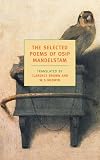
The first poem here was written/published when Mandelstam was around seventeen or eighteen and is, like most of the poems of his earlier years, on nature and ephemerality.
The shy speechless sound
of a fruit falling from its tree,
and around it the silent music
of the forest, unbroken…?
As the years go by, a world war, a revolution, and what at the very least can be called violent suppression, occur and the poems focus more on violence, betrayal, despair, so that even reflections of images and show more memories of better times dissipate.
O Lord, help me live through this night—
I’m in terror for my life, your slave:
to live in Petersburg is to sleep in a grave.
Mandelstam didn’t escape the censorship, surveilling, arrests, imprisonments, and death that faced poets and artists and others in the Soviet Union under Stalin. That he still had courage to write and recite poetry that spoke directly to the terror and the sycophancy of those around Stalin is unbelievable. Of course, he paid for it dearly with arrest and exile and the conditions of poverty caused by this, and later imprisonment and death, but one of the most touching things I’ve ever read is this part of a poem that alludes to his wife Nadezhda, who memorized a lot of his poetry and kept his work and story alive even after his death, and their misery.
You’re still alive, you’re not alone yet—
she’s still beside you, with her empty hands,
and a joy reaches you both across immense plains
Through mists and hunger and flying snow. show less
The shy speechless sound
of a fruit falling from its tree,
and around it the silent music
of the forest, unbroken…?
As the years go by, a world war, a revolution, and what at the very least can be called violent suppression, occur and the poems focus more on violence, betrayal, despair, so that even reflections of images and show more memories of better times dissipate.
O Lord, help me live through this night—
I’m in terror for my life, your slave:
to live in Petersburg is to sleep in a grave.
Mandelstam didn’t escape the censorship, surveilling, arrests, imprisonments, and death that faced poets and artists and others in the Soviet Union under Stalin. That he still had courage to write and recite poetry that spoke directly to the terror and the sycophancy of those around Stalin is unbelievable. Of course, he paid for it dearly with arrest and exile and the conditions of poverty caused by this, and later imprisonment and death, but one of the most touching things I’ve ever read is this part of a poem that alludes to his wife Nadezhda, who memorized a lot of his poetry and kept his work and story alive even after his death, and their misery.
You’re still alive, you’re not alone yet—
she’s still beside you, with her empty hands,
and a joy reaches you both across immense plains
Through mists and hunger and flying snow. show less
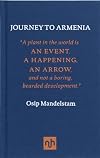
The best poems are always prose, this book wants to make me say--the kind of deadpan, ludicrous epigram that Mandelstam could almost pull off. But no, he'd be more likely to say that the best words are the ones that never get a chance to congeal into these embarrassing remnant forms--instead, the ones that flicker caressingly across your set of predispositions that is you and change ones to zeroes and zeroes to ones; that burrow and coccoon and come out hardy and woody yet limber new show more appendages, extending your scope of movement. The overt theme is the journey, but this be no travelogue: not cod-ethnography but felt difference is what is on Mandelstam's mind, and the lionization of small peoples, and the reclamation of a (cod-)preclassical past of yoghurt gourds, camping on ridges tired from one day's ascent and tingling for another's, and, ummmmm, Ararat. The way sounds feel--the sounds of Armenian serving as the occasion for much synaesthetic speechmaking--and the bequest sounds bear for their utterers--a deeply sensuous linguistic relativity. This sensuousness above all--I grinned biggest of many grins when he said, as has long been my key piece of gallerygoing advice, move fast, stride on, make of the work a draught for drinking on your trek, not a fetish-object for deathly hours with a magnifying-glass over. (My second half of that, a byword only for me as opposed to for everybody, has been imagine that art in your mouth. Kapow!) Not growing moss, more profound and ursprunglich a cliche than we know perhaps (CF. BRUCE CHATWIN), but here embodied in the poet as gypsy thief as immortal, unrepentant wanderluster only for experiences that are not his own, that do not belong to the fields and collective farms he knows. "The Armenian that therefore I am." show less
In an insightful review of Bruce Chatwin's published letters, which appeared in "the Australian" a few years ago, Nicholas Rotwell mischievously compared the British writer to "a kind of internet search engine avant la lettre". He explained : " [Chatwin] was a [ literary ] omnivore and he had a connoisseur's over-fine eye; after all, he had been trained as a teenage prodigy in Sotheby's to spot unnoticed masterpieces. As a result, his taste for obscure books of world import was laser-sharp, show more and honed further by his youthful travels as a journalist, when he was exposed to a wide range of cultural patterns and perspectives".
Earlier, I already mentioned some of these "obscure" authors and books that Chatwin was pointing to and lauded in his letters and short stories. Isaac Babel's "Red Cavalry" for instance or Edmund Wilson with his “ Black Brown Red and Olive”. Gaylord Simpson’s “Attending Marvels”, Peter Mathiessen whose “Far Tortuga” should be preferred to his “Snow leopard”. Ib’n Khaldun’s Muquaddimah, the poems by David Ap Gwilym, Robert Byron's two sacred texts, Osip Mandelstam's "outstanding masterpiece" "Journey to Armenia" and even the Timurid Babur- Nama.
Chatwin is unselfishly generous in his praise of others for he sends us back to books which in quite a few cases outclass by far his own works. One forgets Patagonia after reading Oxiana. Who stops at the "Black Hills", when he can journey to Armenia ?
Still it is thanks to Bruce Chatwin, that I wish-listed and then purchased the slim blue, cloth - bounded volume of "Journey to Armenia" by Osip Mandelstam.
"The superb fresh wind would tear into one's lungs with a whistle. The velocity of the clouds kept increasing by the minute, and the incunabular surf would hasten to issue a fat, hand-printed Gutenberg Bible in half an hour under the gravely scowling sky."
Just after a few lines, I was absolutely enchanted by the magic that emanated from each page, each sentence, each word...
Osip Mandelstam's "Journey to Armenia" is unlike any travelbook you may have read. It is unique, it is delightfully captivating, it is poetry in prose.
It is the first and only travelbook I have read where the typical poetic qualities of emotion, imagery and parataxis are used to render the complex mix of excitement, the existential sadness and the simple joy that are conjured by the experiences and sights of an exotic journey
It is magic ! There is no other word...
"Yesterday I was reading Firdousi and it seemed to me that a bumblebee was sitting on the book sucking it."
"In Persian poetry ambassadorial winds blow out of China bearing gifts. It scoops up longivity with a silver ladle and endows whoever might desire it with a millenia by threes and fives. That is why the rulers of the Djemdjid dynasty are as long lived as parrots"
Osip Emilyevich Mandelstam born in 1891 in Warszaw, Poland, but lived in Russia during and after its revolution and the rise of the Soviet Union. With Anna Ahkmatova, he was one of the foremost members of the Acmeist school of poets.
The increased Stalinization, did not make Mandelstam's live any easier. On the contrary, the poet remained a cursed symbol of freedom and refused to adapt to the requierements of the totalitarian state. The frustration, the anger and the fear made Mandelstam lose his poetic voice. He stopped writing in 1926.
In 1930, Bukharin, a "friend in high places", managed to obtain permission for the Mandelstam couple for a nine month journey to Armenia .
Armenia, was for Mandelstam, what Georgia had been for Pushkin and the older generations. It was sacred ground. It was the true outpost of the Classical and Christian world. There was to be found the land of Colchis, of Argonautic fame as well as Mount Arrarat where Noah's Ark finally run aground.
It was in his awe for the spactacular vistas and his encounters with the "true" people that the poet recovered his voice...
"A childless old couple received us for the night into the bosom of their tent.
The old woman moved and worked with weepy, withdrawing, blessing motions as she prepared a smoky supper and some felt strips for bedding. 'Here, take the felt! Grab a blanket... Tell us something about Moscow'
Our hosts got ready for the bed. An oil wick lit up the tent, making it seem high as a railroad station. The wife took out a coarse army nightshirt and put it on her husband.
I felt as shy as if I were in a palace."
Mandelstam was several times arrested by Joseph Stalin's government during the repression and in '38, after a stringent poetic attack on the "Man of Steel", finally sentenced to a camp in Siberia. He died of exhaustion, in dreadful conditions at a transit camp near Vladivostok, december 27, 1938. He never even made it to the final destination.
"Sleep is easy in nomad camps. The body, exhausted by space, grows warm, stretches out, recalls the length of the road. The paths of the mountain ridges run like shivers along the spine. The velvet meadows burden and tickle the eyelids. Bedsores of the ravine hollow out the sides. Sleep immures you, walls you in. Last thought: have to ride around some ridge."
One can only hope that his inner eye saw the other side of the ridge before they closed forever... show less
Earlier, I already mentioned some of these "obscure" authors and books that Chatwin was pointing to and lauded in his letters and short stories. Isaac Babel's "Red Cavalry" for instance or Edmund Wilson with his “ Black Brown Red and Olive”. Gaylord Simpson’s “Attending Marvels”, Peter Mathiessen whose “Far Tortuga” should be preferred to his “Snow leopard”. Ib’n Khaldun’s Muquaddimah, the poems by David Ap Gwilym, Robert Byron's two sacred texts, Osip Mandelstam's "outstanding masterpiece" "Journey to Armenia" and even the Timurid Babur- Nama.
Chatwin is unselfishly generous in his praise of others for he sends us back to books which in quite a few cases outclass by far his own works. One forgets Patagonia after reading Oxiana. Who stops at the "Black Hills", when he can journey to Armenia ?
Still it is thanks to Bruce Chatwin, that I wish-listed and then purchased the slim blue, cloth - bounded volume of "Journey to Armenia" by Osip Mandelstam.
"The superb fresh wind would tear into one's lungs with a whistle. The velocity of the clouds kept increasing by the minute, and the incunabular surf would hasten to issue a fat, hand-printed Gutenberg Bible in half an hour under the gravely scowling sky."
Just after a few lines, I was absolutely enchanted by the magic that emanated from each page, each sentence, each word...
Osip Mandelstam's "Journey to Armenia" is unlike any travelbook you may have read. It is unique, it is delightfully captivating, it is poetry in prose.
It is the first and only travelbook I have read where the typical poetic qualities of emotion, imagery and parataxis are used to render the complex mix of excitement, the existential sadness and the simple joy that are conjured by the experiences and sights of an exotic journey
It is magic ! There is no other word...
"Yesterday I was reading Firdousi and it seemed to me that a bumblebee was sitting on the book sucking it."
"In Persian poetry ambassadorial winds blow out of China bearing gifts. It scoops up longivity with a silver ladle and endows whoever might desire it with a millenia by threes and fives. That is why the rulers of the Djemdjid dynasty are as long lived as parrots"
Osip Emilyevich Mandelstam born in 1891 in Warszaw, Poland, but lived in Russia during and after its revolution and the rise of the Soviet Union. With Anna Ahkmatova, he was one of the foremost members of the Acmeist school of poets.
The increased Stalinization, did not make Mandelstam's live any easier. On the contrary, the poet remained a cursed symbol of freedom and refused to adapt to the requierements of the totalitarian state. The frustration, the anger and the fear made Mandelstam lose his poetic voice. He stopped writing in 1926.
In 1930, Bukharin, a "friend in high places", managed to obtain permission for the Mandelstam couple for a nine month journey to Armenia .
Armenia, was for Mandelstam, what Georgia had been for Pushkin and the older generations. It was sacred ground. It was the true outpost of the Classical and Christian world. There was to be found the land of Colchis, of Argonautic fame as well as Mount Arrarat where Noah's Ark finally run aground.
It was in his awe for the spactacular vistas and his encounters with the "true" people that the poet recovered his voice...
"A childless old couple received us for the night into the bosom of their tent.
The old woman moved and worked with weepy, withdrawing, blessing motions as she prepared a smoky supper and some felt strips for bedding. 'Here, take the felt! Grab a blanket... Tell us something about Moscow'
Our hosts got ready for the bed. An oil wick lit up the tent, making it seem high as a railroad station. The wife took out a coarse army nightshirt and put it on her husband.
I felt as shy as if I were in a palace."
Mandelstam was several times arrested by Joseph Stalin's government during the repression and in '38, after a stringent poetic attack on the "Man of Steel", finally sentenced to a camp in Siberia. He died of exhaustion, in dreadful conditions at a transit camp near Vladivostok, december 27, 1938. He never even made it to the final destination.
"Sleep is easy in nomad camps. The body, exhausted by space, grows warm, stretches out, recalls the length of the road. The paths of the mountain ridges run like shivers along the spine. The velvet meadows burden and tickle the eyelids. Bedsores of the ravine hollow out the sides. Sleep immures you, walls you in. Last thought: have to ride around some ridge."
One can only hope that his inner eye saw the other side of the ridge before they closed forever... show less
Damn it, I just don’t like Mandelstam. I didn’t like his poetry and I don’t like this formless, masturbatory prose poem either. Osip goes to Armenia, but he’s no travel writer: he ruminates on French paintings, on the scientific method, on economics without saying much. His prose is ostentatious. The only parts I found slightly interesting were his musings on the Armenian and Caucasian languages — but even they are painfully amateur. The guy is a poet, sees beauty in everything, show more but his gaze is fixed primarily on his navel. show less
Lists
Awards


You May Also Like


Associated Authors
Statistics
- Works
- 217
- Also by
- 18
- Members
- 2,331
- Popularity
- #11,003
- Rating
- 4.1
- Reviews
- 32
- ISBNs
- 308
- Languages
- 21
- Favorited
- 23


