
Sofka Zinovieff
Author of Putney
About the Author
Sofka Zinovieff was inspired to uncover the sensational life of her grandmother after stumbling across one of Sophy's diaries written during the occupation. A trained anthropologist and journalist, Zinovieff lives in Athens, Greece.
Image credit: Sofka Zinovieff © Photo Elisabetta Catalano
Works by Sofka Zinovieff
Tagged
Common Knowledge
- Birthdate
- 1961
- Gender
- female
- Education
- University of Cambridge (New Hall)
- Occupations
- journalist
biographer
novelist - Relationships
- Zinovieff, Kyril (great-uncle)
- Short biography
- Sofka Zinovieff was born to an English family with Russian roots. Her paternal grandparents were aristocrats who fled the Russian Revolution as children and settled in England, where they later met and married. Her father Peter Zinovieff was the founder of Electronic Music Studios, and throughout the 1970s their family home was a gathering place for many popular and avant-garde musicians. Sofka studied social anthropology at Cambridge University. While researching her doctoral thesis on modern Greek identity and tourism, she traveled to Greece for the first time and came to love the country. In 1990, she made her first visit to Russia, where she met Vassilis Papadimitriou in the Press Office of Moscow’s Greek Embassy. They later married and had two children. Sofka has worked as a freelance journalist for British publications, including The Independent Magazine, The Telegraph Magazine, The Times Literary Supplement, and The Financial Times. She's the author of several books, including Red Princess: A Revolutionary Life (2007), a biography of her grandmother Princess Sofka Dolgorouky, and The House on Paradise Street (2012), a novel. She lives with her family near Athens.
- Nationality
- England
UK - Birthplace
- London, England, UK
- Places of residence
- Athens, Greece
Rome, Italy
Members
Reviews
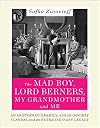
Gerald Hugh Tyrwhitt-Wilson, 14th Baron Berners, was a well-to-do composer, novelist, and eccentric whose stately home, Faringdon, was where he entertained the likes of Cecil Beaton, Gertrude Stein, Nancy and Diane Mitford, Igor Stravinsky, and Salvador Dali. He was the inspiration for Lord Merlin in Nancy’s The Pursuit of Love. He kept a portable clavichord in his car and had his doves dyed in pastel colors.
Robert Hebert-Percy, the Mad Boy, was his much-younger lover and partner. show more Surprising everyone, he married Jennifer, a woman his age, who came to live at the estate and they had a child, Victoria. Berners was fond of Jennifer and the baby but the marriage foundered. They divorced and she remarried, more than once. Robert remained at Faringdon and inherited it when Berners died.
Sofka Zinovieff is the daughter of Victoria so the Mad Boy was her grandfather. They had a friendly relationship but weren’t close. When she was in her 20s he asked her to visit, and, to her surprise, told her he was leaving her the estate.
It’s funny and empathetic. Several of the characters’ fathers were closeted gay men in unhappy marriages. Many people in the story went from marriage to affair to affair and the lover of someone in the 30s may reappear in the 40s, now married to someone else. There are many quirky and memorable characters and surprises up to the last chapter. Zinovieff describes it all with sympathy and it’s beautifully illustrated with photos.
As an Anglophile and a fan of the Mitfords and that world, this is just the sort of book I love. It was recommended by the cartoonist Mimi Pond who’s writing a graphic novel about the Mitfords and posting pages on Facebook. show less
Robert Hebert-Percy, the Mad Boy, was his much-younger lover and partner. show more Surprising everyone, he married Jennifer, a woman his age, who came to live at the estate and they had a child, Victoria. Berners was fond of Jennifer and the baby but the marriage foundered. They divorced and she remarried, more than once. Robert remained at Faringdon and inherited it when Berners died.
Sofka Zinovieff is the daughter of Victoria so the Mad Boy was her grandfather. They had a friendly relationship but weren’t close. When she was in her 20s he asked her to visit, and, to her surprise, told her he was leaving her the estate.
It’s funny and empathetic. Several of the characters’ fathers were closeted gay men in unhappy marriages. Many people in the story went from marriage to affair to affair and the lover of someone in the 30s may reappear in the 40s, now married to someone else. There are many quirky and memorable characters and surprises up to the last chapter. Zinovieff describes it all with sympathy and it’s beautifully illustrated with photos.
As an Anglophile and a fan of the Mitfords and that world, this is just the sort of book I love. It was recommended by the cartoonist Mimi Pond who’s writing a graphic novel about the Mitfords and posting pages on Facebook. show less
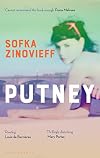
Tidy novel that flirts with a dangerous subject but in the end doesnt reach any great heights. Ralph is a thirty-something playwright who visits the bohemian household of Ed and Ellie in Putney, and becomes infatuated with their 9 year old daughter free-spirited Daphne. In a calculated process of grooming, which the immature Daphne interprets as love, he seduces the child, eventually taking her virginity at the age of 13 during a clandestine trip to Greece. Their affair drags in Daphne's show more friend Jane, who is denigrated by her peers (and herself) as being large and plain, and for whom Ralph as no regard but as a patsy to assist in covering-up his relationship with Daphne. Many years later, Daphne is a single mother with a teenage daughter of her own, and still captivated by the idea her relationship with Ralph was love. But her fears for her maturing daughter and a shocking revelation from Jane suddenly catapult Daphne into reality and she realises her "affair" was actually rape. Her pursuit of Ralph, now dying from cancer, for child abuse leads her to many self-revelations about the course of her life. This ends up being an engrossing story, but its far too mild-mannered and self-conscious to properly deal with such shocking story material. And the conclusion is too abbreviated and tidy to really satisfy. While the characters are strong and engaging, even the repulsive Ralph can elicit a trace of sympathy at times, and the evocations of the bohemian lifestyle in 70s London and wonderful images of Greece are far too attractive for a book of this kind. While this is a strong read, there's a always a lingering feeling that it should really be much darker than it is. Worth reading, but dont expect anything earth-shattering. show less
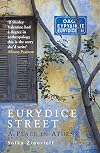
I read this in anticipation of an upcoming trip to Greece. It’s a memoir set in Athens around 2004. The author’s anthropological eye is used wonderfully here to capture her adopted country. She shares about pieces of their history and culture that have shaped the people. I loved learning more about what sets the Greek people apart. It’s not a frothy read, and focuses frequently on dark things from their history like Nazi occupation, the treatment of Albanian people, and conflict with show more the Turks. She also explores the way holidays, like Easter, are celebrated and how a certain group of men compete to see how many tourists they can sleep with. But I really enjoyed it and felt like I was getting an honest look at the country beyond the tourist borders.
“The Parthenon takes its color from all our thoughts and all our dreams.” - Kostis Palamas
“We are all Greeks. Our laws, our literature, our religion, our arts have their root in Greece.” - Shelley show less
“The Parthenon takes its color from all our thoughts and all our dreams.” - Kostis Palamas
“We are all Greeks. Our laws, our literature, our religion, our arts have their root in Greece.” - Shelley show less
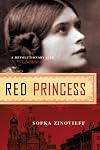
Princess Sophy Dolgorouky (called Sofka) was born in 1907 into an ancient family of nobility. She grew up in an atmosphere of incredible privilege and cossetting, raised by her stiff grandmother and, intermittently, her rebellious surgeon mother and diletante father. Her family fled to Europe during the Bolshevik revolution, and lived nomadic lives while their prestige and money slowly dribbled away. Sofka, strong-willed, intellectual, sensual, charismatic, and with a fire for social show more justice, shocked her family throughout her life. She divorced her suitable first husband, spent little time or energy on her children, and by her thirties was a card-carrying member of the Communist Party. Despite desperate situations (she nearly starved several different times, lost the love of her life after only a few years of marriage, was interned in a Nazi camp, her mother committed suicide while she was in the house, etc), Sofka refused to do anything less than what she wanted and felt was needed. From a jeweled upbringing to a homey little cottage in Cornwall, Sofka's journey is a riveting one. show less
Lists
Awards


You May Also Like


Statistics
- Works
- 7
- Members
- 547
- Popularity
- #45,592
- Rating
- 4.0
- Reviews
- 18
- ISBNs
- 53
- Languages
- 6