
Javad Nurbakhsh (1926–2008)
Author of In the Tavern of Ruin: Seven Essays on Sufism
About the Author
Series
Works by Javad Nurbakhsh
Masters of the Path: A History of the Masters of the Nimatullahi Sufi Order (1980) 15 copies, 1 review
Sufism II: Fear and Hope, Contraction and Expansion, Gathering and Dispersion, Intoxication and Sobriety, Annihilation a (1982) 8 copies
Sufi Symbolism: The Nurbakhsh Encyclopedia of Sufi Terminology, Vol. 11 (Sufi Symbolism) (1986) 5 copies, 1 review
Sufism III: Submission, Contentment, Absence, Presence, Intimacy, Awe, Tranquillity, Serenity, Fluctuation, Stability (1985) 4 copies
Sufism V: Gratitude, Patience, Trust-In- God, Aspiration, Veracity, Zeal, Valour, Altruism, Shame (Sufism) (1991) 3 copies
Sufi Symbolism: The Nurbakhsh Encyclopedia of Sufi Terminology, Vol. III: Religious Terminology (1988) 3 copies, 1 review
Sufism IV: Repentance, Abstinence, Renunciation, Wariness, Humility, Humbleness, Sincerity, Constancy, Courtesy (1988) 3 copies
sama in sufism 1 copy
Associated Works
Bestower of light : a portrait of Dr. Javad Nurbakhsh, master of the Nimatullahi Sufi order (1999) — Contributor — 1 copy
Tagged
Common Knowledge
- Birthdate
- 1926-12-10
- Date of death
- 2008-10-10
- Gender
- male
- Education
- Sorbonne (PhD|psychiatry, 1952)
University of Tehran (undergraduate studies) - Occupations
- Sufi Master
professor
Pir (Nimatullahi Sufi order)
psychiatrist - Organizations
- Khaniqahi-Nimatullahi Sufi Order
Tehran University, school of medicine
Iranian Medical Council
Iranian Association of Psychiatrists - Cause of death
- heart attack
- Nationality
- Iran (birth)
UK - Birthplace
- Kerman, Iran
- Places of residence
- Tehran, Iran
London, England, UK - Place of death
- Banbury, Oxfordshire, England, UK
- Associated Place (for map)
- Iran
Members
Reviews
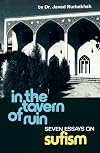
Javad Nurbakhsh was the longtime head of one of the schools of the Nimatullahi Sufi order. His organizing was originally based in Iran, but he was instrumental in bringing this order (or tariqa) to the West, both prior to and more so after his emigration following the ascension of Iran's revolutionary government. When this edition of In the Tavern of Ruin was issued, it included fifteen postal addresses for the order in the US and Europe--although it is not specified whether these were all show more actual locations of khaniqas, or simply contact addresses.
"The Tavern of Ruin" is a name for the "spiritual state" that succeeds fana (i.e. annihilation, translated by Nurbakhsh as "self-having-passed-away-in-God"), and is thus parallel to the City of the Pyramids in Thelemic parlance. The book under this title is a collection of five essays, a lecture, and a FAQ. The lecture and the FAQ, being both very general in scope, have a certain amount of redundancy between them. Throughout the collection, which is listed as the first in a numbered series of Nurbakhsh's works, there are block quotes from past Sufi masters, usually in poetry, at a rate of one or two per page.
The essay on "Steps of the Path" is a very wide-angle view, more concerned to stress the nature of Sufi attainent than to review the details of the process. By contrast, the "Sama" essay, regarding the Sufi's mystical experience of music as a specific practice, is quite technical and prescriptive. Another piece of the latter type is "The Rules and Manners of the Khaniqah," which concerns itself with the governance and customs of the residential facilities (or profess-houses) of the Nimatullahi Order. I found this piece to be of special interest; it comprehends ethical, ritual, and cultural topics. The final essay of the book is "Master and Disciple," which provides a distinct Sufi perspective on the traditional mysticism of guru yoga as deployed in many systems, including that of A.'.A.'.
In several of the texts in this volume, Nurbakhsh goes out of his way to remonstrate against false Sufis. Despite a genuine ascetic tradition in the history of Sufism, he insists that asceticism is essentially foreign to Sufi work, and that ascetic practices are only prescribed therapeutically for certain aspirants. As an organizer, Nurbakhsh was understandably concerned about fakirs and "those who call themselves Sufis" confusing aspirants and soiling what he saw as an integral tradition. The non-Nimatullahi reader may take some of these statements with a grain of salt, however. show less
"The Tavern of Ruin" is a name for the "spiritual state" that succeeds fana (i.e. annihilation, translated by Nurbakhsh as "self-having-passed-away-in-God"), and is thus parallel to the City of the Pyramids in Thelemic parlance. The book under this title is a collection of five essays, a lecture, and a FAQ. The lecture and the FAQ, being both very general in scope, have a certain amount of redundancy between them. Throughout the collection, which is listed as the first in a numbered series of Nurbakhsh's works, there are block quotes from past Sufi masters, usually in poetry, at a rate of one or two per page.
The essay on "Steps of the Path" is a very wide-angle view, more concerned to stress the nature of Sufi attainent than to review the details of the process. By contrast, the "Sama" essay, regarding the Sufi's mystical experience of music as a specific practice, is quite technical and prescriptive. Another piece of the latter type is "The Rules and Manners of the Khaniqah," which concerns itself with the governance and customs of the residential facilities (or profess-houses) of the Nimatullahi Order. I found this piece to be of special interest; it comprehends ethical, ritual, and cultural topics. The final essay of the book is "Master and Disciple," which provides a distinct Sufi perspective on the traditional mysticism of guru yoga as deployed in many systems, including that of A.'.A.'.
In several of the texts in this volume, Nurbakhsh goes out of his way to remonstrate against false Sufis. Despite a genuine ascetic tradition in the history of Sufism, he insists that asceticism is essentially foreign to Sufi work, and that ascetic practices are only prescribed therapeutically for certain aspirants. As an organizer, Nurbakhsh was understandably concerned about fakirs and "those who call themselves Sufis" confusing aspirants and soiling what he saw as an integral tradition. The non-Nimatullahi reader may take some of these statements with a grain of salt, however. show less
If you don't read Arabic, all of the sayings about Jesus in Islamic literature are largely beyond you except for collections of the sayings in volumes like this.
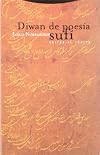
Este 'diwan' del doctor Nurbakhsh, Maestro de la Orden Nematollāhí, se inscribe en la mejor tradición de la poesía mística sufí, una poesía nacida de la experiencia interior en el «camino de los enamorados», cuya única meta es Dios, el Amado, es decir, Él, sólo Él. Cantar del alma, poesía que canta desde lo más hondo una presencia deslumbradora que está más allá de las palabras, pero que, al mismo tiempo, las despierta para fijar en ellas el «recuerdo» constante del show more Amado: la dolorosa nostalgia de su ausencia y la ebriedad gozosa de su presencia. Como profundo conocedor de la tradición sufi, el doctor Nurbakhsh recoge, en estos poemas, los conceptos esenciales y el rico simbolismo de esa tradición, recreada desde sus fuentes más puras. Como Maestro de la Orden Nematollāhí, fiel al significado de su nombre, «dador de luz», ilumina con su enseñanza la senda mística, inspirada en un código caballeresco que implica generosidad, altruismo, sacrificio, compasión, sinceridad y humildad. Como poeta enamorado, absorto enteramente en Dios, canta, desde la libertad y desde el rapto, la bienaventuranza del amor, con el lenguaje paradójico de los místicos, hermosamente contradictorio: presencia/ausencia, ebriedad/sobriedad, reunión/dispersión, vecindad/lejanía, gozo/pena... «Dios es Belleza y ama la belleza» dice una tradición profética. Podíamos añadir, evocando a san Juan de la Cruz, que estos poemas, tan intensos, tan bellos, sólo cantan a la Belleza absoluta, añorándola con «un no sé qué que quedan, balbuciendo...». -
This 'diwan' of Doctor Nurbakhsh, Master of the Order Nematollāhí, is inscribed in the best tradition of Sufi mystical poetry, a poetry born of inner experience in the "way of lovers", whose only goal is God, the Beloved , that is to say, He, only He. Singing of the soul, poetry that sings from the deepest a dazzling presence that is beyond the words, but that, at the same time, awakens them to fix in them the constant "memory" of the Beloved: the painful nostalgia for his absence and the joyful drunkenness of his presence. As a profound connoisseur of the Sufi tradition, Dr. Nurbakhsh collects, in these poems, the essential concepts and the rich symbolism of that tradition, recreated from its purest sources. As Master of the Order Nematollāhí, faithful to the meaning of his name, "giver of light", he illuminates with his teaching the mystical path, inspired by a chivalric code that implies generosity, altruism, sacrifice, compassion, sincerity and humility. As a poet in love, absorbed entirely in God, he sings, from freedom and from the rapture, the bliss of love, with the paradoxical language of the mystics, beautifully contradictory: presence / absence, drunkenness / sobriety, reunion / dispersion, neighborhood / distance , joy / sorrow ... «God is Beauty and loves beauty» says a prophetic tradition. We could add, evoking to Saint John of the Cross, that these poems, so intense, so beautiful, only sing to Absolute Beauty, missing her with "I do not know what they are, stammering ...". show less
This 'diwan' of Doctor Nurbakhsh, Master of the Order Nematollāhí, is inscribed in the best tradition of Sufi mystical poetry, a poetry born of inner experience in the "way of lovers", whose only goal is God, the Beloved , that is to say, He, only He. Singing of the soul, poetry that sings from the deepest a dazzling presence that is beyond the words, but that, at the same time, awakens them to fix in them the constant "memory" of the Beloved: the painful nostalgia for his absence and the joyful drunkenness of his presence. As a profound connoisseur of the Sufi tradition, Dr. Nurbakhsh collects, in these poems, the essential concepts and the rich symbolism of that tradition, recreated from its purest sources. As Master of the Order Nematollāhí, faithful to the meaning of his name, "giver of light", he illuminates with his teaching the mystical path, inspired by a chivalric code that implies generosity, altruism, sacrifice, compassion, sincerity and humility. As a poet in love, absorbed entirely in God, he sings, from freedom and from the rapture, the bliss of love, with the paradoxical language of the mystics, beautifully contradictory: presence / absence, drunkenness / sobriety, reunion / dispersion, neighborhood / distance , joy / sorrow ... «God is Beauty and loves beauty» says a prophetic tradition. We could add, evoking to Saint John of the Cross, that these poems, so intense, so beautiful, only sing to Absolute Beauty, missing her with "I do not know what they are, stammering ...". show less

MUJERES SUFÍES
"Oh Dios mio!, Si Te adoro por miedo al infierno, guémame
en él. Si Te adoro por la esperanza del paraiso, exchiyeme de él. Pero si
Te adoro sólo por Ti mismo, no apartes de mi tu Eterna Belleza".
Esta oración de Rabe'ah 'Adawiya, una sufi del siglo VIlI d. C
resume perfectamente la altura mistica que alcanzaron algunas de estas
mujeres, así como define en muy pocas palabras al sufismo, como
religión del exclusivo amor hacia Dios
El Dr. Nurbakhsh, maestro de la orden show more Nematollahi, ha recopilado en esta
obra biografias, anécdetas, poemas y oraciones de algunas de las mujeres
que han destacado en el sufismo a lo largo de su historia.
Que el ejemplo de estas santas mujeres sirva de guía a los
lectores en su camino en busca de la Verdad show less
"Oh Dios mio!, Si Te adoro por miedo al infierno, guémame
en él. Si Te adoro por la esperanza del paraiso, exchiyeme de él. Pero si
Te adoro sólo por Ti mismo, no apartes de mi tu Eterna Belleza".
Esta oración de Rabe'ah 'Adawiya, una sufi del siglo VIlI d. C
resume perfectamente la altura mistica que alcanzaron algunas de estas
mujeres, así como define en muy pocas palabras al sufismo, como
religión del exclusivo amor hacia Dios
El Dr. Nurbakhsh, maestro de la orden show more Nematollahi, ha recopilado en esta
obra biografias, anécdetas, poemas y oraciones de algunas de las mujeres
que han destacado en el sufismo a lo largo de su historia.
Que el ejemplo de estas santas mujeres sirva de guía a los
lectores en su camino en busca de la Verdad show less
Aug 29, 2018Spanish
You May Also Like


Associated Authors
Statistics
- Works
- 43
- Also by
- 2
- Members
- 296
- Popularity
- #79,167
- Rating
- 3.5
- Reviews
- 31
- ISBNs
- 65
- Languages
- 6
- Favorited
- 1