
Warren Zanes
Author of Petty: The Biography
Works by Warren Zanes
Associated Works
Tagged
Common Knowledge
- Birthdate
- 1965
- Gender
- male
- Education
- University of Wisconsin, Madison
University of Rochester (PhD, Visual and Cultural Studies) - Occupations
- writer
music producer
professor
musician - Organizations
- New York University
Case Western Reserve University
Rochester Institute of Technology
Rock and Roll Hall of Fame - Short biography
- [from author's website]
Warren Zanes is a New York Times bestselling author, a Grammy-nominated documentary producer, and a professor currently teaching at at New York University.
As a teenager, Warren Zanes joined The Del Fuegos, making three records for Slash/Warner Bros.. Later, after earning his Ph.D in Visual and Cultural Studies from The University of Rochester, Zanes released Memory Girls, the first of four solo recordings made for Dualtone Nashville.
In the non-profit area, Warren was the Vice President of Education and Public Programs at The Rock and Roll Hall of Fame and, for ten years, Executive Director of The Rock and Roll Forever Foundation.
His books include Dusty in Memphis, the first volume in the celebrated 33 1/3 Series, Petty: The Biography, Revolutions in Sound: Warner Bros. Records, and his new book about Bruce Springsteen's Nebraska, Deliver Me from Nowhere. With Garth Brooks, Zanes has worked on five books in the artist's Anthology Series.
Among his work in film, Zanes was a consulting producer on the Oscar-winning Twenty Feet from Stardom, a producer on the Grammy-nominated PBS/Soundbreaking series, conducted interviews for Martin Scorsese's George Harrison: Living in the Material World, and served as writer for The Gift: The Journey of Johnny Cash.
He is an active member of both poet Paul Muldoon's Rogue Oliphant collective and a family that includes his sons, Lucian and Piero. - Nationality
- USA
- Birthplace
- Exeter, New Hampshire, USA
- Places of residence
- Montclair, New Jersey, USA
- Associated Place (for map)
- USA
Members
Reviews

Petty: The Biography by Warren Zanes is a 2015 Henry Holt and Co. Publication.
Think of me what you will, I’ve got a little space to fill…
I’ve shared with you my love/hate relationship with rock bios. I decided early on not to read this one because Tom Petty was so special to me. I did NOT want to read a botched biography of TP.
I had forgotten about it until recently, when I checked out the new autobiography of Stevie Nicks. This book was on one of those 'also recommended for you' show more listings, so decided to check out the ratings and read a few reviews of the book. I also did a little research on the author, and decided this one might really be on the up and up.
Yet, I still hesitated. I’ve been a fan of many rock groups over the years, gone through trends like most other people, but one constant, since high school, was Tom Petty. The older I got, the more we connected and the more I appreciated his style. Often his anger, his angst, and his humor matched my own.
Tom and I had some long conversations lasting deep into the night sometimes. His music resonated with me in a way no other band has ever been able to. As my kids grew older, they too became big fans, if that tells you anything, and I am so pleased we were able to take them to see Tom Petty and the Heartbreakers back in 2005.
But, as I was reeling from the horrifying mass shooting in Vegas, Tom went into cardiac arrest and never regained consciousness. In a year when I’ve suffered from one of the deepest, darkest depressions I’ve ever experienced, losing my best rock and roll buddy, left me feeling utterly bereft. I really took it hard. I couldn't even listen to his music there for a while.
So, I wasn’t sure if I was ready for this intimate look at his life. The loss is still too raw. But, on second thought, I felt that maybe it would be cathartic.
I think reading this book now, as opposed to reading it while he was still alive, made it a more poignant journey, but ultimately, I’m glad I tucked away my misgivings. This might be the most honest, in depth, and realistic look at a rock artist that I’ve read. Warren was a friend of Tom’s and Tom was involved in the writing of this book to some degree, so I’m comfortable with the authenticity of the shared information.
While this book follows the logical chronological format, beginning with the family tree, Tom’s upbringing, musical beginnings, and so on until he became a full-fledged rock star, working with the likes of Bob Dylan and George Harrison.
But, it’s also a very in depth and personal look at the man behind the rock star persona. It’s raw, pulls no punches, exposes insecurities, flaws, and demons. His private life and professional life was separate, but not equal. He was often under intense pressures, no one, not even those who were close to him, could have guessed at, and it took its toll.
Sometimes he fell into the stereotypical traps of stardom, sometimes he rebelled hard against the system. But, in the end, he was his own man, foibles and all.
I think he found a balance in the latter years of his life, in his second marriage, which seemed to stabilize him after years of internal hardships.
His music was always solid rock and roll, whether it was with the Heartbreakers or The Wilburys, or in his solo material. He had moments of deep reflections, of acidic criticisms, and angsty heartbreak, but he often showed a light, humorous side, too. His songwriting skills were incredible, his insights invaluable.
Most rock bios, the authorized or not, have a really hard time capturing that all too elusive glimpse into the kind person the subject really is. They can relate the various ups and downs, achievements and disappointments, and spell out the nature of all the relationships they’ve had, professional and personal, but rarely do I feel as though I could see through all the smoke and mirrors, behind the barrier and security measures. In this case, I think I did see into Tom’s soul to some extent. He was much more complicated and complex than I would have thought, and struggled with issues I wouldn’t have associated with him, but he also worked to deal with his problems, and I respected his ability to admit his shortcomings.
‘People come, people go
Some grow young, some grow cold
Tom was a rock star in every sense of the word, and he took full advantage of that privilege, he occasionally exhibited a great deal of moodiness, triteness, arrogance, and entitled outbursts, but, he had principles, and a depth to him, you rarely see from someone in that business, especially after all those years, when he could have become a hardened, jaded, jerk. In fact, I think he was moving towards a good place, where he beginning to win the battle over the demons that plagued him. I do want to believe that, and I hope that was the case.
There have been some casual fans or those who just didn’t listen to Tom Petty’s music, but I’ve never heard anyone say they didn’t like him. He was the coolest rock star ever. I still can’t believe he’s gone. He was only 66, with so much left to give. But, his talent and music will always have a very special place in my heart-
And Tom if you are watching- I promise-
I'll stand my ground
Won't be turned around
And I'll keep this world from draggin' me down
Gonna stand my ground
AND I WON'T BACK DOWN show less
Think of me what you will, I’ve got a little space to fill…
I’ve shared with you my love/hate relationship with rock bios. I decided early on not to read this one because Tom Petty was so special to me. I did NOT want to read a botched biography of TP.
I had forgotten about it until recently, when I checked out the new autobiography of Stevie Nicks. This book was on one of those 'also recommended for you' show more listings, so decided to check out the ratings and read a few reviews of the book. I also did a little research on the author, and decided this one might really be on the up and up.
Yet, I still hesitated. I’ve been a fan of many rock groups over the years, gone through trends like most other people, but one constant, since high school, was Tom Petty. The older I got, the more we connected and the more I appreciated his style. Often his anger, his angst, and his humor matched my own.
Tom and I had some long conversations lasting deep into the night sometimes. His music resonated with me in a way no other band has ever been able to. As my kids grew older, they too became big fans, if that tells you anything, and I am so pleased we were able to take them to see Tom Petty and the Heartbreakers back in 2005.
But, as I was reeling from the horrifying mass shooting in Vegas, Tom went into cardiac arrest and never regained consciousness. In a year when I’ve suffered from one of the deepest, darkest depressions I’ve ever experienced, losing my best rock and roll buddy, left me feeling utterly bereft. I really took it hard. I couldn't even listen to his music there for a while.
So, I wasn’t sure if I was ready for this intimate look at his life. The loss is still too raw. But, on second thought, I felt that maybe it would be cathartic.
I think reading this book now, as opposed to reading it while he was still alive, made it a more poignant journey, but ultimately, I’m glad I tucked away my misgivings. This might be the most honest, in depth, and realistic look at a rock artist that I’ve read. Warren was a friend of Tom’s and Tom was involved in the writing of this book to some degree, so I’m comfortable with the authenticity of the shared information.
While this book follows the logical chronological format, beginning with the family tree, Tom’s upbringing, musical beginnings, and so on until he became a full-fledged rock star, working with the likes of Bob Dylan and George Harrison.
But, it’s also a very in depth and personal look at the man behind the rock star persona. It’s raw, pulls no punches, exposes insecurities, flaws, and demons. His private life and professional life was separate, but not equal. He was often under intense pressures, no one, not even those who were close to him, could have guessed at, and it took its toll.
Sometimes he fell into the stereotypical traps of stardom, sometimes he rebelled hard against the system. But, in the end, he was his own man, foibles and all.
I think he found a balance in the latter years of his life, in his second marriage, which seemed to stabilize him after years of internal hardships.
His music was always solid rock and roll, whether it was with the Heartbreakers or The Wilburys, or in his solo material. He had moments of deep reflections, of acidic criticisms, and angsty heartbreak, but he often showed a light, humorous side, too. His songwriting skills were incredible, his insights invaluable.
Most rock bios, the authorized or not, have a really hard time capturing that all too elusive glimpse into the kind person the subject really is. They can relate the various ups and downs, achievements and disappointments, and spell out the nature of all the relationships they’ve had, professional and personal, but rarely do I feel as though I could see through all the smoke and mirrors, behind the barrier and security measures. In this case, I think I did see into Tom’s soul to some extent. He was much more complicated and complex than I would have thought, and struggled with issues I wouldn’t have associated with him, but he also worked to deal with his problems, and I respected his ability to admit his shortcomings.
‘People come, people go
Some grow young, some grow cold
Tom was a rock star in every sense of the word, and he took full advantage of that privilege, he occasionally exhibited a great deal of moodiness, triteness, arrogance, and entitled outbursts, but, he had principles, and a depth to him, you rarely see from someone in that business, especially after all those years, when he could have become a hardened, jaded, jerk. In fact, I think he was moving towards a good place, where he beginning to win the battle over the demons that plagued him. I do want to believe that, and I hope that was the case.
There have been some casual fans or those who just didn’t listen to Tom Petty’s music, but I’ve never heard anyone say they didn’t like him. He was the coolest rock star ever. I still can’t believe he’s gone. He was only 66, with so much left to give. But, his talent and music will always have a very special place in my heart-
And Tom if you are watching- I promise-
I'll stand my ground
Won't be turned around
And I'll keep this world from draggin' me down
Gonna stand my ground
AND I WON'T BACK DOWN show less

There is a strong case to be made that Tom Petty and the Heartbreakers were the greatest rock-and-roll band to ever exist. They did not have the iconic cultural impact of the Beatles, or the contrariness of the Stones, or the ornate hedonism of Led Zeppelin, but on every other metric – particularly those concerned solely with the music – the Heartbreakers are up there.
Maybe they're ignored because it's so overwhelming to consider their achievement. This is an outfit that, for an show more unprecedented forty years, turned out all killer, no filler. Damn the Torpedoes, Full Moon Fever and Wildflowers are all acknowledged masterpieces, and can stand with the likes of Revolver and Exile on Main St., but even their 'lesser' albums would be any other band's crowning achievement. (Yes, I know Full Moon Fever and Wildflowers are solo albums.) When, in 2007, Peter Bogdanovich cut Runnin' Down a Dream, a feature-length documentary film about the band, it was eight hours long. A tough editing process got it down to four hours. When I sat down to watch the DVD as a sceptical teenager in 2008, having rapidly become a fan of the Heartbreakers' music, I expected I would watch it in instalments over a number of days. I ended up watching it all in one sitting, plus the bonus live DVD. The story is a fascinating one, even if you can't exactly pinpoint why. And the even more remarkable thing is that when I picked up Warren Zanes' biography of Petty, I found there was even more to the story than I thought.
The book would be an essential read even if its only selling point was that it covered previously untouched or under-represented areas, such as the Mudcrutch years, Petty's heroin addiction, or the perspectives of Stan Lynch and Bugs Weidel. But what Zanes' book also does is re-orient the story: this is very much a biography of Tom Petty, rather than the entity of 'Tom Petty and the Heartbreakers'. With Zanes' guiding hand, we get into what drove the man: his desires and ambitions, his anxieties and isolation. If the Runnin' Down a Dream documentary was a celebration, this is an exploration.
Neither book nor film is a hagiography. One impression that the reader gets is that Petty took the world on his shoulders, but the book doesn't make him a saint. One telling passage comes from – of all places – the Acknowledgements page:
"There were times I knew I was writing things that would be hard for Tom to see in print. But he always insisted that this was my book, and he wasn't there to say what went in and what didn't. He was there to work with me, but he didn't want it to be a whitewashed account." (pg. 313)
Alongside the fascinating story of the band – Zanes is excellent on band dynamics – it is perhaps this passage which hints at what draws people to Petty. His authenticity. The man could write songs and plant them in your head in such a way that it feels like they not only belong there, but like you had been waiting for them. You could ask a hundred die-hard fans for their favourite Petty song and they'd come up with a hundred different answers – and all of them would have a good case. He loved the music more than the fame, the girls, the money. Battle-hardened veterans of the industry like Bob Dylan, George Harrison and Johnny Cash – men who saw the need for strong defences – not only opened up to him but in many cases sought him out. The man had soul. And perhaps this is why Petty's death – two years after Zanes' book was published – still feels like a gut-punch. Because this was one of the genuine ones. One of the very few.
Reading Zanes' book in light of Petty's death, some of that gut-punch can be absorbed and healed. It was such a massive shock at the time, and that shock incorporated (undirected) anger and heartbreak when the circumstances were revealed: at the age of sixty-six, Tom Petty had been going up on stage night after night with a fractured hip, which had graduated to a full-on break, and had overdosed on the pain medication he was taking to get through the tour. He didn't want to let the fans down, he didn't want to let the crew down, and he didn't want to leave a job unfinished. He had planned to make it his last tour, so that he could focus on the studio and on spending time with his grand-daughter, only to die a week after the final night.
In some ways, the book's revelations make this harder: he had clearly found some inner peace in his later years, and one anecdote about his grand-daughter (a simple moment which Petty calls "one of the great moments of my life" (pg. 305)) is bittersweet in retrospect. At the same time, you also begin to understand why Petty felt he had to carry on, and why no one around him in the band or their entourage made him stop. Lines from the book, going back in some cases to the 1970s, make even more sense in light of the final tragedy: "his job, he felt, was to keep it all together" (pg. 166); "the Heartbreakers didn't do that kind of intimacy" (pg. 157); "with a record on the charts and a lot of people looking to him for their livelihoods, Petty didn't make his nerves anyone else's problem" (pg. 156); "there was tension, and no one – true to Heartbreakers style – was addressing it directly" (pg. 261). There's no need to assign blame, either to Tom or anyone (nor do we have the right to), but it's frustrating to know that if Petty had let the extent of his hip problems be known, the love and regard his fans had for him would have almost certainly seen an immediate disappointment regarding ticket refunds swept away by a demand that he take a rest.
Ultimately, Zanes' biography is an excellent, intimate insight past the "tinted windows" that Tom Petty kept on his soul (pg. 217). It is measured, mercurial and carefully crafted, hitting both the high and low notes with authority and sincerity: in short, a fitting reflection of the principles that guided its subject matter. Though the book can be heartbreaking to read, the story is ultimately one of ascendancy and triumph, even in light of the subsequent tragic end. As Bugs Weidel remarks on page 305, "as an artist, as a husband, as a father, as a friend… this guy has spent his life trying to improve. In every single way." And he did it. This was a Southern shitkicker born in a swamp, who became one of the greatest rock stars in history, constructing and collaborating with an incredible band with an incredible sound, one that captured the essence of rock-and-roll, of American freedom. He was the guy who united the states: in the argument over which acts were the best, "Petty was the guy most everybody agreed on" (pg. 7). He grew up listening to the Beatles and Dylan and Cash and Carl Perkins and Del Shannon, and later worked with them as equals. He wrote hundreds of songs that, taken individually, can stand alongside the very best of any songwriter, but taken collectively over a forty-plus-year career, are a measure of quality and consistency that is, to my mind, unparalleled. His death was a raw moment for millions who had never even met him. Books like Zanes' help you understand him, and this helps level the playing field somewhat. Because listen to him for three minutes of a song and you feel like he knows you. show less
Maybe they're ignored because it's so overwhelming to consider their achievement. This is an outfit that, for an show more unprecedented forty years, turned out all killer, no filler. Damn the Torpedoes, Full Moon Fever and Wildflowers are all acknowledged masterpieces, and can stand with the likes of Revolver and Exile on Main St., but even their 'lesser' albums would be any other band's crowning achievement. (Yes, I know Full Moon Fever and Wildflowers are solo albums.) When, in 2007, Peter Bogdanovich cut Runnin' Down a Dream, a feature-length documentary film about the band, it was eight hours long. A tough editing process got it down to four hours. When I sat down to watch the DVD as a sceptical teenager in 2008, having rapidly become a fan of the Heartbreakers' music, I expected I would watch it in instalments over a number of days. I ended up watching it all in one sitting, plus the bonus live DVD. The story is a fascinating one, even if you can't exactly pinpoint why. And the even more remarkable thing is that when I picked up Warren Zanes' biography of Petty, I found there was even more to the story than I thought.
The book would be an essential read even if its only selling point was that it covered previously untouched or under-represented areas, such as the Mudcrutch years, Petty's heroin addiction, or the perspectives of Stan Lynch and Bugs Weidel. But what Zanes' book also does is re-orient the story: this is very much a biography of Tom Petty, rather than the entity of 'Tom Petty and the Heartbreakers'. With Zanes' guiding hand, we get into what drove the man: his desires and ambitions, his anxieties and isolation. If the Runnin' Down a Dream documentary was a celebration, this is an exploration.
Neither book nor film is a hagiography. One impression that the reader gets is that Petty took the world on his shoulders, but the book doesn't make him a saint. One telling passage comes from – of all places – the Acknowledgements page:
"There were times I knew I was writing things that would be hard for Tom to see in print. But he always insisted that this was my book, and he wasn't there to say what went in and what didn't. He was there to work with me, but he didn't want it to be a whitewashed account." (pg. 313)
Alongside the fascinating story of the band – Zanes is excellent on band dynamics – it is perhaps this passage which hints at what draws people to Petty. His authenticity. The man could write songs and plant them in your head in such a way that it feels like they not only belong there, but like you had been waiting for them. You could ask a hundred die-hard fans for their favourite Petty song and they'd come up with a hundred different answers – and all of them would have a good case. He loved the music more than the fame, the girls, the money. Battle-hardened veterans of the industry like Bob Dylan, George Harrison and Johnny Cash – men who saw the need for strong defences – not only opened up to him but in many cases sought him out. The man had soul. And perhaps this is why Petty's death – two years after Zanes' book was published – still feels like a gut-punch. Because this was one of the genuine ones. One of the very few.
Reading Zanes' book in light of Petty's death, some of that gut-punch can be absorbed and healed. It was such a massive shock at the time, and that shock incorporated (undirected) anger and heartbreak when the circumstances were revealed: at the age of sixty-six, Tom Petty had been going up on stage night after night with a fractured hip, which had graduated to a full-on break, and had overdosed on the pain medication he was taking to get through the tour. He didn't want to let the fans down, he didn't want to let the crew down, and he didn't want to leave a job unfinished. He had planned to make it his last tour, so that he could focus on the studio and on spending time with his grand-daughter, only to die a week after the final night.
In some ways, the book's revelations make this harder: he had clearly found some inner peace in his later years, and one anecdote about his grand-daughter (a simple moment which Petty calls "one of the great moments of my life" (pg. 305)) is bittersweet in retrospect. At the same time, you also begin to understand why Petty felt he had to carry on, and why no one around him in the band or their entourage made him stop. Lines from the book, going back in some cases to the 1970s, make even more sense in light of the final tragedy: "his job, he felt, was to keep it all together" (pg. 166); "the Heartbreakers didn't do that kind of intimacy" (pg. 157); "with a record on the charts and a lot of people looking to him for their livelihoods, Petty didn't make his nerves anyone else's problem" (pg. 156); "there was tension, and no one – true to Heartbreakers style – was addressing it directly" (pg. 261). There's no need to assign blame, either to Tom or anyone (nor do we have the right to), but it's frustrating to know that if Petty had let the extent of his hip problems be known, the love and regard his fans had for him would have almost certainly seen an immediate disappointment regarding ticket refunds swept away by a demand that he take a rest.
Ultimately, Zanes' biography is an excellent, intimate insight past the "tinted windows" that Tom Petty kept on his soul (pg. 217). It is measured, mercurial and carefully crafted, hitting both the high and low notes with authority and sincerity: in short, a fitting reflection of the principles that guided its subject matter. Though the book can be heartbreaking to read, the story is ultimately one of ascendancy and triumph, even in light of the subsequent tragic end. As Bugs Weidel remarks on page 305, "as an artist, as a husband, as a father, as a friend… this guy has spent his life trying to improve. In every single way." And he did it. This was a Southern shitkicker born in a swamp, who became one of the greatest rock stars in history, constructing and collaborating with an incredible band with an incredible sound, one that captured the essence of rock-and-roll, of American freedom. He was the guy who united the states: in the argument over which acts were the best, "Petty was the guy most everybody agreed on" (pg. 7). He grew up listening to the Beatles and Dylan and Cash and Carl Perkins and Del Shannon, and later worked with them as equals. He wrote hundreds of songs that, taken individually, can stand alongside the very best of any songwriter, but taken collectively over a forty-plus-year career, are a measure of quality and consistency that is, to my mind, unparalleled. His death was a raw moment for millions who had never even met him. Books like Zanes' help you understand him, and this helps level the playing field somewhat. Because listen to him for three minutes of a song and you feel like he knows you. show less
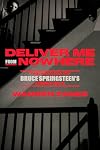
Deliver Me from Nowhere by Warren Zanes is a fascinating look at both this superb album and the creative process in general, with plenty of input from Springsteen himself.
Though not immediately embraced on a large scale, Nebraska was loved by those who did appreciate it immediately. I was one of those and it wasn't because we, any of us, were musical experts, it was because of how it spoke to us personally. That also explains why it gained in popularity as time went on, as people experienced show more more of the ups and, especially, downs of life the album spoke to them more and more. This book dives into both how Springsteen captured that feeling (by capturing that sound) and why, at that point in his career, it was something he needed to do. For his own wellbeing and, ultimately, for the band.
The writing here is excellent and Springsteen's comments and insights are used wonderfully to highlight Zanes' journey through the research and writing of the book. While a fair amount of the information isn't new, it is presented in a more contextualized manner than the scattered anecdotes we are familiar with.
Of the many books on Springsteen I've read, I find I tend toward the more academic (or at least the less sensationalized). Several, including a recent read on women fandom, focus on audience reception as much as music production or biographical information. This volume is an ideal mix for me, serious but accessible, about the making of the music as well as the reception, and most important a lack of sensationalism just to sell the book.
Recommended for Springsteen fans (even old ones like me that still think of Born in the USA as the later Springsteen, though now I guess I would have to change that to the middle Springsteen) as well as music fans in general. Those readers who enjoy learning more about the hows and whys of an album will particularly enjoy this.
Reviewed from a copy made available by the publisher via NetGalley. show less
Though not immediately embraced on a large scale, Nebraska was loved by those who did appreciate it immediately. I was one of those and it wasn't because we, any of us, were musical experts, it was because of how it spoke to us personally. That also explains why it gained in popularity as time went on, as people experienced show more more of the ups and, especially, downs of life the album spoke to them more and more. This book dives into both how Springsteen captured that feeling (by capturing that sound) and why, at that point in his career, it was something he needed to do. For his own wellbeing and, ultimately, for the band.
The writing here is excellent and Springsteen's comments and insights are used wonderfully to highlight Zanes' journey through the research and writing of the book. While a fair amount of the information isn't new, it is presented in a more contextualized manner than the scattered anecdotes we are familiar with.
Of the many books on Springsteen I've read, I find I tend toward the more academic (or at least the less sensationalized). Several, including a recent read on women fandom, focus on audience reception as much as music production or biographical information. This volume is an ideal mix for me, serious but accessible, about the making of the music as well as the reception, and most important a lack of sensationalism just to sell the book.
Recommended for Springsteen fans (even old ones like me that still think of Born in the USA as the later Springsteen, though now I guess I would have to change that to the middle Springsteen) as well as music fans in general. Those readers who enjoy learning more about the hows and whys of an album will particularly enjoy this.
Reviewed from a copy made available by the publisher via NetGalley. show less
Warren Zanes is one of the very best music writers of the last half century. His book on Tom Petty is one of my favorite rock biographies, and I'm not even a particular fan of Petty (although that book raised my opinion of him by quite a few notches). Zanes understands musicians, having been one himself, and the more famous musicians he writes about seem to trust him in turn. And Zanes brings, beyond the empathy that comes from having tread many of the same boards, a shrewd intelligence show more about human character and about art. He knows what to ask, and he understands the questions that their answers pose. Nobody else could have written this book.
My personal theory concerning Nebraska is that its fans tend to be those who have been to the depths. If you've been there, you can hear it in these bleak songs of despair, suicide and murder. Arguably, Springsteen didn't know he was headed for a breakdown at the time, but he was, he had it, and he's open about it now. So you can read it to see how one man turned his demons into art, and, if you're not of one of the afflicted, you can read it just for the stories and for the insight into the collaborative project of putting out a record. It's a quick read, and a good one, and more than worthwhile for anyone who's ever loved a song. show less
My personal theory concerning Nebraska is that its fans tend to be those who have been to the depths. If you've been there, you can hear it in these bleak songs of despair, suicide and murder. Arguably, Springsteen didn't know he was headed for a breakdown at the time, but he was, he had it, and he's open about it now. So you can read it to see how one man turned his demons into art, and, if you're not of one of the afflicted, you can read it just for the stories and for the insight into the collaborative project of putting out a record. It's a quick read, and a good one, and more than worthwhile for anyone who's ever loved a song. show less
Lists
Awards

You May Also Like


Associated Authors
Statistics
- Works
- 6
- Also by
- 1
- Members
- 491
- Popularity
- #50,319
- Rating
- 4.1
- Reviews
- 41
- ISBNs
- 16
- Languages
- 2
