
Linda Lafferty
Author of The Bloodletter's Daughter
Works by Linda Lafferty
Tagged
Common Knowledge
- Canonical name
- Lafferty, Linda
- Gender
- female
- Education
- University of Colorado
- Places of residence
- Colorado, USA
- Associated Place (for map)
- Colorado, USA
Members
Reviews
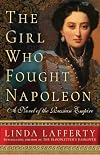
I have long been fascinated with Russia. I took two years of Russian in high school (which, so many years later, leaves me capable of the names of a couple of animals, fruits, please, thank-you, "My name is...," and the like). I took a "Russian-Soviet Life" class in high school and a "Russia to 1900" class in college. I have read many of the Russian greats and a few of the banned Soviets as well. So this novel of the Russian Empire, set in the waning years of Catherine the Great, her son show more Paul I, and grandson Alexander I's rules, was something I knew would sustain my interest. Finding out that the premise of a girl who fled her home and joined the Russian cavalry to fight Napoleon was based on a true story made it all that much more appealing.
Nadezhda Durova is born to a Russian army officer and his Ukrainian wife. A disappointment to her mother, she grows up wild and indulged while her family follows the drum. When he father finally retires, she is suddenly faced with her mother's strictures and ideas of how a proper lady comports herself. Chafing under this contained life, Nadezhda runs away in the middle of the night on her magnificent steed, Alcides. Dressed as a Cossack, she conspires to join the army in the guise of a young boy named Aleksandr. Throughout the years, she serves with honor and bravery, eventually taking part in the horrific Patriotic War of 1812 against Napoleon. As Nadezhda grows up and joins the army, the young Grand Duke Alexander is also growing up in St. Petersburg in his grandmother Catherine the Great's household. He is groomed to become Tsar, witness to and victim of the great animosity between his father and his grandmother. Political machinations mold and form his adolescence and young adulthood as he is thrust into a position he never desired. Nadezhda escapes the life that society would impress on her but the Tsar cannot so easily run away from his responsibilities.
The novel is told from Nadezhda's first person perspective and third person limited from Alexander I's with a few short bits focused on Napoleon. Generally the shifts occur from chapter to chapter but occasionally, and slightly confusingly, they happen within a chapter as well. The narrative is not a straight chronology either, at least in the beginning when the reader needs to pay close attention to the date headings on the chapters to figure out where in history the story is, as well as which character is dominating the story line. Although the two major story lines start off quite far apart, they do eventually cross over each other in a somewhat surprising way. Despite their intersection, they still generally felt like two different novels rather than a completely integrated whole. The Russian history was well researched and seeing Alexander I's struggles with his position, his guilt over his father's death, and his almost platonic relationship with his own wife was interesting indeed. Nadezhda's story, unknown as it seems to be here in the West, was even more interesting. Her rebellion against society and the narrow life that she could expect to lead as a woman was completely understandable and her accounts of war and the suffering of the troops was brutal. The story was generally engaging with one exception: the unexpected revelation at the end of the novel comes out of the blue and although it apparently follows the very late revelation in the real Nadezhda Durova's memoir, it is confusing and disruptive for the reader. Aside from that though, anyone interested in the life of a woman who fashions herself as she wants to be or in the years of the Romanov dynasty that this encompasses will certainly enjoy this expansive novel. show less
Nadezhda Durova is born to a Russian army officer and his Ukrainian wife. A disappointment to her mother, she grows up wild and indulged while her family follows the drum. When he father finally retires, she is suddenly faced with her mother's strictures and ideas of how a proper lady comports herself. Chafing under this contained life, Nadezhda runs away in the middle of the night on her magnificent steed, Alcides. Dressed as a Cossack, she conspires to join the army in the guise of a young boy named Aleksandr. Throughout the years, she serves with honor and bravery, eventually taking part in the horrific Patriotic War of 1812 against Napoleon. As Nadezhda grows up and joins the army, the young Grand Duke Alexander is also growing up in St. Petersburg in his grandmother Catherine the Great's household. He is groomed to become Tsar, witness to and victim of the great animosity between his father and his grandmother. Political machinations mold and form his adolescence and young adulthood as he is thrust into a position he never desired. Nadezhda escapes the life that society would impress on her but the Tsar cannot so easily run away from his responsibilities.
The novel is told from Nadezhda's first person perspective and third person limited from Alexander I's with a few short bits focused on Napoleon. Generally the shifts occur from chapter to chapter but occasionally, and slightly confusingly, they happen within a chapter as well. The narrative is not a straight chronology either, at least in the beginning when the reader needs to pay close attention to the date headings on the chapters to figure out where in history the story is, as well as which character is dominating the story line. Although the two major story lines start off quite far apart, they do eventually cross over each other in a somewhat surprising way. Despite their intersection, they still generally felt like two different novels rather than a completely integrated whole. The Russian history was well researched and seeing Alexander I's struggles with his position, his guilt over his father's death, and his almost platonic relationship with his own wife was interesting indeed. Nadezhda's story, unknown as it seems to be here in the West, was even more interesting. Her rebellion against society and the narrow life that she could expect to lead as a woman was completely understandable and her accounts of war and the suffering of the troops was brutal. The story was generally engaging with one exception: the unexpected revelation at the end of the novel comes out of the blue and although it apparently follows the very late revelation in the real Nadezhda Durova's memoir, it is confusing and disruptive for the reader. Aside from that though, anyone interested in the life of a woman who fashions herself as she wants to be or in the years of the Romanov dynasty that this encompasses will certainly enjoy this expansive novel. show less

I liked this book much more than I expected to. It kept subverting my expectations.
The title character, Ahmed Kadir, is a classic strong-and-silent type military man who lives for his duty and hides his pain. Everyone else, however, has complexities that slowly emerge over the course of the story.
The other thing I enjoyed was the importance of religion to the novel and to the characters themselves. Very passionate and very pragmatic people abstain from certain actions because of their show more beliefs. Several of the main characters were born in Christian communities but were compelled to convert to Islam after they were captured by the Ottomans. However, this is not blamed on Islam, but the political agendas of the rulers - and the converts are generally shown as embracing Islam while still cherishing aspects of their early Christian faith. Islam and Christianity are presented as equally worthy religions. show less
The title character, Ahmed Kadir, is a classic strong-and-silent type military man who lives for his duty and hides his pain. Everyone else, however, has complexities that slowly emerge over the course of the story.
The other thing I enjoyed was the importance of religion to the novel and to the characters themselves. Very passionate and very pragmatic people abstain from certain actions because of their show more beliefs. Several of the main characters were born in Christian communities but were compelled to convert to Islam after they were captured by the Ottomans. However, this is not blamed on Islam, but the political agendas of the rulers - and the converts are generally shown as embracing Islam while still cherishing aspects of their early Christian faith. Islam and Christianity are presented as equally worthy religions. show less
A lot of the reviews thought this book was slow...I didn't think so. I thought it had a nice, steady rhythm to it and I had a hard time putting it down!
If you like historical fiction, give this book a try. I thought the author did a fantastic job of recreating the era in which the story takes place. The story she weaves was believable, funny, and heartbreaking...sometimes all at once.
If you like historical fiction, give this book a try. I thought the author did a fantastic job of recreating the era in which the story takes place. The story she weaves was believable, funny, and heartbreaking...sometimes all at once.
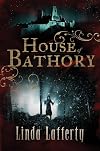
This is one of those books that is very difficult for me to rate. It's written in two distinct parts - 17th century historical fiction and present day suspense. While these two storylines are woven together and alternate throughout the book, I feel like I need to rate and review them separately.
First, the book centers around the real life Countess Bathory, or the Blood Countess, who lived in Slovakia during the 1600s. This historical aspect is incredibly well written. I felt like I was show more there in the castle, witnessing the horrendous conditions, the torture, and the desperation. I was emotionally invested in the characters and their story.
The modern part of the story, for me, is not nearly as interesting. The premise of these characters' story - of this entire book - is synchronicity. Put simply, this is a Jungian (psychology) theory where two or more events are connected, despite having no causal relationship. The use of synchronicity here leans a bit into the paranormal and is the thread tying the past to the present. While an interesting theory, it didn't make for interesting characters. I never felt connected to them, didn't totally understand their motives, and didn't always believe their actions.
One area where the book really fell apart for me came with Daisy's character. She plays a key role in the modern story and I did not find her at all believable. I don't want to give spoilers, so I'll just say that I found this especially troublesome toward the end. I wanted to scream, "Where are this girl's parents?"
I didn't like the end at all. It felt too chaotic, with too many characters all converging in order to tie everything up neatly. Again, I didn't find most of these events at all believable.
Overall, I think perhaps the story became bigger than it needed to be. Kept as historical fiction, this would have been a fascinating, 5-star read for me. But there were far too many characters and not nearly enough of the modern story to make an impact, and the book suffered because of that. show less
First, the book centers around the real life Countess Bathory, or the Blood Countess, who lived in Slovakia during the 1600s. This historical aspect is incredibly well written. I felt like I was show more there in the castle, witnessing the horrendous conditions, the torture, and the desperation. I was emotionally invested in the characters and their story.
The modern part of the story, for me, is not nearly as interesting. The premise of these characters' story - of this entire book - is synchronicity. Put simply, this is a Jungian (psychology) theory where two or more events are connected, despite having no causal relationship. The use of synchronicity here leans a bit into the paranormal and is the thread tying the past to the present. While an interesting theory, it didn't make for interesting characters. I never felt connected to them, didn't totally understand their motives, and didn't always believe their actions.
One area where the book really fell apart for me came with Daisy's character. She plays a key role in the modern story and I did not find her at all believable. I don't want to give spoilers, so I'll just say that I found this especially troublesome toward the end. I wanted to scream, "Where are this girl's parents?"
I didn't like the end at all. It felt too chaotic, with too many characters all converging in order to tie everything up neatly. Again, I didn't find most of these events at all believable.
Overall, I think perhaps the story became bigger than it needed to be. Kept as historical fiction, this would have been a fascinating, 5-star read for me. But there were far too many characters and not nearly enough of the modern story to make an impact, and the book suffered because of that. show less
Lists
Awards

You May Also Like


Statistics
- Works
- 7
- Members
- 768
- Popularity
- #33,142
- Rating
- 3.4
- Reviews
- 53
- ISBNs
- 36