
John R. Keene, Jr.
Author of Counternarratives
About the Author
Image credit: Uncredited image found at Northwestern University website.
Works by John R. Keene, Jr.
Associated Works
African American Poetry: 250 Years of Struggle and Song (2020) — Contributor — 232 copies, 4 reviews
Freedom in This Village: Twenty-Five Years of Black Gay Men's Writing (2005) — Contributor — 91 copies, 2 reviews
Love Is a Dangerous Word: The Selected Poems of Essex Hemphill (2025) — Editor, some editions; Afterword, some editions — 38 copies
Gathering Ground: A Reader Celebrating Cave Canem's First Decade (2006) — Contributor — 30 copies, 1 review
Tagged
Common Knowledge
- Birthdate
- 1965
- Gender
- male
- Education
- Harvard University (BA)
New York University (MFA) - Occupations
- professor
- Organizations
- Dark Room Collective
- Awards and honors
- Whiting Writers' Award (2005)
MacArthur Fellowship (2018) - Nationality
- USA
- Associated Place (for map)
- USA
Members
Reviews
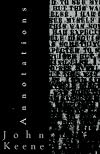
"Loneliness is solitude unfulfilled by its own presence."
A wonderful, sweet, short and difficult book. A collection of recollections from a childhood lived in St. Louis, Missouri, as witnessed by a Black queer child. The history of the town, its urban and suburban life, its geography, and its people all merge brilliantly in the observations of an adult who was once a precocious artful child.
The difficulty of the book has more to do with its form than anything else. Its style and language show more are clearly meant to be academic, complete with references and notes, which I found unusual and was new to me in a non-academic setting. It's difficult to categorize what this book is, how autobiographical it is, as well as how much is fictionalized. Also interesting in form is how memory here is jumbled, chaotic I would even say, and not sequential. As stated in the book itself: "Certain sensations are unrenderable in sequential terms." One memory does not lead to another but instead it's multiple memories all working to form a polyptych of a narrative.
Some of the other quotes I loved from the book:
"Love, therefore, assumes the status of a cynosure, when in truth it is but one outward manifestation of the internal discourse of returning."
"Simply naming, while powerful, never proves enough."
"The desire to be seen was an attempt to escape alterity, or in other words, to shift from the margins to the center."
"Sex, that sublime sum of bodily attraction, served as little more than one factor in the algebra of their juncture."
"Civility offers an acceptable way to evade the issues at hand." show less
A wonderful, sweet, short and difficult book. A collection of recollections from a childhood lived in St. Louis, Missouri, as witnessed by a Black queer child. The history of the town, its urban and suburban life, its geography, and its people all merge brilliantly in the observations of an adult who was once a precocious artful child.
The difficulty of the book has more to do with its form than anything else. Its style and language show more are clearly meant to be academic, complete with references and notes, which I found unusual and was new to me in a non-academic setting. It's difficult to categorize what this book is, how autobiographical it is, as well as how much is fictionalized. Also interesting in form is how memory here is jumbled, chaotic I would even say, and not sequential. As stated in the book itself: "Certain sensations are unrenderable in sequential terms." One memory does not lead to another but instead it's multiple memories all working to form a polyptych of a narrative.
Some of the other quotes I loved from the book:
"Love, therefore, assumes the status of a cynosure, when in truth it is but one outward manifestation of the internal discourse of returning."
"Simply naming, while powerful, never proves enough."
"The desire to be seen was an attempt to escape alterity, or in other words, to shift from the margins to the center."
"Sex, that sublime sum of bodily attraction, served as little more than one factor in the algebra of their juncture."
"Civility offers an acceptable way to evade the issues at hand." show less
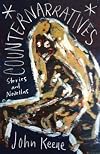
I've put off writing a review of this book for months, because I wanted to do justice to it. I can't. It's really good, really intelligent--Keene can write, and despite setting himself up for intellectual failure (the obvious problem with 'counternarratives' being that they create a Manichean world), he doesn't fail. The moral horrors of racism in the Americas are made entirely plain, as are the mechanisms used to keep it in place, but they're never attributed to some evil cabal. They are show more the social structures that form us. And technically, this is a lesson in combining formal skill and intellectual ambition with emotional heft. show less
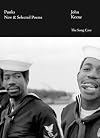
A wonderful collection that never bores and always excites the reader with its wide variety of subject material and style of presentation. Some are biographical, some observational and some experimental in approach. All are blessed with Keene's unique perspective of being a black gay artist in modern America. I can see why the book received all its well deserved plaudits and praise. A great poet at the top of his game.
This collection is not themed, but it does show the range of Keene's work. The sections of the book are themed--in content or form. And his form varies widely within the book. Some poems are paragraphs, others look like stereotypical poems on the page, others play with form and text and white space.
Topics vary widely--lgtb relationships and issues, baseball, music, places, poetry. My favorite thing about this collection is its accessibility. Most of these poems are not conversation with show more other poets. These poems can largely be understood by the average non-academic poetry reader (me).
Manzanita was my favorite section, probably because of the historical references and settings. I also really liked the poem Words in the section also titled Words. show less
Topics vary widely--lgtb relationships and issues, baseball, music, places, poetry. My favorite thing about this collection is its accessibility. Most of these poems are not conversation with show more other poets. These poems can largely be understood by the average non-academic poetry reader (me).
Manzanita was my favorite section, probably because of the historical references and settings. I also really liked the poem Words in the section also titled Words. show less
Lists
Awards


You May Also Like


Associated Authors
Statistics
- Works
- 5
- Also by
- 11
- Members
- 473
- Popularity
- #52,093
- Rating
- 4.2
- Reviews
- 9
- ISBNs
- 16
- Languages
- 3