
Liz Trenow
Author of The Forgotten Seamstress
About the Author
Liz Trenow is an author who was born and raised in England. She started out as a journalist for national newspapers, BBC radio, and television news. This lead her to a career in public relations and communications. She soon found her passion for writing. She has authored four novels: The Last show more Telegram, The Forgotten Seamstress, The Poppy Factory, and The Silk Weaver. (Bowker Author Biography) show less
Works by Liz Trenow
Tagged
Common Knowledge
Members
Reviews
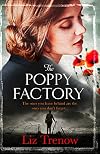
I was somehow expecting to read a run of the mill WWI novel but was absolutely blown away by this book so much so that I could not put it down.
I like how Trenow binds the experience of a young women serving in Afghanistan as a medic, with world war one soldiers. She shows Jess as feeling so capable, so able and defiantly okay after her own experience of being fired on in the field whilst helping the wounded and refuses to acknowledge that she is falling apart with Post Traumatic Stress show more Disorder (PTSD). The diaries written by Jess’s great-grandmother tells a parallel story of how PTST or shell shock as it was called then affected the lives of people after WWI.
This story is as much about how war affects communities as it is about individuals and you realise that nothing has really changed in the 100 years that have gone by, the technology of war may have changed but the affects remain the same.
There are many powerful bits to this book that have been written so sensitively the image simply stayed in my mind as I read on. The first is the sense of absolute fear and trauma for this medic is described such:
‘They were completely pinned down with their faces in the dust, unable to make any movement or noise for fear of attracting Taliban fire. …….Then she realised she was hyperventilating, and knew that she had to concentrate on something to stop herself panicking and passing out.
And then…oh God, then…she’d lifted her eyes and seen the poppy….a late bloom, a single stem topped by a single red flower…..When the firing had stopped she reopened her eyes and looked for the poppy.
It had gone.’
As Jess’s sinks into an alcoholic escape and her life falls apart, she fights the intonation that she cannot deal the nightmares and flashbacks alone.
To give a parallel of Alfie who returns from the front having lost a leg suffering the same trauma is seamless. I love the way the Rose focuses no only on herself but on a whole community in the diaries, in the same way that Trenow describes the effects on all those close to and around Jess.
There is a lot of domestic history in the descriptions from the diaries, especially the roles of women once the men returned from the war from factories to being at home and being dependent on another. Trenow allows the reader to step back in time into the lives of ordinary people, women having worked in factories, communities helping each other. Then the grieving for all the sons and fathers who never returned, but the joy of those who did and how that affected the community as a whole.
Looking beyond the regular daily visits to the pub and drink to forget, you get a sense of helplessness of not be able to leave the horrors of war behind and you begin a sense of understanding how PTSD affects individuals.
When Rose and her mother go to the new Cenotaph for Remembrance Day, reading it brought me to tears as it is written so movingly:
‘ The silence was like being in the countryside at the dead of night, or down a deep tunnel lined with velvet. You could almost touch it. ….A blackbird started up in a tree and my thoughts turned to my brothers…’
This book is an education about who started the Poppy Factory and why, as it was an integral part of the the novel both then and now. A lifeline with dignity. There is so much in this book that is still turning over in my mind, not questions but the simple truth of it.
If there is one book you should read this year it is this one.
**Thank you to the publisher for sending me this book via NetGalley for my honest review** show less
I like how Trenow binds the experience of a young women serving in Afghanistan as a medic, with world war one soldiers. She shows Jess as feeling so capable, so able and defiantly okay after her own experience of being fired on in the field whilst helping the wounded and refuses to acknowledge that she is falling apart with Post Traumatic Stress show more Disorder (PTSD). The diaries written by Jess’s great-grandmother tells a parallel story of how PTST or shell shock as it was called then affected the lives of people after WWI.
This story is as much about how war affects communities as it is about individuals and you realise that nothing has really changed in the 100 years that have gone by, the technology of war may have changed but the affects remain the same.
There are many powerful bits to this book that have been written so sensitively the image simply stayed in my mind as I read on. The first is the sense of absolute fear and trauma for this medic is described such:
‘They were completely pinned down with their faces in the dust, unable to make any movement or noise for fear of attracting Taliban fire. …….Then she realised she was hyperventilating, and knew that she had to concentrate on something to stop herself panicking and passing out.
And then…oh God, then…she’d lifted her eyes and seen the poppy….a late bloom, a single stem topped by a single red flower…..When the firing had stopped she reopened her eyes and looked for the poppy.
It had gone.’
As Jess’s sinks into an alcoholic escape and her life falls apart, she fights the intonation that she cannot deal the nightmares and flashbacks alone.
To give a parallel of Alfie who returns from the front having lost a leg suffering the same trauma is seamless. I love the way the Rose focuses no only on herself but on a whole community in the diaries, in the same way that Trenow describes the effects on all those close to and around Jess.
There is a lot of domestic history in the descriptions from the diaries, especially the roles of women once the men returned from the war from factories to being at home and being dependent on another. Trenow allows the reader to step back in time into the lives of ordinary people, women having worked in factories, communities helping each other. Then the grieving for all the sons and fathers who never returned, but the joy of those who did and how that affected the community as a whole.
Looking beyond the regular daily visits to the pub and drink to forget, you get a sense of helplessness of not be able to leave the horrors of war behind and you begin a sense of understanding how PTSD affects individuals.
When Rose and her mother go to the new Cenotaph for Remembrance Day, reading it brought me to tears as it is written so movingly:
‘ The silence was like being in the countryside at the dead of night, or down a deep tunnel lined with velvet. You could almost touch it. ….A blackbird started up in a tree and my thoughts turned to my brothers…’
This book is an education about who started the Poppy Factory and why, as it was an integral part of the the novel both then and now. A lifeline with dignity. There is so much in this book that is still turning over in my mind, not questions but the simple truth of it.
If there is one book you should read this year it is this one.
**Thank you to the publisher for sending me this book via NetGalley for my honest review** show less
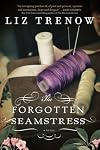
A sweet poem was embroidered into the stunning patchwork quilt that Caroline Meadows inherited from her grandmother. The fine silk for the center piece, woven through with silver thread, was a clue that this quilt was something extraordinary. Each section seems to have a special meaning, a story the seamstress held dear. But who was she? With few leads to go on, Caroline sets out to unravel the mystery of the quilt’s origin, and what she finds is shocking.
Entwined with Caroline’s story show more is an interview with a woman named Maria, taken from cassette tapes recorded in 1970. Maria’s tale was heartbreaking as she recounted her decades in an asylum called Helena Hall. She claims to have been a seamstress for the royal family during the 1910s, but was unjustly diagnosed as crazy and locked away when she caused problems. It was despicable the way Maria was treated, and hers was an eye-opening account of what happened to many “troublesome” women who were committed to mental institutions to be silenced.
This is the first book by Liz Trenow I’ve read, and I absolutely loved it! She has an engaging writing style that flowed smoothly and was a joy to read. I enjoyed how the past and present were threaded together until finally the truth behind the quilt is revealed. This book was sad in parts, but at the same time there was hopefulness and humor. Both Caroline and Maria were compelling characters, and Maria especially had a huge personality in spite of everything she went through. THE FORGOTTEN SEAMSTRESS was a wonderful book with memorable characters and brilliant descriptions of quilts and quilt-making. Highly recommended!
Source: Review copy from the publisher show less
Entwined with Caroline’s story show more is an interview with a woman named Maria, taken from cassette tapes recorded in 1970. Maria’s tale was heartbreaking as she recounted her decades in an asylum called Helena Hall. She claims to have been a seamstress for the royal family during the 1910s, but was unjustly diagnosed as crazy and locked away when she caused problems. It was despicable the way Maria was treated, and hers was an eye-opening account of what happened to many “troublesome” women who were committed to mental institutions to be silenced.
This is the first book by Liz Trenow I’ve read, and I absolutely loved it! She has an engaging writing style that flowed smoothly and was a joy to read. I enjoyed how the past and present were threaded together until finally the truth behind the quilt is revealed. This book was sad in parts, but at the same time there was hopefulness and humor. Both Caroline and Maria were compelling characters, and Maria especially had a huge personality in spite of everything she went through. THE FORGOTTEN SEAMSTRESS was a wonderful book with memorable characters and brilliant descriptions of quilts and quilt-making. Highly recommended!
Source: Review copy from the publisher show less
I was somehow expecting to read a run of the mill WWI novel but was absolutely blown away by this book so much so that I could not put it down.
I like how Trenow binds the experience of a young women serving in Afghanistan as a medic, with world war one soldiers. She shows Jess as feeling so capable, so able and defiantly okay after her own experience of being fired on in the field whilst helping the wounded and refuses to acknowledge that she is falling apart with Post Traumatic Stress show more Disorder (PTSD). The diaries written by Jess’s great-grandmother tells a parallel story of how PTST or shell shock as it was called then affected the lives of people after WWI.
This story is as much about how war affects communities as it is about individuals and you realise that nothing has really changed in the 100 years that have gone by, the technology of war may have changed but the affects remain the same.
There are many powerful bits to this book that have been written so sensitively the image simply stayed in my mind as I read on. The first is the sense of absolute fear and trauma for this medic is described such:
‘They were completely pinned down with their faces in the dust, unable to make any movement or noise for fear of attracting Taliban fire. …….Then she realised she was hyperventilating, and knew that she had to concentrate on something to stop herself panicking and passing out.
And then…oh God, then…she’d lifted her eyes and seen the poppy….a late bloom, a single stem topped by a single red flower…..When the firing had stopped she reopened her eyes and looked for the poppy.
It had gone.’
As Jess’s sinks into an alcoholic escape and her life falls apart, she fights the intonation that she cannot deal the nightmares and flashbacks alone.
To give a parallel of Alfie who returns from the front having lost a leg suffering the same trauma is seamless. I love the way the Rose focuses no only on herself but on a whole community in the diaries, in the same way that Trenow describes the effects on all those close to and around Jess.
There is a lot of domestic history in the descriptions from the diaries, especially the roles of women once the men returned from the war from factories to being at home and being dependent on another. Trenow allows the reader to step back in time into the lives of ordinary people, women having worked in factories, communities helping each other. Then the grieving for all the sons and fathers who never returned, but the joy of those who did and how that affected the community as a whole.
Looking beyond the regular daily visits to the pub and drink to forget, you get a sense of helplessness of not be able to leave the horrors of war behind and you begin a sense of understanding how PTSD affects individuals.
When Rose and her mother go to the new Cenotaph for Remembrance Day, reading it brought me to tears as it is written so movingly:
‘ The silence was like being in the countryside at the dead of night, or down a deep tunnel lined with velvet. You could almost touch it. ….A blackbird started up in a tree and my thoughts turned to my brothers…’
This book is an education about who started the Poppy Factory and why, as it was an integral part of the the novel both then and now. A lifeline with dignity. There is so much in this book that is still turning over in my mind, not questions but the simple truth of it.
If there is one book you should read this year it is this one.
**Thank you to the publisher for sending me this book via NetGalley for my honest review** show less
I like how Trenow binds the experience of a young women serving in Afghanistan as a medic, with world war one soldiers. She shows Jess as feeling so capable, so able and defiantly okay after her own experience of being fired on in the field whilst helping the wounded and refuses to acknowledge that she is falling apart with Post Traumatic Stress show more Disorder (PTSD). The diaries written by Jess’s great-grandmother tells a parallel story of how PTST or shell shock as it was called then affected the lives of people after WWI.
This story is as much about how war affects communities as it is about individuals and you realise that nothing has really changed in the 100 years that have gone by, the technology of war may have changed but the affects remain the same.
There are many powerful bits to this book that have been written so sensitively the image simply stayed in my mind as I read on. The first is the sense of absolute fear and trauma for this medic is described such:
‘They were completely pinned down with their faces in the dust, unable to make any movement or noise for fear of attracting Taliban fire. …….Then she realised she was hyperventilating, and knew that she had to concentrate on something to stop herself panicking and passing out.
And then…oh God, then…she’d lifted her eyes and seen the poppy….a late bloom, a single stem topped by a single red flower…..When the firing had stopped she reopened her eyes and looked for the poppy.
It had gone.’
As Jess’s sinks into an alcoholic escape and her life falls apart, she fights the intonation that she cannot deal the nightmares and flashbacks alone.
To give a parallel of Alfie who returns from the front having lost a leg suffering the same trauma is seamless. I love the way the Rose focuses no only on herself but on a whole community in the diaries, in the same way that Trenow describes the effects on all those close to and around Jess.
There is a lot of domestic history in the descriptions from the diaries, especially the roles of women once the men returned from the war from factories to being at home and being dependent on another. Trenow allows the reader to step back in time into the lives of ordinary people, women having worked in factories, communities helping each other. Then the grieving for all the sons and fathers who never returned, but the joy of those who did and how that affected the community as a whole.
Looking beyond the regular daily visits to the pub and drink to forget, you get a sense of helplessness of not be able to leave the horrors of war behind and you begin a sense of understanding how PTSD affects individuals.
When Rose and her mother go to the new Cenotaph for Remembrance Day, reading it brought me to tears as it is written so movingly:
‘ The silence was like being in the countryside at the dead of night, or down a deep tunnel lined with velvet. You could almost touch it. ….A blackbird started up in a tree and my thoughts turned to my brothers…’
This book is an education about who started the Poppy Factory and why, as it was an integral part of the the novel both then and now. A lifeline with dignity. There is so much in this book that is still turning over in my mind, not questions but the simple truth of it.
If there is one book you should read this year it is this one.
**Thank you to the publisher for sending me this book via NetGalley for my honest review** show less
I was somehow expecting to read a run of the mill WWI novel but was absolutely blown away by this book so much so that I could not put it down.
I like how Trenow binds the experience of a young women serving in Afghanistan as a medic, with world war one soldiers. She shows Jess as feeling so capable, so able and defiantly okay after her own experience of being fired on in the field whilst helping the wounded and refuses to acknowledge that she is falling apart with Post Traumatic Stress show more Disorder (PTSD). The diaries written by Jess’s great-grandmother tells a parallel story of how PTST or shell shock as it was called then affected the lives of people after WWI.
This story is as much about how war affects communities as it is about individuals and you realise that nothing has really changed in the 100 years that have gone by, the technology of war may have changed but the affects remain the same.
There are many powerful bits to this book that have been written so sensitively the image simply stayed in my mind as I read on. The first is the sense of absolute fear and trauma for this medic is described such:
‘They were completely pinned down with their faces in the dust, unable to make any movement or noise for fear of attracting Taliban fire. …….Then she realised she was hyperventilating, and knew that she had to concentrate on something to stop herself panicking and passing out.
And then…oh God, then…she’d lifted her eyes and seen the poppy….a late bloom, a single stem topped by a single red flower…..When the firing had stopped she reopened her eyes and looked for the poppy.
It had gone.’
As Jess’s sinks into an alcoholic escape and her life falls apart, she fights the intonation that she cannot deal the nightmares and flashbacks alone.
To give a parallel of Alfie who returns from the front having lost a leg suffering the same trauma is seamless. I love the way the Rose focuses no only on herself but on a whole community in the diaries, in the same way that Trenow describes the effects on all those close to and around Jess.
There is a lot of domestic history in the descriptions from the diaries, especially the roles of women once the men returned from the war from factories to being at home and being dependent on another. Trenow allows the reader to step back in time into the lives of ordinary people, women having worked in factories, communities helping each other. Then the grieving for all the sons and fathers who never returned, but the joy of those who did and how that affected the community as a whole.
Looking beyond the regular daily visits to the pub and drink to forget, you get a sense of helplessness of not be able to leave the horrors of war behind and you begin a sense of understanding how PTSD affects individuals.
When Rose and her mother go to the new Cenotaph for Remembrance Day, reading it brought me to tears as it is written so movingly:
‘ The silence was like being in the countryside at the dead of night, or down a deep tunnel lined with velvet. You could almost touch it. ….A blackbird started up in a tree and my thoughts turned to my brothers…’
This book is an education about who started the Poppy Factory and why, as it was an integral part of the the novel both then and now. A lifeline with dignity. There is so much in this book that is still turning over in my mind, not questions but the simple truth of it.
If there is one book you should read this year it is this one.
**Thank you to the publisher for sending me this book via NetGalley for my honest review** show less
I like how Trenow binds the experience of a young women serving in Afghanistan as a medic, with world war one soldiers. She shows Jess as feeling so capable, so able and defiantly okay after her own experience of being fired on in the field whilst helping the wounded and refuses to acknowledge that she is falling apart with Post Traumatic Stress show more Disorder (PTSD). The diaries written by Jess’s great-grandmother tells a parallel story of how PTST or shell shock as it was called then affected the lives of people after WWI.
This story is as much about how war affects communities as it is about individuals and you realise that nothing has really changed in the 100 years that have gone by, the technology of war may have changed but the affects remain the same.
There are many powerful bits to this book that have been written so sensitively the image simply stayed in my mind as I read on. The first is the sense of absolute fear and trauma for this medic is described such:
‘They were completely pinned down with their faces in the dust, unable to make any movement or noise for fear of attracting Taliban fire. …….Then she realised she was hyperventilating, and knew that she had to concentrate on something to stop herself panicking and passing out.
And then…oh God, then…she’d lifted her eyes and seen the poppy….a late bloom, a single stem topped by a single red flower…..When the firing had stopped she reopened her eyes and looked for the poppy.
It had gone.’
As Jess’s sinks into an alcoholic escape and her life falls apart, she fights the intonation that she cannot deal the nightmares and flashbacks alone.
To give a parallel of Alfie who returns from the front having lost a leg suffering the same trauma is seamless. I love the way the Rose focuses no only on herself but on a whole community in the diaries, in the same way that Trenow describes the effects on all those close to and around Jess.
There is a lot of domestic history in the descriptions from the diaries, especially the roles of women once the men returned from the war from factories to being at home and being dependent on another. Trenow allows the reader to step back in time into the lives of ordinary people, women having worked in factories, communities helping each other. Then the grieving for all the sons and fathers who never returned, but the joy of those who did and how that affected the community as a whole.
Looking beyond the regular daily visits to the pub and drink to forget, you get a sense of helplessness of not be able to leave the horrors of war behind and you begin a sense of understanding how PTSD affects individuals.
When Rose and her mother go to the new Cenotaph for Remembrance Day, reading it brought me to tears as it is written so movingly:
‘ The silence was like being in the countryside at the dead of night, or down a deep tunnel lined with velvet. You could almost touch it. ….A blackbird started up in a tree and my thoughts turned to my brothers…’
This book is an education about who started the Poppy Factory and why, as it was an integral part of the the novel both then and now. A lifeline with dignity. There is so much in this book that is still turning over in my mind, not questions but the simple truth of it.
If there is one book you should read this year it is this one.
**Thank you to the publisher for sending me this book via NetGalley for my honest review** show less
Lists
Awards


You May Also Like


Statistics
- Works
- 15
- Members
- 713
- Popularity
- #35,569
- Rating
- 3.9
- Reviews
- 62
- ISBNs
- 85
- Languages
- 4