
Margery Kempe
Author of The Book of Margery Kempe
About the Author
The daughter of a respected merchant and public official, Margery Kempe was born in about 1373 in Norfolk, England. When Kempe was in her 20s, she began having visions in which she talked to Jesus, Mary, and some saints. In 1414, Kempe and her husband, a local official named John Kempe whom she show more married in 1393, embarked on a series of pilgrimages to the Holy Land and throughout Europe. At about the age of 60, Kempe dictated her spiritual autobiography to two scribes. The earliest autobiography written in English, The Book of Margery Kempe discusses every aspect of Kempe's life, including her marriage, religious conversion, and many pilgrimages. Margery Kempe is believed to have died sometime around 1440. (Bowker Author Biography) show less
Works by Margery Kempe
Kempe, Margery Archive 1 copy
Associated Works
Wise Women: Over Two Thousand Years of Spiritual Writing by Women (1996) — Contributor — 228 copies, 1 review
Tagged
Common Knowledge
- Other names
- Brunham, Margery
- Birthdate
- 1373 c.
- Date of death
- 1440 c.
- Gender
- female
- Short biography
- Kempe is honoured in the Church of England on 9 November and in the Episcopal Church in the United States of America together with Richard Rolle and Walter Hilton on 28 September.
- Nationality
- UK
- Birthplace
- King's Lynn, Norfolk, England
- Associated Place (for map)
- King's Lynn, Norfolk, England
Members
Reviews
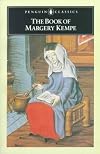
I don't get why people are giving Margery poor reviews. She's fantastic. She's a rare peek into a voice we don't hear often from Medieval Times - an illiterate, lower-middle-class woman.
It all started when Margery had her first child (the first of many). She experienced what we might call post-partum psychosis, but which they called "full of devils". After eight months tormented by insanity, a vision of Jesus brought her back to herself. Thereafter, Margery was able to converse with holy show more figures - Jesus, Mary, and even God himself, and often became so overwhelmed with her experiences that she fell on the ground, wept, screamed and cried.
Margery switches between lofty religious concerns to petty grievances at the drop of a hat - complaining about how her fellow pilgrims bullied her and stole her pillow, or acquaintances constantly trying to ditch her.
Even though I might not have tolerated her long as a companion, I can't help but admire her special brand of feisty derangement from this safe distance of 800 years. She travelled widely, visiting the Holy Land and Rome as a woman travelling alone (attaching herself to unwary pilgrimage groups or unlucky beggars). She was arrested more than once, and if you believe her, defended herself well.
I especially liked her response upon being told that women weren't to preach, essentially. "I'm not preaching, I'm just talking."
Her husband was a long-suffering fellow, who Margery said sometimes went away when the embarrassment came to much, but always returned in the end. She bullied him into taking a vow of celibacy with her, revealing to the bizarre sex-negativity of the of the Medieval Christian world - in which even consensual sex with one's lawfully-married spouse was considered unclean - and he eventually accepted under the threat of Jesus' wrath.
Margery still complains of the local gossips spreading awful rumours that she was having sex with her husband, and so she was forced to live apart from him to prove her nay-sayers wrong. This backfires when, nearing the end of his life, her husband has a dangerous accident, and the same gossips allegedly accuse her of being responsible for his injury since she wasn't home looking after him like a good wife.
She also claimed to have the gift of prophesy. One of her sons, married and living on the continent, considered visiting her, but was frightened of the dangerous journey. She consulted her visions, and assured him that he would arrive home in perfect health. So he and his wife came, only for him to fall ill and die shortly after arriving.
Margery, of course, reasons that her prophesy was correct, since technically he got home before dying. And anyway, going home to God is the ultimate and best sort of a homecoming.
Inexplicably, she later fell out with her daughter in law.
Margery is fantastic, unique, wacky, probably suffers from mental illness, feisty, insufferable, petty and an all-round character. I don't see how anyone can read her and not laugh, cringe, and at times sympathise at her antics. show less
It all started when Margery had her first child (the first of many). She experienced what we might call post-partum psychosis, but which they called "full of devils". After eight months tormented by insanity, a vision of Jesus brought her back to herself. Thereafter, Margery was able to converse with holy show more figures - Jesus, Mary, and even God himself, and often became so overwhelmed with her experiences that she fell on the ground, wept, screamed and cried.
Margery switches between lofty religious concerns to petty grievances at the drop of a hat - complaining about how her fellow pilgrims bullied her and stole her pillow, or acquaintances constantly trying to ditch her.
Even though I might not have tolerated her long as a companion, I can't help but admire her special brand of feisty derangement from this safe distance of 800 years. She travelled widely, visiting the Holy Land and Rome as a woman travelling alone (attaching herself to unwary pilgrimage groups or unlucky beggars). She was arrested more than once, and if you believe her, defended herself well.
I especially liked her response upon being told that women weren't to preach, essentially. "I'm not preaching, I'm just talking."
Her husband was a long-suffering fellow, who Margery said sometimes went away when the embarrassment came to much, but always returned in the end. She bullied him into taking a vow of celibacy with her, revealing to the bizarre sex-negativity of the of the Medieval Christian world - in which even consensual sex with one's lawfully-married spouse was considered unclean - and he eventually accepted under the threat of Jesus' wrath.
Margery still complains of the local gossips spreading awful rumours that she was having sex with her husband, and so she was forced to live apart from him to prove her nay-sayers wrong. This backfires when, nearing the end of his life, her husband has a dangerous accident, and the same gossips allegedly accuse her of being responsible for his injury since she wasn't home looking after him like a good wife.
She also claimed to have the gift of prophesy. One of her sons, married and living on the continent, considered visiting her, but was frightened of the dangerous journey. She consulted her visions, and assured him that he would arrive home in perfect health. So he and his wife came, only for him to fall ill and die shortly after arriving.
Margery, of course, reasons that her prophesy was correct, since technically he got home before dying. And anyway, going home to God is the ultimate and best sort of a homecoming.
Inexplicably, she later fell out with her daughter in law.
Margery is fantastic, unique, wacky, probably suffers from mental illness, feisty, insufferable, petty and an all-round character. I don't see how anyone can read her and not laugh, cringe, and at times sympathise at her antics. show less

From the medieval history reading program. This is called “the first English autobiography”, which is somewhat stretching the term. Margery Kempe was a 14th century middle class Englishwoman from Lynn who had an extreme bout of postpartum depression after her first child and suddenly began having fits of uncontrollable sobbing every time she went to church, and then every time she had religious thoughts – which was often. She had conversations with Jesus, Mary, Mary Magdalene, St. show more Bridget, St. Katherine, St. John the Evangelist, and pretty much the entire calendar of saints. This went on her entire life, from around 1390 or so to sometime in the 1400s (she’s known to have been born in 1373 and lived at least until she was 65).
She must have been insufferable. Her book relates the trials and tribulations she underwent because her contemporaries didn’t like her crying. She went on pilgrimage to Jerusalem, Rome, Compostella, and Aachen – crying the whole way. Groups of pilgrims would pick her up out of sympathy, tolerate her for a while, and then abandon her in the middle of nowhere after they couldn’t take the sobbing any more. (She was always reassured by whatever saint she was in touch with at the time that her companions were merely hypocritically abashed by her holiness). She’s certainly annoying to the reader, as she makes practically no mention of politics, or description of her travels, or even the names of her family (she took a vow of chastity, but had 14 children; her husband was importunate).
An interesting question to me is how she survived. From what little she reveals, she was middle class (itself sort of a rarity in medieval England); she always managed to find enough money to go on pilgrimages (I don’t know how much it would cost to get from England to Jerusalem in the 14th century, but I imagine it wasn’t within the reach of the lower class). In many cases she depended on the charity of others, who must have been happy to feed her just because she couldn’t cry and eat at the same time. Another interesting observation is no one ever suggested she was mad – although madness was certainly known at the time. Instead she was repeatedly accused of being a heretic – a Lollard. (For those of you who have mislaid your copy of Peterson’s Guide to Medieval Heresy, Lollards were followers of John Wycliffe, who held that humans could understand God by reading the Bible, and didn’t need the intervention of priests. Wycliffe produced the first English translation of the Bible). Kempe was questioned several times by various authorities, including the Archbishop of Canterbury; her views were always pronounced orthodox, although it was often suggested that she go home and act like a normal woman (i.e., weaving or spinning or cooking) rather than crying all the time. She certainly makes no favorable reference to Lollardry in her book, although her direct conversations with Jesus and the saints may have been taken as bypassing priestly intervention.
Very frustrating, much as Margery must have been. show less
She must have been insufferable. Her book relates the trials and tribulations she underwent because her contemporaries didn’t like her crying. She went on pilgrimage to Jerusalem, Rome, Compostella, and Aachen – crying the whole way. Groups of pilgrims would pick her up out of sympathy, tolerate her for a while, and then abandon her in the middle of nowhere after they couldn’t take the sobbing any more. (She was always reassured by whatever saint she was in touch with at the time that her companions were merely hypocritically abashed by her holiness). She’s certainly annoying to the reader, as she makes practically no mention of politics, or description of her travels, or even the names of her family (she took a vow of chastity, but had 14 children; her husband was importunate).
An interesting question to me is how she survived. From what little she reveals, she was middle class (itself sort of a rarity in medieval England); she always managed to find enough money to go on pilgrimages (I don’t know how much it would cost to get from England to Jerusalem in the 14th century, but I imagine it wasn’t within the reach of the lower class). In many cases she depended on the charity of others, who must have been happy to feed her just because she couldn’t cry and eat at the same time. Another interesting observation is no one ever suggested she was mad – although madness was certainly known at the time. Instead she was repeatedly accused of being a heretic – a Lollard. (For those of you who have mislaid your copy of Peterson’s Guide to Medieval Heresy, Lollards were followers of John Wycliffe, who held that humans could understand God by reading the Bible, and didn’t need the intervention of priests. Wycliffe produced the first English translation of the Bible). Kempe was questioned several times by various authorities, including the Archbishop of Canterbury; her views were always pronounced orthodox, although it was often suggested that she go home and act like a normal woman (i.e., weaving or spinning or cooking) rather than crying all the time. She certainly makes no favorable reference to Lollardry in her book, although her direct conversations with Jesus and the saints may have been taken as bypassing priestly intervention.
Very frustrating, much as Margery must have been. show less
Margery Kempe is a fascinating personality, both for her unpretentious mysticism and for the psychological anxiety that her intense spirituality caused her. In her book, she is candid about her struggles with clerical hypocrisy, with sexuality, and with the negative reactions of others to the outward expressions of her visions (she seems to have spent an inordinate amount of time weeping and loudly crying out, manifestations of her grief at the sufferings of Christ's Passion). But for all show more the turmoil in her psyche, she evinces no skepticism about her mystical beliefs, relating as fact many of her conversations with God.
The text is repetitive and lacking in detail, even given its antiquity. However, Margery Kempe's guilelessness creates a vivid, revealing self-portrait. The Penguin edition I read was sparse in annotation. The Norton Critical Edition, which I haven't seen, might provide a better contextual framework for the book. show less
The text is repetitive and lacking in detail, even given its antiquity. However, Margery Kempe's guilelessness creates a vivid, revealing self-portrait. The Penguin edition I read was sparse in annotation. The Norton Critical Edition, which I haven't seen, might provide a better contextual framework for the book. show less
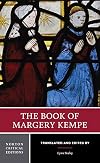
A female author from the early 15th century who steps outside of the usual hagiographical texts to provide us with an original view of late medieval society; one that is far removed from knights, chivalry and courtly love.
From our vantage point of the 21st century we might view her book as:
1) An attempt by Margery or her followers to make a case for canonisation
2) The extraordinary life of a brave woman who made her way in a world dominated by the all male clergy.
3 The ravings of a religious show more fanatic who was intensely preoccupied with herself and whose hysteria borders on insanity.
4) A mystic who was a witness to divine mercy and revelation and who wished to provide comfort and solas to those that followed her.
Margery's book may be all of these things and Lynn Staley who has edited the Norton Critical Edition describes it as an electrifying text. The manuscript was discovered in 1934 and recognised as an invaluable find. It is a unique document from the late middle ages because it was never sanitised or polished by cult followers and remains as it was originally produced. It shines a light on gender issues, culture and society of early 15th century Europe.
Reading the book of Margery Kempe with a modern perspective will only reveal half of the story. C S Lewis in his Studies in Medieval and Renaissance Literature, likens it to a tourist abroad who is only satisfied when he finds things in a foreign country that he values back home; similarly the highlights of a medieval text for the modern reader are those bits that reflect the viewpoints of the modern age. To dig a little deeper it is necessary to read around the subject, for example other medieval texts, social history or critical essays. The Norton Critical edition helps the reader to do this by including extracts from relevant texts in context as well as critical essays from noted medievalists and a bibliography for further reading. All this helps us to see Margery more clearly with the eyes of a reader or compatriot of her times.
Margery Kempe was the daughter of a powerful Burgess living in an important provincial town in England. She married within her mercantile class and had 14 children and had found the time to try her hand as a business woman. before she became convinced that she had been chosen by God to lead an exemplary life of chastity, fasting and penance in praise of Him. Her first task was to persuade her husband to become celibate and to provide her with the freedom to embark on pilgrimages to Jerusalem and Rome. She was soon talking directly to Jesus and experiencing extreme reactions to holy relics, sites and to preachers. Here is what happens to her when she arrives with a group of pilgrims at Calvary:
" She fell down so that she might not stand or kneel, but wallowed and twisted with her body, spreading her arms abroad, and cried out with a loud voice as though her heart should have burst asunder.........the crying was so loud and so wonderful that it made the people astonished, unless they had heard it before or else they knew the cause of the crying. And she had them so often that they made her right weak in her bodily mights, and namely, if she heard of our Lords passion."
Her crying and sobbing soon made her unpopular with those groups of pilgrims that she happened to be travelling with and she frequently found herself ostracized. This only strengthened her resolve because she believed that she must suffer all trials and tribulations to prove herself to God. She comes to believe she is married to the Godhead:
"And then the Father took her by the hand in her soul, before the Son and the Holy Ghost and the Mother of Jesus and all the twelve apostles and Saint Katherine and Saint Margeret and many other saints and holy virgins and a great multitude of angels saying to her soul. "I take you Margery for my wedded wife for fairer or fouler for richer or poorer so that you be buxom and obedient to do what I bid you to do..........Therefore must I needs be homely with you and lie in your bed with you. Daughter you desire greatly to see me, and you may boldly when you are in your bed, take me to you as your wedded husband."
Margery always speaks of herself in the third person and we are never allowed to forget she is a sexual being in her thoughts and desires. She is now filled with the holy fire and is convinced that her prayers can achieve miracles. Back in England and she experiences problems with the church authorities. She is almost run out of town in Bristol and soon after arriving in York she faces an inquisition in the Charter House in York Minster. She is accused of Lollardry and heresy, but her orthodox answers to the questions put to her and her standing with powerful friends within the church see her through. She is detained again in Hull and in Leicester and faces further inquisitions, but again with the help of friends inside the church she is allowed to go free. She roams the country visiting various pilgrim sites and visits the famous anchoress Julian of Norwich. She takes time out to nurse her terminally ill husband, but her visions become more intense and she sees herself present at Christ's Passion comforting the Virgin Mary. Now in her old age she believes she must undertake further pilgrimages abroad and as usual her weeping and crying continue to divides opinion wherever she goes.
Margery Kempe led an extraordinary life as a religious mystic, all the more extraordinary because she was a married woman all alone in a world dominated by the all male clergy, many of whom resented her piety and her passion. She had to fight many battles to lead her chosen life, including finding someone to write her book for her. She claimed not to be able to write herself which served her purpose in refuting charges of heresy. She was in physical danger for much of her time on the road; in constant dread of being defiled and at one point was threatened with rape by the steward of Leicestershire before she faced an inquisition. As a business woman however she saw the advantages in pilgrimages and the collection of indulgences and always found someone to help her when in dire need.
There was no way into the official church for a woman and Margery's assertion of her right to speak out brought her in continual opposition to men of the cloth. There were prescriptions against women speaking out on religious matters and Margery always ran the risk of being accused of Lollardry (heresy). Lollard's believed that lay people had the right to spread the word of God. The prescriptions were there to protect the power of the clergy and so were usually enforced. Margery was by no means the first women mystic of the middle ages and while it could not be said to be a well trodden path there were certainly others around. St Bridget of Sweden (1303-1373) was well renowned and Margery was familiar with her life and teachings. There is no doubt that Margery had an obsessive personality that both attracted and repelled others. Her continual breaking down into sobbing and weeping and her need to confess at almost every opportunity must have placed a considerable burden on friends and followers alike. Much of this was in keeping with her chosen profession and how much of her behaviour was due to her business head, her faith, or mental disorder we will never know. What is beyond doubt is her courage, her resourcefulness and her love of God.
Margery Kempe's book is brought to life by Lynn Staley's excellent translation, which in its phrasing and intonation has a medieval feel to it. I think this book provides ua with a window into at least one aspect of medieval life: that of the itinerant mystics who trod a dangerous path between orthodoxy and heresy. I am sure the book will not appeal to everybody, as being inside the head of a fanatically religious women will not be to every body's taste, but it thrilled me. Let Margery have the last word about her book (she continually refers to herself as "the creature"):
"Also while the aforesaid creature was occupied about the writing of this treatise, she had many holy tears and weepings and often times there came a flame of fire about her breast, full hot and delectable, and also he who was the writer could not sometimes keep himself from weeping. And often in the meantime, when the creature was in church, our Lord Jesus Christ with his glorious Mother and many saints also came into her soul and thanked her saying that they were well pleased with the writing of the book." show less
From our vantage point of the 21st century we might view her book as:
1) An attempt by Margery or her followers to make a case for canonisation
2) The extraordinary life of a brave woman who made her way in a world dominated by the all male clergy.
3 The ravings of a religious show more fanatic who was intensely preoccupied with herself and whose hysteria borders on insanity.
4) A mystic who was a witness to divine mercy and revelation and who wished to provide comfort and solas to those that followed her.
Margery's book may be all of these things and Lynn Staley who has edited the Norton Critical Edition describes it as an electrifying text. The manuscript was discovered in 1934 and recognised as an invaluable find. It is a unique document from the late middle ages because it was never sanitised or polished by cult followers and remains as it was originally produced. It shines a light on gender issues, culture and society of early 15th century Europe.
Reading the book of Margery Kempe with a modern perspective will only reveal half of the story. C S Lewis in his Studies in Medieval and Renaissance Literature, likens it to a tourist abroad who is only satisfied when he finds things in a foreign country that he values back home; similarly the highlights of a medieval text for the modern reader are those bits that reflect the viewpoints of the modern age. To dig a little deeper it is necessary to read around the subject, for example other medieval texts, social history or critical essays. The Norton Critical edition helps the reader to do this by including extracts from relevant texts in context as well as critical essays from noted medievalists and a bibliography for further reading. All this helps us to see Margery more clearly with the eyes of a reader or compatriot of her times.
Margery Kempe was the daughter of a powerful Burgess living in an important provincial town in England. She married within her mercantile class and had 14 children and had found the time to try her hand as a business woman. before she became convinced that she had been chosen by God to lead an exemplary life of chastity, fasting and penance in praise of Him. Her first task was to persuade her husband to become celibate and to provide her with the freedom to embark on pilgrimages to Jerusalem and Rome. She was soon talking directly to Jesus and experiencing extreme reactions to holy relics, sites and to preachers. Here is what happens to her when she arrives with a group of pilgrims at Calvary:
" She fell down so that she might not stand or kneel, but wallowed and twisted with her body, spreading her arms abroad, and cried out with a loud voice as though her heart should have burst asunder.........the crying was so loud and so wonderful that it made the people astonished, unless they had heard it before or else they knew the cause of the crying. And she had them so often that they made her right weak in her bodily mights, and namely, if she heard of our Lords passion."
Her crying and sobbing soon made her unpopular with those groups of pilgrims that she happened to be travelling with and she frequently found herself ostracized. This only strengthened her resolve because she believed that she must suffer all trials and tribulations to prove herself to God. She comes to believe she is married to the Godhead:
"And then the Father took her by the hand in her soul, before the Son and the Holy Ghost and the Mother of Jesus and all the twelve apostles and Saint Katherine and Saint Margeret and many other saints and holy virgins and a great multitude of angels saying to her soul. "I take you Margery for my wedded wife for fairer or fouler for richer or poorer so that you be buxom and obedient to do what I bid you to do..........Therefore must I needs be homely with you and lie in your bed with you. Daughter you desire greatly to see me, and you may boldly when you are in your bed, take me to you as your wedded husband."
Margery always speaks of herself in the third person and we are never allowed to forget she is a sexual being in her thoughts and desires. She is now filled with the holy fire and is convinced that her prayers can achieve miracles. Back in England and she experiences problems with the church authorities. She is almost run out of town in Bristol and soon after arriving in York she faces an inquisition in the Charter House in York Minster. She is accused of Lollardry and heresy, but her orthodox answers to the questions put to her and her standing with powerful friends within the church see her through. She is detained again in Hull and in Leicester and faces further inquisitions, but again with the help of friends inside the church she is allowed to go free. She roams the country visiting various pilgrim sites and visits the famous anchoress Julian of Norwich. She takes time out to nurse her terminally ill husband, but her visions become more intense and she sees herself present at Christ's Passion comforting the Virgin Mary. Now in her old age she believes she must undertake further pilgrimages abroad and as usual her weeping and crying continue to divides opinion wherever she goes.
Margery Kempe led an extraordinary life as a religious mystic, all the more extraordinary because she was a married woman all alone in a world dominated by the all male clergy, many of whom resented her piety and her passion. She had to fight many battles to lead her chosen life, including finding someone to write her book for her. She claimed not to be able to write herself which served her purpose in refuting charges of heresy. She was in physical danger for much of her time on the road; in constant dread of being defiled and at one point was threatened with rape by the steward of Leicestershire before she faced an inquisition. As a business woman however she saw the advantages in pilgrimages and the collection of indulgences and always found someone to help her when in dire need.
There was no way into the official church for a woman and Margery's assertion of her right to speak out brought her in continual opposition to men of the cloth. There were prescriptions against women speaking out on religious matters and Margery always ran the risk of being accused of Lollardry (heresy). Lollard's believed that lay people had the right to spread the word of God. The prescriptions were there to protect the power of the clergy and so were usually enforced. Margery was by no means the first women mystic of the middle ages and while it could not be said to be a well trodden path there were certainly others around. St Bridget of Sweden (1303-1373) was well renowned and Margery was familiar with her life and teachings. There is no doubt that Margery had an obsessive personality that both attracted and repelled others. Her continual breaking down into sobbing and weeping and her need to confess at almost every opportunity must have placed a considerable burden on friends and followers alike. Much of this was in keeping with her chosen profession and how much of her behaviour was due to her business head, her faith, or mental disorder we will never know. What is beyond doubt is her courage, her resourcefulness and her love of God.
Margery Kempe's book is brought to life by Lynn Staley's excellent translation, which in its phrasing and intonation has a medieval feel to it. I think this book provides ua with a window into at least one aspect of medieval life: that of the itinerant mystics who trod a dangerous path between orthodoxy and heresy. I am sure the book will not appeal to everybody, as being inside the head of a fanatically religious women will not be to every body's taste, but it thrilled me. Let Margery have the last word about her book (she continually refers to herself as "the creature"):
"Also while the aforesaid creature was occupied about the writing of this treatise, she had many holy tears and weepings and often times there came a flame of fire about her breast, full hot and delectable, and also he who was the writer could not sometimes keep himself from weeping. And often in the meantime, when the creature was in church, our Lord Jesus Christ with his glorious Mother and many saints also came into her soul and thanked her saying that they were well pleased with the writing of the book." show less
Lists
Awards

You May Also Like


Associated Authors
Statistics
- Works
- 6
- Also by
- 4
- Members
- 2,102
- Popularity
- #12,245
- Rating
- 3.8
- Reviews
- 23
- ISBNs
- 30
- Languages
- 3
- Favorited
- 6