
Greg Johnson (1) (1953–)
Author of Invisible Writer: A Biography of Joyce Carol Oates
For other authors named Greg Johnson, see the disambiguation page.
About the Author
Greg Johnson is a professor of English at Kennesaw State University.
Works by Greg Johnson
Associated Works
The Ecco Anthology of Contemporary American Short Fiction (2008) — Contributor — 140 copies, 2 reviews
Tagged
Common Knowledge
- Birthdate
- 1953-07-13
- Gender
- male
- Education
- Southern Methodist University
Emory University - Occupations
- poet
novelist
literary scholar
short story writer
biographer - Organizations
- Kennesaw State University
- Nationality
- USA
- Birthplace
- San Francisco, California, USA
- Places of residence
- Liverpool, Merseyside, England, UK
Tyler, Texas, USA
Atlanta, Georgia, USA - Associated Place (for map)
- USA
Members
Reviews
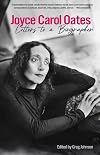
Greg Johnson, ed. Joyce Carol Oates: Letters to a Biographer, Akashic Books, Brooklyn: NY, 2024.
The book delivers precisely what is promised by the combination of title and subtitle.¹ It delivers more than promised in the sense that the biographer and editor, Greg Johnson, is also the author’s friend—and so the letters are warmer and more wide-ranging than might otherwise be expected from coolly business-like correspondence with a biographer. If you come looking for a heavily-edited, show more thematically-arranged volume, you’ll be disappointed. The edits are limited and judicious, usually in the form of a short introduction to set the context or clarifying comments enclosed in brackets within the text of the letters to identify people, places, events, and the like that would otherwise be confusing to the reader. The latter are especially important given that we have only the letters to the biographer and not the other half of the conversation. Reading the book is very much like overhearing one half of an ongoing phone conversation with Joyce Carol Oates (JCO) about her spouse, her pets, her colleagues, her work, the publishing world (Vanguard, Random House, Dutton, Norton, Doubleday, Ecco/HarperCollins) and editors, other authors, the theater world, and academic literary circles.
You’ll also be disappointed if you come looking for an unabridged, academic collection or critical edition of the complete correspondence. Elipses within the letters identify missing portions. You’ll have to make your own index if you want to refer back to JCO’s opinions about Toni Morrison, John Updike, Tom Wolfe, Jacqueline Kennedy Onassis, Sylvia Plath and Ted Hughes, Truman Capote, Charles Gibson, Janet Malcom, Margaret Atwood, Mike Tyson, Flannery O’Connor, Angelina Jolie, Marilynne Robinson, Saul Bellow, Nabokov, Henry James, Philip Roth, Stephen King, Walter Mosley, P.D. James, Donald Trump, Norman Mailer, Elaine Showalter, Jeanne Halpern, N. Scott Momaday, Leslie Silko, Louise Erdrich, Wallace Stevens, Oprah Winfrey, Cormac McCarthy, Mark Twain, Kurt Vonnegut, and Harold Bloom and Cornel West (“masters of bloviation,” p. 291).²
Of special interest throughout the book are the many observations JCO makes in the letters about the writing life, especially the challenge of moving back and forth between plays, short stories, novels (shorter and longer, YA and literary fiction), and poetry. She despairs of ever mastering the novella and she frequently mentions the challenge, even agony, of the first draft vs. the relative ease of revising. (“Yet, to have the facility of a Mozart, to toss work off without any effort at all, would not be much fun,” p. 58. “I expect to glance into a mirror one day & see a blank space with the notice OUT OF PRINT across it,” p. 291)
I am in the very odd (for me) position of reviewing a book about (by?) an author whose work I have not read, except in the occasional New Yorker or Atlantic essay or article in the New York Review of Books. I’ve never read her novels or seen her plays performed. And, frankly, this is probably not the book that one should choose for an introduction to JCO. Better, or at least more likely to be comprehensive for the periods it covers, is the 1998 biography, also by Greg Johnson (Invisible Writer: A Biography of Joyce Carol Oates). However, this book of letters and subsequent research (especially the November 20, 2023 Profile in the New Yorker by Rachel Aviv, “Joyce Carol Oates’s Relentless, Prolific Search for a Self”) intrigues me enough to pursue reading a few of her novels and short story collections as time permits over the next year or so. If that is the criterion, the book was clearly a success.
Contents
Preface by Greg Johnson
Introduction by Joyce Carol Oates
Part One: 1975-1990
Part Two: 1991-1992
Part Three: 1993-1995
Part Four: 1996-1998
Part Five: 1999-2004
Part Six: 2005-2006
Who Should Read It?
Students of JCO who are trying to obtain contextual and biographical information to understand her oeuvre will be interested in the book, as will any hard core fans of either JCO or Greg Johnson. It is not for people like me who have limited to no prior acquaintance with JCO’s work, as there are likely better entrées to that work and summaries of it.
Princetonians should read the book. In addition to JCO, the university and the town (especially the McCarter Theatre) play a prominent role in the correspondence. As someone who spent significant time at Princeton Theological Seminary during the periods covered by the book (1988-1995), I found it a wonderful trip down memory lane. One letter in particular, dated 8 February 1994, with its brief mention of the weather (“Our weather is unspeakable! More snow! Sleet!”) was especially meaningful. We have photos of that horrific winter in which our first daughter was born a week after the letter was penned. The snow never let up.
Upcoming Events at which JCO will Promote the Book:
1 This book was received via LibraryThing Early Reviewers (LTER), a program by which publishers provide advance copies of books for review (or, as in this case, recently published copies—the book was released on March 5 and I was notified that I had “won” it on February 27; I received and started reading it on March 8). The book arrived complete with a Press Kit from Akashic Books with promotional events with Joyce Carol Oates listed from March 18-May 20. LibraryThing does not dictate the content or tone of any reviews, so long as they abide by the Terms of Use publicly posted on the site. This review is my honest opinion.
2 Cornel West actually appears with an interview/essay in the next book I must review, Until Our Lungs Give Out: Conversations on Race, Justice, and the Future, Rowman & Littlefield: NY, 2023, edited by George Yancy. show less
The book delivers precisely what is promised by the combination of title and subtitle.¹ It delivers more than promised in the sense that the biographer and editor, Greg Johnson, is also the author’s friend—and so the letters are warmer and more wide-ranging than might otherwise be expected from coolly business-like correspondence with a biographer. If you come looking for a heavily-edited, show more thematically-arranged volume, you’ll be disappointed. The edits are limited and judicious, usually in the form of a short introduction to set the context or clarifying comments enclosed in brackets within the text of the letters to identify people, places, events, and the like that would otherwise be confusing to the reader. The latter are especially important given that we have only the letters to the biographer and not the other half of the conversation. Reading the book is very much like overhearing one half of an ongoing phone conversation with Joyce Carol Oates (JCO) about her spouse, her pets, her colleagues, her work, the publishing world (Vanguard, Random House, Dutton, Norton, Doubleday, Ecco/HarperCollins) and editors, other authors, the theater world, and academic literary circles.
You’ll also be disappointed if you come looking for an unabridged, academic collection or critical edition of the complete correspondence. Elipses within the letters identify missing portions. You’ll have to make your own index if you want to refer back to JCO’s opinions about Toni Morrison, John Updike, Tom Wolfe, Jacqueline Kennedy Onassis, Sylvia Plath and Ted Hughes, Truman Capote, Charles Gibson, Janet Malcom, Margaret Atwood, Mike Tyson, Flannery O’Connor, Angelina Jolie, Marilynne Robinson, Saul Bellow, Nabokov, Henry James, Philip Roth, Stephen King, Walter Mosley, P.D. James, Donald Trump, Norman Mailer, Elaine Showalter, Jeanne Halpern, N. Scott Momaday, Leslie Silko, Louise Erdrich, Wallace Stevens, Oprah Winfrey, Cormac McCarthy, Mark Twain, Kurt Vonnegut, and Harold Bloom and Cornel West (“masters of bloviation,” p. 291).²
Of special interest throughout the book are the many observations JCO makes in the letters about the writing life, especially the challenge of moving back and forth between plays, short stories, novels (shorter and longer, YA and literary fiction), and poetry. She despairs of ever mastering the novella and she frequently mentions the challenge, even agony, of the first draft vs. the relative ease of revising. (“Yet, to have the facility of a Mozart, to toss work off without any effort at all, would not be much fun,” p. 58. “I expect to glance into a mirror one day & see a blank space with the notice OUT OF PRINT across it,” p. 291)
I am in the very odd (for me) position of reviewing a book about (by?) an author whose work I have not read, except in the occasional New Yorker or Atlantic essay or article in the New York Review of Books. I’ve never read her novels or seen her plays performed. And, frankly, this is probably not the book that one should choose for an introduction to JCO. Better, or at least more likely to be comprehensive for the periods it covers, is the 1998 biography, also by Greg Johnson (Invisible Writer: A Biography of Joyce Carol Oates). However, this book of letters and subsequent research (especially the November 20, 2023 Profile in the New Yorker by Rachel Aviv, “Joyce Carol Oates’s Relentless, Prolific Search for a Self”) intrigues me enough to pursue reading a few of her novels and short story collections as time permits over the next year or so. If that is the criterion, the book was clearly a success.
Contents
Preface by Greg Johnson
Introduction by Joyce Carol Oates
Part One: 1975-1990
Part Two: 1991-1992
Part Three: 1993-1995
Part Four: 1996-1998
Part Five: 1999-2004
Part Six: 2005-2006
Who Should Read It?
Students of JCO who are trying to obtain contextual and biographical information to understand her oeuvre will be interested in the book, as will any hard core fans of either JCO or Greg Johnson. It is not for people like me who have limited to no prior acquaintance with JCO’s work, as there are likely better entrées to that work and summaries of it.
Princetonians should read the book. In addition to JCO, the university and the town (especially the McCarter Theatre) play a prominent role in the correspondence. As someone who spent significant time at Princeton Theological Seminary during the periods covered by the book (1988-1995), I found it a wonderful trip down memory lane. One letter in particular, dated 8 February 1994, with its brief mention of the weather (“Our weather is unspeakable! More snow! Sleet!”) was especially meaningful. We have photos of that horrific winter in which our first daughter was born a week after the letter was penned. The snow never let up.
Upcoming Events at which JCO will Promote the Book:
1 This book was received via LibraryThing Early Reviewers (LTER), a program by which publishers provide advance copies of books for review (or, as in this case, recently published copies—the book was released on March 5 and I was notified that I had “won” it on February 27; I received and started reading it on March 8). The book arrived complete with a Press Kit from Akashic Books with promotional events with Joyce Carol Oates listed from March 18-May 20. LibraryThing does not dictate the content or tone of any reviews, so long as they abide by the Terms of Use publicly posted on the site. This review is my honest opinion.
2 Cornel West actually appears with an interview/essay in the next book I must review, Until Our Lungs Give Out: Conversations on Race, Justice, and the Future, Rowman & Littlefield: NY, 2023, edited by George Yancy. show less
 This review was written for LibraryThing Early Reviewers.
This book is a must for any Joyce Carol Oates fan. And if one is not a fan, it will perhaps make you one. Something it will not do is solve the mystery of how one person can perform so much magic with the English language, as a novelist, short story writer, playwright, poet, essayist, reviewer, editor, and letter writer (although her 10-12 hour writing days provide a clue). From recollections of friends and acquaintances such as John Updike, Philip Roth, Toni Morrison, Richard Ford, Stephen show more King, Steve Martin and others too numerous to mention (including her cats), to thoughts on Dickinson, Hemingway, O'Connor, and Vonnegut, she is self-deprecating, frank, and witty. One example: "I'd always thought that a raging ego (Hemingway, Mailer) was a great advantage, like a hidden motor on a bicycle. While the rest of us struggle away up those hills, the ego-'maniacs' just sail blithely along knowing that posterity will vindicate them." With the encroachment of e-mail, there will be few books like this one, revealing the inner life and soul of a masterly contemporary author. Take advantage of this opportunity. show less
This review was written for LibraryThing Early Reviewers.
Joyce Carol Oates : Letters to a Biographer is a surprisingly enjoyable, low-key read. The progression of the author's relationship with JCO, the writerly business, and the background of both personal and public events over the extended timeline were very interesting. JCO comes across as more warm and charming than I expected, as well as sharp and insightful, which was no surprise. I haven't read her biography, or even much of her work, but my TBR list has grown since reading this book.
This review was written for LibraryThing Early Reviewers.Joyce Carol Oates and Greg Johnson started a correspondence in 1975. This correspondence lasted for almost 50 years and covered topics including her work, travels and celebrities she encountered. This exchange of letters turned into a friendship and made it easy for them to share ideas and thoughts. As a reader we get a glimpse into JCO's concerns, delights and sense of humor. I haven't had the pleasure of reading any of Oates's essays or novels, but this book has made me curious to check show more them out. And as a bonus it has reignited my commitment to letter writing. show less
This review was written for LibraryThing Early Reviewers.You May Also Like


Associated Authors
Statistics
- Works
- 15
- Also by
- 8
- Members
- 333
- Popularity
- #71,380
- Rating
- 3.6
- Reviews
- 10
- ISBNs
- 125
- Languages
- 3
