
Malcolm Edwards
Author of Realms of Fantasy
About the Author
Works by Malcolm Edwards
Tour of the Universe: The Journey of a Lifetime: The Recorded Diaries of Leio Scott and Caroline Luranski (1980) — Author — 60 copies
Better the devil you know 1 copy
The things of the spirit 1 copy
Demonism and the Bible 1 copy
A personal choice 1 copy
Vector 67/68 1 copy
Associated Works
This Way to the End Times: Classic Tales of the Apocalypse (2016) — Contributor — 52 copies, 2 reviews
Science Fiction Writers: Critical Studies of the Major Authors From the Early Nineteenth Century to the Present Day (1982) — Contributor — 34 copies
The California diary of General E. D. Towsend — Editor — 6 copies
Tagged
Common Knowledge
- Legal name
- Edwards, Malcolm John
- Birthdate
- 1949-12-03
- Gender
- male
- Education
- University of Cambridge
- Occupations
- editor
critic - Organizations
- Orion Books
HarperCollins
Grafton
Gollancz - Awards and honors
- British Book Award (Imprint and Editor of the Year, 1996)
BSFA Awards (Best Short Fiction, 1983) - Short biography
- Malcolm John Edwards (born 1949) is a British editor and critic in the science fiction field.
- Nationality
- UK
- Birthplace
- London, England, UK
- Map Location
- England, UK
Members
Discussions
Sci-Fi Classics Art Book in Name that Book (August 2010)
Reviews

I first saw this 1979 art collection in the early 1980s at school as an early teen. I couldn't recall the title until some helpful folks here on LT helped me figure it out, then I was able to snag a copy via inter-library loan to have another look at it these thirty years later. I remembered it better than I thought, although I'd mistakenly believed Majipoor was one of the features.
It begins with a well-written introduction by someone who loves the genre, giving a fair overview of the show more history and categorizations for science fiction settings, contrasting them with fantasy, and listing the ways in which invented worlds can serve a story. There are many more cited examples than the ones featured in this book. One of the last citations is from George R. R. Martin, which stands as testament to his work long before Game of Thrones existed.
The rest of the volume presents a sampling of invented worlds, each portrayed with three enormous paintings that focus on evoking the setting. As a young teenager I was most swept up by the images of worlds I wasn't yet familiar with: the Okie Cities grabbed my imagination, Hothouse looks wonderfully bizarre (is this artist a Salvador Dali protégé?), and Mesklin is intriguing. For the worlds I was familiar with I had a harder time digesting the clash with my own imagination, especially the renderings of Pern. I've seen more stirring images of Arrakis but these are still good. All of those impressions held on my revisit these many years later, although I've since gotten to know James Blish's work. Brian Aldiss and Hal Clement, you're next.
Reading about Rama made little impression on me, but the images here do a lot to evoke its scale and wonder; more than the novel did. Eros and Trantor unfortunately aren't conveyed with much impact. Ringworld was made interesting enough to get me to read Larry Niven, but doesn't seem as impressive now. The futuristic rendering of The Time Machine makes no sense to me, given the era it was constructed in.
Considerable text accompanies the images, presented as a sort of travel guide that describes the major features and a bit of the workings for each world. There's no plot spoilers, although the identifying of certain elements and places does convey what each story will cover.
I'm glad to have reviewed this treasure and compare my impressions now to then, but I don't find myself desiring a copy. You can google up the best images from this book without having to look for it now, and reading the novels is always a better introduction than an invented tour guide which can only summarize from them. But as an indicator of must-visit science fiction it's not entirely a bad place to start (it certainly helped teenage me), and it can definitely stir the imagination. show less
It begins with a well-written introduction by someone who loves the genre, giving a fair overview of the show more history and categorizations for science fiction settings, contrasting them with fantasy, and listing the ways in which invented worlds can serve a story. There are many more cited examples than the ones featured in this book. One of the last citations is from George R. R. Martin, which stands as testament to his work long before Game of Thrones existed.
The rest of the volume presents a sampling of invented worlds, each portrayed with three enormous paintings that focus on evoking the setting. As a young teenager I was most swept up by the images of worlds I wasn't yet familiar with: the Okie Cities grabbed my imagination, Hothouse looks wonderfully bizarre (is this artist a Salvador Dali protégé?), and Mesklin is intriguing. For the worlds I was familiar with I had a harder time digesting the clash with my own imagination, especially the renderings of Pern. I've seen more stirring images of Arrakis but these are still good. All of those impressions held on my revisit these many years later, although I've since gotten to know James Blish's work. Brian Aldiss and Hal Clement, you're next.
Reading about Rama made little impression on me, but the images here do a lot to evoke its scale and wonder; more than the novel did. Eros and Trantor unfortunately aren't conveyed with much impact. Ringworld was made interesting enough to get me to read Larry Niven, but doesn't seem as impressive now. The futuristic rendering of The Time Machine makes no sense to me, given the era it was constructed in.
Considerable text accompanies the images, presented as a sort of travel guide that describes the major features and a bit of the workings for each world. There's no plot spoilers, although the identifying of certain elements and places does convey what each story will cover.
I'm glad to have reviewed this treasure and compare my impressions now to then, but I don't find myself desiring a copy. You can google up the best images from this book without having to look for it now, and reading the novels is always a better introduction than an invented tour guide which can only summarize from them. But as an indicator of must-visit science fiction it's not entirely a bad place to start (it certainly helped teenage me), and it can definitely stir the imagination. show less
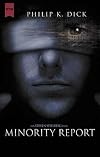
The collection is fantastic, but the story that stood out most to me is The Minority Report. I enjoyed absolutely everything about this story. Such an interesting work of science fiction. The fact that Dick can dream up the elaborate plot and all the details and then go beyond that to put it into beautiful writing astounds me.
The story was pretty dense, but I'm not a huge science fiction reader. There were parts I had to read a few times through to understand, but I was glad I did. Some show more books you can skim through and still get the idea of what's going on. With The Minority Report, I found that I didn't want to skim. I wanted to read and try to understand everything I could.
I am a new reader of Phillip K. Dick, but I will definitely be looking into more of his work. show less
The story was pretty dense, but I'm not a huge science fiction reader. There were parts I had to read a few times through to understand, but I was glad I did. Some show more books you can skim through and still get the idea of what's going on. With The Minority Report, I found that I didn't want to skim. I wanted to read and try to understand everything I could.
I am a new reader of Phillip K. Dick, but I will definitely be looking into more of his work. show less

This book is about as idiosyncratic as it is possible for a book to be; at least they are up front with it on the actual front cover. It is one of those books that if you are in a hurry to do anything, don't pick it up.

"Realms of Fantasy" takes an in-depth look at the worlds created by by some of our most imaginative authors at a time (the early 80s) when the fantasy genre was enjoying tremendous popularity. The illustration is top-notch and really adds to the book. Though the works are varied, the settings can be divided into 5 catagories: stories set in the ancient past, set in present-day lost worlds, set on other planets, set in the distant future, and stories set in fantasy earths quite separate from show more our own. All of them are fascinating but my personal favorites are the alternate earths. show less
Lists
Awards

You May Also Like


Associated Authors
Statistics
- Works
- 28
- Also by
- 14
- Members
- 613
- Popularity
- #41,001
- Rating
- 3.7
- Reviews
- 6
- ISBNs
- 27
- Languages
- 2