
Joel Bakan
Author of The Corporation: The Pathological Pursuit of Profit and Power
About the Author
Joel Bakan is professor of law at the University of British Columbia.
Image credit: Joel Bakan
Works by Joel Bakan
Associated Works
Economix: How Our Economy Works (and Doesn't Work) in Words and Pictures (2012) — Introduction — 502 copies, 22 reviews
Tagged
Common Knowledge
Members
Reviews
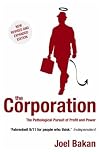
Here's a fascinating book, making a powerful case, yet trying so hard to be fair that, personally, I think it doesn't go far enough and so misses the point in the (rough) solutions it proposes. What is it about?
Well, written in the shadow of Enron's collapse, the point made by the author is that Corporates, these massive institutions driving our economies and shaping our lives whether we like or not, are, at their core, pathological. They are pathological because their only purposes is to show more make profit for their owners (read: shareholders) and this drive for profits leaves them completely oblivious to the consequences this can have upon us all (let alone the environment, if you're ecologically inclined). Put it bluntly: Corporates, as institutions, are psychopaths let loose within our capitalistic system.
Now, of course, it's the goal of every company/ businesses to make profits! But corporates, by their very nature, are not your normal business indeed. Institutions owned by shareholders so numerous it dilutes personal responsibility, and entrusted to the hands of directors/ managers whose role is solely to make it profitable for its shareholders, you would be dumb to don't see in it not only the seeds for corruption, but, also, the potential and disastrous impact such Frankenstein can unleash if left without control. This is actually so obvious that, classical liberalism warned against them (poor Adam Smith! He must be spinning into his grave looking at what psycho-yuppies, who clearly never read him, have made of his 'invisible hand'...). This is actually so obvious that, believe it not, there were once even Parliamentary laws making them illegal (e.g. the Bubble Act in the UK, passed in 1720 following the collapse of the South Sea Company...). This is actually so obvious that, every sensible governments who had to pick up their mess, from the English Parliament back in the 18th century to Roosevelt and his New Deal in the 20th century, knew full-well that such monsters had to be tamed for the sake of us all. It's so obvious, and yet...
And yet, over the past five decades or so corporate capitalism came to triumph and dominate our world! How come?
'A fledging institution that could be banned with the stroke of a legislative pen in 1720, the corporation now dominates society and government.'
Joel Bakan, here, does a brilliant and educational job in retracing their fascinating history, showing not only how they came to be so powerful in today's world, but, also, how, in the process, they gained an identity of their own where profits is the sole drive, shareholders the priority (despite potentially being vulnerable to be fooled themselves), and responsibility so diluted they came to have no responsibility whatsoever apart for making money. Of course, then as now here are recipes for disasters! To their credit, corporates these days love to bash us all ad nauseam about their so-called 'social responsibility' -some indeed are responsible, and take their social role very seriously. But the author is not, rightfully, concerned with case by case corporate nor case by case individuals running them. He is concerned with their structure, history, and, so, as a result, their pathological functioning. Deregulations synonyms with attacks upon workers rights and human rights, threat to civil society and the social contracts that bind us all (corporatism was a feature of fascism, after all...), no care whatsoever for the environment, reducing us all to only units of production or consumers to the point of even targeting children in their race for money ('within the psychopathic world of the corporation, vulnerability is an invitation to exploit, not a reason to protect') the author shows indeed that without regulations for corporate to internalize the costs they have upon society, 'corporate social responsibility' will remain an oxymoron. The lesson was learnt in 18th century England, and it was learnt in the wake of the 1929's crisis. When Enron and such collapsed, we therefore had no excuse to don't know better:
'the underlying reasons for its collapse can be traced to characteristics common to all corporations: obsession with profit and share prices, greed, lack of concerns for others, and a penchant for breaking legal rules.'
So, I love the core argument. Yet, I disagree with how timid the author is.
His solutions are weak. For instance, he calls for regulations in order to tame such powerful Behemoth. Personally, I don't. I don't, not because I am a looney who believes in anarcho-capitalism. On that score, I actually fully agree with one of Balkan's most powerful statement in this book against the system we currently live in, that is:
'No one would seriously suggest that individuals should regulate themselves, that laws against murder, assault, and theft are unnecessary because people are socially responsible. Yet oddly, we are asked to believe that corporate persons -institutional psychopaths who lack any sense of moral conviction and who have the power and motivation to cause harm and devastation in the world- should be left free to govern themselves.'
No, I don't believe in regulations, simply because there already are regulations. More red tape is not going to solve the problem. The willingness of our leaders to actually have such regulations be respected, and whose failing to abide punished, should be enough to solve the problem. They don't, because our system is one of crony capitalism whereas politicians depend on corporates to sustain their career, from financing of political parties and campaigns to lobbying, and revolving doors between politics and the business and financial world etc. If the author has one solution worth looking into, it's indeed a rethink of our whole political system:
'Elections should be publicly financed, corporate financial donations phased out, and tighter restrictions imposed on lobbying and the "revolving door" flow of personnel between government and business.'
I also found him timid when trying to excuse away the behaviours of the individuals in charge, by insisting most are actually decent human beings just caught in the cogs of a pathological system. Ethically, I found him here rolling down a slippery slope and so missing the point.
He is right: the ability of the people concerned to compartmentalise (his word) their life that is, disassociating their private life from their jobs, is a sure evidence that they are not psychopaths in the strictly psychiatric definition of the term. Yet, does that mean they are decent people? The author claims so -again, to him they are as victim of a dysfunctional system as we all are. This might be the case for some, whose running corporates taking their social responsibility seriously. As a whole, though, I strongly disagree. And now brace yourself, because my point will shock many (I don't care):
The bureaucrats members of the Nazi party and serving the regime were wonderful people too by this logic. Many were amazing husbands, loving fathers, good neighbours... Or were they? Of course not! These people might have been remarkable in their private lives, nevertheless, the choices they made to participate and collaborate in an enterprise they knew criminal made them criminals. They deserve our disdain and our repulsion, not our sympathy for having been caught up in the cogs of Nazism, a truly evil regime. I believe it is the same with the CEOs running modern day corporates. They might be remarkable people in private, but the willing choices they make in the course of their jobs, fully knowing the terrible consequences such choices have upon the rest of us, doesn't make them decent. It makes them worthy of our disdain and our condemnation. Of course, it's not easy! Of course, we're all trapped somehow into the corporate system plaguing us. As consumer, of course, we too participate and collaborate to the evil being done in the name of profits. It would be hypocrite to deny it, and so feel free to accuse me of hypocrisy. But, we are not making a living of it. Given the opportunity, moral people would not engage in the criminal or at least unethical activities entailed by running Corporates the way they are run. Decent people don't take pride in earning astronomical salaries and making massive profits at the expense of the vulnerable and the unfortunate, excusing it all in the name of a system which remains legal. Slave owners were doing so; slave owners were not decent people either, no matter how great partners, parents, neighbours, even philanthropist. But if we, as consumers, surely are trapped too, we nevertheless try and make choices, e.g. not consuming products/ services from unethical companies, or even campaigning for a better world against a morale prostituted to the making of money for the sole benefit of making money. Many will be aghast at my comparison between modern corporate CEO exploiting their way to the top and the bureaucratic Nazi mindset, yet… They all fit in a system they never question as long as it profits them, they follow orders, are strangely obsessed with numbers and statistics over people, have learnt to be oblivious to others and blunt any sense of empathy so as to perform their jobs successfully (it's not personal, it's business) and, when faced with taking responsibilities for their deeds, be it having crashed a corporate bank/caused an ecological disaster/run sweatshops in developing countries or engaging in a murderous endeavour (though financiers have blood on their hands too -how many suicides and shattered lives after the failure of their selfish gambling?...) the 'banality of their evil' is all but strikingly similar -they just fitted a system, supposedly not their faults. 'It's my job, not me'. Well... No.
A job reflects who you are. My stance here is harsh, but I long for the day indeed when the people amassing billions (not millions anymore, for we have stepped up a level into our race for greed) or simply making a living within such opaque institutions, whose benefits to society as a whole remains to be proven, will stop being adulated as successful individuals to be look up to, but, instead, pointed at for who they are: greedy, selfish, amoral pigs.
All in all, this is a wonderful book truly exposing the institution that came to embody the free-market ideology for what it is-greed mercilessly stamping down empathy and, beyond, slowly eroding civil society. Corporations are indeed psychopaths let loose, and it should concern us all; not least because we're all -yes, all- complicit. Sadly, the author let himself down by fooling himself into believing the self interested amoral pricks running them, by buying into their pitiful excuses of supposedly being trapped within a system, or, worse, that leaving them unregulated is for the best. They are not. It's not. As history has proven time and time again, there is nothing preventing us to tame the monsters. It has been done before, it can be done again. Yet do they want to? No. No, and that says it all about their so-called concern about social responsibility and supposedly genuine will to change the system. Should we care, though? Corporations might be so big they escape the control of citizens, but there remains something we can control: besides the choices we try to navigate as responsible consumers (yes, we have a part to play, no matter how challenging!) we, citizens, can still reclaim the political sphere. Isn't it time we fight to end crony capitalism? show less
Well, written in the shadow of Enron's collapse, the point made by the author is that Corporates, these massive institutions driving our economies and shaping our lives whether we like or not, are, at their core, pathological. They are pathological because their only purposes is to show more make profit for their owners (read: shareholders) and this drive for profits leaves them completely oblivious to the consequences this can have upon us all (let alone the environment, if you're ecologically inclined). Put it bluntly: Corporates, as institutions, are psychopaths let loose within our capitalistic system.
Now, of course, it's the goal of every company/ businesses to make profits! But corporates, by their very nature, are not your normal business indeed. Institutions owned by shareholders so numerous it dilutes personal responsibility, and entrusted to the hands of directors/ managers whose role is solely to make it profitable for its shareholders, you would be dumb to don't see in it not only the seeds for corruption, but, also, the potential and disastrous impact such Frankenstein can unleash if left without control. This is actually so obvious that, classical liberalism warned against them (poor Adam Smith! He must be spinning into his grave looking at what psycho-yuppies, who clearly never read him, have made of his 'invisible hand'...). This is actually so obvious that, believe it not, there were once even Parliamentary laws making them illegal (e.g. the Bubble Act in the UK, passed in 1720 following the collapse of the South Sea Company...). This is actually so obvious that, every sensible governments who had to pick up their mess, from the English Parliament back in the 18th century to Roosevelt and his New Deal in the 20th century, knew full-well that such monsters had to be tamed for the sake of us all. It's so obvious, and yet...
And yet, over the past five decades or so corporate capitalism came to triumph and dominate our world! How come?
'A fledging institution that could be banned with the stroke of a legislative pen in 1720, the corporation now dominates society and government.'
Joel Bakan, here, does a brilliant and educational job in retracing their fascinating history, showing not only how they came to be so powerful in today's world, but, also, how, in the process, they gained an identity of their own where profits is the sole drive, shareholders the priority (despite potentially being vulnerable to be fooled themselves), and responsibility so diluted they came to have no responsibility whatsoever apart for making money. Of course, then as now here are recipes for disasters! To their credit, corporates these days love to bash us all ad nauseam about their so-called 'social responsibility' -some indeed are responsible, and take their social role very seriously. But the author is not, rightfully, concerned with case by case corporate nor case by case individuals running them. He is concerned with their structure, history, and, so, as a result, their pathological functioning. Deregulations synonyms with attacks upon workers rights and human rights, threat to civil society and the social contracts that bind us all (corporatism was a feature of fascism, after all...), no care whatsoever for the environment, reducing us all to only units of production or consumers to the point of even targeting children in their race for money ('within the psychopathic world of the corporation, vulnerability is an invitation to exploit, not a reason to protect') the author shows indeed that without regulations for corporate to internalize the costs they have upon society, 'corporate social responsibility' will remain an oxymoron. The lesson was learnt in 18th century England, and it was learnt in the wake of the 1929's crisis. When Enron and such collapsed, we therefore had no excuse to don't know better:
'the underlying reasons for its collapse can be traced to characteristics common to all corporations: obsession with profit and share prices, greed, lack of concerns for others, and a penchant for breaking legal rules.'
So, I love the core argument. Yet, I disagree with how timid the author is.
His solutions are weak. For instance, he calls for regulations in order to tame such powerful Behemoth. Personally, I don't. I don't, not because I am a looney who believes in anarcho-capitalism. On that score, I actually fully agree with one of Balkan's most powerful statement in this book against the system we currently live in, that is:
'No one would seriously suggest that individuals should regulate themselves, that laws against murder, assault, and theft are unnecessary because people are socially responsible. Yet oddly, we are asked to believe that corporate persons -institutional psychopaths who lack any sense of moral conviction and who have the power and motivation to cause harm and devastation in the world- should be left free to govern themselves.'
No, I don't believe in regulations, simply because there already are regulations. More red tape is not going to solve the problem. The willingness of our leaders to actually have such regulations be respected, and whose failing to abide punished, should be enough to solve the problem. They don't, because our system is one of crony capitalism whereas politicians depend on corporates to sustain their career, from financing of political parties and campaigns to lobbying, and revolving doors between politics and the business and financial world etc. If the author has one solution worth looking into, it's indeed a rethink of our whole political system:
'Elections should be publicly financed, corporate financial donations phased out, and tighter restrictions imposed on lobbying and the "revolving door" flow of personnel between government and business.'
I also found him timid when trying to excuse away the behaviours of the individuals in charge, by insisting most are actually decent human beings just caught in the cogs of a pathological system. Ethically, I found him here rolling down a slippery slope and so missing the point.
He is right: the ability of the people concerned to compartmentalise (his word) their life that is, disassociating their private life from their jobs, is a sure evidence that they are not psychopaths in the strictly psychiatric definition of the term. Yet, does that mean they are decent people? The author claims so -again, to him they are as victim of a dysfunctional system as we all are. This might be the case for some, whose running corporates taking their social responsibility seriously. As a whole, though, I strongly disagree. And now brace yourself, because my point will shock many (I don't care):
The bureaucrats members of the Nazi party and serving the regime were wonderful people too by this logic. Many were amazing husbands, loving fathers, good neighbours... Or were they? Of course not! These people might have been remarkable in their private lives, nevertheless, the choices they made to participate and collaborate in an enterprise they knew criminal made them criminals. They deserve our disdain and our repulsion, not our sympathy for having been caught up in the cogs of Nazism, a truly evil regime. I believe it is the same with the CEOs running modern day corporates. They might be remarkable people in private, but the willing choices they make in the course of their jobs, fully knowing the terrible consequences such choices have upon the rest of us, doesn't make them decent. It makes them worthy of our disdain and our condemnation. Of course, it's not easy! Of course, we're all trapped somehow into the corporate system plaguing us. As consumer, of course, we too participate and collaborate to the evil being done in the name of profits. It would be hypocrite to deny it, and so feel free to accuse me of hypocrisy. But, we are not making a living of it. Given the opportunity, moral people would not engage in the criminal or at least unethical activities entailed by running Corporates the way they are run. Decent people don't take pride in earning astronomical salaries and making massive profits at the expense of the vulnerable and the unfortunate, excusing it all in the name of a system which remains legal. Slave owners were doing so; slave owners were not decent people either, no matter how great partners, parents, neighbours, even philanthropist. But if we, as consumers, surely are trapped too, we nevertheless try and make choices, e.g. not consuming products/ services from unethical companies, or even campaigning for a better world against a morale prostituted to the making of money for the sole benefit of making money. Many will be aghast at my comparison between modern corporate CEO exploiting their way to the top and the bureaucratic Nazi mindset, yet… They all fit in a system they never question as long as it profits them, they follow orders, are strangely obsessed with numbers and statistics over people, have learnt to be oblivious to others and blunt any sense of empathy so as to perform their jobs successfully (it's not personal, it's business) and, when faced with taking responsibilities for their deeds, be it having crashed a corporate bank/caused an ecological disaster/run sweatshops in developing countries or engaging in a murderous endeavour (though financiers have blood on their hands too -how many suicides and shattered lives after the failure of their selfish gambling?...) the 'banality of their evil' is all but strikingly similar -they just fitted a system, supposedly not their faults. 'It's my job, not me'. Well... No.
A job reflects who you are. My stance here is harsh, but I long for the day indeed when the people amassing billions (not millions anymore, for we have stepped up a level into our race for greed) or simply making a living within such opaque institutions, whose benefits to society as a whole remains to be proven, will stop being adulated as successful individuals to be look up to, but, instead, pointed at for who they are: greedy, selfish, amoral pigs.
All in all, this is a wonderful book truly exposing the institution that came to embody the free-market ideology for what it is-greed mercilessly stamping down empathy and, beyond, slowly eroding civil society. Corporations are indeed psychopaths let loose, and it should concern us all; not least because we're all -yes, all- complicit. Sadly, the author let himself down by fooling himself into believing the self interested amoral pricks running them, by buying into their pitiful excuses of supposedly being trapped within a system, or, worse, that leaving them unregulated is for the best. They are not. It's not. As history has proven time and time again, there is nothing preventing us to tame the monsters. It has been done before, it can be done again. Yet do they want to? No. No, and that says it all about their so-called concern about social responsibility and supposedly genuine will to change the system. Should we care, though? Corporations might be so big they escape the control of citizens, but there remains something we can control: besides the choices we try to navigate as responsible consumers (yes, we have a part to play, no matter how challenging!) we, citizens, can still reclaim the political sphere. Isn't it time we fight to end crony capitalism? show less

show more 資本主義の先進諸国における企業の性質を痛烈に批判する。
冷酷なまでに株主の利益を最優先し、時としてその為に非道徳的行為、犯罪行為を犯す存在「corporation」。しかし求められる贖罪は極めて軽く、再犯の歯止めとはならない。そして政府は、その冷酷非道を、企業が尊守すべき唯一の法として定めている。
企業の持つ法人格はサイコパスと言える利己的な性格を帯びている。この点について、私は私自身が資本主義社会を生きる過程で、その企業的性格を自身の性格としてしまっているように感じた。思いやりにかけ、自分の事しか考えない。しかも、それこそ企業が求める消費者像だと言う。私はまんまと引っかかったのか。
今日、大企業の持つその強大な力は、政府を上回るように感じられる。自社の為に政策を転換させるなど、造作もないはずだ。しかし本書は訴える。政府は弱くなってなどいないと。政府は単に、市民から企業にその恩恵をシフトしただけであって、あくまで上に立つ存在なのだと。政府なくしては企業は成立しないのだと。
企業など、法で認められた人格こそあれど、その存在は本来、虚構のはずだ。実態を持つ我々個人が、虚構に惑わされる必要などない。その事を忘れないでくれと本書は言っているのではないだろうか。 show less
冷酷なまでに株主の利益を最優先し、時としてその為に非道徳的行為、犯罪行為を犯す存在「corporation」。しかし求められる贖罪は極めて軽く、再犯の歯止めとはならない。そして政府は、その冷酷非道を、企業が尊守すべき唯一の法として定めている。
企業の持つ法人格はサイコパスと言える利己的な性格を帯びている。この点について、私は私自身が資本主義社会を生きる過程で、その企業的性格を自身の性格としてしまっているように感じた。思いやりにかけ、自分の事しか考えない。しかも、それこそ企業が求める消費者像だと言う。私はまんまと引っかかったのか。
今日、大企業の持つその強大な力は、政府を上回るように感じられる。自社の為に政策を転換させるなど、造作もないはずだ。しかし本書は訴える。政府は弱くなってなどいないと。政府は単に、市民から企業にその恩恵をシフトしただけであって、あくまで上に立つ存在なのだと。政府なくしては企業は成立しないのだと。
企業など、法で認められた人格こそあれど、その存在は本来、虚構のはずだ。実態を持つ我々個人が、虚構に惑わされる必要などない。その事を忘れないでくれと本書は言っているのではないだろうか。 show less

I thought this book might be an eye-opener and I wasn't wrong. Actually, I think I was aware of lots of the issues mentioned in the book, but had never quite thought through the possible implications or consequences.
Bakan spells them out in no uncertain terms. He discusses how corporations use cost-benefit analysis to assess the implications of their actions. Where it is cost-effective or profitable for them to break laws or regulations (eg in environmental or safety laws) - in terms of low show more risks of being caught and low fines vs potential for high profits - then they will break those laws. The cost-benefit analysis by GM to decide it was more cost-effective for them to pay compensation for injuries or disfigurement than to improve the design of their cars in terms of safety was absolutely chilling. These actions seem immoral.
And yet, as Bakan reminds us, those people who run corporations are legally obliged to work in the interests of the corporation, at the cost of everything else. Laws are there to be broken, workers are there to be abused, customers are there to be exploited - as long as those actions maximise profit.
He goes on to discuss the possible future of the corporation amidst increasing privatisation and individuals who are increasingly self-interested and unconcerned about the welfare of others. I think I found the following sentence to be the most sinister "A century and a half after its birth, the modern business corporation, an artificial person made in the image of a human psychopath, now is seeking to remake people it its image" (p135).
Thankfully, the end of the book deals with what can be done to contain corporations, such as increased regulation, holding managers accountable for the actions of the companies they run, proper funding of investigative agencies and massively increased fines for breaking laws. By the end of the book, I felt a little more hopeful than I had half-way through.
All in all, a very worthwhile read. show less
Bakan spells them out in no uncertain terms. He discusses how corporations use cost-benefit analysis to assess the implications of their actions. Where it is cost-effective or profitable for them to break laws or regulations (eg in environmental or safety laws) - in terms of low show more risks of being caught and low fines vs potential for high profits - then they will break those laws. The cost-benefit analysis by GM to decide it was more cost-effective for them to pay compensation for injuries or disfigurement than to improve the design of their cars in terms of safety was absolutely chilling. These actions seem immoral.
And yet, as Bakan reminds us, those people who run corporations are legally obliged to work in the interests of the corporation, at the cost of everything else. Laws are there to be broken, workers are there to be abused, customers are there to be exploited - as long as those actions maximise profit.
He goes on to discuss the possible future of the corporation amidst increasing privatisation and individuals who are increasingly self-interested and unconcerned about the welfare of others. I think I found the following sentence to be the most sinister "A century and a half after its birth, the modern business corporation, an artificial person made in the image of a human psychopath, now is seeking to remake people it its image" (p135).
Thankfully, the end of the book deals with what can be done to contain corporations, such as increased regulation, holding managers accountable for the actions of the companies they run, proper funding of investigative agencies and massively increased fines for breaking laws. By the end of the book, I felt a little more hopeful than I had half-way through.
All in all, a very worthwhile read. show less
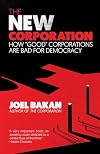
This book by Joel Bakan is an excellent follow-up to "The Corporation," but one that hides a deep flaw. He does not go far enough.
Since he wrote the first book, there has been much pushback from society. People blame corporations for environmental degradation, disease, and other epidemics. With the spread of digital technology, corporations are digging deeper into our lives, even as they profess to be part of the solution.
Joel Bakan's essential premise is the same: corporations are show more pathological, even if the people who run them are perfectly decent. However, herein lies the flaw. Corporations don't run themselves. They are just legal constructs. People run corporations. Therefore, if corporations espouse greed, it is because the people who run them are greedy. Think about this. show less
Since he wrote the first book, there has been much pushback from society. People blame corporations for environmental degradation, disease, and other epidemics. With the spread of digital technology, corporations are digging deeper into our lives, even as they profess to be part of the solution.
Joel Bakan's essential premise is the same: corporations are show more pathological, even if the people who run them are perfectly decent. However, herein lies the flaw. Corporations don't run themselves. They are just legal constructs. People run corporations. Therefore, if corporations espouse greed, it is because the people who run them are greedy. Think about this. show less
Lists
Awards

You May Also Like


Associated Authors
Statistics
- Works
- 10
- Also by
- 1
- Members
- 1,216
- Popularity
- #21,112
- Rating
- 4.0
- Reviews
- 15
- ISBNs
- 55
- Languages
- 13