
James Elkins
Author of The Object Stares Back: On the Nature of Seeing
About the Author
James Elkins is E.C. Chadbourne Chair in the Department of Art History, Theory, and Criticism at the School of the Art Institute of Chicago. He is the author of Pictures and Tears, How to Use Your Eyes, Stories of Art, Visual Studies, Why Are Our Pictures Puzzles?, Our Beautiful, Dry, and Distant show more Texts, On the Strange Place of Religion in Contemporary Art, and Master Narratives and Their Discontents, all published by Routledge. He is editor of Art History Versus Aesthetics, Photography Theory, Landscape Theory, The State of Art Criticism, and Visual Literacy, all published by Routledge. show less
Image credit: Vilnius 2010.
Series
Works by James Elkins
What Painting Is: How to Think about Oil Painting, Using the Language of Alchemy (1998) 206 copies, 2 reviews
Pictures and Tears: A History of People Who Have Cried in Front of Paintings (2001) 161 copies, 4 reviews
Six Stories from the End of Representation: Images in Painting, Photography, Astronomy, Microscopy, Particle Physics, and Quantum Mechanics, 1980-2000 (2008) 26 copies
The End of Diversity in Art Historical Writing: North Atlantic Art History and its Alternatives (2020) 2 copies
Julie Heffernan 1 copy
Printed Project Issue 4 1 copy
Associated Works
Beyond Mimesis and Convention: Representation in Art and Science (Boston Studies in the Philosophy and History of Science) (2010) — Contributor — 18 copies
Tagged
Common Knowledge
- Legal name
- Elkins, James Preston
- Other names
- Elkins, Jim
- Birthdate
- 1955-10-13
- Gender
- male
- Education
- University of Chicago
Cornell University - Occupations
- art historian
art critic
university professor - Organizations
- Art Institute of Chicago
- Nationality
- USA
- Birthplace
- Ithaca, New York, USA
- Associated Place (for map)
- New York, USA
Members
Reviews
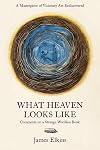
I found What Heaven Looks Like — James Elkins’ commentary on a 17th-century book of unknown origins held in the University of Glasgow’s “collection of alchemical manuscripts” — among the jilted review copies at a magazine where I fact checked six years ago. It’s a natural resting place for a work about a painter best taxonomized as a hermit and mystic, outside and far, but not utterly remote, from any establishment and tradition. And yet, having disinterred and reburied the show more book among my others until recently, I can’t help but wish that more people would discover the fifty-two paintings within, conjured up by a solitary, wandering mind’s encounters with fifty-two (or fewer) imperfect wooden circles.
The number fifty-two seems like it should be significant, as do plenty of the images in the book, the painter’s many references to Christian figures, Greek gods, and contemporaneous guides to alchemy. Elkins observes that no subject ever reaches a point of finality, where we might comfortably claim there is some sense to it. “Nothing is unwelcome, unless she recognizes it,” he writes. (He has decided, quite plausibly, that the artist is a woman.) “I would like to think she lost interest in her project when she began to feel at home in the contours of her imagination.” Elkins wants to avoid meaning and its inevitable outgrowth, narrative, in the work. He seems to struggle against the same impulse in his writing, a form where it is even more difficult to evade, and is aided by a self-imposed limit — a single page of commentary for each painting.
Through his commentary, I found myself led, but not strong-armed, into noticing the many features I had missed about the paintings. His brief explanations of historical context are also helpful. One place of disagreement comes in his thoughts on the title page; he is mildly skeptical of the idea that the inscription might be by the artist herself. In particular, though, the description in these few lines of the painter as an “Ape of Nature” appeals to me — it reminds me of Kafka’s “A Report to an Academy,” in which an ape named Red Peter explains the method by which, after his capture and transportation to Europe, he fashioned himself into a human. In his novel Elizabeth Costello, J.M. Coetzee has the eponymous writer deliver a lecture in which she notes that “Red Peter took it upon himself to make the arduous descent from the silence of the beasts to the gabble of reason.” I sometimes think this painter must have tried to climb in the opposite direction, journeying into muteness and effecting, as Elkins notes, a certain forlorn distance from the rest of humanity. show less
The number fifty-two seems like it should be significant, as do plenty of the images in the book, the painter’s many references to Christian figures, Greek gods, and contemporaneous guides to alchemy. Elkins observes that no subject ever reaches a point of finality, where we might comfortably claim there is some sense to it. “Nothing is unwelcome, unless she recognizes it,” he writes. (He has decided, quite plausibly, that the artist is a woman.) “I would like to think she lost interest in her project when she began to feel at home in the contours of her imagination.” Elkins wants to avoid meaning and its inevitable outgrowth, narrative, in the work. He seems to struggle against the same impulse in his writing, a form where it is even more difficult to evade, and is aided by a self-imposed limit — a single page of commentary for each painting.
Through his commentary, I found myself led, but not strong-armed, into noticing the many features I had missed about the paintings. His brief explanations of historical context are also helpful. One place of disagreement comes in his thoughts on the title page; he is mildly skeptical of the idea that the inscription might be by the artist herself. In particular, though, the description in these few lines of the painter as an “Ape of Nature” appeals to me — it reminds me of Kafka’s “A Report to an Academy,” in which an ape named Red Peter explains the method by which, after his capture and transportation to Europe, he fashioned himself into a human. In his novel Elizabeth Costello, J.M. Coetzee has the eponymous writer deliver a lecture in which she notes that “Red Peter took it upon himself to make the arduous descent from the silence of the beasts to the gabble of reason.” I sometimes think this painter must have tried to climb in the opposite direction, journeying into muteness and effecting, as Elkins notes, a certain forlorn distance from the rest of humanity. show less
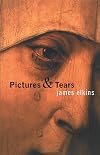
So, a book about people who have cried in front of different paintings throughout history? Sign me up please! I'd never heard of this writer before, but the unconventional treatment of art history was right up my alley. I love writing that explores the area between the academic (art/painting) and the non-academic (crying).
Though the author, Elkins, is a respected professor of art history, he was still able to remain open-minded to other ways of approaching art, never ruling out anything as show more 'invalid', but considering them all in the spectrum of different human reactions to art. Not so his colleagues. When beginning his project, he sent out a letter to many people, both art historians and regular art admirers, with a survey asking if they had ever cried in front of a painting before.
The vast majority of art historians either did not write back, or wrote back to say they had not--and did not think that crying was very professional. Many of the ones who did admit to crying wished to remain anonymous. The author says that we currently live in one of the most tearless eras of art history ever, and that it was not always this way.
The most interesting letters/surveys that came back were from non-art historians, just regular museum goers who had a special experience to share.
The book starts off with two chapters about the Rothko chapel (above), which I found especially interesting since I visited it just a year ago, knowing only Rothko’s more colorful output. I was oddly unmoved by these vast dark pieces, whereas Rothko’s lozenge-like color fields have been some of the paintings closest to moving me to tears in the past. But it was nice to read what others had felt in front of these paintings that I had not.
People cry in front of paintings for many different reasons. Some I found more useful than others, and sometimes--I have to be honest--I thought the author was a little too open-minded, whereas reading the accounts myself, I felt that the crying had more to do with the person than the painting.
Elkins himself admits that he has not cried in front of a painting before, but I got a sense that he deeply wishes to be able to; all his knowledge prevents him from returning to that state.
Throughout the book, Elkins wrestles with the two approaches: emotional investment vs. intellectual distance. He shows you how throughout history, there have been periods of lots of crying and periods of sober intellectual distance. We are in one of the most sober periods in art. Elkins reminds us that modernism and postmodernism came about as a reaction against the high emotion, the carried-away-ness of romanticism. We live under the illusion that art does not need to move us, we walk from painting to painting in a museum as if consuming chicken nuggets.
But I don't know if it's so clear cut as that. We can be moved by highly modern and even post-modern works, like the woman who wrote letter #6 in the appendix (he collects some of his responses in the back) where she describes being moved to tears by the colors, the paint, and even the nails that hold the canvas to the stretcher. In fact, I think the most successful paintings for me are the ones that manage to create that illusion of Modernism's self-aware distance, yet still communicate strong human emotions--paintings that embody both intellect AND emotion.
Response to p.124-129
I understand Elkins is trying to play devil’s advocate here, but his analysis is too simple. After giving us all the great reasons why we don’t cry over a late 18th century Greuze painting (below), namely: cultural/generational differences that affect how we look at painting, and at ideas like nobility, patriotism, love, etc. and how we don’t see things as black & white but as more complicated shades of gray, as well as how we look at things that are overly sentimental as manipulative, he goes on to say that nevertheless we cry at sentimental Disney movies and Dick and Jane books, etc. Then he says:
“There must be some other reason why Greuze is so powerless to move us. The answer, I think, lies in our fear of crying.”
Well I find that completely absurd, given what he’s just told us. If we fear crying, why don't we fear crying at Disney movies and Dick and Jane books, as he JUST told us? No, we don’t cry at Greuze paintings anymore for the same reason (most of us) don’t find 20’s comedies funny anymore--because attitudes about what’s sad/funny/etc. change within the span of decades, and even faster now. I agree with Elkin’s point that we should free up our tear glands more often when it comes to art appreciation... and I agree that fear of crying is probably one of the many factors for why we don’t cry at more paintings... but fear of crying is NOT the reason we don’t cry at THIS Greuze painting, in particular.
In other words, just because we should cry doesn’t mean we should still be crying over the same things we cried over in 1785! That’s absurd... if we’re to cry today, it will have to be something that makes OUR generation cry--something that speaks to us, like Rothko did in Chapter 1. How can such a simple point elude Elkin, when he pretty much outlines it right there earlier in the chapter? I feel like he willfully misses this obvious point towards the end of the chapter. But why?
About Museums
I think what he says about museums being a busy, brightly lit area seems to be one of the strongest reasons for not crying. And in fact I wonder why he doesn’t harp on this point more. Maybe because he thinks the museum experience may just be a symptom of our attitudes towards art rather than the cause. The chicken or the egg? Hmm...
He talks about how much more conducive to emotional reactions it would be if museums would dedicate each room to just one painting, where the light is dimmed and a soft light is cast on the painting.
Although I think this is a good idea, I can see why we don't do it this way, i.e. the presentation of the art can easily become manipulative, tainting the 'pure' experience of the artwork with the museum's interpretation. But isn’t that inevitable anyway? Crowding many art pieces into a brightly lit room is also influencing our way of viewing it, but this way doesn’t serve the painting at all. Perhaps every painting should be thought of as installation art, and museums should think more about individualizing the presentation of each to fit the art.
A Review of the Actual Writing Itself
Despite some gaps in the logic and some rather repetitive portions towards the middle, it was generally engaging; personal, yet backed up by evidence, and not shying away from the occasional inexplicable mystery. But there were times when I thought he did not delve far enough with some of his conclusions.
A Survey of My Own
I would like to know what paintings you have cried in front of, if any, and (if you can put it into words:) why did you cry?
And if none, then what paintings have moved you closest to tears? And if still none, then what sculptures, photographs, or otherwise non-filmic visual medium has moved you to tears? Please respond in the comments section. show less
Though the author, Elkins, is a respected professor of art history, he was still able to remain open-minded to other ways of approaching art, never ruling out anything as show more 'invalid', but considering them all in the spectrum of different human reactions to art. Not so his colleagues. When beginning his project, he sent out a letter to many people, both art historians and regular art admirers, with a survey asking if they had ever cried in front of a painting before.
The vast majority of art historians either did not write back, or wrote back to say they had not--and did not think that crying was very professional. Many of the ones who did admit to crying wished to remain anonymous. The author says that we currently live in one of the most tearless eras of art history ever, and that it was not always this way.
The most interesting letters/surveys that came back were from non-art historians, just regular museum goers who had a special experience to share.
The book starts off with two chapters about the Rothko chapel (above), which I found especially interesting since I visited it just a year ago, knowing only Rothko’s more colorful output. I was oddly unmoved by these vast dark pieces, whereas Rothko’s lozenge-like color fields have been some of the paintings closest to moving me to tears in the past. But it was nice to read what others had felt in front of these paintings that I had not.
"Some tears were mysteries even to the person who cried them. ("Tears, a liquid embrace") They came from nowhere, and in a minute they evaporate, like a dream that can hardly be remembered. What can be said about tears like that? I want to spend awhile now considering tears of all sorts, just to see how few of them make sense."
People cry in front of paintings for many different reasons. Some I found more useful than others, and sometimes--I have to be honest--I thought the author was a little too open-minded, whereas reading the accounts myself, I felt that the crying had more to do with the person than the painting.
Elkins himself admits that he has not cried in front of a painting before, but I got a sense that he deeply wishes to be able to; all his knowledge prevents him from returning to that state.
Throughout the book, Elkins wrestles with the two approaches: emotional investment vs. intellectual distance. He shows you how throughout history, there have been periods of lots of crying and periods of sober intellectual distance. We are in one of the most sober periods in art. Elkins reminds us that modernism and postmodernism came about as a reaction against the high emotion, the carried-away-ness of romanticism. We live under the illusion that art does not need to move us, we walk from painting to painting in a museum as if consuming chicken nuggets.
But I don't know if it's so clear cut as that. We can be moved by highly modern and even post-modern works, like the woman who wrote letter #6 in the appendix (he collects some of his responses in the back) where she describes being moved to tears by the colors, the paint, and even the nails that hold the canvas to the stretcher. In fact, I think the most successful paintings for me are the ones that manage to create that illusion of Modernism's self-aware distance, yet still communicate strong human emotions--paintings that embody both intellect AND emotion.
"In a subject like this, no matter how dusty a theory is, it might help, and a very dusty theory might fit best. I say that because I hope it's true: at least I know there is no hope for a well-behaved, legitimate-sounding theory where things are so wild."
Response to p.124-129
I understand Elkins is trying to play devil’s advocate here, but his analysis is too simple. After giving us all the great reasons why we don’t cry over a late 18th century Greuze painting (below), namely: cultural/generational differences that affect how we look at painting, and at ideas like nobility, patriotism, love, etc. and how we don’t see things as black & white but as more complicated shades of gray, as well as how we look at things that are overly sentimental as manipulative, he goes on to say that nevertheless we cry at sentimental Disney movies and Dick and Jane books, etc. Then he says:
“There must be some other reason why Greuze is so powerless to move us. The answer, I think, lies in our fear of crying.”
Well I find that completely absurd, given what he’s just told us. If we fear crying, why don't we fear crying at Disney movies and Dick and Jane books, as he JUST told us? No, we don’t cry at Greuze paintings anymore for the same reason (most of us) don’t find 20’s comedies funny anymore--because attitudes about what’s sad/funny/etc. change within the span of decades, and even faster now. I agree with Elkin’s point that we should free up our tear glands more often when it comes to art appreciation... and I agree that fear of crying is probably one of the many factors for why we don’t cry at more paintings... but fear of crying is NOT the reason we don’t cry at THIS Greuze painting, in particular.
In other words, just because we should cry doesn’t mean we should still be crying over the same things we cried over in 1785! That’s absurd... if we’re to cry today, it will have to be something that makes OUR generation cry--something that speaks to us, like Rothko did in Chapter 1. How can such a simple point elude Elkin, when he pretty much outlines it right there earlier in the chapter? I feel like he willfully misses this obvious point towards the end of the chapter. But why?
About Museums
I think what he says about museums being a busy, brightly lit area seems to be one of the strongest reasons for not crying. And in fact I wonder why he doesn’t harp on this point more. Maybe because he thinks the museum experience may just be a symptom of our attitudes towards art rather than the cause. The chicken or the egg? Hmm...
He talks about how much more conducive to emotional reactions it would be if museums would dedicate each room to just one painting, where the light is dimmed and a soft light is cast on the painting.
Although I think this is a good idea, I can see why we don't do it this way, i.e. the presentation of the art can easily become manipulative, tainting the 'pure' experience of the artwork with the museum's interpretation. But isn’t that inevitable anyway? Crowding many art pieces into a brightly lit room is also influencing our way of viewing it, but this way doesn’t serve the painting at all. Perhaps every painting should be thought of as installation art, and museums should think more about individualizing the presentation of each to fit the art.
A Review of the Actual Writing Itself
Despite some gaps in the logic and some rather repetitive portions towards the middle, it was generally engaging; personal, yet backed up by evidence, and not shying away from the occasional inexplicable mystery. But there were times when I thought he did not delve far enough with some of his conclusions.
A Survey of My Own
I would like to know what paintings you have cried in front of, if any, and (if you can put it into words:) why did you cry?
And if none, then what paintings have moved you closest to tears? And if still none, then what sculptures, photographs, or otherwise non-filmic visual medium has moved you to tears? Please respond in the comments section. show less
It's difficult to find really interesting books on photography other than the "usual names" (Benjamin, Barthes, Sontag and a very few others). Elkins bravely decided to write a direct confrontation with Barthes' Camera Lucida and constructed a strange and fascinating book which has both merits and downsides. Elkins definitely knows what he's talking about (even from the technical point of view) and some of his reflections will definitely leave a mark in photography theoretical discourse. show more Everyone interested in the nature of photography should read it. show less

Elkins is ultimately commenting on the uncertainty of the critique process, on how it's really more about collecting a bushel of opinions, letting them ferment in a vat for forty-five minutes, and then distilling some form of educational beverage from them. It's an inexact process that he tries unsuccessfully to understand. He does manage to provoke thought about the whole venture, which he contends is ultimately what critiques themselves are supposed to do. Also, yes, as another reviewer show more has pointed out, there are some humorous moments. In particular, I enjoyed the suggestion that the student arrange his work in reverse-chronological order and try to convince the panel that he had progressed from newest to oldest over time, or to have someone else stand in place of the artist to uncover the biases of the panel. Surreptitious stuff. show less
Lists
You May Also Like


Associated Authors
Statistics
- Works
- 52
- Also by
- 2
- Members
- 2,145
- Popularity
- #11,994
- Rating
- 3.6
- Reviews
- 28
- ISBNs
- 160
- Languages
- 6
- Favorited
- 3

