
Kristen Iversen
Author of Full Body Burden: Growing Up in the Nuclear Shadow of Rocky Flats
About the Author
Kristen Iversen grew up in Arvada, Colorado, and holds a PhD from the University of Denver. She is the author of several books including the award-winning Full Body Burden: Growing Up in the Nuclear Shadow of Rocky Flats (Crown), chosen by universities across the country for their Common Read show more programs and now the subject of a forthcoming documentary. Her work has appeared in The New York Times, The Nation, Reader's Digest, American Scholar, Fourth Genre, and many other publications. She currently teaches at the University of Cincinnati, where she heads the PhD program in Literary Nonfiction. show less
Image credit: Taken from the authors page
Works by Kristen Iversen
Doom with a View: Historical and Cultural Contexts of the Rocky Flats Nuclear Weapons Plant (2020) 5 copies, 1 review
The Pinch 1 copy
Tagged
Common Knowledge
- Gender
- female
- Nationality
- USA
- Birthplace
- Des Moines, Iowa, USA
- Associated Place (for map)
- Iowa, USA
Members
Reviews
Doom with a View: Historical and Cultural Contexts of the Rocky Flats Nuclear Weapons Plant by Kristen Iversen
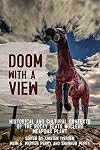
I received a free copy of this ebook from the publisher (via NetGalley) in exchange for an honest review.
As soon as I saw this work by Kristen Iversen, I immediately requested to read it. I loved Full Body Burden], and I was eager to read more by her on this subject. I was a little disappointed to find out that this is a collection of essays with Iversen's introduction. Even in the short introduction, Iversen's writing was excellent.
The essays were very informative, but sometimes a bit show more repetitive as the same details were rehashed in multiple essays. Not that I minded terribly. I was glad to get an updated look at what was happening at Rocky Flats. The essays also provided a multi-faceted look at different aspects of the situation; like Medical, legal, artistic, etc.
The plutonium contamination and continual whitewashing and coverups will never end. People like the authors of these essays are the sentinels of the truth of Rocky Flats. While government and business want to hurry up and move on, building and burning, these voices cry the reasons why this is stupid and unfathomably dangerous. The only reason the area around Rocky Flats is still inhabited is because you can't prove without any doubt at all that your cancer was due to exposure to radioactive and carcinogenic materials from that plant. That's the only reason. And as long as industry and government can cling to that statement, they will.
If you've read Full Body Burden, this is something you'll certainly want to pick up. If you have any interest at all on nuclear history, or the impact said history is still having on us all, please pick this up. It is absolutely disgusting what this country has done to itself in pursuit of nuclear weapons. show less
As soon as I saw this work by Kristen Iversen, I immediately requested to read it. I loved Full Body Burden], and I was eager to read more by her on this subject. I was a little disappointed to find out that this is a collection of essays with Iversen's introduction. Even in the short introduction, Iversen's writing was excellent.
The essays were very informative, but sometimes a bit show more repetitive as the same details were rehashed in multiple essays. Not that I minded terribly. I was glad to get an updated look at what was happening at Rocky Flats. The essays also provided a multi-faceted look at different aspects of the situation; like Medical, legal, artistic, etc.
The plutonium contamination and continual whitewashing and coverups will never end. People like the authors of these essays are the sentinels of the truth of Rocky Flats. While government and business want to hurry up and move on, building and burning, these voices cry the reasons why this is stupid and unfathomably dangerous. The only reason the area around Rocky Flats is still inhabited is because you can't prove without any doubt at all that your cancer was due to exposure to radioactive and carcinogenic materials from that plant. That's the only reason. And as long as industry and government can cling to that statement, they will.
If you've read Full Body Burden, this is something you'll certainly want to pick up. If you have any interest at all on nuclear history, or the impact said history is still having on us all, please pick this up. It is absolutely disgusting what this country has done to itself in pursuit of nuclear weapons. show less
My professor for Professional Responsibility (that is ethics for those who are not familiar with law school euphemisms) was a rather brilliant libertarian crank who had been for some time Ayn Rand's lawyer. One day he got into it (not for the first or last time) with one of our more loudmouthed classmates who is now a loudmouthed real estate developer who has public screaming matches with advocates for the environment and racial and economic justice. When the classmate was backed into a show more corner in the argument he yelled "Law has nothing to do with justice!" Every day for the rest of the term the prof wrote those words on the board followed by an attribution to that student whom I won't name here. As I read this book I kept thinking of that. Law has nothing to do with justice. I may not agree on much with that loudmouth student or with that libertarian prof but on this point we all come together.
Full Body Burden is the story of the history and impact of Rocky Flats, likely the most hazardous nuclear waste site in the US and the one for which the smallest amount of remediation and redress has been forthcoming. The government denies Rocky Flats is an issue despite having radioactive material in the soil and groundwater at rates higher than Nagasaki just after we bombed it. In fact Rocky Flats has been turned into a recreational area and wildlife preserve. But that is not the only story here. Don't miss the rest of the subtitle; The book is also about Kristen Iverson growing up. The cone of silence around Iverson's fracturing family is but a subset of the cone of silence around most things that are thought to be embarrassing, or which could prove inconvenient, like industrial poisoning that hurt or killed thousands of people. I grew up in the same type of corrosive environment a few years later and a 1000 miles away, but it was all recognizable. I was floored by how seamlessly Iverson knitted together the story of the Rocky Flats plant and the many people who died or were physically damaged by the cavalier flinging about of plutonium and other radioactive materials, and the destruction of a family forced into silence as they were ravaged by their father's alcoholism and their mother's repression and denial. Iverson's approach to the material is brilliant and innovative and she is a hell of a good writer. I have had this book on my shelf for years and every time I looked at it I thought it would be dry, but it was so far from that. It was riveting and affecting and infuriating, but not dry.
The moronic innocence of the 70's (see no evil, hear no evil, etc.) would be sad and sweet if it could be left to nostalgia, but alas most people still live there, ignoring things that will destroy us individually and collectively because it is inconvenient to stop things that provide jobs and/or increase comfort. I think it was Kurt Vonnegut who said “We will go down in history as the first society that wouldn't save itself because it wasn't cost effective.” Kurt was a true sage.
This is a very very good book. If you have a chance to read it, you should do that. show less
Full Body Burden is the story of the history and impact of Rocky Flats, likely the most hazardous nuclear waste site in the US and the one for which the smallest amount of remediation and redress has been forthcoming. The government denies Rocky Flats is an issue despite having radioactive material in the soil and groundwater at rates higher than Nagasaki just after we bombed it. In fact Rocky Flats has been turned into a recreational area and wildlife preserve. But that is not the only story here. Don't miss the rest of the subtitle; The book is also about Kristen Iverson growing up. The cone of silence around Iverson's fracturing family is but a subset of the cone of silence around most things that are thought to be embarrassing, or which could prove inconvenient, like industrial poisoning that hurt or killed thousands of people. I grew up in the same type of corrosive environment a few years later and a 1000 miles away, but it was all recognizable. I was floored by how seamlessly Iverson knitted together the story of the Rocky Flats plant and the many people who died or were physically damaged by the cavalier flinging about of plutonium and other radioactive materials, and the destruction of a family forced into silence as they were ravaged by their father's alcoholism and their mother's repression and denial. Iverson's approach to the material is brilliant and innovative and she is a hell of a good writer. I have had this book on my shelf for years and every time I looked at it I thought it would be dry, but it was so far from that. It was riveting and affecting and infuriating, but not dry.
The moronic innocence of the 70's (see no evil, hear no evil, etc.) would be sad and sweet if it could be left to nostalgia, but alas most people still live there, ignoring things that will destroy us individually and collectively because it is inconvenient to stop things that provide jobs and/or increase comfort. I think it was Kurt Vonnegut who said “We will go down in history as the first society that wouldn't save itself because it wasn't cost effective.” Kurt was a true sage.
This is a very very good book. If you have a chance to read it, you should do that. show less
This is not a book I enjoyed reading but Iversen's deceptively simple prose sure packs a wallop. In paralleling the interior secrets of her families silence in the face of her father's alcoholism and the ravages sustained by that with the government and community silence and denial of the damage that plutonium from the Rocky Flats facility, she makes our own complicity with those denials clear.
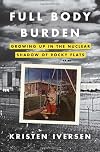
A scary, rattling, sleep-disturbing read. Kristen Iversen intersperses a memoir of her childhood in Arvada, CO with an investigation/expose of the nearby Rocky Flats Plant, a nuclear weapons production facility operated by the Department of Energy beginning in the 1950s. The themes of secrecy and denial pervade the narrative -- both the personal (Iversen's father's alcoholism that destroyed the family, and the general code of the time not to discuss anything unpleasant) and the very public show more (massive contamination of the air, soil and water of the region by plutonium and other extremely toxic elements; gruesome cancers running through nearly every family in the area, all denied or denounced by the government: "It's all perfectly safe *big smily face*!!"). An extremely important read -- I would say for anyone who lives near Denver as I do, but for everyone, really, as there are super toxic nuclear weapons facilities all over the country and the world. Rocky Flats was raided by the FBI in 1989 -- one federal agency raiding another -- and their months-long investigation resulted in the plant ceasing operations, and a massive lawsuit (won, then overturned). Today, Rocky Flats is a park and wildlife refuge area open (most of it) for anyone to visit. Efforts to erect signage indicating that the site is massively contaminated have failed.
"We don't talk about plutonium. It's bad for business. It reminds us of what we don't want to acknowledge about ourselves. We built nuclear bombs, and poisoned ourselves in the process. Where does the fault lie? Atomic secrecy, the Cold War culture, bureaucratic indifference, corporate greed, a complacent citizenry, a failed democracy? What is a culture but a group of individuals acting on the basis of shared values?" show less
"We don't talk about plutonium. It's bad for business. It reminds us of what we don't want to acknowledge about ourselves. We built nuclear bombs, and poisoned ourselves in the process. Where does the fault lie? Atomic secrecy, the Cold War culture, bureaucratic indifference, corporate greed, a complacent citizenry, a failed democracy? What is a culture but a group of individuals acting on the basis of shared values?" show less
Lists
Awards


You May Also Like


Statistics
- Works
- 8
- Members
- 552
- Popularity
- #45,211
- Rating
- 4.0
- Reviews
- 29
- ISBNs
- 20