
Craig Nelson (1) (1955–)
Author of Rocket Men: The Epic Story of the First Men on the Moon
For other authors named Craig Nelson, see the disambiguation page.
About the Author
Craig Nelson was an editor at HarperCollins, Hyperion, and Random House for almost twenty years. He lives in New York City.
Works by Craig Nelson
Thomas Paine: Enlightenment, Revolution, and the Birth of Modern Nations (2006) 470 copies, 6 reviews
The First Heroes: The Extraordinary Story of the Doolittle Raid- America's First World War II Victory (2002) 227 copies, 4 reviews
Tagged
Common Knowledge
- Birthdate
- 1955-02-06
- Gender
- male
- Education
- University of Texas, Austin
- Occupations
- writer
editor
executive editor
vice president (Harper & Row, Hyperion, Random House, and Villard)
literary agent - Organizations
- Boy Scouts of America (Eagle Scout)
- Agent
- Stuart Krichevsky
- Nationality
- USA
- Places of residence
- Greenwich Village, New York, USA
- Associated Place (for map)
- New York, USA
Members
Reviews
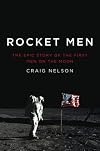
Through interviews, 23,000 pages of NASA oral histories, and declassified CIA documents on the space race, Nelson offers a grippingly vivid and detailed account of the Apollo 11 mission. Beginning with the arduous training to the stress of media stardom, the author recounts the story of a twentieth-century pilgrimage, a voyage into the unknown motivated by politics, science, and wonder. A voyage that changed history.
But, at its core, “Rocket Men” is a human story, a tale of heroic show more astronauts, tolerant wives, and often-preoccupied children. It is the story of ground crews and Mission Control and those who stood behind the men and the mission. Readers will find themselves cheering for their astounding accomplishments.
Highly recommended. show less
But, at its core, “Rocket Men” is a human story, a tale of heroic show more astronauts, tolerant wives, and often-preoccupied children. It is the story of ground crews and Mission Control and those who stood behind the men and the mission. Readers will find themselves cheering for their astounding accomplishments.
Highly recommended. show less
"Feeling weightless...it's...a feeling of pride, of healthy solitude, of dignified freedom from everything that's dirty, sticky. You think well, you move well, without sweat, without difficulty, as if the biblical curse 'In the sweat of thy face and in sorrow' no longer exists. As if you've been born again... You can love the earth with all the love in the world; returning is regret, is sorrow."
- Wally Schirra
Obstensibly a biopic about the three astronauts who flew the Apollo 11 mission, show more Rocket Men actually casts a much larger net. With a field-trip into the history of rockets and a historical perspective on the Space Race in general, there are times you wonder if Nelson is ever going to talk about Armstrong, Aldrin and Collins at all. Not that I didn't find these passages interesting, I did, but I just wasn't expecting them.
Nelson freely quotes large passages from dozens of individuals throughout the book but sometimes his own clever scene-setting shines through.
These were the MOCRs, Mission Operations Control Rooms, where Mission Control did its work, modern caves of industrious silence, blinding fluorescence, and the reverberant odors of pizza, smoldering ashtrays, burned-to-the-bowl coffee, and greasy Mexican takeout.
I've read several books on the Space Race and seeing it linked to the Cold War is nothing new, but I was impressed by the way Nelson laid down the groundwork to explain the how and why. He sums it up so nicely:
Perhaps the most important reason for going to the Moon, then, is that the Space Race kept the Cold War cold.
There is quite a discussion about Sputnik, a good backgrounder on the fear and speculation of what Russia could do during those fly-overs that drove our side of the Race. And even though some would not agree with it, I thought this quote was a really interesting perspective.
"The Soviet Union, in the eyes of the world, had suddenly become a genuine superpower, not just a backward and brutish empire to be feared because of its sheer size, territorial ambitions, and aggressive technology, but a true and equal rival of the United States, a beacon of progress that deserved respect for it's technological prowess and forward thinking. Moscow, for once, held the high moral ground to this new phase of the contest, because Sputnik, as opposed to Hiroshima, could be touted as a purely peaceful and scientific achievement." Sputnik historian Matthew Brzezinski
I also learned that quite early on, President Kennedy had asked Khruschev to end the Space Race and instead launch joint missions between the USA and USSR. He asked more than once, actually. Nelson makes a good point:
If Kennedy had indeed served out his terms as president, would he have ultimately succeeded in ending the Space Race, which after his death, would be run, in great measure, in his name, and on behalf of his legacy.
Nelson also uses snips of interviews and remembrances to humanize the three men, to let their quirks show through and chip away at the "gloss" that was shellacked on them by the press at the time.
"I remember one day picking up a copy of Life magazine with a story on us in it...I remember reading the story and thinking, 'if only it was like that.' Here were all the happy contented wives and children smiling out from happy backyards with husbands standing proudly by. Well, the fact is that the husband probably flew halfway across the country to pose for the picture, the kids were half-strangers to him.... My kids had been forced to reconcile...the father they saw on television with the one they saw at home... often inattentive, tired, and asleep on the den sofa by nine o'clock." - Buzz Aldrin
And then Nelson gives us nearly a blow-by-blow of the Apollo 11 mission. There are some really interesting moments here.
"We'd watched hundreds of landings in simulation, and they're very real, and on this particular one, the real one, Buzz Aldrin called out 'We've got dust now' and we'd never heard that before. You know, it's one of those, 'Oh, this is the real thing, isn't it. My God, this is the real thing." -Jack Garman
I enjoyed Rocket Men and I'd definitely recommend it for anyone wanting perspective on the Space Race or just interested in the Apollo program. Enjoy! show less
- Wally Schirra
Obstensibly a biopic about the three astronauts who flew the Apollo 11 mission, show more Rocket Men actually casts a much larger net. With a field-trip into the history of rockets and a historical perspective on the Space Race in general, there are times you wonder if Nelson is ever going to talk about Armstrong, Aldrin and Collins at all. Not that I didn't find these passages interesting, I did, but I just wasn't expecting them.
Nelson freely quotes large passages from dozens of individuals throughout the book but sometimes his own clever scene-setting shines through.
These were the MOCRs, Mission Operations Control Rooms, where Mission Control did its work, modern caves of industrious silence, blinding fluorescence, and the reverberant odors of pizza, smoldering ashtrays, burned-to-the-bowl coffee, and greasy Mexican takeout.
I've read several books on the Space Race and seeing it linked to the Cold War is nothing new, but I was impressed by the way Nelson laid down the groundwork to explain the how and why. He sums it up so nicely:
Perhaps the most important reason for going to the Moon, then, is that the Space Race kept the Cold War cold.
There is quite a discussion about Sputnik, a good backgrounder on the fear and speculation of what Russia could do during those fly-overs that drove our side of the Race. And even though some would not agree with it, I thought this quote was a really interesting perspective.
"The Soviet Union, in the eyes of the world, had suddenly become a genuine superpower, not just a backward and brutish empire to be feared because of its sheer size, territorial ambitions, and aggressive technology, but a true and equal rival of the United States, a beacon of progress that deserved respect for it's technological prowess and forward thinking. Moscow, for once, held the high moral ground to this new phase of the contest, because Sputnik, as opposed to Hiroshima, could be touted as a purely peaceful and scientific achievement." Sputnik historian Matthew Brzezinski
I also learned that quite early on, President Kennedy had asked Khruschev to end the Space Race and instead launch joint missions between the USA and USSR. He asked more than once, actually. Nelson makes a good point:
If Kennedy had indeed served out his terms as president, would he have ultimately succeeded in ending the Space Race, which after his death, would be run, in great measure, in his name, and on behalf of his legacy.
Nelson also uses snips of interviews and remembrances to humanize the three men, to let their quirks show through and chip away at the "gloss" that was shellacked on them by the press at the time.
"I remember one day picking up a copy of Life magazine with a story on us in it...I remember reading the story and thinking, 'if only it was like that.' Here were all the happy contented wives and children smiling out from happy backyards with husbands standing proudly by. Well, the fact is that the husband probably flew halfway across the country to pose for the picture, the kids were half-strangers to him.... My kids had been forced to reconcile...the father they saw on television with the one they saw at home... often inattentive, tired, and asleep on the den sofa by nine o'clock." - Buzz Aldrin
And then Nelson gives us nearly a blow-by-blow of the Apollo 11 mission. There are some really interesting moments here.
"We'd watched hundreds of landings in simulation, and they're very real, and on this particular one, the real one, Buzz Aldrin called out 'We've got dust now' and we'd never heard that before. You know, it's one of those, 'Oh, this is the real thing, isn't it. My God, this is the real thing." -Jack Garman
I enjoyed Rocket Men and I'd definitely recommend it for anyone wanting perspective on the Space Race or just interested in the Apollo program. Enjoy! show less
I've read the story of Apollo 11 many times, but what's one more. Nelson doesn't bring a lot new to the story. He focuses on Apollo 11 itself, interleaving the story of rocketry in with it. Lots of good stuff about the history and personalities of the Apollo 11 astronauts, but the telling of the flight itself is a bit on the anticlimactic side.
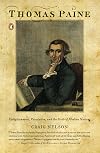
A well written, thoroughly researched biography of the Englishman turned American turned Frenchmen that was involved in two revolutions over the course of his career. The author does not write a hagiography, showing Paine with flaws, both real and perceived, since some of them are things that were made up about him by his detractors. Nor is it a hatchet job, like the early biographies (and some later ones). He is at pains to show the reader what is known, because he wants to write a show more comprehensive, honest biography of a man he obviously admires. The egotism displayed by the revolutionary writer is on display frequently, and even his friends often note that, so it is very likely not made up, and there are few attempts by anyone to correct that impression. Other things are sometimes more in dispute, and also there are things where we just can't be sure, separated by more than two centuries from the subject. A lot of writings about Paine were destroyed by people who hated him, and a lot of his original writings in his own hand were also destroyed, which leads to a certain amount of gray in his life story. There is an abundant correspondence available, however, to help piece together what was happening when. My main complaint is that there were a couple of places where the author left things out that would be useful to enhance understanding. For instance, one thing that is clear throughout is that Paine never made much money, was often destitute, and turned most of his earnings from his writings over to the revolution for their good. Yet when he dies, the legacy he leaves behind is substantial. Where did the money come from? Was it there all along, or was there some place where he finally started earning something? And the mention of his taking care of Bonneville's wife and children, and helping raise the children, just sort of happens. We hear that they came to America, then we hear that Paine is now responsible for a family. Why? What made him feel like he needed to see to them for the rest of his life? The explanations could be quite simple, but it would be nice to understand that aspect of the man. show less
Lists
Awards


You May Also Like


Associated Authors
Statistics
- Works
- 8
- Members
- 1,995
- Popularity
- #12,901
- Rating
- 3.9
- Reviews
- 33
- ISBNs
- 88
- Languages
- 3

