

Patricia Lockwood
Author of No One Is Talking About This
About the Author
Patricia Lockwood was born in Fort Wayne. Indiana, and raised in all the worst cities of the Midwest. She is the author of two poetry collections. Balloon Pop Outlaw Black and Motherland Fatherland Homelandsexuals, a New York Times Notable Book. Her writing has appeared in The New York Times. The show more New Yorker, The New Republic, Slate, and The London Review of Books. She lives in Savannah, Georgia. show less
Works by Patricia Lockwood
Associated Works
The Best American Poetry 2014 (The Best American Poetry series) (2014) — Contributor — 89 copies, 1 review
Tagged
Common Knowledge
- Canonical name
- Patricia Lockwood
- Birthdate
- 1982-04-27
- Gender
- female
- Occupations
- poet
novelist
essayist
literary critic
social media influencer
public speaker - Nationality
- USA
- Birthplace
- Fort Wayne, Indiana, USA
- Places of residence
- Lawrence, Kansas, USA
Cincinnati, Ohio, USA
St Louis, Missouri, USA
Savannah, Georgia, USA - Associated Place (for map)
- USA
Members
Discussions
2021 Booker Prize Longlist: No One Is Talking About This by Patricia Lockwood in Booker Prize (October 2021)
Reviews

Priestdaddy is Patricia Lockwood's account of her childhood as the daughter of a Catholic priest, through the framing device of the year she and her husband moved in with her family. Lockwood's father is a larger-than-life character, a manly man of out-sized opinions who dominates every room he's in. Her mother is also colorful, a good Catholic wife with a passion for the ways the world can injure or even kill you.
Lockwood is a poet with a fierce sense of humor and both her facility with show more language and her ability to write an uproariously hilarious scene are integral to this memoir. It's a wonderful balancing act between the accounts of very funny things that happened, accounts of things that are very funny because of how Lockwood tells the story, and accounts of how her childhood shaped who she is as an adult, not all for the good. She has a wonderful, and wonderfully easy-going husband whose presence grounds both her and this book.
Here's her description of her father's guitar playing.
It sounds like a whole band dying in a plane crash in the year 1972. He plays the guitar like he's trying to take off women's jeans, or he's standing nude in the middle of a thunderstorm and calling down lightening to strike his pecs. . .
Some people are, through whatever mystifying means, able to make the guitar talk. My father can't do that, but he can do the following:
1. Make the guitar squeal
2. Make the guitar say no
3. Make the guitar falsely confess to murder
4. Make the guitar stage a filibuster where it reads The Hunt for Red October out loud. show less
Lockwood is a poet with a fierce sense of humor and both her facility with show more language and her ability to write an uproariously hilarious scene are integral to this memoir. It's a wonderful balancing act between the accounts of very funny things that happened, accounts of things that are very funny because of how Lockwood tells the story, and accounts of how her childhood shaped who she is as an adult, not all for the good. She has a wonderful, and wonderfully easy-going husband whose presence grounds both her and this book.
Here's her description of her father's guitar playing.
It sounds like a whole band dying in a plane crash in the year 1972. He plays the guitar like he's trying to take off women's jeans, or he's standing nude in the middle of a thunderstorm and calling down lightening to strike his pecs. . .
Some people are, through whatever mystifying means, able to make the guitar talk. My father can't do that, but he can do the following:
1. Make the guitar squeal
2. Make the guitar say no
3. Make the guitar falsely confess to murder
4. Make the guitar stage a filibuster where it reads The Hunt for Red October out loud. show less
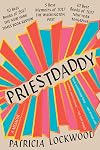
Recommended by my daughter, PRIESTDADDY is a winner. Patricia Lockwood's memoir ranges from moving to hilarious to profound, as she tells of growing up, the second of five children, in various rectories around the Midwest and south. It is also a meticulously recorded look at her parents' life and marriage. Greg and Karen married young, and he did a hitch in the navy as a submariner. He told of how, deep in the ocean, he and his crewmates watched THE EXORCIST numerous times, which he said show more prompted a religious vocation. Initially he was a Lutheran minister, then he converted to Catholicism and, under a little known papal loophole, was ordained a priest. Yes, a married priest with five kids!
Lockwood, who is a poet (and it shows, and to her advantage) frames her story in a year in which she and her husband, flat broke, were forced to move back in with her parents, not always a comfortable fit. They also shared the house with "the seminarian," who is something of a character himself. But not nearly as much as the titular character, who is something of a family despot, a loud "blusterer" who blasts - "shreds?" - electric guitar riffs from his room, and enjoys lounging around the house clad only in his boxers watching violent action-thrillers on TV. To his credit, he is always available to his parishioners in times of need or trouble. He is also of a very conservative, right-leaning bent, even to picketing abortion clinics (with wife and children in tow) and supporting a disgraced bishop who for years shifted and hid priests guilty of sexual abuse of children. The author herself remembers a priest who was a frequent visitor to their house, who held her on his lap and stroked her hair, "mansplaining" to her uncomfortable mother that "children need to be touched." (Her mother finally banned the priest from their home.)
I haven't even begun to touch the surface of all that Patricia Lockwood covers in this marvelous memoir of her unusual Catholic childhood, her long suffering mother and her domineering PRIESTDADDY. But take my word for it. It's a real winner. My very highest recommendation.
- Tim Bazzett, author of the memoir, BOOKLOVER show less
Lockwood, who is a poet (and it shows, and to her advantage) frames her story in a year in which she and her husband, flat broke, were forced to move back in with her parents, not always a comfortable fit. They also shared the house with "the seminarian," who is something of a character himself. But not nearly as much as the titular character, who is something of a family despot, a loud "blusterer" who blasts - "shreds?" - electric guitar riffs from his room, and enjoys lounging around the house clad only in his boxers watching violent action-thrillers on TV. To his credit, he is always available to his parishioners in times of need or trouble. He is also of a very conservative, right-leaning bent, even to picketing abortion clinics (with wife and children in tow) and supporting a disgraced bishop who for years shifted and hid priests guilty of sexual abuse of children. The author herself remembers a priest who was a frequent visitor to their house, who held her on his lap and stroked her hair, "mansplaining" to her uncomfortable mother that "children need to be touched." (Her mother finally banned the priest from their home.)
I haven't even begun to touch the surface of all that Patricia Lockwood covers in this marvelous memoir of her unusual Catholic childhood, her long suffering mother and her domineering PRIESTDADDY. But take my word for it. It's a real winner. My very highest recommendation.
- Tim Bazzett, author of the memoir, BOOKLOVER show less
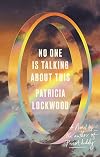
The title of this book alone is so fantastic--as one of my least favorite phrases on social media, it immediately grabbed my attention, and it is the perfect summation of the extremely online nature of the protagonist and the feelings of loneliness that develop when one is going through something IRL that is completely absent from one's social media feeds.
I had no idea going in that this was essentially prose (and autobiographical), but that just made me pay more attention. There are so many show more times when Lockwood's descriptions of internet culture were so accurate that they made me yell "oh my god THAT'S EXACTLY IT" out loud. I hear the criticism of the 2 parts feeling too separate, but I honestly didn't feel that was the case; I think the dramatic shift from the protagonist's portal-centered life to her dire, real-life situation is exactly the point.
All in all, an absolute fantastic use of my Shabbat afternoon. show less
I had no idea going in that this was essentially prose (and autobiographical), but that just made me pay more attention. There are so many show more times when Lockwood's descriptions of internet culture were so accurate that they made me yell "oh my god THAT'S EXACTLY IT" out loud. I hear the criticism of the 2 parts feeling too separate, but I honestly didn't feel that was the case; I think the dramatic shift from the protagonist's portal-centered life to her dire, real-life situation is exactly the point.
All in all, an absolute fantastic use of my Shabbat afternoon. show less

The narrator is consumed by the internet and speaking in disconnected tweet-like pronouncements. Her life is absurd and detached from reality. Yet she is navigating the world of politics, climate change, and much more based on online posts and queries. Online friends and communication's impersonal and detached nature becomes painfully apparent when, in real life, her sister’s pregnancy is in peril. As a result, the story becomes more engaging and free-flowing in the second part of the show more book, but her humanity and vulnerabilities also take precedence. I decided that this book is an excellent statement about the differences between the chaos of online groupthink and the personal interactions that sometimes only occur in times of tragedy.
The first time I attempted to read this book, I couldn’t follow Lockwood’s disjointed commentary about many disparate issues. Although I could figure out what most of the allusions referred to, I wasn’t sure there was any inherent value to continuing to read. But, after reading several reviews and noting that The New York Times named No One is Talking About This as one of the best books of 2021 and realizing it was nominated for a Booker Prize, I went back to it. This time it was so much more engaging –especially the second part.
Since I just finished facilitating a discussion group about millennial authors. I looked up Lockwood’s age, and since she was born in 1981, she is a millennial, and the writing reflects many of the attributes of other works written by her age group:
How global capitalism affects an individual and a desire to hate it
Derision for haters
Thorny issues related to money and class
Social media and digital communication everywhere
Satire, sometimes very dark
Being influenced and influencing others
Rootless, anxious life
Some quotes from the book that I noted include:
Capitalism! It was important to hate it, even though it was how you got money. Slowly, slowly, she found herself moving toward a position so philosophical even Jesus couldn’t have held it: that she must hate capitalism while at the same time loving film montages
(p. 4). Penguin Publishing Group. Kindle Edition.
Every day their attention must turn, like the shine on a school of fish, all at once, toward a new person to hate. Sometimes the subject was a war criminal, but other times it was someone who made a heinous substitution in guacamole. It was not so much the hatred she was interested in as the swift attenuation, as if their collective blood had made a decision.
(p. 9). Penguin Publishing Group. Kindle Edition.
White people, who had the political educations of potatoes—lumpy, unseasoned, and biased toward the Irish—were suddenly feeling compelled to speak out about injustice.
(p. 33). Penguin Publishing Group. Kindle Edition.
Even a spate of sternly worded articles called “Guess What: Tech Has an Ethics Problem” was not making tech have less of an ethics problem. Oh man. If that wasn’t doing it, what would??
(p. 64). Penguin Publishing Group. Kindle Edition. show less
The first time I attempted to read this book, I couldn’t follow Lockwood’s disjointed commentary about many disparate issues. Although I could figure out what most of the allusions referred to, I wasn’t sure there was any inherent value to continuing to read. But, after reading several reviews and noting that The New York Times named No One is Talking About This as one of the best books of 2021 and realizing it was nominated for a Booker Prize, I went back to it. This time it was so much more engaging –especially the second part.
Since I just finished facilitating a discussion group about millennial authors. I looked up Lockwood’s age, and since she was born in 1981, she is a millennial, and the writing reflects many of the attributes of other works written by her age group:
How global capitalism affects an individual and a desire to hate it
Derision for haters
Thorny issues related to money and class
Social media and digital communication everywhere
Satire, sometimes very dark
Being influenced and influencing others
Rootless, anxious life
Some quotes from the book that I noted include:
Capitalism! It was important to hate it, even though it was how you got money. Slowly, slowly, she found herself moving toward a position so philosophical even Jesus couldn’t have held it: that she must hate capitalism while at the same time loving film montages
(p. 4). Penguin Publishing Group. Kindle Edition.
Every day their attention must turn, like the shine on a school of fish, all at once, toward a new person to hate. Sometimes the subject was a war criminal, but other times it was someone who made a heinous substitution in guacamole. It was not so much the hatred she was interested in as the swift attenuation, as if their collective blood had made a decision.
(p. 9). Penguin Publishing Group. Kindle Edition.
White people, who had the political educations of potatoes—lumpy, unseasoned, and biased toward the Irish—were suddenly feeling compelled to speak out about injustice.
(p. 33). Penguin Publishing Group. Kindle Edition.
Even a spate of sternly worded articles called “Guess What: Tech Has an Ethics Problem” was not making tech have less of an ethics problem. Oh man. If that wasn’t doing it, what would??
(p. 64). Penguin Publishing Group. Kindle Edition. show less
Lists
Booker Prize (1)
Spirituality (1)
Awards


You May Also Like


Associated Authors
Statistics
- Works
- 7
- Also by
- 6
- Members
- 3,456
- Popularity
- #7,356
- Rating
- 3.7
- Reviews
- 149
- ISBNs
- 46
- Languages
- 8
- Favorited
- 3