
Julius Evola (1898–1974)
Author of Revolt Against the Modern World
About the Author
Julius Evola was one of the foremost authorities on the world's esoteric traditions. His other works available in English include The Hermetic Tradition, The Yoga of Power, Revolt Against the Modern World, Eros and the Mysteries of Love, The Doctrine of Awakening, The Mystery of the Grail, show more Meditations on the Peaks, and Men Among the Ruins. show less
Works by Julius Evola
The Mystery of the Grail: Initiation and Magic in the Quest for the Spirit (1972) 221 copies, 6 reviews
The Doctrine of Awakening: The Attainment of Self-Mastery According to the Earliest Buddhist Texts (1996) 176 copies, 4 reviews
Menschen inmitten von Ruinen 2 copies
El Yoga Tantrico: Un camino para la realización del cuerpo y el espíritu (Spanish Edition) (1991) 2 copies
Fascism and Tradition: Collection of Traditionalist Critiques of Fascist Movements and Regimes 2 copies
La raza del espíritu 2 copies
La Tradizione di Roma 2 copies
Ultimi scritti 2 copies
The Woman Problem 2 copies
Oriente y Occidente 2 copies
Phénoménologie de la subversion : L'antitradition dans ses écrits politiques, 1933 à 1970 (2004) 2 copies
Le mythe du sang & Synthèse de doctrine de la race: Éléments pour une éducation raciale (2019) 1 copy
Evola on Christianity 1 copy
Eastern Studies 1 copy
Le Génie d'Israël 1 copy
Against The Neo-Pagans 1 copy
Cultura e politica 1 copy
El Estado tradicional 1 copy
Metafizica sexului 1 copy
El mito de la sangre 1 copy
Cavalgar el tigre 1 copy
Orientaciones 1 copy
Más allá de Nietzsche 1 copy
Escritos sobre el Judaísmo 1 copy
Más allá del fascismo 1 copy
Los hombres y las Ruinas 1 copy
Hiérarchie et démocratie 1 copy
Doctrina y Ética Aria 1 copy
Essais politiques : idée impériale et nouvel ordre européen, économie et critique sociale, germanisme et nazisme (1996) 1 copy
The Fall of Spirituality 1 copy
Η Κρίση της Νεωτερικότητας: Φεμινισμός, Φιλελευθερισμός, Διαζύγιο, Παιδεία και οι Πνευματικές… 1 copy
Metafisica do Sexo 1 copy
Essays On Magical Idealism 1 copy
Spiritual Virility 1 copy
The Metaphysics of Hierarchy 1 copy
Dada 1 copy
The Absolute Individual 1 copy
Against the Neopagans 1 copy
Diario 1943 - 1944 1 copy
The Doctine of Awakening 1 copy
Út és ige 1 copy
L'idealismo magico 1 copy
Le petit livre noir 1 copy
Race As A Revolutionary Idea 1 copy
El camino del cinabrio 1 copy
Καυαλικεύοντας την Τίγρη 1 copy
Escritos sobre la Masonería 1 copy
Εβραίοι και Μαθηματικά 1 copy
Άνθρωποι Ανάμεσα στα Ερείπια 1 copy
Η Διδασκαλία της Αφυπνίσεως 1 copy
Διαλογισμοί επί των Κορυφών 1 copy
Il problema della donna 1 copy
O Mistério do Graal Livro 1 1 copy
Associated Works
Tagged
Common Knowledge
- Canonical name
- Evola, Julius
- Legal name
- Evola, Giulio Cesare Andrea
- Other names
- EVOLA, Giulio Cesare Andrea
EVOLA, Julius - Birthdate
- 1898-05-19
- Date of death
- 1974-06-11
- Gender
- male
- Education
- Istituto Tecnico Leonardo da Vinci
- Occupations
- philosopher
poet
painter
fascist - Organizations
- Italian Army (WWI)
Dada - Cause of death
- congestive heart failure
- Nationality
- Italy
- Birthplace
- Rome, Italy
- Places of residence
- Rome, Italy
- Place of death
- Rome, Italy
- Burial location
- cremated, ashes deposited in glacier on Monta Rosa, Piedmont, Italy
- Associated Place (for map)
- Rome, Italy
Members
Reviews

Who is Julius Evola? What does he want? Why does he matter? Do Fascists shit in the woods?
Ride the Tiger starts with some standard criticisms of the Liberal-Democratic-Capitalist-Constitutional world, as well as the Materialist-Marxist-Soviet-COMINTERN world, again noting their focus on material conditions while ignoring 'spiritual' or mental processes. He briefly discusses a few contemporary philosophers in this early stage of analysis. Most of his time is spent wrestling with Nietzsche, show more his implications from "God is dead", a Zarathusthra, the Apollonian-Dionysian dualism of society, and so forth. He makes a few brief criticisms of Heidegger, Marx and Stirner, and notes the 'new nihilism' of existentialism, and takes a good whack at Sartre.
So what does Evola propose instead? He starts with Nietzsche's view of what must come after nihilism, after God has died, and proposes his new society from there. He advocates something called 'radical traditionalism', with emphasis on the old institutions of Europe which existed before 1789, or perhaps before 476.
Evola is anti-cosmopolitan, anti-financial, anti-Marxist, anti-rational, anti-scientific, anti-pacifist, anti-materialist, anti-feminist, anti-egalitarian, anti-Christian, anti-individual, anti-modern, anti-democratic, anti-bourgeois.
This leaves us with tribal nationalism, agrarianism, neo-paganism, traditional family organization, an aristocratic caste system (with people like him on top, naturally - he was born into Italian nobility) as well as a bit of Eastern Mysticism thrown in, especially the 'Kali Yuga', the 432,000 year long age of darkness and sin in Hindu theology.
He is not solely an ordinary 'traditionalist', with reference to familial customs or little traditions. Instead he wants to throw out all of the changes over the past few hundred years and start again 'anew' with older traditions, a grand mystical warrior existence, 'riding the tiger'. Before the French Revolution, before Marxism, before 'human rights' or 'democracy'.
This is where Evola shows his true inner self - not in his criticism, but what he does advocate. He snarls at modern society, but perhaps because it has passed him by. He is frightened of the 'degeneracy' of the world, and such is made very clear.
He advances a few tentative points against 'scientific rationalism', but these are laughably muddled. For example, because he does not understand atomic theory, it is therefore 'useless knowledge' and to be discarded.
On culture, he is insipid. His rants are that of a grumpy racist grandfather complaining that 'new music' rap jazz is intellectually bankrupt because it is from 'primitive' peoples. I quote:
Women? Their best place is raising a family. Men are suited for war and should thus kill. The modern world is wholly bosh and should be tossed.
So - the big question: is Evola a fascist? Perhaps, although not necessarily - he was a 'Radical Traditionalist', and gives himself a substantial intellectual covering to prevent himself from being mistaken for a fascist immediately. Though not all traditionalists are fascists, all fascists are traditionalists.
Evola, here, comes across as a man who wants so desperately, so futilely, for the world to be simple, black-and-white, good-and-evil, with himself naturally on the side of good. He wants a return to simplicity, with some people naturally in power (such as himself), and all of the annoying complaints of others (women, people not in his ethnicity, people who aren't 'superior') to be sidelined. Everything else can go. Agriculture, technology, politics, art, all of it which cannot be controlled or changed for the better (and very little can) is to be eliminated. The simple fact is that our modern world is pluralistic, save for a few isolated locals in the Amazon, the Sentinel Islands, and the militias of North Midwest, and this cannot be changed very easily.
One of the core tenets of fascism - at least, fascism in its 20th century unholy incarnations, is the cult of tradition. Hitler had his imagined Aryan race, the restoration of German glory, as well as his 'cult of pastoral life' - his view was for Germany to be a nation of soldier-peasants after the war, gleefully exterminating the brutish Poles and Russians. Mussolini made plain his ambitions for the New Roman Empire, as well as his rejection of democracy. Francisco Franco imagined himself to be a new Crusader of Spain's glory days in the 16th century.
Of course, the poisonous ideas of fascism still endure. Most recently, Anders Behring Breivik, the perpetrator of the Utoya massacre imagined himself to be a Crusader, a defender of traditional Europe and its Values, as he bombed civilians.
As such, he is to be pitied as much to be held in contempt for his intellectual garbage, and providing a pleasing lie for the radical traditionalists who complain about 'foreign invasion' on one day, and shoot children in the head and beat homosexuals and immigrants the next.
1 star. show less
Ride the Tiger starts with some standard criticisms of the Liberal-Democratic-Capitalist-Constitutional world, as well as the Materialist-Marxist-Soviet-COMINTERN world, again noting their focus on material conditions while ignoring 'spiritual' or mental processes. He briefly discusses a few contemporary philosophers in this early stage of analysis. Most of his time is spent wrestling with Nietzsche, show more his implications from "God is dead", a Zarathusthra, the Apollonian-Dionysian dualism of society, and so forth. He makes a few brief criticisms of Heidegger, Marx and Stirner, and notes the 'new nihilism' of existentialism, and takes a good whack at Sartre.
So what does Evola propose instead? He starts with Nietzsche's view of what must come after nihilism, after God has died, and proposes his new society from there. He advocates something called 'radical traditionalism', with emphasis on the old institutions of Europe which existed before 1789, or perhaps before 476.
Evola is anti-cosmopolitan, anti-financial, anti-Marxist, anti-rational, anti-scientific, anti-pacifist, anti-materialist, anti-feminist, anti-egalitarian, anti-Christian, anti-individual, anti-modern, anti-democratic, anti-bourgeois.
This leaves us with tribal nationalism, agrarianism, neo-paganism, traditional family organization, an aristocratic caste system (with people like him on top, naturally - he was born into Italian nobility) as well as a bit of Eastern Mysticism thrown in, especially the 'Kali Yuga', the 432,000 year long age of darkness and sin in Hindu theology.
He is not solely an ordinary 'traditionalist', with reference to familial customs or little traditions. Instead he wants to throw out all of the changes over the past few hundred years and start again 'anew' with older traditions, a grand mystical warrior existence, 'riding the tiger'. Before the French Revolution, before Marxism, before 'human rights' or 'democracy'.
This is where Evola shows his true inner self - not in his criticism, but what he does advocate. He snarls at modern society, but perhaps because it has passed him by. He is frightened of the 'degeneracy' of the world, and such is made very clear.
He advances a few tentative points against 'scientific rationalism', but these are laughably muddled. For example, because he does not understand atomic theory, it is therefore 'useless knowledge' and to be discarded.
On culture, he is insipid. His rants are that of a grumpy racist grandfather complaining that 'new music' rap jazz is intellectually bankrupt because it is from 'primitive' peoples. I quote:
One can deduce that modern man, especially North American man, has regressed to primitivism in choosing, assimilating, and developing a music οf such primitive qualities as Negro music, which was even originally associated with dark forms οf ecstasy.
Women? Their best place is raising a family. Men are suited for war and should thus kill. The modern world is wholly bosh and should be tossed.
So - the big question: is Evola a fascist? Perhaps, although not necessarily - he was a 'Radical Traditionalist', and gives himself a substantial intellectual covering to prevent himself from being mistaken for a fascist immediately. Though not all traditionalists are fascists, all fascists are traditionalists.
Evola, here, comes across as a man who wants so desperately, so futilely, for the world to be simple, black-and-white, good-and-evil, with himself naturally on the side of good. He wants a return to simplicity, with some people naturally in power (such as himself), and all of the annoying complaints of others (women, people not in his ethnicity, people who aren't 'superior') to be sidelined. Everything else can go. Agriculture, technology, politics, art, all of it which cannot be controlled or changed for the better (and very little can) is to be eliminated. The simple fact is that our modern world is pluralistic, save for a few isolated locals in the Amazon, the Sentinel Islands, and the militias of North Midwest, and this cannot be changed very easily.
One of the core tenets of fascism - at least, fascism in its 20th century unholy incarnations, is the cult of tradition. Hitler had his imagined Aryan race, the restoration of German glory, as well as his 'cult of pastoral life' - his view was for Germany to be a nation of soldier-peasants after the war, gleefully exterminating the brutish Poles and Russians. Mussolini made plain his ambitions for the New Roman Empire, as well as his rejection of democracy. Francisco Franco imagined himself to be a new Crusader of Spain's glory days in the 16th century.
Of course, the poisonous ideas of fascism still endure. Most recently, Anders Behring Breivik, the perpetrator of the Utoya massacre imagined himself to be a Crusader, a defender of traditional Europe and its Values, as he bombed civilians.
As such, he is to be pitied as much to be held in contempt for his intellectual garbage, and providing a pleasing lie for the radical traditionalists who complain about 'foreign invasion' on one day, and shoot children in the head and beat homosexuals and immigrants the next.
1 star. show less
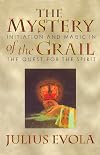
It is no surprise to find Julius Evola mounting an opposition to common readings of the medieval Grail legends as Christian sacramentalism and sentimental mysticism. He wrote The Mystery of the Grail after Revolt Against the Modern World, and drew on the earlier book for the framework of degenerative hierohistory that brands his larger Traditionalist project. With a few exceptions, the Grail book takes that context as given, only rarely explaining it, or referring the reader expressly to show more Evola's other books for details.
The overall arc of the work is from the general to the particular. After a section on his aims and methods, there follows a set of chapters exploring "Principles and Prior Events," in which he surveys background and context for the seminal Grail literature, along with principal mythemes which he associates with heroic initiation. The latter is the pattern that he then goes on to chart as fundamental to "The Cycle of the Grail" in its original forms and variants. In the fourth and final section, he discusses related "historical currents" (one might say "traditions," if that word had not already been enlisted for a more specific duty in Evola's work): Templarism, Albigensianism, the "Love's Lieges" (i.e. Fideli d'Amore oddly Englished), Hermeticism, and Rosicrucianism.
Translator Guido Stucco may have provided an accurate text, but it is not a lovely one. His rendering of Evola's prose makes ponderous English. I can't say whether that reflects the style of the original Italian. Especially in the early chapters of Part Three, I sometimes felt as if I were reading among the more stylistically impaired of Arthur Edward Waite's writings. (I'm sure Evola wouldn't welcome the comparison! Curiously, Waite's most grueling prose is perhaps in his own book on The Hidden Church of the Holy Grail. I wonder if it reflects some sort of transmission of opacity from the primary materials.)
My reading of the book really took a turn at almost the exact midpoint. In the chapter on "The Test of Pride," I began to get a much more vivid sense of how Evola saw the initiatory spirit animating the legends. This perception sharpened my interest, and I continued in this manner through the following chapters until "The Grail as a Ghibelline Mystery" which concludes Part Three. Here, he identifies the Grail cycle with an (unmanifested, for the most part) ideal of the Holy Roman Empire as a "movement toward an ecumenical 'solar' synthesis" (120), attempting to re-integrate the dissociated kingly and priestly aspects of authority. Part four is very rewarding, supplying many points of contact among various historical phenomena of esoteric interest, and constellating them around the Grail cycle as previously explored.
An appended bibliography would have been helpful. Evola often references prior scholarship in ways too fleeting to allow students or researchers to conveniently follow his trail. Although he sometimes supplies bibliographic references in footnotes, these are generally to the primary literature of the Grail legends and to his own works. An example where bibliographic citation is frustratingly absent: "This was the thesis endorsed by Rossetti and Aroux, taken up by Valli and to a degree by Ricolfi and, more recently, by Alessandrini, though with a heavy emphasis on the merely political dimension" (145).
The epilogue is really the final chapter of the book, covering the most significant organized modern receptions of the medieval and Renaissance "currents" that Evola treats in the fourth section. He has no ideological sympathy for these: Freemasonry and Theosophy he views as anti-traditional purveyors of pseudo-initiation. He supplies a useful review of the points of congruence that, he would say, serve as the means of subverting materials usurped from traditional initiation. But then he goes on to advert to The Protocols of the Elders of Zion, as well as a "satanic" conspiracy animating bourgeois societies and global Communism (172-3). Wagner also comes in for abuse on account of his "arbitrary, pseudomystical, and decadent" misrepresentation of the Grail cycle (174).
Evola concludes in a chilling and invidious manner that "the invisible and inviolable center, the king who must awake, and the avenging and restorating hero are not mere fancies of a dead and romantic past, but rather the truth of those who, today, alone may legitimately said to be alive" (175). The final ten words confirm my antagonism for Evola, since I hold in contrast that Every man and every woman is a star. show less
The overall arc of the work is from the general to the particular. After a section on his aims and methods, there follows a set of chapters exploring "Principles and Prior Events," in which he surveys background and context for the seminal Grail literature, along with principal mythemes which he associates with heroic initiation. The latter is the pattern that he then goes on to chart as fundamental to "The Cycle of the Grail" in its original forms and variants. In the fourth and final section, he discusses related "historical currents" (one might say "traditions," if that word had not already been enlisted for a more specific duty in Evola's work): Templarism, Albigensianism, the "Love's Lieges" (i.e. Fideli d'Amore oddly Englished), Hermeticism, and Rosicrucianism.
Translator Guido Stucco may have provided an accurate text, but it is not a lovely one. His rendering of Evola's prose makes ponderous English. I can't say whether that reflects the style of the original Italian. Especially in the early chapters of Part Three, I sometimes felt as if I were reading among the more stylistically impaired of Arthur Edward Waite's writings. (I'm sure Evola wouldn't welcome the comparison! Curiously, Waite's most grueling prose is perhaps in his own book on The Hidden Church of the Holy Grail. I wonder if it reflects some sort of transmission of opacity from the primary materials.)
My reading of the book really took a turn at almost the exact midpoint. In the chapter on "The Test of Pride," I began to get a much more vivid sense of how Evola saw the initiatory spirit animating the legends. This perception sharpened my interest, and I continued in this manner through the following chapters until "The Grail as a Ghibelline Mystery" which concludes Part Three. Here, he identifies the Grail cycle with an (unmanifested, for the most part) ideal of the Holy Roman Empire as a "movement toward an ecumenical 'solar' synthesis" (120), attempting to re-integrate the dissociated kingly and priestly aspects of authority. Part four is very rewarding, supplying many points of contact among various historical phenomena of esoteric interest, and constellating them around the Grail cycle as previously explored.
An appended bibliography would have been helpful. Evola often references prior scholarship in ways too fleeting to allow students or researchers to conveniently follow his trail. Although he sometimes supplies bibliographic references in footnotes, these are generally to the primary literature of the Grail legends and to his own works. An example where bibliographic citation is frustratingly absent: "This was the thesis endorsed by Rossetti and Aroux, taken up by Valli and to a degree by Ricolfi and, more recently, by Alessandrini, though with a heavy emphasis on the merely political dimension" (145).
The epilogue is really the final chapter of the book, covering the most significant organized modern receptions of the medieval and Renaissance "currents" that Evola treats in the fourth section. He has no ideological sympathy for these: Freemasonry and Theosophy he views as anti-traditional purveyors of pseudo-initiation. He supplies a useful review of the points of congruence that, he would say, serve as the means of subverting materials usurped from traditional initiation. But then he goes on to advert to The Protocols of the Elders of Zion, as well as a "satanic" conspiracy animating bourgeois societies and global Communism (172-3). Wagner also comes in for abuse on account of his "arbitrary, pseudomystical, and decadent" misrepresentation of the Grail cycle (174).
Evola concludes in a chilling and invidious manner that "the invisible and inviolable center, the king who must awake, and the avenging and restorating hero are not mere fancies of a dead and romantic past, but rather the truth of those who, today, alone may legitimately said to be alive" (175). The final ten words confirm my antagonism for Evola, since I hold in contrast that Every man and every woman is a star. show less
Revolt Against the Modern World: Politics, Religion, and Social Order in the Kali Yuga by Julius Evola
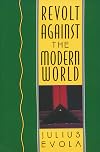
“Mistreatment of horses. It will stop only when passersby become so irritable and decadent that they, no longer in control of themselves, mad and desperate in such cases, commit crimes and shoot down the cringing and cowardly coachman —" Thus Nietzsche, who condemned pity, collapsed in Turin when he saw a coachman beating his horse.
— Adorno, Critical Models
Decadent Scholarship
The Napoleonic Code of 1803 famously "re-established the supremacy of the husband over his wife" following show more the brief "egalitarian" moment which ended in the Reign of Terror. It also, surreptitiously, forbade civil inquiry into questions of origin — a quiet boon to that former artillery officer charged with so much world-historical Tragedy and Farce. Napoleon III may have also benefited from this provision. He did pretty well for himself in the Grand Scheme of Things, although the slanting historical line tracking down to him from "Napoleon I" has been called a trajectory of decadence. This sense of "Decadence" — meaning "degeneration" — has been appropriated to diverse movements from the so-called "Hyperborean Descent" to such phenomena as "Entartete Kunst." (i.e. "Degenerate Art"; frankly more interesting than anything produced by the NSDAP, though we're getting ahead of ourselves.) The occasion of Evola's translation into English is an opportunity to read another sense of "decadence" over the top of this (which isn't present in the original Italian): "Decadence" in the sense of "luxurious self-indulgence."
Perhaps there's no better word than "Decadent" to describe the auto-affection of a text consisting of a not-very-rigorous pastiche of Historical "facts" and Eastern "mysticism." Evola's arguments are a profusion of declarative statements which function like embedded sleeper cells, forming a network of isolated and independent resistances. Such defenses aren't overcome by a singular refutation, such as against his presentation of the "Brāhmaṇa" (as Mahasweta Devi does in Breast Giver) or a re-reading of the "Vedas" (as Roberto Calasso does in Ka). I would contrast the structuralist anthropological work of Claude Lévi-Strauss (see Mythologiques) with what Evola is doing here. Lévi-Strauss is grandiloquent, yet his work remains somewhat rigorous because its claims remains open to refutation on the basis of facts which are open to dispute. Much has been said against the so-called "publish or perish" paradigm of the academy, but its unique merit is that it selects for scholarship that's "productive." Marx remains in wide circulation even today because he's writing a critique of political economy that can itself become the subject of Critique (therefore functioning as a renewable "supply" for grad students' pursuit of "Academic Capital"). Evola's work (and much so-called "right-wing scholarship") is too Decadent (read: self-indulgent) to allow itself to enter into this exchange — being too deeply embedded (Evola's arguments are, at base, are axiomatic), his work refuses "critique" and therefore gets priced out of the "publish or perish" economy. (You can't get approval to write a thesis on the implications of Evola's [Orientalist] reading of the Ṛig Veda because no one is interested in such questions, least of all the author.) Ironically, Evola finds himself in much the same place as Adorno: victim of the positivist bias in academia. Ruth miller remarks, "[Negative Dialectics] came to no good in the academy since it seemed not to solve anything."
There appears to be a common misconception that right-wing ideologies are essentially restatements of the position that "might makes right." They are, in fact, much closer to the opposite. The far-right positions itself as defenders of the ultimate Lost Cause — an original prelapsarian golden age (you know what Napoleon said about origins . . .) has already been lost. Its traces are going out of the world completely, hanging on as secret agents in the Hyperborean blood and soil. And therefore, with backs against the wall, any amount of preemptive retaliation is justified against the "stronger" forces of Decadence ("degeneration"). An entire movement on the basis of an overawing act of surprise. Though, even in this frame, the side of Decadence has its advocates. Adorno presents a model of Decadence ("degeneracy") as a productive neurasthenia (as in the case of Nietzsche, above). One shouldn't neglect that Decadence also has its own douceur (sweetness). It's possible that a total victory of Decadence has long since come and passed. Possibly things really did happen as Marx predicted (for once!): "Recoiling constantly from the indefinite magnitude of their own goals — a situation is created which makes all turning back impossible, and the conditions themselves call out: Hic Rhodus, hic salta! [alas, we are too decadent ("self-indulgent") to do anything about it]." (The Eighteenth Brumaire of Bonaparte) show less
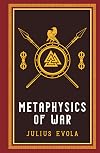
This was a very strange read.
Apologists aside, author was very fond of Fascist rule (not that much of Nazi's that he considered so romantic (as he says, they are Germans after all) that they ultimately strayed from what author thinks is proper path) and this permeates entire book. Considering that book is collection of articles Evola published in Fascist magazine during the WW2 and then in publications in 1950 it is visible that he had change of heart regarding the Fascism but unfortunately show more not as a critic of the same but because Fascism was flawed and finally failed in the eyes of Evola. His thoughts on the subject are clear when one considers he considers himself supra-Fascist. Which is terrifying in itself. So answer to question where does the author's heart lies politically is pretty obvious even from the introduction. Evola is so right he could pop up on the left any time.
As many of his contemporary philosophers Evola delves way too deep in esoteric areas. We can see mentions of Hyperborians and Aryans from Indoeuropean traditions and mystic stories from further east, Persia and India. There is whole bunch of citations from various holy texts, from Islamic (he as majority of authoritarian regimes is enamored by Islamic approach to holy war) to Christian (although author does not like it that much because of its tame nature) to Indian Hindu traditions. Considering that majority of these literature works are strictly hierarchical it comes as no surprise that author longs for the times when people were split across social strata, or more precise cast system.
Reason is simple, aristocracy was aristocracy for the reason, Evola reasons, they had the pure blood and they are the rulers of the world (personally would not agree considering that same aristocracy due to their way of life caused its own demise). Plebs (or masses) are just slaves, automatons, degenerative and (as Evola says with sadness in his voice) currently in power. When you have masses ruling the world there is nothing good to expect so we need aristocracy back quickly, because they are the ones that are solely qualified to lead and rule (again rather questionable logic and I dont agree with return of degenerative lords of life and death, but OK).
So, as can be seen Evola would aggravate whole bunch of people today. With all this talk about the chosen elites Evola weaves his story of how masses have taken every meaning from ones life because everything needs to be tamed and ridden of goals towards higher level of existence - everyone needs to be molded and controlled. All of this was caused by rise - can you guess it? - of Jewish influence and control of world (again as I said author is Fascist to the core so antisemitism is expected). So when it comes to political manifesto of the Fascist sympathizer, Evola does everything by the book, Thule society and other race superiority cults of early 1900's would be proud of him.
So this is the background. Now we can move to the core of the book - Evola's discussion on nature of war, or better said conflict.
Evola's main comment is that together with progress towards pacifism and humanism (both considered as aberrations by Evola) people have lost their edge, their ruggedness and are tamed and placed under control of forces like bankers and world's financial rulers. Due to this people get slaughtered in new wars but as a form of cattle/cannon fodder that manages to survive only because of the base emotions and drives that enable people to survive - but because of which people degenerate even further. There is no motivation that could help people to rise up and be the best they can be. People are no more people of action but constantly paralyzed by conflicts in their minds that make them powerless and pliable to external forces.
Evola's view of perfect man is someone who manages to place himself under control, manages to control the lower emotions and evolves through danger. It is not that Evola thinks wars are required - although he does consider them excellent means of natural selection - he thinks that man needs to yearn to become best he can be, he needs to engage in the internal war to defeat bad elements in himself and thus rise up. But in order to do this man needs to become man of action, not of constant, self-paralyzing contemplation. Of course true warrior is the person who is best suited to achieve this inner victory because he is accustomed with corporeal warfare and that fact makes him the most qualified when it comes to internal (spiritual) warfare. Arjuna from Hindu tradition pops up every so often - when paralyzed by conflict in his mind he is advised by God of Light to act! and stop contemplating forever.
If above reminds you, beside often cited India's warrior cast logic, of Japanese Bushido you would be right. Same applies to Romans and to Scandinavian/Nordic people. In general it is true for every discipline that deals with life threats - everything is better than non-action, just act and move on the way one thinks its best. We might not like it but nature of life is struggle and this is something that we as society (in large) might have lost contact with. Instead of acting, thinking (just another way of acting but one that has potential for change but not necessarily can make the change) has a very weird effect - majority decides to be pulled this way, that way and thus play the role of play-doh used by the controllers in the shadows (media included). When one realizes that death awaits us all and that one can decide to die under ones own conditions - this is when when ultimate freedom is won. And death is the ultimate terror - just look at what is done by using this fear in last several months.
Here I agree with the author - people need to learn to act and think. And through that action they need to seek their own freedom by conquering their fears. Without action it all remains theoretical and thus creates depression and maladies of the spirit that bring people down and under greater control.
But to be able to act one needs sets of belief that need to be ingrained in oneself to have any effect. I agree with this too - last decade showed that people are actually missing the higher goals (considering that religion or belief system into higher power ran out of favor by majority of intelligentsia and is not considered hip or trendy). Everyday activities are just not sufficient to keep man motivated (imagine getting motivated by never ending cycle of wake up, go to work and repeat - and for majority it seems they are working in fields they dont like at all). To succeed mentally/spiritually man needs a higher goal. And this is where problem arises - if person is not capable to individually identify that higher goal it will be imprinted on him by external forces that have their own goals and imprisonment continues, even worse than before.
In the end we are all warriors in our own right just by living in the world. Through everyday struggles we need to seek enlightenment and become ultimate warriors by making sure we are free as individuals and not controlled by outside forces. We need to control our own fate. Today this would be frowned upon because inner strength and thought chain that goes with it - reasonable stoicism and practice of Musashi's thought for example - would be thought as toxic (omg, new age....). This is greatest hurdle for today's society, return from pure impulse emotional response to acceptance of world as it is and working on improving it.
So it is not that this book does not have its merits it is just it takes awhile to get to it. So if you have patience and will to go through the book and through some pretty disturbing thought chains about race and population structure there are things to learn here.
Just dont make this one starting point in your philosophical reading list - read classics and other authors (preferably even those from the other side of spectrum) so more complete picture of world can be made. Only then you can go through works of Evola and be able to learn something new where possible. show less
Apologists aside, author was very fond of Fascist rule (not that much of Nazi's that he considered so romantic (as he says, they are Germans after all) that they ultimately strayed from what author thinks is proper path) and this permeates entire book. Considering that book is collection of articles Evola published in Fascist magazine during the WW2 and then in publications in 1950 it is visible that he had change of heart regarding the Fascism but unfortunately show more not as a critic of the same but because Fascism was flawed and finally failed in the eyes of Evola. His thoughts on the subject are clear when one considers he considers himself supra-Fascist. Which is terrifying in itself. So answer to question where does the author's heart lies politically is pretty obvious even from the introduction. Evola is so right he could pop up on the left any time.
As many of his contemporary philosophers Evola delves way too deep in esoteric areas. We can see mentions of Hyperborians and Aryans from Indoeuropean traditions and mystic stories from further east, Persia and India. There is whole bunch of citations from various holy texts, from Islamic (he as majority of authoritarian regimes is enamored by Islamic approach to holy war) to Christian (although author does not like it that much because of its tame nature) to Indian Hindu traditions. Considering that majority of these literature works are strictly hierarchical it comes as no surprise that author longs for the times when people were split across social strata, or more precise cast system.
Reason is simple, aristocracy was aristocracy for the reason, Evola reasons, they had the pure blood and they are the rulers of the world (personally would not agree considering that same aristocracy due to their way of life caused its own demise). Plebs (or masses) are just slaves, automatons, degenerative and (as Evola says with sadness in his voice) currently in power. When you have masses ruling the world there is nothing good to expect so we need aristocracy back quickly, because they are the ones that are solely qualified to lead and rule (again rather questionable logic and I dont agree with return of degenerative lords of life and death, but OK).
So, as can be seen Evola would aggravate whole bunch of people today. With all this talk about the chosen elites Evola weaves his story of how masses have taken every meaning from ones life because everything needs to be tamed and ridden of goals towards higher level of existence - everyone needs to be molded and controlled. All of this was caused by rise - can you guess it? - of Jewish influence and control of world (again as I said author is Fascist to the core so antisemitism is expected). So when it comes to political manifesto of the Fascist sympathizer, Evola does everything by the book, Thule society and other race superiority cults of early 1900's would be proud of him.
So this is the background. Now we can move to the core of the book - Evola's discussion on nature of war, or better said conflict.
Evola's main comment is that together with progress towards pacifism and humanism (both considered as aberrations by Evola) people have lost their edge, their ruggedness and are tamed and placed under control of forces like bankers and world's financial rulers. Due to this people get slaughtered in new wars but as a form of cattle/cannon fodder that manages to survive only because of the base emotions and drives that enable people to survive - but because of which people degenerate even further. There is no motivation that could help people to rise up and be the best they can be. People are no more people of action but constantly paralyzed by conflicts in their minds that make them powerless and pliable to external forces.
Evola's view of perfect man is someone who manages to place himself under control, manages to control the lower emotions and evolves through danger. It is not that Evola thinks wars are required - although he does consider them excellent means of natural selection - he thinks that man needs to yearn to become best he can be, he needs to engage in the internal war to defeat bad elements in himself and thus rise up. But in order to do this man needs to become man of action, not of constant, self-paralyzing contemplation. Of course true warrior is the person who is best suited to achieve this inner victory because he is accustomed with corporeal warfare and that fact makes him the most qualified when it comes to internal (spiritual) warfare. Arjuna from Hindu tradition pops up every so often - when paralyzed by conflict in his mind he is advised by God of Light to act! and stop contemplating forever.
If above reminds you, beside often cited India's warrior cast logic, of Japanese Bushido you would be right. Same applies to Romans and to Scandinavian/Nordic people. In general it is true for every discipline that deals with life threats - everything is better than non-action, just act and move on the way one thinks its best. We might not like it but nature of life is struggle and this is something that we as society (in large) might have lost contact with. Instead of acting, thinking (just another way of acting but one that has potential for change but not necessarily can make the change) has a very weird effect - majority decides to be pulled this way, that way and thus play the role of play-doh used by the controllers in the shadows (media included). When one realizes that death awaits us all and that one can decide to die under ones own conditions - this is when when ultimate freedom is won. And death is the ultimate terror - just look at what is done by using this fear in last several months.
Here I agree with the author - people need to learn to act and think. And through that action they need to seek their own freedom by conquering their fears. Without action it all remains theoretical and thus creates depression and maladies of the spirit that bring people down and under greater control.
But to be able to act one needs sets of belief that need to be ingrained in oneself to have any effect. I agree with this too - last decade showed that people are actually missing the higher goals (considering that religion or belief system into higher power ran out of favor by majority of intelligentsia and is not considered hip or trendy). Everyday activities are just not sufficient to keep man motivated (imagine getting motivated by never ending cycle of wake up, go to work and repeat - and for majority it seems they are working in fields they dont like at all). To succeed mentally/spiritually man needs a higher goal. And this is where problem arises - if person is not capable to individually identify that higher goal it will be imprinted on him by external forces that have their own goals and imprisonment continues, even worse than before.
In the end we are all warriors in our own right just by living in the world. Through everyday struggles we need to seek enlightenment and become ultimate warriors by making sure we are free as individuals and not controlled by outside forces. We need to control our own fate. Today this would be frowned upon because inner strength and thought chain that goes with it - reasonable stoicism and practice of Musashi's thought for example - would be thought as toxic (omg, new age....). This is greatest hurdle for today's society, return from pure impulse emotional response to acceptance of world as it is and working on improving it.
So it is not that this book does not have its merits it is just it takes awhile to get to it. So if you have patience and will to go through the book and through some pretty disturbing thought chains about race and population structure there are things to learn here.
Just dont make this one starting point in your philosophical reading list - read classics and other authors (preferably even those from the other side of spectrum) so more complete picture of world can be made. Only then you can go through works of Evola and be able to learn something new where possible. show less
Lists
el (2)
Awards

You May Also Like


Associated Authors
Statistics
- Works
- 182
- Also by
- 3
- Members
- 3,452
- Popularity
- #7,363
- Rating
- 3.8
- Reviews
- 41
- ISBNs
- 267
- Languages
- 13
- Favorited
- 15