
Aria Beth Sloss
Author of Autobiography of Us
About the Author
Image credit: Aria Beth Sloss
Works by Aria Beth Sloss
Associated Works
Tagged
Common Knowledge
- Canonical name
- Sloss, Aria Beth
- Gender
- female
- Education
- Yale University
Iowa Writers' Workshop - Places of residence
- New York, New York, USA
- Associated Place (for map)
- New York, USA
Members
Reviews
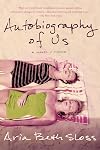
Rebecca Madden and Alexandra Carrington meet in homeroom their freshman year of high school. Beautiful and vivacious Alex had just moved to Pasadena from Texas. Shy and studious Becky was as surprised as anyone when Alex asked to sit with her at lunch, but from the moment they met they were best friends. We found each other like two animals recognizing a similar species: noses raised, sniffing, alert.
The novel is told by an older Rebecca, relating her youth to her daughter. It’s a show more coming-of-age novel that is intensely personal and mimics the upheaval the country was undergoing in the 1960s – civil rights, Vietnam, women’s liberation. Raised in an upper-middle-class neighborhood, the girls chafe at the expectations of their mothers and go to college determined NOT to find husbands, but to succeed at their own dreams and ambitions. Breaking out of the mold is apparently easier for Alex than for Becky, but the results for both are much the same.
This is a character-driven novel. Told entirely from Rebecca’s viewpoint, it mostly explores her own awakening and maturing. In fact, Alex disappears from the story for a large part of it, as they finish college and wind up in different cities. But just as Alex awakened the 14-year-old Becky, it will be Alex who forces the adult Rebecca to recognize the truth of her life and spur her to take action.
The best way I can describe this novel is that it is atmospheric. Maybe that’s because I, too, was growing up in that era, and questioned the apparent expectations that society had for me. For our high school graduation, the PTA mothers gave each of us girls engraved formal calling cards (I still have the engraving plate). We had curfews in the college dorms, gentleman callers were confined to the formal sitting room which was always chaperoned, and all phone calls came through a central switchboard (which closed at 11p). Women were required to wear skirts to all meals in the college dining hall. It was a lifetime ago, and just a few moments ago. show less
The novel is told by an older Rebecca, relating her youth to her daughter. It’s a show more coming-of-age novel that is intensely personal and mimics the upheaval the country was undergoing in the 1960s – civil rights, Vietnam, women’s liberation. Raised in an upper-middle-class neighborhood, the girls chafe at the expectations of their mothers and go to college determined NOT to find husbands, but to succeed at their own dreams and ambitions. Breaking out of the mold is apparently easier for Alex than for Becky, but the results for both are much the same.
This is a character-driven novel. Told entirely from Rebecca’s viewpoint, it mostly explores her own awakening and maturing. In fact, Alex disappears from the story for a large part of it, as they finish college and wind up in different cities. But just as Alex awakened the 14-year-old Becky, it will be Alex who forces the adult Rebecca to recognize the truth of her life and spur her to take action.
The best way I can describe this novel is that it is atmospheric. Maybe that’s because I, too, was growing up in that era, and questioned the apparent expectations that society had for me. For our high school graduation, the PTA mothers gave each of us girls engraved formal calling cards (I still have the engraving plate). We had curfews in the college dorms, gentleman callers were confined to the formal sitting room which was always chaperoned, and all phone calls came through a central switchboard (which closed at 11p). Women were required to wear skirts to all meals in the college dining hall. It was a lifetime ago, and just a few moments ago. show less

Friendship isn’t easy. A friendship started in childhood has to grow and mature as do those in the relationship. No matter how dear someone is to you, there will be bumps in the road. Misunderstandings. Arguments. Hurts. But when a friendship is solid, it will weather these because it must. Aria Beth Sloss’s new novel, Autobiography of Us, is a tale of just such a friendship, one started young, one that must endure betrayal and estrangement, but one that ultimately knits itself back show more together because it is too hard, impossible really, to let it go.
Rebecca is a bit of a loner, quiet, introverted, smart, and scientifically minded. She’s always wanted to be a doctor, even though in the early 1960s in Pasadena, California, this is not a usual or likely goal for a girl. When she meets Alexandra, she is immediately drawn to Alex and she is thrilled to be chosen to be the magnetic Alex’s best friend. Alex is outgoing and a bit wild, popular and set on becoming an actress. When the two young women go off to college, they go as best of friends although they do start to drift apart on their different trajectories. While Rebecca is studious and single-minded about eventually going to medical school, Alex is much more social, collecting a coterie of friends. When Rebecca makes a mistake at a friends’ wedding, it shatters their long-standing friendship and changes Rebecca’s entire life trajectory. And it will take many years before the two women come back together again to tentatively rekindle their friendship.
The historical period of time during which the two of them come of age is well drawn and compelling. Sloss has set her novel in a time of great social upheaval when options for women were still constrained and narrow but were about to widen unimagineably. And in this still repressed setting with its seemingly immutable gender roles, Sloss tackles many difficult and contentious issues: abortion, abuse, adultery, mental illness. And she weaves all of this into a tale centered on the nature of friendship, what relationship can endure without cracking wide open and the lengths that a friend will go to, even if just in memory of what the friendship used to be.
Although the title of the book is Autobiography of Us, much of the book takes place when there is no us except in memory. Even in beginning, the "us" that there is is not quite convincing. The friendship between Rebecca and Alex often feels one-sided with Alex using Rebecca to bolster her own self-esteem, always enjoying the mild hero-worship of her friend, appreciating her built in audience. She’s selfish and demanding and difficult and yet Rebecca continues to love her as her very best friend, wanting, in a way, to be Alex or at least to be more like her. Neither of these women are particularly likable, except perhaps to each other. Rebecca is a doormat and Alex is manipulative, making it hard for the reader to feel much sympathy for either of them. There is little real depth to their friendship and it remains a mystery why these two are in fact as close as the story says. Told from Rebecca’s point of view, the narrative proceeds in fits and starts with large missing chunks of time, akin to pictures missing from a photo album. The ending does reveal the reason why the story is told as it is and changes quite a lot but the payoff may not be big enough. Although there are some flaws here, the novel shows the lack of choices for women of their age and time and will make readers reflect on just what does make a lasting friendship and the nature of friendship in their own lives. show less
Rebecca is a bit of a loner, quiet, introverted, smart, and scientifically minded. She’s always wanted to be a doctor, even though in the early 1960s in Pasadena, California, this is not a usual or likely goal for a girl. When she meets Alexandra, she is immediately drawn to Alex and she is thrilled to be chosen to be the magnetic Alex’s best friend. Alex is outgoing and a bit wild, popular and set on becoming an actress. When the two young women go off to college, they go as best of friends although they do start to drift apart on their different trajectories. While Rebecca is studious and single-minded about eventually going to medical school, Alex is much more social, collecting a coterie of friends. When Rebecca makes a mistake at a friends’ wedding, it shatters their long-standing friendship and changes Rebecca’s entire life trajectory. And it will take many years before the two women come back together again to tentatively rekindle their friendship.
The historical period of time during which the two of them come of age is well drawn and compelling. Sloss has set her novel in a time of great social upheaval when options for women were still constrained and narrow but were about to widen unimagineably. And in this still repressed setting with its seemingly immutable gender roles, Sloss tackles many difficult and contentious issues: abortion, abuse, adultery, mental illness. And she weaves all of this into a tale centered on the nature of friendship, what relationship can endure without cracking wide open and the lengths that a friend will go to, even if just in memory of what the friendship used to be.
Although the title of the book is Autobiography of Us, much of the book takes place when there is no us except in memory. Even in beginning, the "us" that there is is not quite convincing. The friendship between Rebecca and Alex often feels one-sided with Alex using Rebecca to bolster her own self-esteem, always enjoying the mild hero-worship of her friend, appreciating her built in audience. She’s selfish and demanding and difficult and yet Rebecca continues to love her as her very best friend, wanting, in a way, to be Alex or at least to be more like her. Neither of these women are particularly likable, except perhaps to each other. Rebecca is a doormat and Alex is manipulative, making it hard for the reader to feel much sympathy for either of them. There is little real depth to their friendship and it remains a mystery why these two are in fact as close as the story says. Told from Rebecca’s point of view, the narrative proceeds in fits and starts with large missing chunks of time, akin to pictures missing from a photo album. The ending does reveal the reason why the story is told as it is and changes quite a lot but the payoff may not be big enough. Although there are some flaws here, the novel shows the lack of choices for women of their age and time and will make readers reflect on just what does make a lasting friendship and the nature of friendship in their own lives. show less
“Autobiography of Us” is the coming-of-age story of a pair of California girls, Rebecca and Alex, who became friends when 14 years old. Beginning with the day in of their meeting the early 1960s, Rebecca takes us through their school and college years, then beyond, to adulthood.
It’s a rocky relationship, because Alex is no ordinary teen. She’s artistic, with dreams of stage and screen; she is dramatic and equally bold. For the lonely Rebecca, Alex’s personality is equally show more magnetic and repellant in frightening turns. But it is the magnetism that ensnares Rebecca with a hold as baffling to her, at times, as it is to the reader.
We travel with this pair through the struggles of high school, the tragic consequences of poor decisions during college, and the aching acceptance of ordinary lives despite lofty aspirations. All occurs amid the backdrop of war, the women’s movement and political unrest, and along the way, no stone is left unturned. Abortion, adultery, spousal abuse, mental illness and even repressed homosexuality rear their heads.
It is as though author Aria Beth Sloss tried to fit all into one novel and, for me, at least, it doesn’t work. I found little to like in Alexandra, and often, little to like in Rebecca, as well.
I had thought I would devour this book, because my life parallels that of this pair. I did not. It felt, at times, as though the work lacked soul, even as it stretched to encompass all that was happening in those turbulent times.
I did see a great deal of promise in this writer, though. I’ll read her next. I won a copy of this book as a part of the early reviewers program on LibraryThing. show less
It’s a rocky relationship, because Alex is no ordinary teen. She’s artistic, with dreams of stage and screen; she is dramatic and equally bold. For the lonely Rebecca, Alex’s personality is equally show more magnetic and repellant in frightening turns. But it is the magnetism that ensnares Rebecca with a hold as baffling to her, at times, as it is to the reader.
We travel with this pair through the struggles of high school, the tragic consequences of poor decisions during college, and the aching acceptance of ordinary lives despite lofty aspirations. All occurs amid the backdrop of war, the women’s movement and political unrest, and along the way, no stone is left unturned. Abortion, adultery, spousal abuse, mental illness and even repressed homosexuality rear their heads.
It is as though author Aria Beth Sloss tried to fit all into one novel and, for me, at least, it doesn’t work. I found little to like in Alexandra, and often, little to like in Rebecca, as well.
I had thought I would devour this book, because my life parallels that of this pair. I did not. It felt, at times, as though the work lacked soul, even as it stretched to encompass all that was happening in those turbulent times.
I did see a great deal of promise in this writer, though. I’ll read her next. I won a copy of this book as a part of the early reviewers program on LibraryThing. show less
 This review was written for LibraryThing Early Reviewers.
When I first started reading this, I could immediatey tell it was well written but I also thought this was going to be another novel about female friendship. I was partly right but I also became totally emeshed in the story of these two friends who met when they were fourtenn but were so totally addicted. Take also the time period, the fifties and the sixties with everything happening in the world, the massive societal shifts, the riots after the death of Martin Luther King, the expectations show more imposed on young woman born during this time and you have the making of a very interesting story. It did, however become even more than that for me because I had a firend, a best friend that I also met wqhen I was fourteen and though the time periods did not quite match up, I was younger than Alex and Becky were when these things happened, al the same I was very touched. This book made me remember how important this friendship was for so many years, and how when we mwr again many years later I, for a short time, wished we could go back and start all over. In this book Alex and Becky are kind of caught between the generations, their mothers had very few expectations, or rather they had them but with little hope of being able to fufilk them. Alecx and Becky hope to be able to realize their dreamsm, and have a hard time, Alex more than Becky, in accepting tht maybe they would not come true. This is a rather brilliant book, that encompasses quite a bit, history,relationships, and of course friendship. I think this is actually one of my longest reviews. ARC from publisher. show less
This review was written for LibraryThing Early Reviewers.You May Also Like


Associated Authors
Statistics
- Works
- 2
- Also by
- 2
- Members
- 173
- Popularity
- #123,687
- Rating
- 3.3
- Reviews
- 20
- ISBNs
- 14
