
Kent Wascom
Author of The Blood of Heaven
About the Author
Series
Works by Kent Wascom
Tagged
Common Knowledge
- Gender
- male
- Education
- Florida State University (MFA)
- Nationality
- USA
- Associated Place (for map)
- USA
Members
Reviews
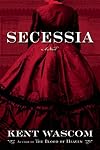
New Orleans has always held an unique place in the American imagination. It's an American city, but there is an element of the exotic, of the foreign, in its identity that makes it like no other place in the United States. From its founding in 1718 to its sale, along with the rest of the vast unchartered Louisiana Purchase in 1803, it was a French and then Spanish, and then French again, colonial outpost near the mouth of the Mississippi. The French and Spanish who settled there created the show more Creole ruling class that would continue to govern the city and dominate Louisiana state politics long after the United States took possession and the Anglo-Americans began to arrive. The Europeans also brought African slaves with them. The common habit of slave owners taking slave mistresses, or raping their slaves, produced a large bi-racial population in the city. In some cases, slave masters granted freedom to their favorite slave children, or the slaves were allowed to buy their freedom. Thus, a community of free persons of color grew in the city and some of its more fortunate members attained positions of relative wealth and status. When the children of this class married whites, their children were often light-skinned enough to "pass" as white.
But as Kent Wascom vividly illustrates in his novel Secessia, the upper class of white society in New Orleans was on guard against the danger of being "tainted" by African blood in their marital match-making. This was particularly true when white men of great wealth and social status considered marriage with a woman of a respectable but somewhat less elite family. The burden would be on the woman's family to prove she had no black ancestors. However, as the novel also reveals, such restrictions could be evaded, by arranging "expert" testimony that the woman was pure in her whiteness, when she might actually be the great granddaughter of a slave or the granddaughter of a free person of color, or a similarly remote black ancestor.
Secessia opens with an incident in 1844 in which a young Creole debutante named Elise is fleeing from a masquerade ball after biting off the earlobe of a young man who was trying to force himself on her. Another young man, Emile, a few years older than Elise, runs after her, thinking that she may be hurt and in need of rescue. Only when she spits out the chunk of ear is the blood on her lips and chin explained. Despite Emile's somewhat clumsy effort at a gallant gesture in offering her protection, she refuses to go with him and runs away into the night.
The story then jumps forward 18 years to late April 1862, just after the Union naval forces of Admiral David Farragut have captured New Orleans and the troops of General Benjamin Butler are about to occupy the city. Elise is now married to Angel Woolsack, a wealthy slave trader, old enough to be her father, a man of profanity and violence with a sordid history. Emile Sabatier is now a brilliant surgeon who is fascinated by disease and who still lusts after Elise. It was his medical examination of her that certified her whiteness before her marriage to Woolsack.
Wascom brilliantly depicts the humiliation of New Orleans under Union occupation. Here was the largest, richest city of the Confederacy- captured without much of a fight. There's a lot of angry talk and ugly mobs milling about- but the boldest acts of resistance are offered by the prostitutes who pour the contents of their chamber pots from the balconies in the Quarter onto the heads of passing federal officers. This leads to General Butler's notorious Order No. 28- in which any woman directing, rude, disloyal, or lewd comments, gestures or objects at his troops would be subject to arrest and to be charged as a "woman of the town plying her trade." Outraged Southerners branded him as "Beast" Butler and Jefferson Davis put a price on his head- which was never collected.
Beneath the Old World charm of New Orleans was the depravity of slavery which was at its heart. In Secessia, Wascom shows us the beginning of the collapse of that corrupt society. The novel is a delight to read, its language is that of both Faulkner and Tennessee Williams. It is rich with historical detail and it is free of the romantic nostalgia for the "Lost Cause" and the sentimental bullshit of moonlight and magnolias. While it is a superb work of historical fiction, it delves into such perverse and dark places that it could also be considered a Gothic tale, worthy of the bit of Poe verse quoted at the beginning, a story of horror and madness. show less
But as Kent Wascom vividly illustrates in his novel Secessia, the upper class of white society in New Orleans was on guard against the danger of being "tainted" by African blood in their marital match-making. This was particularly true when white men of great wealth and social status considered marriage with a woman of a respectable but somewhat less elite family. The burden would be on the woman's family to prove she had no black ancestors. However, as the novel also reveals, such restrictions could be evaded, by arranging "expert" testimony that the woman was pure in her whiteness, when she might actually be the great granddaughter of a slave or the granddaughter of a free person of color, or a similarly remote black ancestor.
Secessia opens with an incident in 1844 in which a young Creole debutante named Elise is fleeing from a masquerade ball after biting off the earlobe of a young man who was trying to force himself on her. Another young man, Emile, a few years older than Elise, runs after her, thinking that she may be hurt and in need of rescue. Only when she spits out the chunk of ear is the blood on her lips and chin explained. Despite Emile's somewhat clumsy effort at a gallant gesture in offering her protection, she refuses to go with him and runs away into the night.
The story then jumps forward 18 years to late April 1862, just after the Union naval forces of Admiral David Farragut have captured New Orleans and the troops of General Benjamin Butler are about to occupy the city. Elise is now married to Angel Woolsack, a wealthy slave trader, old enough to be her father, a man of profanity and violence with a sordid history. Emile Sabatier is now a brilliant surgeon who is fascinated by disease and who still lusts after Elise. It was his medical examination of her that certified her whiteness before her marriage to Woolsack.
Wascom brilliantly depicts the humiliation of New Orleans under Union occupation. Here was the largest, richest city of the Confederacy- captured without much of a fight. There's a lot of angry talk and ugly mobs milling about- but the boldest acts of resistance are offered by the prostitutes who pour the contents of their chamber pots from the balconies in the Quarter onto the heads of passing federal officers. This leads to General Butler's notorious Order No. 28- in which any woman directing, rude, disloyal, or lewd comments, gestures or objects at his troops would be subject to arrest and to be charged as a "woman of the town plying her trade." Outraged Southerners branded him as "Beast" Butler and Jefferson Davis put a price on his head- which was never collected.
Beneath the Old World charm of New Orleans was the depravity of slavery which was at its heart. In Secessia, Wascom shows us the beginning of the collapse of that corrupt society. The novel is a delight to read, its language is that of both Faulkner and Tennessee Williams. It is rich with historical detail and it is free of the romantic nostalgia for the "Lost Cause" and the sentimental bullshit of moonlight and magnolias. While it is a superb work of historical fiction, it delves into such perverse and dark places that it could also be considered a Gothic tale, worthy of the bit of Poe verse quoted at the beginning, a story of horror and madness. show less

This is the story of Angel Woolsack, who came to an isolated and poverty-stricken community in 1776. He's alone with his father, his mother having died, and his father is a fire and brimstone preacher who disciplines his son by making him swallow live coals. Things only become more bleak and bloody from there, as Angel runs away from home, forming a partnership with two brothers, and taking their name as his own as they seek first to survive, through preaching and robbery, then to create a show more new country, called West Florida, with the help, they hope, of the American leader, Aaron Burr.
Kent Wascom has created a violent world, where the only way to survive is to embrace cruelty and to strike without mercy. This isn't a comfortable story with a happy ending, but it is riveting and blood-soaked, if that's what you're in the mood for. show less
Kent Wascom has created a violent world, where the only way to survive is to embrace cruelty and to strike without mercy. This isn't a comfortable story with a happy ending, but it is riveting and blood-soaked, if that's what you're in the mood for. show less
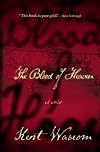
Blogged at River City Reading:
Kent Wascom's debut novel traces the life of Angel Woolsack, who leaves his preacher father and the plains of Missouri to create a new life with his adopted brother, Samuel Kemper, in the early 1800's. The pair navigates their way through the South, loosening their morals and discovering breaking points on their journey toward settlement in West Florida. Through love, death, murder and marriage, Angel and his companions map out the harsh history behind the show more creation of the United States.
Early in The Blood of Heaven, many of the characters' actions are dictated by a desire to spread or purify their religion, freeing them of guilt regardless of their immorality. Yet, as readers watch Angel's choices lead him further from his starting point, he finds he must warp his justifications in order to deal with the crimes he has committed. This becomes one of the novel's overarching themes, one that can easily be seen paralleled in today's society some 200 years later.
"...if a man can't blaspheme when he is on the raw edge of revelation, then when? If you can hear the thunder of the holy heartbeat, where the conscience rests that burns holes in the sky and calls up pits of spiders to swallow the weak, do what comes natural and your actions will be smiled upon."
Though the last of the novel's four books lacks the pace of the rest, Wascom delivers an incredibly powerful debut. At just 26 years-old, he writes with the voice of a master, creating effortless phrases that read like they took lifetimes to compose. Those stunning sentences combined with bold violence, well researched history and questionable morality make The Blood of Heaven worthy of all its praise. show less
Kent Wascom's debut novel traces the life of Angel Woolsack, who leaves his preacher father and the plains of Missouri to create a new life with his adopted brother, Samuel Kemper, in the early 1800's. The pair navigates their way through the South, loosening their morals and discovering breaking points on their journey toward settlement in West Florida. Through love, death, murder and marriage, Angel and his companions map out the harsh history behind the show more creation of the United States.
Early in The Blood of Heaven, many of the characters' actions are dictated by a desire to spread or purify their religion, freeing them of guilt regardless of their immorality. Yet, as readers watch Angel's choices lead him further from his starting point, he finds he must warp his justifications in order to deal with the crimes he has committed. This becomes one of the novel's overarching themes, one that can easily be seen paralleled in today's society some 200 years later.
"...if a man can't blaspheme when he is on the raw edge of revelation, then when? If you can hear the thunder of the holy heartbeat, where the conscience rests that burns holes in the sky and calls up pits of spiders to swallow the weak, do what comes natural and your actions will be smiled upon."
Though the last of the novel's four books lacks the pace of the rest, Wascom delivers an incredibly powerful debut. At just 26 years-old, he writes with the voice of a master, creating effortless phrases that read like they took lifetimes to compose. Those stunning sentences combined with bold violence, well researched history and questionable morality make The Blood of Heaven worthy of all its praise. show less
When New Orleans falls to the Union in the middle of 1962, twelve year-old Joseph Woolsack’s life is suddenly changed. His city is under the tightening grip of Union commander General Benjamin “the Beast” Butler while his father dies of mysterious circumstances, which leaves his mother, Elise, both questioning and questioned. A mixed-race woman passing as white, Elise’s situation grows intense after the death of her husband, as she attempts to hold on to her son and her position in a show more rapidly evolving, violent city.
As in Kent Wascom’s debut novel, The Blood of Heaven, which I loved, most everything in Secessia is grand. The novel’s key characters are all larger than life, with big personalities that are just as easy to fall into as the grimy, dangerous streets of New Orleans. But it’s the way Wascom writes those characters and streets that sets his books apart. Though his words are as grandiose as the images they convey, each one is delicately placed to create a cadence that begs the reader to slow down and enjoy the ride.
“Nine hundred and fifty days before she will bear brightness again. A year and a half before she may trim collar or cuff in white; two years before the allowance of gray; an interminable afterward while color is slowly introduced. She has seen girls married off at seventeen and within months were made gloom-shrouded avatars for husbands who’d done not more than bloody a good set of sheets. And there were those girls, low or high, who themselves died, and for whom husbands dutifully adhered to the widower’s tradition: a black armband on their usual suits. Worn for how long, she cannot say. There are fewer rules for men.”
So much historical fiction seems posed—almost as if it must bend to fit the genre—but the writing here feels more like a necessity. Secessia reads like an outpouring of fascination and love for the past with little concern for convention, which only solidifies Kent Wascom’s unique place in the literary landscape.
More at rivercityreading.com show less
As in Kent Wascom’s debut novel, The Blood of Heaven, which I loved, most everything in Secessia is grand. The novel’s key characters are all larger than life, with big personalities that are just as easy to fall into as the grimy, dangerous streets of New Orleans. But it’s the way Wascom writes those characters and streets that sets his books apart. Though his words are as grandiose as the images they convey, each one is delicately placed to create a cadence that begs the reader to slow down and enjoy the ride.
“Nine hundred and fifty days before she will bear brightness again. A year and a half before she may trim collar or cuff in white; two years before the allowance of gray; an interminable afterward while color is slowly introduced. She has seen girls married off at seventeen and within months were made gloom-shrouded avatars for husbands who’d done not more than bloody a good set of sheets. And there were those girls, low or high, who themselves died, and for whom husbands dutifully adhered to the widower’s tradition: a black armband on their usual suits. Worn for how long, she cannot say. There are fewer rules for men.”
So much historical fiction seems posed—almost as if it must bend to fit the genre—but the writing here feels more like a necessity. Secessia reads like an outpouring of fascination and love for the past with little concern for convention, which only solidifies Kent Wascom’s unique place in the literary landscape.
More at rivercityreading.com show less
Lists
Awards


You May Also Like


Associated Authors
Statistics
- Works
- 5
- Members
- 233
- Popularity
- #96,931
- Rating
- 3.3
- Reviews
- 11
- ISBNs
- 22
- Languages
- 1