
Robin D. Laws
Author of Dungeon Master's Guide II
About the Author
Image credit: Robin D. Laws - Photo © Carlos A, Smith
Series
Works by Robin D. Laws
Parlainth: The Forgotten City (EarthDawn Roleplaying, Book, 18 Treasure & Creature Cards, Fold-Out Map, 6104) (1994) 24 copies
The Missing and the Lost 13 copies
Skullduggery 13 copies
Black Star Magic 4 copies
The Repairer of Reputations 4 copies
The Birds: There Goes My Dream Job 3 copies
Burning Shaolin Redux 2 copies
Warped Adventures: Invasion 2 copies
Adventure Crucible 2 copies
Meat & Bone 2 copies
Iron Man (1998) #72 1 copy
Iron Man (1998) #70 1 copy
Iron Man (1998) #71 1 copy
Iron Man (1998) #67 1 copy
Iron Man (1998) #68 1 copy
Iron Man (1998) #69 1 copy
Page Turners 1 copy
The Final Equation 1 copy
The Forgotten Man 1 copy
The Star Makers 1 copy
Stranger Than Truth! 1 copy
Even Death Can Die 1 copy
Associated Works
Madness on the Orient Express: 16 Lovecraftian Tales of an Unforgettable Journey (2014) — Contributor — 33 copies, 1 review
Nexus the Infinite City (Realities on the Edge) (1994) — Editor, some editions — 22 copies, 1 review
Goblin Quest - Softcover: A game of fatal incompetence (2015) — Author, some editions — 12 copies, 1 review
Prince Valiant Episode Book — Contributor, some editions — 4 copies
Tagged
Common Knowledge
- Canonical name
- Laws, Robin D.
- Birthdate
- 1964-10-14
- Gender
- male
- Occupations
- game designer
- Awards and honors
- Diana Jones Award Finalist (2002)
- Nationality
- Canada
- Places of residence
- Toronto, Ontario, Canada
- Associated Place (for map)
- Ontario, Canada
Members
Reviews
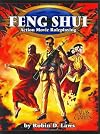
As with most roleplayers, I first encountered the games in my early teens and via D&D. This would have been about 1983 or 84, with the red box set of D&D Basic Rules, then the blue Expert Rules. Our group very much took to heart the concept that these rules were a framework, a guideline - now take it and make it your own! While we did buy supplements and Dragon magazine, our fertile imaginations and bottomless appetite for movies and books in the fantasy, sci-fi and horror genres meant we show more were more than willing to build (and shoehorn) our own ideas into this basic architecture.
I also played with another group of friends (I’m not sure why the two didn’t really mix, it was just one of those things). This group was less adventurous; we played different games - largely [b:Rolemaster|577055|Rolemaster Boxed Set (Rolemaster 2nd Edition, #1000)|Iron Crown Enterprises|https://d.gr-assets.com/books/1338436260s/577055.jpg|564006] and [b:Paranoia|842495|Paranoia|Dan Gelber|https://d.gr-assets.com/books/1224611004s/842495.jpg|828031] and boardgames - but stuck more within the strictures of the given rules. This was also the group where you didn’t get too attached to your character- perhaps unsurprisingly given the systems, mortality was fierce - while in my D&D group we would run characters and their relationships for years. Of course, both groups split when we reached college age and went our separate ways..
It was some years before I found another group of like-minded friends (I had considered going to one of the local game shops and seeing about joining a group, but gaming had for me always been quite a personal, intimate thing). This group, still going these years later, with some changes, had a much wider experience of games than I did and introduced me to some wonders, and we discovered many more together (one of the rules of gaming: never start to tot up how much you’ve spent on rulebooks…) and one that was an utter revelation was Feng Shui by a man who shall forever be known as The Mighty [a:Robin D. Laws|22995|Robin D. Laws|https://d.gr-assets.com/authors/1283275326p2/22995.jpg].
The subtitle “Action Movie Roleplaying” tells you much of what you need to know about this game. It is specifically the Hong Kong action movie genre of John Woo, Jackie Chan and Tsui Hark, although you can easily adjust it to fit Schwarzenegger movies, Indiana Jones or The Transporter. The main point is that it is Heroic; the characters are typically Big Damn arse-kicking Heroes who can leap off balconies firing a gun in each hand, punch opponents through walls and drive high octane cars down narrow streets at ridiculous speeds.
And it works brilliantly, due to Laws’ superb design. The basic mechanic is stunningly simple. Eschewing the multiplicity of dice I have come to know and love (the old joke is that you out a roleplayer by saying “would you hand me that d6?”) Feng Shui uses two six-sided dice of different colours, a good dice (positive) and a bad dice (negative), added on to a skill/characteristic rating (if you know what I’m talking about, you’re a roleplayer; if not, don’t worry about it). What really works is the level at which this is pitched; as I say, the characters are Heroes, they don’t need to worry about fighting with ordinary minions! This is accomplished by the simple expedient that Mooks (as they are designated here), generally the kind fodder the Big Bad will throw at the heroes to keep them occupied, tend to come in squads of six and each individual is taken out wit a single point of damage - so picture Jackie Chan running through a factory, knocking bad guys from gantries as they try to mob him. This is further enhanced by advantages that the game calls shticks, special abilities of an almost (or sometimes literally, depending on the character type) magical nature. For instance, the common one of never having to reload a weapon or, one of my favourites, the rather more tricky running up the stream of bullets coming toward you to attack your opponent.
However, the real revelation for me was a step beyond that injunction in the original D&D to make these rules your own, and that is the encouragement to use description and inventiveness within the game by giving bonuses for descriptiveness, resourcefulness and imagination - along with penalties for being dull or repetitive. Example: in a firefight you can get away with saying “I take aim and shoot” a couple of times, but if you don’t try harder the Director (as the gamesmaster is called) should start to penalise you. Adding some description will counter this, and maybe give a minor bonus (“I leap over the bar for cover, blazing away with an automatic pistol in each hand”) and particularly good/descriptive/crazy ideas should earn you better bonuses (shooting down a chandelier onto a group of mooks, sliding on your back along a stream of lantern oil someone is about to set on fire while shooting, or simply punching/tripping/throwing one enemy into a pile of others. Just use your imagination, or steal from your favourite action films.
The beam of celestial light hit me in my first session playing this game. We were in a New Year parade in Kowloon when it is attacked by Triad goons/terrorists/whatever (I forget the details). My character (a fairly bog-standard Martial Arts Cop, one of the basic archetypes) was on the edge of the parade and I asked if there was a nearby lamppost or pillar I could use to swing around, kick some bad guys in the face and continue to boost up over the parade. Simon, the director, looked me squarely in the face and said “If you need there to be, there is.” Of course: movie logic!
Of course, there is the danger with this that either the players will just be too silly in their inventiveness, of the Director will expect and demand ever increasing invention to avoid penalties, but that is partly where the trust and cohesion of a good roleplaying group comes into things. In any game, the gamemaster (or Director, DM, storyteller, etc) has to set the tone and expectations, usually implicitly but occasionally explicitly, and the players let him or her know whether they are onboard. Roleplaying is a unique form or communal storytelling where each participant adjusts and makes room and reacts and accommodates to move the story forward.
This game was my introduction to the work of (The Mighty) [a:Robin D. Laws|22995|Robin D. Laws|https://d.gr-assets.com/authors/1283275326p2/22995.jpg], for my money one of the great game designers and writers and someone who has continued to work on games that foreground the storytelling above rulemastery aspects of gaming, while having systems that support and give structure - Nexus, The Dying Earth, the flexible Gumshoe system. I’ve left much out of this review - the setting and background, the influence of magic (this is primarily based on Hong Kong cinema, don’t forget, so we’re not just talking martial arts and gunfights!) but, if you haven’t yet, you should get it, get together with a group of like-minded friends, some wine and beer and chips and dips, and have yourself a real good time. In fact, 2nd edition has recently come out and I’ve not got it yet. Ah, so many games, so little time.... show less
I also played with another group of friends (I’m not sure why the two didn’t really mix, it was just one of those things). This group was less adventurous; we played different games - largely [b:Rolemaster|577055|Rolemaster Boxed Set (Rolemaster 2nd Edition, #1000)|Iron Crown Enterprises|https://d.gr-assets.com/books/1338436260s/577055.jpg|564006] and [b:Paranoia|842495|Paranoia|Dan Gelber|https://d.gr-assets.com/books/1224611004s/842495.jpg|828031] and boardgames - but stuck more within the strictures of the given rules. This was also the group where you didn’t get too attached to your character- perhaps unsurprisingly given the systems, mortality was fierce - while in my D&D group we would run characters and their relationships for years. Of course, both groups split when we reached college age and went our separate ways..
It was some years before I found another group of like-minded friends (I had considered going to one of the local game shops and seeing about joining a group, but gaming had for me always been quite a personal, intimate thing). This group, still going these years later, with some changes, had a much wider experience of games than I did and introduced me to some wonders, and we discovered many more together (one of the rules of gaming: never start to tot up how much you’ve spent on rulebooks…) and one that was an utter revelation was Feng Shui by a man who shall forever be known as The Mighty [a:Robin D. Laws|22995|Robin D. Laws|https://d.gr-assets.com/authors/1283275326p2/22995.jpg].
The subtitle “Action Movie Roleplaying” tells you much of what you need to know about this game. It is specifically the Hong Kong action movie genre of John Woo, Jackie Chan and Tsui Hark, although you can easily adjust it to fit Schwarzenegger movies, Indiana Jones or The Transporter. The main point is that it is Heroic; the characters are typically Big Damn arse-kicking Heroes who can leap off balconies firing a gun in each hand, punch opponents through walls and drive high octane cars down narrow streets at ridiculous speeds.
And it works brilliantly, due to Laws’ superb design. The basic mechanic is stunningly simple. Eschewing the multiplicity of dice I have come to know and love (the old joke is that you out a roleplayer by saying “would you hand me that d6?”) Feng Shui uses two six-sided dice of different colours, a good dice (positive) and a bad dice (negative), added on to a skill/characteristic rating (if you know what I’m talking about, you’re a roleplayer; if not, don’t worry about it). What really works is the level at which this is pitched; as I say, the characters are Heroes, they don’t need to worry about fighting with ordinary minions! This is accomplished by the simple expedient that Mooks (as they are designated here), generally the kind fodder the Big Bad will throw at the heroes to keep them occupied, tend to come in squads of six and each individual is taken out wit a single point of damage - so picture Jackie Chan running through a factory, knocking bad guys from gantries as they try to mob him. This is further enhanced by advantages that the game calls shticks, special abilities of an almost (or sometimes literally, depending on the character type) magical nature. For instance, the common one of never having to reload a weapon or, one of my favourites, the rather more tricky running up the stream of bullets coming toward you to attack your opponent.
However, the real revelation for me was a step beyond that injunction in the original D&D to make these rules your own, and that is the encouragement to use description and inventiveness within the game by giving bonuses for descriptiveness, resourcefulness and imagination - along with penalties for being dull or repetitive. Example: in a firefight you can get away with saying “I take aim and shoot” a couple of times, but if you don’t try harder the Director (as the gamesmaster is called) should start to penalise you. Adding some description will counter this, and maybe give a minor bonus (“I leap over the bar for cover, blazing away with an automatic pistol in each hand”) and particularly good/descriptive/crazy ideas should earn you better bonuses (shooting down a chandelier onto a group of mooks, sliding on your back along a stream of lantern oil someone is about to set on fire while shooting, or simply punching/tripping/throwing one enemy into a pile of others. Just use your imagination, or steal from your favourite action films.
The beam of celestial light hit me in my first session playing this game. We were in a New Year parade in Kowloon when it is attacked by Triad goons/terrorists/whatever (I forget the details). My character (a fairly bog-standard Martial Arts Cop, one of the basic archetypes) was on the edge of the parade and I asked if there was a nearby lamppost or pillar I could use to swing around, kick some bad guys in the face and continue to boost up over the parade. Simon, the director, looked me squarely in the face and said “If you need there to be, there is.” Of course: movie logic!
Of course, there is the danger with this that either the players will just be too silly in their inventiveness, of the Director will expect and demand ever increasing invention to avoid penalties, but that is partly where the trust and cohesion of a good roleplaying group comes into things. In any game, the gamemaster (or Director, DM, storyteller, etc) has to set the tone and expectations, usually implicitly but occasionally explicitly, and the players let him or her know whether they are onboard. Roleplaying is a unique form or communal storytelling where each participant adjusts and makes room and reacts and accommodates to move the story forward.
This game was my introduction to the work of (The Mighty) [a:Robin D. Laws|22995|Robin D. Laws|https://d.gr-assets.com/authors/1283275326p2/22995.jpg], for my money one of the great game designers and writers and someone who has continued to work on games that foreground the storytelling above rulemastery aspects of gaming, while having systems that support and give structure - Nexus, The Dying Earth, the flexible Gumshoe system. I’ve left much out of this review - the setting and background, the influence of magic (this is primarily based on Hong Kong cinema, don’t forget, so we’re not just talking martial arts and gunfights!) but, if you haven’t yet, you should get it, get together with a group of like-minded friends, some wine and beer and chips and dips, and have yourself a real good time. In fact, 2nd edition has recently come out and I’ve not got it yet. Ah, so many games, so little time.... show less
Dungeon Master's Guide II (Dungeons & Dragons d20 3.5 Fantasy Roleplaying Supplement) by Jesse Decker
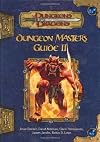
This book goes into great detail on the roleplaying and practical aspects of being a Dungeon Master - it is not an expansion of rules or a replacement for the first Dungeon Master Guide. It goes into far greater detail than that volume on topics like how to understand the different types of players (why they are the way they are and how to motivate them, or otherwise work with them, in your campaign), how to design richer urban environments (cities, towns, and regional characteristics based show more on realistic ideas rather than random tables), and provides insight into magic and how to work it into your campaign. It also comes with a detailed example of an urban setting, the 'Saltmarsh', which is worth reading through even if you have no intention of using it. The descriptions of all aspects of the Saltmarsh are quite detailed and could easily be adapted in whole or in part into any number of urban environments in your own campaign.
While some of the content in the book will sound somewhat old hat to an experienced Dungeon Master, I'd be willing to bet that there is still a good deal of useful information in this book for everyone. I've not met many people who could not benefit in some way from an alternate point of view, and if you can be openminded to new ideas then you may find a reasonable amount of useful information in this book. At the very least this material should inspire some new ideas in the creative reader, and will certainly be a solid reference book for those who are looking for a good starting point to build quality DungeonMaster skills.
Like all information (printed or otherwise), depending on what you want from this book you may or may not find it useful. There is very little rule-based information, so don't worry about having to alter rules to suit your preferred version of the game - this book is all about general concepts and being creative to make a richer campaign for everyone. I have been playing D&D off and on since the late 1970's and I still found a good deal of useful insight here. I prefer a roleplaying oriented game where rules are used to enhance the experience of play, maps are hand drawn, and homemade props are common over a game where complex rules can become intrusive, cartoonish (and expensive) maps are required, and rapid advancement/power gain is the primary focus. I bought this book because I wanted some insight into how other people have resolved various issues and problems with the game and those who play it (especially the latter since online MMOs and console games have radically changed the expectations of the player base). I also wanted to read someone else's thoughts on how to develop more complex and interesting urban settings, both as a base for the party and a source of adventure that was not the standard dungeon crawl, and I found what I was looking for in this book. show less
While some of the content in the book will sound somewhat old hat to an experienced Dungeon Master, I'd be willing to bet that there is still a good deal of useful information in this book for everyone. I've not met many people who could not benefit in some way from an alternate point of view, and if you can be openminded to new ideas then you may find a reasonable amount of useful information in this book. At the very least this material should inspire some new ideas in the creative reader, and will certainly be a solid reference book for those who are looking for a good starting point to build quality DungeonMaster skills.
Like all information (printed or otherwise), depending on what you want from this book you may or may not find it useful. There is very little rule-based information, so don't worry about having to alter rules to suit your preferred version of the game - this book is all about general concepts and being creative to make a richer campaign for everyone. I have been playing D&D off and on since the late 1970's and I still found a good deal of useful insight here. I prefer a roleplaying oriented game where rules are used to enhance the experience of play, maps are hand drawn, and homemade props are common over a game where complex rules can become intrusive, cartoonish (and expensive) maps are required, and rapid advancement/power gain is the primary focus. I bought this book because I wanted some insight into how other people have resolved various issues and problems with the game and those who play it (especially the latter since online MMOs and console games have radically changed the expectations of the player base). I also wanted to read someone else's thoughts on how to develop more complex and interesting urban settings, both as a base for the party and a source of adventure that was not the standard dungeon crawl, and I found what I was looking for in this book. show less

A bit uneven, as most anthologies of this kind are, but does contain several gems. The premise is interesting (even if it's been done before), and the selection is nice and varied while not straing too far away from the main theme.
Bonus points for title and cover. Get this if you're a fan of the post-Lovecraft Mythos. Purists will find some things to like too, in all probability, but maybe no enough to make this worthwhile over other new anthologies like, for instance Joshi's Black Wings of show more Cthulhu. show less
Bonus points for title and cover. Get this if you're a fan of the post-Lovecraft Mythos. Purists will find some things to like too, in all probability, but maybe no enough to make this worthwhile over other new anthologies like, for instance Joshi's Black Wings of show more Cthulhu. show less

Not a bad ending to this campaign, but one that I think most players would find frustrating - even within the grimdark setting of WFRP. There are two fantastic bits that I would (and might) use in my 5e campaign though. The creation of the Doomstones scenario is great and really interesting, and the village of chaos is fantastic. Both are wonderful and my players would love them. The rest, not so much,
Lists
Awards

You May Also Like


Associated Authors
Statistics
- Works
- 127
- Also by
- 21
- Members
- 2,920
- Popularity
- #8,771
- Rating
- 3.8
- Reviews
- 30
- ISBNs
- 131
- Languages
- 7
- Favorited
- 2