
Kirsty Logan
Author of The Gracekeepers
Works by Kirsty Logan
Associated Works
Queer: A Collection of LGBTQ Writing from Ancient Times to Yesterday (2021) — Contributor, some editions — 65 copies
The Other Side of Never: Dark Tales from the World of Peter & Wendy (2023) — Contributor — 32 copies
Haunted Voices: An Anthology of Gothic Storytelling from Scotland (2019) — Contributor — 25 copies, 3 reviews
Tagged
Common Knowledge
- Birthdate
- 1984-03-13
- Gender
- female
- Occupations
- writer
- Places of residence
- Glasgow, Lanarkshire, Scotland, UK
- Map Location
- UK
Members
Discussions
Found: SciFi Circus on boats, land is scarce, there is an ocean graveyard in Name that Book (May 2024)
Reviews
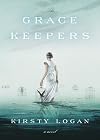
This unusual book reads like a fairytale but one set in a post-apocalyptic era. It is told from multiple points of view, but the main characters are females: Callanish, who is a “gracekeeper” administering burials at sea; North, who performs with a bear in the floating Circus Excalibur; and Avalon, the wife of the circus ringmaster.
In this world of the future, many former cities are underwater; the living are now divided between “damplings” who travel the world on boats, and show more “landlockers” (called “clams” by the damplings) who live on strings of islands. The two groups interact, but don’t like or trust one another.
The tension in the story arises from the struggle of each of the women to realize her desires. Avalon wants to become a landlocker and live in a real house. North wants to find a place she can live safely with her bear and with the baby she is carrying. Callanish wants forgiveness from her mother for an act that led to her isolation as a gracekeeper. When North and Callanish meet, they find they have more in common than either suspected, causing the thoughts of each increasingly to turn to the other.
Avalon’s desperation to make her dreams come true leads her to commit desperate acts, resulting in potential disaster for all the characters. They all stand to lose everything, or maybe, to find what they were looking for, if they can survive.
Discussion: The circus performers hide their true desires and feelings and even their genders, behind spectacle and illusion created from glittery make-up, painted colors, ribbons and tattoos and ghostly lighting. The alliterative and lyrical language matches the dreamy, mythical, performative content:
"Behind curtains the three clowns stamped to the beat in their metal-soled boots until the striped silk shuddered with the sound.”
It was never really clear to me how much of the relationship between North and her bear was metaphorical or allegorical; in some ways the book seems like a mash-up of Station Eleven and Life of Pi, or perhaps more aptly, the fairy tale Snow White and Rose Red.
What happened to create this post-disaster world is only speculated about once by the characters, who were born into this world the way it was. And like the murky and mysterious cities under the water, most of the interior lives of the characters are hidden from each other, as well as the reader. How did they end up where they were? What do they do all day? What do they think about? In this magical reverie through a gossamer lens, the past hardly comes into play.
The dénouement is more suggestive than solid but for the most part satisfying, ending with a calm sea that is “silver bright, busy with worlds.” show less
In this world of the future, many former cities are underwater; the living are now divided between “damplings” who travel the world on boats, and show more “landlockers” (called “clams” by the damplings) who live on strings of islands. The two groups interact, but don’t like or trust one another.
The tension in the story arises from the struggle of each of the women to realize her desires. Avalon wants to become a landlocker and live in a real house. North wants to find a place she can live safely with her bear and with the baby she is carrying. Callanish wants forgiveness from her mother for an act that led to her isolation as a gracekeeper. When North and Callanish meet, they find they have more in common than either suspected, causing the thoughts of each increasingly to turn to the other.
Avalon’s desperation to make her dreams come true leads her to commit desperate acts, resulting in potential disaster for all the characters. They all stand to lose everything, or maybe, to find what they were looking for, if they can survive.
Discussion: The circus performers hide their true desires and feelings and even their genders, behind spectacle and illusion created from glittery make-up, painted colors, ribbons and tattoos and ghostly lighting. The alliterative and lyrical language matches the dreamy, mythical, performative content:
"Behind curtains the three clowns stamped to the beat in their metal-soled boots until the striped silk shuddered with the sound.”
It was never really clear to me how much of the relationship between North and her bear was metaphorical or allegorical; in some ways the book seems like a mash-up of Station Eleven and Life of Pi, or perhaps more aptly, the fairy tale Snow White and Rose Red.
What happened to create this post-disaster world is only speculated about once by the characters, who were born into this world the way it was. And like the murky and mysterious cities under the water, most of the interior lives of the characters are hidden from each other, as well as the reader. How did they end up where they were? What do they do all day? What do they think about? In this magical reverie through a gossamer lens, the past hardly comes into play.
The dénouement is more suggestive than solid but for the most part satisfying, ending with a calm sea that is “silver bright, busy with worlds.” show less
Wow, what a beautiful, haunting novel. I had a feeling I was going to fall in love with The Gracekeepers, from its gorgeous cover to the fascinating synopsis pulling me in. As some of you would probably agree, the quality of the characters can make or break a book. I'm happy to say that the characters you meet in this book do not disappoint.
There are two main, clear protagonists, Callanish and North. Callanish is a gracekeeper who lays the dead damplings (those that live at sea) to rest. She show more used to be a landlocker (someone who lives on the land), but due to some events in her past she has exiled herself to an island. North is part of a floating circus, where her act is performing with her trained bear. She lost her parents in a rather tragic accident and the circus and its performers are all she has ever known. Both she and Callanish harbor secrets that could change their lives forever, and this forms an unbreakable bond between them. There are a lot of supporting characters here: the ringmaster, Jarrow (or Red Gold as North calls him); Jarrow's cruel, pregnant wife, Avalon; the acrobats, fire breather, horse performer, messengers, and gracekeepers. It would be impossible to go over them all in this review. They were all very important to the story in their own ways.
The book is written in third-person point of view, and I really enjoyed how the author chose to change the voice frequently. It was like opening a window into each of the characters' lives. Some of the supporting characters were given a voice as well and that doesn't happen very often.The chapters were labeled as to which character's story was being told, so it was never confusing. This method helped me understand each of them more completely, for better or worse. I even held some compassion for the characters I despised after learning the motivations behind their actions.
As eerie and morbid as it may seem, I found the graceyard setting oddly beautiful. When the dead were put in their final resting place below the water, Callanish would place a caged bird (a grace) on top of the body. When the grace died, the loved ones knew it was time to move on and stop grieving. I just wish it were that simple, but we all know that there is no time table on grief. Three years later and my heart still hurts from losing my mom, and I know it always will. I really liked one quote in particular, when North was talking to Callanish about someone she knew who died. She began talking about him as if he was still alive, and then she remembered.
She stopped. She knew that ______ wasn't coming back, but also he must be coming back. It didn't make sense otherwise. (pg. 96 of The Gracekeepers - I used "____" in place of the character's name to avoid spoilers)
That passage spoke to me so much. It is exactly how I felt right after my mom passed away; it was sudden and I just couldn't believe that she wasn't going to walk through the door. I knew she was gone and I'd never see her again. Of course I did; we all understand how death works. Yet in those moments, and even to this day sometimes, I feel like she will come home. And the heartbreak starts all over again.
There were many sources of conflict, from arranged marriages to past mistakes, but underneath it all was the huge divide between the damplings and the landlockers. From what I understood, water had covered a lot of the land and sunk some cities, leaving fewer areas left to be inhabited. Those that lived on land looked down on the sea dwellers because they didn't worship the same gods. They didn't even want them setting foot on their soil for the most part, which is why the circus was performed on a ship. This fairly strict segregation continued through most of the story, but at the end there was a glimmer of hope for the future.
I'm not sure if The Gracekeepers will be a stand-alone book or part of a series; it could go either way I suppose. All I know is this is one of the best novels I've read this year. The author had a beautiful way of painting both the setting and the characters; the lovely wording is very reminiscent of one of my favorites, The Chemical Garden series by Lauren DeStefano. This is the first time I've heard of author Kirsty Logan, but I sincerely hope it won't be the last because she has a real gift for the written word. I look forward to reading more from her in the future. show less
There are two main, clear protagonists, Callanish and North. Callanish is a gracekeeper who lays the dead damplings (those that live at sea) to rest. She show more used to be a landlocker (someone who lives on the land), but due to some events in her past she has exiled herself to an island. North is part of a floating circus, where her act is performing with her trained bear. She lost her parents in a rather tragic accident and the circus and its performers are all she has ever known. Both she and Callanish harbor secrets that could change their lives forever, and this forms an unbreakable bond between them. There are a lot of supporting characters here: the ringmaster, Jarrow (or Red Gold as North calls him); Jarrow's cruel, pregnant wife, Avalon; the acrobats, fire breather, horse performer, messengers, and gracekeepers. It would be impossible to go over them all in this review. They were all very important to the story in their own ways.
The book is written in third-person point of view, and I really enjoyed how the author chose to change the voice frequently. It was like opening a window into each of the characters' lives. Some of the supporting characters were given a voice as well and that doesn't happen very often.The chapters were labeled as to which character's story was being told, so it was never confusing. This method helped me understand each of them more completely, for better or worse. I even held some compassion for the characters I despised after learning the motivations behind their actions.
As eerie and morbid as it may seem, I found the graceyard setting oddly beautiful. When the dead were put in their final resting place below the water, Callanish would place a caged bird (a grace) on top of the body. When the grace died, the loved ones knew it was time to move on and stop grieving. I just wish it were that simple, but we all know that there is no time table on grief. Three years later and my heart still hurts from losing my mom, and I know it always will. I really liked one quote in particular, when North was talking to Callanish about someone she knew who died. She began talking about him as if he was still alive, and then she remembered.
She stopped. She knew that ______ wasn't coming back, but also he must be coming back. It didn't make sense otherwise. (pg. 96 of The Gracekeepers - I used "____" in place of the character's name to avoid spoilers)
That passage spoke to me so much. It is exactly how I felt right after my mom passed away; it was sudden and I just couldn't believe that she wasn't going to walk through the door. I knew she was gone and I'd never see her again. Of course I did; we all understand how death works. Yet in those moments, and even to this day sometimes, I feel like she will come home. And the heartbreak starts all over again.
There were many sources of conflict, from arranged marriages to past mistakes, but underneath it all was the huge divide between the damplings and the landlockers. From what I understood, water had covered a lot of the land and sunk some cities, leaving fewer areas left to be inhabited. Those that lived on land looked down on the sea dwellers because they didn't worship the same gods. They didn't even want them setting foot on their soil for the most part, which is why the circus was performed on a ship. This fairly strict segregation continued through most of the story, but at the end there was a glimmer of hope for the future.
I'm not sure if The Gracekeepers will be a stand-alone book or part of a series; it could go either way I suppose. All I know is this is one of the best novels I've read this year. The author had a beautiful way of painting both the setting and the characters; the lovely wording is very reminiscent of one of my favorites, The Chemical Garden series by Lauren DeStefano. This is the first time I've heard of author Kirsty Logan, but I sincerely hope it won't be the last because she has a real gift for the written word. I look forward to reading more from her in the future. show less
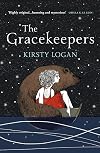
REVIEW ALSO ON: http://bibliomantics.com/2015/08/22/till-human-voices-wake-us-and-we-drown-cassi...
Kirsty Logan's beautifully written debut novel The Gracekeepers is perfect for fans of mermaids, circuses, fantasy worlds and prose that sings from line to line.
It's set in a fully realized post-apocalyptic world where rising sea levels have destroyed cities and created a brand new landscape dominated by the ocean. Because of this global warming allegory, those who own and live on land show more (landlockers) have more food and resources and thus more power, while the 99 percent (damplings) are forced to live at sea.
Both classes resent each other, with the always hungry damplings being forced to wear bells to distinguish themselves when they're on land and the damplings insultingly referring to landlockers as clams for their insistence on clinging to the old ways.
While damplings prefer seaside burials called restings, deceased landlockers are burned and their ashes scattered at something called the World Tree -- pretty fitting since landlockers worship trees, whose numbers have understandably dwindled since the rising sea levels. Dampling restings are slightly more complicated and involve birds called graces who represent grief. When the grace (who is placed in a cage that's tied to the dampling's body) dies, the mourning period for that person is over.
The landlocker POV is represented by gracekeeper Callanish. She lives alone on a small island in a graceyard and her only human contact is the damplings who arrive to put their dead to rest. The government provides North with graces to perform these restings and to thank her for performing these burial rights, Callanish is paid by mourners in tradeable goods like food and supplies. It's a lonely life, but one Callanish has chosen to punish herself for past mistakes. A gracekeeper position may be used as an alternative to time on a prison boat or death -- kind of like taking the black.
Representing the damplings we have North, an equally lonely young girl who was born and raised on the circus boat the Excalibur, which travels from island to island to perform and make money. After a circus accident leaves her an orphan, North performs with the only thing her parents left her: the bear, a rarity (and in turn a commodity) in her water covered world.
Like many parallel elements in the novel (landlockers and damplings, the circus and the religious revival boats -- which are the real circuses) Callanish and North are polar opposites brought together by a freak storm and a dream for a better future in a different world. Beautiful Callanish is fearful of touching the water, while not as conventionally attractive North is disgusted when walking on land, which only makes their respective arcs more satisfying when they reach their inevitable conclusion.
Callanish and North aren't the only characters who have POVs -- Logan keeps things fresh by giving us glimpses into the minds of the complicated circus family made up of Jarrow (AKA Red Gold, the circus ringmaster), his pregnant wife Avalon and Ainsel, his son who is betrothed to North. We also get a brief look at Callanish's landlocker mother Veryan and a few other peripheral characters, further expanding the fantastical world Logan created. show less
Kirsty Logan's beautifully written debut novel The Gracekeepers is perfect for fans of mermaids, circuses, fantasy worlds and prose that sings from line to line.
It's set in a fully realized post-apocalyptic world where rising sea levels have destroyed cities and created a brand new landscape dominated by the ocean. Because of this global warming allegory, those who own and live on land show more (landlockers) have more food and resources and thus more power, while the 99 percent (damplings) are forced to live at sea.
Both classes resent each other, with the always hungry damplings being forced to wear bells to distinguish themselves when they're on land and the damplings insultingly referring to landlockers as clams for their insistence on clinging to the old ways.
While damplings prefer seaside burials called restings, deceased landlockers are burned and their ashes scattered at something called the World Tree -- pretty fitting since landlockers worship trees, whose numbers have understandably dwindled since the rising sea levels. Dampling restings are slightly more complicated and involve birds called graces who represent grief. When the grace (who is placed in a cage that's tied to the dampling's body) dies, the mourning period for that person is over.
The landlocker POV is represented by gracekeeper Callanish. She lives alone on a small island in a graceyard and her only human contact is the damplings who arrive to put their dead to rest. The government provides North with graces to perform these restings and to thank her for performing these burial rights, Callanish is paid by mourners in tradeable goods like food and supplies. It's a lonely life, but one Callanish has chosen to punish herself for past mistakes. A gracekeeper position may be used as an alternative to time on a prison boat or death -- kind of like taking the black.
Representing the damplings we have North, an equally lonely young girl who was born and raised on the circus boat the Excalibur, which travels from island to island to perform and make money. After a circus accident leaves her an orphan, North performs with the only thing her parents left her: the bear, a rarity (and in turn a commodity) in her water covered world.
Like many parallel elements in the novel (landlockers and damplings, the circus and the religious revival boats -- which are the real circuses) Callanish and North are polar opposites brought together by a freak storm and a dream for a better future in a different world. Beautiful Callanish is fearful of touching the water, while not as conventionally attractive North is disgusted when walking on land, which only makes their respective arcs more satisfying when they reach their inevitable conclusion.
Callanish and North aren't the only characters who have POVs -- Logan keeps things fresh by giving us glimpses into the minds of the complicated circus family made up of Jarrow (AKA Red Gold, the circus ringmaster), his pregnant wife Avalon and Ainsel, his son who is betrothed to North. We also get a brief look at Callanish's landlocker mother Veryan and a few other peripheral characters, further expanding the fantastical world Logan created. show less
 This review was written for LibraryThing Early Reviewers.
Another hypnotically strange fairy-tale-at-sea (that weird sub-sub-genre that I love so much).
I hope there will be a follow-up, or several, set in the same world. Basically, this is a much better version of Waterworld. Land is scarce and food is stretched thin and social classes are tied to whether you live on an island or on a ship. It reads more like a fairy tale than a dystopian novel though, and thank God for that.
Also, a floating circus. Yes.
(Probably a longer review later, and show more thanks to PRH for the advance copy!) show less
I hope there will be a follow-up, or several, set in the same world. Basically, this is a much better version of Waterworld. Land is scarce and food is stretched thin and social classes are tied to whether you live on an island or on a ship. It reads more like a fairy tale than a dystopian novel though, and thank God for that.
Also, a floating circus. Yes.
(Probably a longer review later, and show more thanks to PRH for the advance copy!) show less
Lists
Awards


You May Also Like


Associated Authors
Statistics
- Works
- 19
- Also by
- 23
- Members
- 1,371
- Popularity
- #18,760
- Rating
- 3.7
- Reviews
- 103
- ISBNs
- 54
- Languages
- 2
- Favorited
- 1
