
Lucy Wood (2) (1990–)
Author of Diving Belles
For other authors named Lucy Wood, see the disambiguation page.
Works by Lucy Wood
Notes From the House Spirits 1 copy
Tagged
Common Knowledge
- Birthdate
- 1990
- Gender
- female
- Nationality
- UK
- Birthplace
- Cornwall, England, UK
- Associated Place (for map)
- England, UK
Members
Reviews
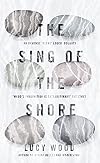
‘’Winters are when people disappear. One minute you’re elbow on the street, the next you walk along sidestepping nothing but the wind. Cafes put down their blinds. Houses are locked and dark. The car parks slowly empty and all that’s left on the beaches are a few forgotten shoes.’’
I came across The Sing of the Shore via Jen Campbell’s YouTube channel, a holy shrine for those of us who love our literature flavoured with a healthy dose of the strange and the misty. This show more collection of stories set in the wild, beautiful Cornish landscape is rich in bleakness, strange outcomes, misty characters and beautiful, complex prose. I admit that during the first three stories I felt lost in space. I didn’t know what I was reading. I realised that my mental state wasn’t the proper one and I went back, read them again and let the words ‘’flood’’ my confused, occupied- by- tons of issues brain. This collection by Lucy Wood is one of the most beautiful,, demanding and strange works of the Literary Fiction genre. It is an ode to Cornwall, a realistic, harsh depiction of our struggle with nature, with the ones around us and with ourselves.
Cornwall...A name that brings so many images in our minds...In this majestic, ferocious scenery, human seem even more small, temporary, insignificant. The powerful presence of the sea is the heart of the collection. ‘’The Sing of the Shore’’ is the sound of the waves, breaking sands, rock, reefs alerting the sailormen and the fishermen as to their position when darkness and mists cover the land ahead. Here, the shore hides childhood dreams, family relationships, loneliness.
Children try to hold on surface, swept away by their parents’ problems. Young parents try to meet the demands of their offsprings. People search for lost items, brought to land by the currants. Young friends try to make a living through leftovers. Others try to find their way through fields covered in mist, guided (or misled) by the sound of the sea. Two young sisters try to make sense of their changing childhood in a noisy funfair. A young boy grows up in the shadow of a father who desperately tries to tame the waves. Ghosts visit the domains of the mortals…
‘’ ‘They tell themselves they didn’t really see anything. And for a while they don’t see anything else. Everything goes back to how it was, until they come back one day and, as they’re getting out of their car, they happen to look across at their kitchen window. ‘ Fran stops and looks down at her tea. There’s half left but she still doesn’t drink it. ‘There’s hands pressed against it from the inside.’
‘’Actual’’ ghosts and the ghostly presence of the past form a wailing Chorus. Ghostly feelings, unfulfilled wishes and what ifs cast a heavy shadow. And then there is the sea. Always the sea. A friend and a foe. A companion and a reminder of our mortality, of how tiny and unimportant we actually are.
A collection that is extremely difficult to describe. Give it time, be patient and let it haunt you. You won’t regret it…
‘’I even started drawing this book for kids, about a man who forgets where he lives and just wanders around from door to door, knocking. Sometimes people let him in but mostly they don’t.’’
My reviews can also be found on https://theopinionatedreaderblog.wordpress.com show less
I came across The Sing of the Shore via Jen Campbell’s YouTube channel, a holy shrine for those of us who love our literature flavoured with a healthy dose of the strange and the misty. This show more collection of stories set in the wild, beautiful Cornish landscape is rich in bleakness, strange outcomes, misty characters and beautiful, complex prose. I admit that during the first three stories I felt lost in space. I didn’t know what I was reading. I realised that my mental state wasn’t the proper one and I went back, read them again and let the words ‘’flood’’ my confused, occupied- by- tons of issues brain. This collection by Lucy Wood is one of the most beautiful,, demanding and strange works of the Literary Fiction genre. It is an ode to Cornwall, a realistic, harsh depiction of our struggle with nature, with the ones around us and with ourselves.
Cornwall...A name that brings so many images in our minds...In this majestic, ferocious scenery, human seem even more small, temporary, insignificant. The powerful presence of the sea is the heart of the collection. ‘’The Sing of the Shore’’ is the sound of the waves, breaking sands, rock, reefs alerting the sailormen and the fishermen as to their position when darkness and mists cover the land ahead. Here, the shore hides childhood dreams, family relationships, loneliness.
Children try to hold on surface, swept away by their parents’ problems. Young parents try to meet the demands of their offsprings. People search for lost items, brought to land by the currants. Young friends try to make a living through leftovers. Others try to find their way through fields covered in mist, guided (or misled) by the sound of the sea. Two young sisters try to make sense of their changing childhood in a noisy funfair. A young boy grows up in the shadow of a father who desperately tries to tame the waves. Ghosts visit the domains of the mortals…
‘’ ‘They tell themselves they didn’t really see anything. And for a while they don’t see anything else. Everything goes back to how it was, until they come back one day and, as they’re getting out of their car, they happen to look across at their kitchen window. ‘ Fran stops and looks down at her tea. There’s half left but she still doesn’t drink it. ‘There’s hands pressed against it from the inside.’
‘’Actual’’ ghosts and the ghostly presence of the past form a wailing Chorus. Ghostly feelings, unfulfilled wishes and what ifs cast a heavy shadow. And then there is the sea. Always the sea. A friend and a foe. A companion and a reminder of our mortality, of how tiny and unimportant we actually are.
A collection that is extremely difficult to describe. Give it time, be patient and let it haunt you. You won’t regret it…
‘’I even started drawing this book for kids, about a man who forgets where he lives and just wanders around from door to door, knocking. Sometimes people let him in but mostly they don’t.’’
My reviews can also be found on https://theopinionatedreaderblog.wordpress.com show less
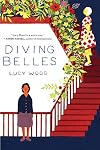
More a collection of vignettes than short stories, an enthralling blend of realism and surrealism, moving easily and seamlessly from one to the other. The author has evoked Cornwall and her folklore, blending contemporary stories with just the right note of otherworldliness. A woman is turning to stone while house hunting with a boyfriend. A phantom wrecker--one who lured ships onto rocks and stole their cargoes--appears and occupies the house of a couple who has recently moved in. A mother show more has a phantom lover. Shapeshifting in a nursing home. House spirits watch over its charge, first empty then through the years of a family living there, then the house gradually empties again. Ghostly dogs on a nighttime moor, explored by father and daughter.
Unsettling but somehow hypnotic in its lyrical writing.
Highly recommended. show less
Unsettling but somehow hypnotic in its lyrical writing.
Highly recommended. show less
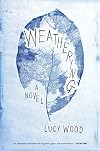
She spent a long time finding the right spot -- the correct angle of light, complicated colours, something to frame the shots with in the background. Then she set up the tripod, selected a lens, attached it and set the aperture and focus. And then waited. And waited. [ . . . ] Why did she do this? [ . . . ] But she knew why. She could remember exactly why, even now. For the way time seemed to slow down and stretch, measured in the river's ripples rather than by clocks and mealtimes. For the show more invisibility. For the hush. To forget. To make some sort of record -- but of what she wasn't sure exactly. To notice things she wouldn't otherwise have noticed: dragonflies hunting, the patterns of light, the specific way that water poured over a dipper's back. (page 124)
It has been thirteen years since Ada has seen the house on the river where she grew up alone with her mother, Pearl. Now she has returned with Pepper, her six-year-old daughter, to this damp and derelict place, but--as she's quick to point out to local folk--she's only here to settle her mother's affairs, sell the house, and move on as soon as possible.
The first thing Ada and Pepper do is to scatter Pearl's ashes on the water. Pearl, however, is not ready to leave. There are things she, too, needs to settle. A watery, elemental spirit, she creeps from the river and makes her presence known to her daughter and granddaughter up at the house. She recognizes now how isolated and confused her life had been in those final months. Sinking into a form of dementia, in part from lack of society, she had refused to answer the phone or even respond to knocks at the door. Luke, her closest neighbour, had kept an eye out for her, accompanying her to the hospital when her wrists and fingers could no longer flex to perform the jewelry and watch repairs that had earned her a meager living. Now she needs to be with the remaining two members of her family before taking final leave.
Pearl's appearance does not startle or unsettle Ada or Pepper. She guides her granddaughter in the use of the camera left behind and encourages her interest in the birds that live on and near the river. Pearl's artistic passion for the creatures is evident in the framed photographs that line the lower hallway of the house. To Ada, Pearl communicates her understanding that the life they lived beside the river was isolated, unusual, and difficult. She knows why her daughter decided to leave. There is no bitterness.
Determined though Ada is to clear out Pearl's things and sort through all the paperwork expeditiously, the house has other ideas, raising endless impediments. Just keeping herself and her daughter warm, fed, and clean is a time-intensive business for Ada. The house has a primitive heating system that involves feeding wood into a boiler for heat and warm water. Due to disrepair and turbulent weather (rain, hail, and snow) the power and telephone service are frequently down. The nearest shop is some distance away, and Pearl's rusty old car is hardly reliable. Coping with the place and weathering the ongoing fall and winter storms make Ada appreciate the hardships her mother faced. She also comes to terms with her guilt about not returning earlier to see Pearl before her death.
News spreads quickly that Ada is back, and she finds herself working at the local pub, something she did as a younger woman. An excellent and creative cook, she is soon in some demand at the establishment, and the money is helpful. She is attracted to a sympathetic younger man who assists her with repairs to the house. Quite naturally, it seems, she is becoming "embroiled" in exactly the ways she vowed she wouldn't be.
Wild storms, wind, rain, flooding--the elements--are powerful players in Lucy Wood's poetic novel. Like her mother before her, Ada is changed--weathered-- by her time in the rundown house near the "chuntering" river that muscles its way through the valley. So is Pepper.
Wood has written a highly atmospheric, impressive first novel. Having said that, I should add that it is not for everyone. First of all, there is not much of a plot here. Most of the book turns on how Ada and Pepper face the difficulties of living in a house so worn down by the elements. Furthermore, while the author does provide some of Pearl's backstory--telling how and why she first came to the house and how she felt about the place at the beginning--I would've liked to know more about the time before the isolated valley. I wish the author had offered this instead of dwelling quite so much on Pearl's end: how she is (almost cosmically) absorbed back into the larger, impersonal, natural world.
In the end, Weathering is not so much a novel of incident as an extended prose poem, albeit one with fully fleshed-out characters. I believe fans of Emily Bronte would like this book, as well as readers of Jon McGregor, who (I understand) has been a mentor to Wood. I look forward to seeing what she does next. show less
It has been thirteen years since Ada has seen the house on the river where she grew up alone with her mother, Pearl. Now she has returned with Pepper, her six-year-old daughter, to this damp and derelict place, but--as she's quick to point out to local folk--she's only here to settle her mother's affairs, sell the house, and move on as soon as possible.
The first thing Ada and Pepper do is to scatter Pearl's ashes on the water. Pearl, however, is not ready to leave. There are things she, too, needs to settle. A watery, elemental spirit, she creeps from the river and makes her presence known to her daughter and granddaughter up at the house. She recognizes now how isolated and confused her life had been in those final months. Sinking into a form of dementia, in part from lack of society, she had refused to answer the phone or even respond to knocks at the door. Luke, her closest neighbour, had kept an eye out for her, accompanying her to the hospital when her wrists and fingers could no longer flex to perform the jewelry and watch repairs that had earned her a meager living. Now she needs to be with the remaining two members of her family before taking final leave.
Pearl's appearance does not startle or unsettle Ada or Pepper. She guides her granddaughter in the use of the camera left behind and encourages her interest in the birds that live on and near the river. Pearl's artistic passion for the creatures is evident in the framed photographs that line the lower hallway of the house. To Ada, Pearl communicates her understanding that the life they lived beside the river was isolated, unusual, and difficult. She knows why her daughter decided to leave. There is no bitterness.
Determined though Ada is to clear out Pearl's things and sort through all the paperwork expeditiously, the house has other ideas, raising endless impediments. Just keeping herself and her daughter warm, fed, and clean is a time-intensive business for Ada. The house has a primitive heating system that involves feeding wood into a boiler for heat and warm water. Due to disrepair and turbulent weather (rain, hail, and snow) the power and telephone service are frequently down. The nearest shop is some distance away, and Pearl's rusty old car is hardly reliable. Coping with the place and weathering the ongoing fall and winter storms make Ada appreciate the hardships her mother faced. She also comes to terms with her guilt about not returning earlier to see Pearl before her death.
News spreads quickly that Ada is back, and she finds herself working at the local pub, something she did as a younger woman. An excellent and creative cook, she is soon in some demand at the establishment, and the money is helpful. She is attracted to a sympathetic younger man who assists her with repairs to the house. Quite naturally, it seems, she is becoming "embroiled" in exactly the ways she vowed she wouldn't be.
Wild storms, wind, rain, flooding--the elements--are powerful players in Lucy Wood's poetic novel. Like her mother before her, Ada is changed--weathered-- by her time in the rundown house near the "chuntering" river that muscles its way through the valley. So is Pepper.
Wood has written a highly atmospheric, impressive first novel. Having said that, I should add that it is not for everyone. First of all, there is not much of a plot here. Most of the book turns on how Ada and Pepper face the difficulties of living in a house so worn down by the elements. Furthermore, while the author does provide some of Pearl's backstory--telling how and why she first came to the house and how she felt about the place at the beginning--I would've liked to know more about the time before the isolated valley. I wish the author had offered this instead of dwelling quite so much on Pearl's end: how she is (almost cosmically) absorbed back into the larger, impersonal, natural world.
In the end, Weathering is not so much a novel of incident as an extended prose poem, albeit one with fully fleshed-out characters. I believe fans of Emily Bronte would like this book, as well as readers of Jon McGregor, who (I understand) has been a mentor to Wood. I look forward to seeing what she does next. show less
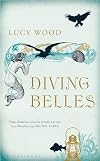
The writing in this collection is really gorgeous, and the tone of the stories really appeal to me. Many of these are bittersweet and not necessarily dark, but not light either. There are magic elements, but they are not treated as fantastic, and most of the stories utilize oceanic imagery. Wood's ability to conjure a scene is fantastic. The details she includes in her descriptions really bring the setting to life.
I do feel that some of the stories sort of end at an awkward spot, almost like show more they are vignettes more than stories. Sometimes they end before I ever really felt like I had grasped what was happening. The title story, 'Diving Belles,' is really the standout. I think it is the one where the characters feel the most real, and the story feels like a story, rather than a scene. It unfolds slowly, which gives you time to acclimate yourself to the world in which the story exists. I also enjoyed 'Of Mothers and Little People' and 'Beachcombing,' both about the relationship between a child (one grown, one small) and a parent/grandparent.
I'm really excited to see what comes next from the author. She reminds me a little of a combination of Graham Joyce and Karen Russell, two of my favorite authors. And I feel like the world could always use more weird, bittersweet, quirky, magical, fairy-tale, fable-based stories. show less
I do feel that some of the stories sort of end at an awkward spot, almost like show more they are vignettes more than stories. Sometimes they end before I ever really felt like I had grasped what was happening. The title story, 'Diving Belles,' is really the standout. I think it is the one where the characters feel the most real, and the story feels like a story, rather than a scene. It unfolds slowly, which gives you time to acclimate yourself to the world in which the story exists. I also enjoyed 'Of Mothers and Little People' and 'Beachcombing,' both about the relationship between a child (one grown, one small) and a parent/grandparent.
I'm really excited to see what comes next from the author. She reminds me a little of a combination of Graham Joyce and Karen Russell, two of my favorite authors. And I feel like the world could always use more weird, bittersweet, quirky, magical, fairy-tale, fable-based stories. show less
Lists
Awards


You May Also Like


Associated Authors
Statistics
- Works
- 4
- Members
- 407
- Popularity
- #59,757
- Rating
- 3.7
- Reviews
- 24
- ISBNs
- 29
- Favorited
- 1