
David O. Stewart
Author of The Summer of 1787: The Men Who Invented the Constitution
About the Author
David O. Stewart turned to writing after a career practicing law in Washington, DC, defending accused criminals and challenging government actions as unconstitutional. He is a national bestselling and award winning author of four previous books on American history. He is formerly the president of show more the Washington Independent Review of Books. show less
Image credit: At the National Book Festival, 2012
Series
Works by David O. Stewart
Impeached: The Trial of President Andrew Johnson and the Fight for Lincoln's Legacy (2009) 325 copies, 10 reviews
Associated Works
MHQ: The Quarterly Journal of Military History — Winter 2013 (2012) — Author "Burr in the Saddle" — 3 copies
Tagged
Common Knowledge
- Legal name
- Stewart, David Overlock
- Birthdate
- 1951-04-02
- Gender
- male
- Education
- Yale University (BA|summa cum laude|1973)
Yale Law School (JD|1978) - Occupations
- lawyer
- Organizations
- American Bar Association (member of task force on double jeopard)
- Relationships
- Stewart, Matt (son)
- Nationality
- USA
- Places of residence
- Washington, D.C., USA
- Associated Place (for map)
- D.C., USA
Members
Reviews
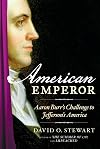
An entertaining popular history of one of the more bizarre episodes in the history of the United States, Stewart examines in extended detail the efforts of Aaron Burr to recoup his fortunes in the wake of the personal disaster that was his duel with Alexander Hamilton and which covered a spectrum of schemes between spearheading a filibustering expedition against Spanish possessions in North America to shaking down Pres. Jefferson for a new role in the administration. The fact of the matter show more is that American tensions with the Spanish government of Carlos V provided an environment in which Burr could spin his intrigues with men also interested in exploiting the situation.
How much of this was merely a confidence scheme that went awry is almost besides the point, in that Burr ultimately wound up before Chief Justice John Marshall, a piece in the institutional and political conflict between Marshall and Jefferson, further burnishing Marshall's reputation and adding to the law governing the rights of U.S. citizens when issues of national security are in play. Stewart's background as a lawyer is invaluable here, as he dissects the realities of 19th century U.S. legal practice, and the defects in the case the U.S. government brought against Burr and his co-conspirators.
The weakness of this book is that Stewart admits that some of his documentation in regards to the intentions of Pres. Jefferson is not as inclusive as it could be, as to a large degree he's depending on the published papers of the president, and that series has not reached the period in question. One does wonder why Jefferson waited so long to act against Burr, and why he was willing to tolerate leaving the dubious personality that was Gen. James Wilkinson in a sensitive position, key elements in the whole story. Though by the end of it Jefferson was no longer so positive about the virtues of secession!
The final irony of the story is that Burr survived long enough to witness the establishment of the Texas Republic, and to feel as though he was a prophet before his time. show less
How much of this was merely a confidence scheme that went awry is almost besides the point, in that Burr ultimately wound up before Chief Justice John Marshall, a piece in the institutional and political conflict between Marshall and Jefferson, further burnishing Marshall's reputation and adding to the law governing the rights of U.S. citizens when issues of national security are in play. Stewart's background as a lawyer is invaluable here, as he dissects the realities of 19th century U.S. legal practice, and the defects in the case the U.S. government brought against Burr and his co-conspirators.
The weakness of this book is that Stewart admits that some of his documentation in regards to the intentions of Pres. Jefferson is not as inclusive as it could be, as to a large degree he's depending on the published papers of the president, and that series has not reached the period in question. One does wonder why Jefferson waited so long to act against Burr, and why he was willing to tolerate leaving the dubious personality that was Gen. James Wilkinson in a sensitive position, key elements in the whole story. Though by the end of it Jefferson was no longer so positive about the virtues of secession!
The final irony of the story is that Burr survived long enough to witness the establishment of the Texas Republic, and to feel as though he was a prophet before his time. show less
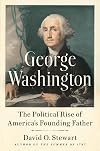
An experienced biographer, historian David O. Stewart focuses on how George Washington became a “master politician,” and how this skill helped him navigate the very treacherous shoals of the early years of the American Republic. The increasingly poisonous atmosphere, especially during Washington’s second term in office, won’t sound so foreign to the current audience.
Stewart devotes most of his attention to Washington’s early years, and especially to those events that defined his show more later character. He recounts Washington's experiences in the French and Indian War; his terms of office in the Virginia House of Burgesses; service as a judge on Fairfax County Court; and commander of armed forces in the American War of Independence. Stewart documents how, over time, Washington gained control over his apparently fierce temper, and learned the importance of building political coalitions and avoiding controversies whenever he could.
Washington, Stewart reports, never minced words about what he wanted: his goal was renown. Moreover, he craved “the regard and esteem” of fellow countrymen. He had a lifelong dread of any smudge on his reputation, and therefore of failure in any of his endeavors. As he wrote to a relative in 1775, “reputation derives it principal support from success.”
Because he needed success to make a good impression, some controversies were more difficult to avoid than others, especially as they directly would determine the outcome of his biggest challenges. One was the matter of getting colonists to cough up money. The Revolution was tied to Americans’ hatred of taxes, a dislike that has never in fact been dented much. And yet, at the same time, Americans wanted much that depended on government funding, such as an army that could repel the British; protection by an army from Natives increasingly unhappy over the usurpation of their land; and roads and other infrastructure that crossed state boundaries. Washington, who spent so many years leading soldiers who had little food, clothes, equipment, and wages, knew firsthand that a resistance to taxation and demand for services were incompatible desires.
Washington’s awareness of the country’s need for money carried over into his presidency, during which he aligned with Alexander Hamilton on fiscal policies that would retire the war debts and get a standardized currency approved. These unpopular measures needed to have the force of law behind them. As Washington observed back in 1778, “Few men are capable of making a continual sacrifice of all views of private interest, or advantage, to the common good.” He went on to aver that no institution relying on that faulty premise would succeed.
Washington had several factors that worked in his favor in the early republic. One was that Americans then, like now, “craved a hero.” It was generally easier to find someone to fill that need who played a military role, in spite of the fact that Washington’s military victories were few and far between. Much of his success in the Revolution could be attributed just to outlasting the British, who were fighting far from home. But as Stewart points out, it was political savvy, rather than military prowess, that was central to Washington’s success. In the internecine battles for control over the army and influence in Congress, Washington was often just the last man left standing.
Washington always wanted to make sure that everyone knew he didn’t want all these responsibilities (a claim belied by his pursuit of them). Thus if he failed, it wasn’t really his fault because he kept trying to turn down all these positions to which he was unanimously elected.
Once he did accept a position, however, he exerted tight control over that institution. Today he would be called a “micro-manager.” He was deeply involved in every aspect of his army and with all the deal-making under his presidential administration, in spite of his seeming reticence publicly. In fact, one interesting passage in this book deals with the famous compromise over war debt assumption by the new country and the location of its capital. Most histories claim that Jefferson somehow engineered the deal at a dinner party; Stewart contends this was largely a re-writing by Jefferson of what happened. It was a long-term process, Stewart avers, and Washington manipulated all of it.
By Washington’s second term, however, Washington was no longer seen as someone who could do no wrong. The country had grown, and dissent had grown along with it. Opponents launched bitter and often untrue attacks on him. Stewart explores the factors that led to this increase in factionalism, including French interference in American politics; the growing rivalry of Jefferson, who co-opted Madison, a former ally of Washington’s, to his cause; and of course, taxes. Washington couldn’t wait to escape the growing acrimony of political life. On the day John Adams was inaugurated as the second president, Adams later wrote that Washington looked “as serene and unclouded as the day.” He added, “Methought I heard him say, ‘Ay! I am fairly out and you fairly in! See which one of us will be happiest!’”
Washington died in 1799 after a difficult illness that started out as a cold. In his will he freed what slaves he could (some were owned by Martha’s estate and not his to free), and provided for care of others. He never made a public condemnation of slavery, however. Stewart speculates that Washington knew how controversial slavery was and didn’t want to damage his standing any further. Stewart also thought Washington must have known he would have sounded hypocritical if he spoke out against slavery. [That consideration never stopped other Founding Fathers, such as Jefferson.] Moreover, Washington never seemed to have awareness of how awful the state of being “owned” must be to another person. When he was younger, for example, traveling to Barbados with his older half-brother Lawrence in 1751, he gushed in his diary about being “ravished” by the beauty of Barbados, the gorgeous mansions, and the great meals, but evinced no awareness of the harsh lives of the slaves there who made all that possible, especially the short-lived workers in the sugar-cane fields. And much later in life, when Martha’s favorite slave Ona Judge ran away, Washington fumed in a letter:
". . . however well disposed I might be to a gradual abolition, or even to an entire emancipation of that description of People (if the latter was in itself practicable at this moment) it would neither be politic or just to reward unfaithfulness with a premature preference; and thereby discontent before hand the minds of all her fellow-servants who by their steady attachments are far more deserving than herself of favor.”
The Washingtons were incensed and offered a reward for Ona's recapture.
In Washington’s view, Ona, who was money walking out his door, was “ungrateful.” What about a desire for freedom? It seems that for Washington, that wasn’t a relevant or legitimate desire for African Americans.
His blindness about “life, liberty, and happiness” for all extended to Native Americans. When fighting against them on America’s then western border, he reported how upset he was over “barbarous” Indians killing settlers - “poor innocent babes and helpless families.” He never considered why they might have acted that way, insofar as they were being evicted from their homelands, and subject to barbarous murders themselves by settlers covetous of Native property.
Stewart doesn’t make these flaws in Washington’s perception and character central, however, choosing to focus instead on Washington’s self-reinvention and political genius, and how he accomplished the former and developed the latter. In that respect, he does a fine job. show less
Stewart devotes most of his attention to Washington’s early years, and especially to those events that defined his show more later character. He recounts Washington's experiences in the French and Indian War; his terms of office in the Virginia House of Burgesses; service as a judge on Fairfax County Court; and commander of armed forces in the American War of Independence. Stewart documents how, over time, Washington gained control over his apparently fierce temper, and learned the importance of building political coalitions and avoiding controversies whenever he could.
Washington, Stewart reports, never minced words about what he wanted: his goal was renown. Moreover, he craved “the regard and esteem” of fellow countrymen. He had a lifelong dread of any smudge on his reputation, and therefore of failure in any of his endeavors. As he wrote to a relative in 1775, “reputation derives it principal support from success.”
Because he needed success to make a good impression, some controversies were more difficult to avoid than others, especially as they directly would determine the outcome of his biggest challenges. One was the matter of getting colonists to cough up money. The Revolution was tied to Americans’ hatred of taxes, a dislike that has never in fact been dented much. And yet, at the same time, Americans wanted much that depended on government funding, such as an army that could repel the British; protection by an army from Natives increasingly unhappy over the usurpation of their land; and roads and other infrastructure that crossed state boundaries. Washington, who spent so many years leading soldiers who had little food, clothes, equipment, and wages, knew firsthand that a resistance to taxation and demand for services were incompatible desires.
Washington’s awareness of the country’s need for money carried over into his presidency, during which he aligned with Alexander Hamilton on fiscal policies that would retire the war debts and get a standardized currency approved. These unpopular measures needed to have the force of law behind them. As Washington observed back in 1778, “Few men are capable of making a continual sacrifice of all views of private interest, or advantage, to the common good.” He went on to aver that no institution relying on that faulty premise would succeed.
Washington had several factors that worked in his favor in the early republic. One was that Americans then, like now, “craved a hero.” It was generally easier to find someone to fill that need who played a military role, in spite of the fact that Washington’s military victories were few and far between. Much of his success in the Revolution could be attributed just to outlasting the British, who were fighting far from home. But as Stewart points out, it was political savvy, rather than military prowess, that was central to Washington’s success. In the internecine battles for control over the army and influence in Congress, Washington was often just the last man left standing.
Washington always wanted to make sure that everyone knew he didn’t want all these responsibilities (a claim belied by his pursuit of them). Thus if he failed, it wasn’t really his fault because he kept trying to turn down all these positions to which he was unanimously elected.
Once he did accept a position, however, he exerted tight control over that institution. Today he would be called a “micro-manager.” He was deeply involved in every aspect of his army and with all the deal-making under his presidential administration, in spite of his seeming reticence publicly. In fact, one interesting passage in this book deals with the famous compromise over war debt assumption by the new country and the location of its capital. Most histories claim that Jefferson somehow engineered the deal at a dinner party; Stewart contends this was largely a re-writing by Jefferson of what happened. It was a long-term process, Stewart avers, and Washington manipulated all of it.
By Washington’s second term, however, Washington was no longer seen as someone who could do no wrong. The country had grown, and dissent had grown along with it. Opponents launched bitter and often untrue attacks on him. Stewart explores the factors that led to this increase in factionalism, including French interference in American politics; the growing rivalry of Jefferson, who co-opted Madison, a former ally of Washington’s, to his cause; and of course, taxes. Washington couldn’t wait to escape the growing acrimony of political life. On the day John Adams was inaugurated as the second president, Adams later wrote that Washington looked “as serene and unclouded as the day.” He added, “Methought I heard him say, ‘Ay! I am fairly out and you fairly in! See which one of us will be happiest!’”
Washington died in 1799 after a difficult illness that started out as a cold. In his will he freed what slaves he could (some were owned by Martha’s estate and not his to free), and provided for care of others. He never made a public condemnation of slavery, however. Stewart speculates that Washington knew how controversial slavery was and didn’t want to damage his standing any further. Stewart also thought Washington must have known he would have sounded hypocritical if he spoke out against slavery. [That consideration never stopped other Founding Fathers, such as Jefferson.] Moreover, Washington never seemed to have awareness of how awful the state of being “owned” must be to another person. When he was younger, for example, traveling to Barbados with his older half-brother Lawrence in 1751, he gushed in his diary about being “ravished” by the beauty of Barbados, the gorgeous mansions, and the great meals, but evinced no awareness of the harsh lives of the slaves there who made all that possible, especially the short-lived workers in the sugar-cane fields. And much later in life, when Martha’s favorite slave Ona Judge ran away, Washington fumed in a letter:
". . . however well disposed I might be to a gradual abolition, or even to an entire emancipation of that description of People (if the latter was in itself practicable at this moment) it would neither be politic or just to reward unfaithfulness with a premature preference; and thereby discontent before hand the minds of all her fellow-servants who by their steady attachments are far more deserving than herself of favor.”
The Washingtons were incensed and offered a reward for Ona's recapture.
In Washington’s view, Ona, who was money walking out his door, was “ungrateful.” What about a desire for freedom? It seems that for Washington, that wasn’t a relevant or legitimate desire for African Americans.
His blindness about “life, liberty, and happiness” for all extended to Native Americans. When fighting against them on America’s then western border, he reported how upset he was over “barbarous” Indians killing settlers - “poor innocent babes and helpless families.” He never considered why they might have acted that way, insofar as they were being evicted from their homelands, and subject to barbarous murders themselves by settlers covetous of Native property.
Stewart doesn’t make these flaws in Washington’s perception and character central, however, choosing to focus instead on Washington’s self-reinvention and political genius, and how he accomplished the former and developed the latter. In that respect, he does a fine job. show less
Review of: George Washington: The Political Rise of America’s Founding Father,
by David O. Stewart
by Stan Prager (1-23-22)
Is another biography of George Washington really necessary? A Google search reveals some nine hundred already exist, not to mention more than five thousand journal articles that chronicle some portion of his life. But the answer turns out to be a resounding yes, and David O. Stewart makes that case magnificently with his latest work, George Washington: The Political show more Rise of America’s Founding Father, an extremely well-written, insightful, and surprisingly innovative contribution to the historiography.
Many years ago, I recall reading the classic study, Washington: The Indispensable Man, by James Thomas Flexner, which looks beyond his achievements to put emphasis on his most extraordinary contribution, defined not by what he did but what he deliberately did not do: seize power and rule as tyrant. This, of course, is no little thing, as seen in the pages of history from Caesar to Napoleon. When told he would resign his commission and surrender power to a civilian government, King George III—who no doubt would have had him hanged (or worse) had the war gone differently—famously declared that "If he does that, he will be the greatest man in the world." Washington demonstrated that greatness again when he voluntarily—you might say eagerly—stepped down after his tenure as President of the United States to retire to private life. Indispensable he was: it is difficult to imagine the course of the American experiment had another served in his place in either of those pivotal roles.
But there is more to Washington than that, and some of it is less than admirable. Notably, there was Washington’s heroic fumble as a young Virginia officer leading colonial forces to warn away the French at what turned into the Battle of Jumonville Glen and helped to spark the French & Indian War. Brash, headstrong, arrogant, thin-skinned, and ever given to an unshakable certitude that his judgment was the sole correct perspective in every matter, the young Washington distinguished himself for his courage and his integrity while at the same time routinely clashing with authority figures, including former mentors that he frequently left exasperated by his demands for recognition.
Biographers tend to visit this period of his life and then fast-forward two decades ahead to the moment when the esteemed if austere middle-aged Washington showed up to the Continental Congress resplendent in his military uniform, the near-unanimous choice to lead the Revolutionary Army in the struggle against Britain. But how did he get here? In most studies, it is not clear. But this is where Stewart shines! The author, whose background is the law rather than academia—he was once a constitutional lawyer who clerked for Supreme Court Justice Lewis Powell, Jr.—has proved himself a brilliant historian in several fine works, including his groundbreaking reassessment of a key episode of the early post-Civil War era, Impeached: The Trial of President Andrew Johnson and the Fight for Lincoln’s Legacy. And in Madison’s Gift: Five Partnerships that Built America, Stewart’s careful research, analytical skills, and intuitive approach successfully resurrected portions of James Madison’s elusive personality that had been otherwise mostly lost to history.
This talent is on display here, as well, as Stewart adeptly examines and interprets Washington’s evolution from Jumonville Glen to Valley Forge. Washington’s own personality is something of a conundrum for biographers, as he can seem to be simultaneously both selfless and self-centered. The young Washington so frequently in turn infuriated and alienated peers and superiors alike that it may strike us as fully remarkable that this is the same individual who could later harness the talents and loyalty of both rival generals during the war and the outsize egos of fellow Founders as the new Republic took shape. Stewart demonstrates that Washington was the author of his own success in this arena, quietly in touch with his strengths and weaknesses while earning respect and cultivating goodwill over the years as he established himself as a key figure in the Commonwealth. Washington himself was not in this regard a changed man as much as he was a more mature man who taught himself to modify his demeanor and his behavior in the company of others for mutual advantage. This too, is no small thing.
The subtitle of this book—The Political Rise of America’s Founding Father—is thus hardly accidental, the latest contribution to a rapidly expanding genre focused upon politics and power, showcased in such works as Jon Meacham’s Thomas Jefferson: The Art of Power, and Robert Dallek’s Franklin D. Roosevelt: A Political Life. Collectively, these studies serve to underscore that politics is ever at the heart of leadership, as well as that great leaders are not born fully formed, but rather evolve and emerge. George Washington perhaps personifies the most salient example of this phenomenon.
The elephant in the room of any examination of Washington—or the other Virginia Founders who championed liberty and equality for that matter—is slavery. Like Jefferson and Madison and a host of others, Washington on various occasions decried the institution of enslaving human beings—while he himself held hundreds as chattel property. Washington is often credited with freeing the enslaved he held direct title to in his will, but that hardly absolves him of the sin of a lifetime of buying, selling, and maintaining an unpaid labor force for nothing less than his own personal gain, especially since he was aware of the moral blemish in doing so. Today’s apologists often caution that is unfair to judge those who walked the earth in the late eighteenth-century by our own contemporary standards, but the reality is that these were Enlightenment-era men that in their own words declared slavery abhorrent while—like Jefferson with his famous “wolf by the ear” cop-out—making excuses to justify participating in and perpetuating a cruel inhumanity that served their own economic self-interests. As biographer, Stewart’s strategy for this dimension of Washington’s life is to treat very little with it in the course of the narrative, while devoting the second to last chapter to a frank and balanced discussion of the ambivalence that governed the thoughts and actions of the master of Mount Vernon. It is neither whitewash nor condemnation.
Stewart’s study is by no means hagiography, but the author clearly admires his subject. Washington gets a pass for his shortcomings at Jumonville, and he is hardly held to strict account for his role as an enslaver. Still, the result of Stewart’s research, analysis, and approach is the most readable and best single-volume account of Washington’s life to date. This is a significant contribution to the scholarship that I suspect will long be deemed required reading.
I reviewed other works by David O. Stewart here:
Review of: Madison’s Gift: Five Partnerships that Built America, by David O. Stewart
Review of: Impeached: The Trial of President Andrew Johnson and the Fight for Lincoln’s Legacy, by David O. Stewart
Review of: George Washington: The Political Rise of America’s Founding Father, by David O. Stewart https://regarp.com/2022/01/23/review-of-george-washington-the-political-rise-of-... show less
by David O. Stewart
by Stan Prager (1-23-22)
Is another biography of George Washington really necessary? A Google search reveals some nine hundred already exist, not to mention more than five thousand journal articles that chronicle some portion of his life. But the answer turns out to be a resounding yes, and David O. Stewart makes that case magnificently with his latest work, George Washington: The Political show more Rise of America’s Founding Father, an extremely well-written, insightful, and surprisingly innovative contribution to the historiography.
Many years ago, I recall reading the classic study, Washington: The Indispensable Man, by James Thomas Flexner, which looks beyond his achievements to put emphasis on his most extraordinary contribution, defined not by what he did but what he deliberately did not do: seize power and rule as tyrant. This, of course, is no little thing, as seen in the pages of history from Caesar to Napoleon. When told he would resign his commission and surrender power to a civilian government, King George III—who no doubt would have had him hanged (or worse) had the war gone differently—famously declared that "If he does that, he will be the greatest man in the world." Washington demonstrated that greatness again when he voluntarily—you might say eagerly—stepped down after his tenure as President of the United States to retire to private life. Indispensable he was: it is difficult to imagine the course of the American experiment had another served in his place in either of those pivotal roles.
But there is more to Washington than that, and some of it is less than admirable. Notably, there was Washington’s heroic fumble as a young Virginia officer leading colonial forces to warn away the French at what turned into the Battle of Jumonville Glen and helped to spark the French & Indian War. Brash, headstrong, arrogant, thin-skinned, and ever given to an unshakable certitude that his judgment was the sole correct perspective in every matter, the young Washington distinguished himself for his courage and his integrity while at the same time routinely clashing with authority figures, including former mentors that he frequently left exasperated by his demands for recognition.
Biographers tend to visit this period of his life and then fast-forward two decades ahead to the moment when the esteemed if austere middle-aged Washington showed up to the Continental Congress resplendent in his military uniform, the near-unanimous choice to lead the Revolutionary Army in the struggle against Britain. But how did he get here? In most studies, it is not clear. But this is where Stewart shines! The author, whose background is the law rather than academia—he was once a constitutional lawyer who clerked for Supreme Court Justice Lewis Powell, Jr.—has proved himself a brilliant historian in several fine works, including his groundbreaking reassessment of a key episode of the early post-Civil War era, Impeached: The Trial of President Andrew Johnson and the Fight for Lincoln’s Legacy. And in Madison’s Gift: Five Partnerships that Built America, Stewart’s careful research, analytical skills, and intuitive approach successfully resurrected portions of James Madison’s elusive personality that had been otherwise mostly lost to history.
This talent is on display here, as well, as Stewart adeptly examines and interprets Washington’s evolution from Jumonville Glen to Valley Forge. Washington’s own personality is something of a conundrum for biographers, as he can seem to be simultaneously both selfless and self-centered. The young Washington so frequently in turn infuriated and alienated peers and superiors alike that it may strike us as fully remarkable that this is the same individual who could later harness the talents and loyalty of both rival generals during the war and the outsize egos of fellow Founders as the new Republic took shape. Stewart demonstrates that Washington was the author of his own success in this arena, quietly in touch with his strengths and weaknesses while earning respect and cultivating goodwill over the years as he established himself as a key figure in the Commonwealth. Washington himself was not in this regard a changed man as much as he was a more mature man who taught himself to modify his demeanor and his behavior in the company of others for mutual advantage. This too, is no small thing.
The subtitle of this book—The Political Rise of America’s Founding Father—is thus hardly accidental, the latest contribution to a rapidly expanding genre focused upon politics and power, showcased in such works as Jon Meacham’s Thomas Jefferson: The Art of Power, and Robert Dallek’s Franklin D. Roosevelt: A Political Life. Collectively, these studies serve to underscore that politics is ever at the heart of leadership, as well as that great leaders are not born fully formed, but rather evolve and emerge. George Washington perhaps personifies the most salient example of this phenomenon.
The elephant in the room of any examination of Washington—or the other Virginia Founders who championed liberty and equality for that matter—is slavery. Like Jefferson and Madison and a host of others, Washington on various occasions decried the institution of enslaving human beings—while he himself held hundreds as chattel property. Washington is often credited with freeing the enslaved he held direct title to in his will, but that hardly absolves him of the sin of a lifetime of buying, selling, and maintaining an unpaid labor force for nothing less than his own personal gain, especially since he was aware of the moral blemish in doing so. Today’s apologists often caution that is unfair to judge those who walked the earth in the late eighteenth-century by our own contemporary standards, but the reality is that these were Enlightenment-era men that in their own words declared slavery abhorrent while—like Jefferson with his famous “wolf by the ear” cop-out—making excuses to justify participating in and perpetuating a cruel inhumanity that served their own economic self-interests. As biographer, Stewart’s strategy for this dimension of Washington’s life is to treat very little with it in the course of the narrative, while devoting the second to last chapter to a frank and balanced discussion of the ambivalence that governed the thoughts and actions of the master of Mount Vernon. It is neither whitewash nor condemnation.
Stewart’s study is by no means hagiography, but the author clearly admires his subject. Washington gets a pass for his shortcomings at Jumonville, and he is hardly held to strict account for his role as an enslaver. Still, the result of Stewart’s research, analysis, and approach is the most readable and best single-volume account of Washington’s life to date. This is a significant contribution to the scholarship that I suspect will long be deemed required reading.
I reviewed other works by David O. Stewart here:
Review of: Madison’s Gift: Five Partnerships that Built America, by David O. Stewart
Review of: Impeached: The Trial of President Andrew Johnson and the Fight for Lincoln’s Legacy, by David O. Stewart
Review of: George Washington: The Political Rise of America’s Founding Father, by David O. Stewart https://regarp.com/2022/01/23/review-of-george-washington-the-political-rise-of-... show less
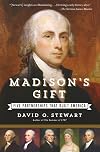
Review of: Madison’s Gift: Five Partnerships that Built America, by David O. Stewart
by Stan Prager (10-17-18)
One of my favored methods for exploring United States history is through the biographies of American presidents, which often provide a critical lens to their respective eras. I have read books on some eighteen of the forty-four men who have held that office to date, and my personal library contains volumes for all of them. More than once I have entertained the notion of reading show more them in chronological order, but each attempt stumbled on James Madison, number four on the list. One of the most prominent figures of the early Republic—a celebrated Founder who long before he was Chief Executive was renowned as “Father of the Constitution,” key author of the Federalist Papers, member of Congress, partner to Jefferson in creating the first political party, Secretary of State, and so much more—Madison has largely defied biographers because despite his distinguished achievements his elusive personality has somehow mostly been lost to history. We know so much about him, but so little of him. Thus, most attempts at biography drape enormous scholarship over a somewhat colorless outline of the man, and the final product tends to the dull and uninspiring, hardly doing justice to one of the greatest figures of his day.
Fortunately, David O. Stewart has come along with Madison’s Gift: Five Partnerships that Built America, a fresh and unique approach that relies upon key interactions with those whom Madison worked most closely with to sketch in many otherwise obscure contours of a fascinating if somewhat enigmatic character. Madison was physically tiny, and some have sought to cleverly contrast his diminutive size by casting him as a giant of a statesman, but it might be more accurate to instead emphasize his outsize role in the shadows of more flamboyant figures. That is the tack Stewart takes here by examining what we can learn about James Madison from his critical relationships with four other significant Founders—Washington, Hamilton, Jefferson and Monroe—and with his own wife, Dolley. In the process, Stewart crafts an episodic, well-written narrative that also serves as a kind of standalone history of key events in the early Republic.
Madison’s work with Hamilton as they teamed up as chief authors of the Federalist Papers and framers of the new Constitution—one that deeply alarmed those who jealously guarded state sovereignty—is a familiar story. Also much chronicled has been Madison’s long association with fellow-Virginian Jefferson, one that gained strength as they privately connived to turn “faction”—which was widely disparaged as odious—into a legitimate political party. The product of their collaboration was the (first) Republican Party, which was to supplant the rival Federalists identified with Washington, Adams and Hamilton, and go on to dominate the nation’s political landscape for three decades to come.
Less studied but perhaps no less relevant was the close relationship Madison formed with Washington, as speechwriter, advisor and trusted confidante. Alas, this rapport was not to last, as Madison went off to serve in the nation’s first Congress, and Washington spent much of the first several years of his tenure contending with the bitter rivalry between Hamilton and Jefferson, key cabinet members who represented two competing views of the role the federal government should play in the life of the new Republic. Madison stood on both sides of many of these issues, at least initially, but over time he was to align ever more in lockstep with Jefferson and thus increasingly in enmity with Hamilton, eventually alienating Washington by extension. One cannot help but wonder at alternative outcomes had Madison been part of that first cabinet rather than serving as legislator outside of Washington’s direct orbit.
Madison’s relationship with Monroe, another fellow Virginian and slightly younger contemporary, was in many ways far more complicated. Monroe—proud, ultrasensitive, and less cerebral than Madison or the others—was nevertheless a gifted negotiator and strong leader. Sometime rivals, what turned out to be a long association managed to survive strains and even fractures. It is in their on-again off-again alliance that Madison’s willingness to cede center-stage to those seeking the spotlight while nevertheless quietly and skillfully directing the action behind the scenes is made most evident. It was not that Madison was unambitious—he hardly could have achieved offices like Secretary of State or President if that was the case—but unlike many of his peers he did not wear this ambition as a badge, but was content to sidestep the jockeying for recognition that so obsessed the others, while he brilliantly if unobtrusively maneuvered for influence and power. Stewart’s portrait of Madison ever engaged in partnerships is not simply a narrative device; Madison genuinely thrived in these relationships. It may be that Madison has eluded us for so long largely because his other biographers have overlooked the centrality of this key ingredient.
As Madison’s Gift reveals, his “partnership” with Dolley was no less consequential than with those other notables. Madison was middle-aged when he met and married the much younger and taller winsome widow who was to forever define the role that would later be dubbed “First Lady.” It is only through her that we can better discern the man behind the curtain, who was apparently in the semi-privacy of his extended family quite playful and romantic, given to wine, a wicked sense humor, and even foot races. Stewart shares a delightful anecdote in which “Dolley, who was ‘stronger as well as larger than he,’ sometimes ‘could – and did – seize his hands, draw him upon her back, and go round the room with him.’” Finally, a palpable glimpse of the flesh-and-blood Madison that once walked the earth!
Stewart plainly admires his subject, but this is no hagiography; slaveowner Madison gets no pass from the author in this regard. The scholarly consensus is that by far the greatest flaw of the Founders was their collective failure to address the institution of human chattel slavery, which led directly to the Civil War that was to cost more than six hundred thousand American lives, and Madison was more than complicit in this later catastrophe. The once much-heralded three-fifths compromise that counted enslaved human beings as partial people for the purposes of representation was a cheat that evaded the existential crisis ahead. The Founding generation was evidently deeply disturbed by the contradictions in their own cries for liberty and equality when juxtaposed with what they themselves clearly acknowledged as an immense evil. We have ample evidence of these great men—Patrick Henry, Washington, Jefferson and indeed Madison—decrying slavery while failing to combat it. The striking ambivalence is perhaps best articulated in Jefferson’s famous “wolf by the ear” analogy that sounds more like an excuse than a rationale. For the sake of his own legacy, Washington had the good fortune to die before the eighteenth century expired while manumitting his slaves in his will. Jefferson and Madison lived on with their human property to bob-and-weave intellectually, while toying with African colonization schemes, and ever making excuses against abolition. Indeed, later in life Madison actually went on record blaming abolitionists for spawning crises rather than slaveowners for enabling a morally abhorrent system that hardly shielded them from the ever-looming debt and bankruptcy that the planter aristocracy rode upon.
Madison’s Gift revisits the elderly statesman’s final public role as representative to the Virginia Constitutional Convention of 1829 that also featured other ancient stand-ins from the early days of the Republic such as John Marshall and Monroe. The revered Madison appeared anachronistically clad in eighteenth-century attire in what turned out to be an epic failure to address slavery, representation, and a more equitable expansion of the franchise. He also lived through the Virginia House of Delegates sessions of 1831-32 that debated abolition, but was not a participant. [Each of these grand missed opportunities is covered in great detail in Susan Dunn’s magnificent Dominion of Memories: Jefferson, Madison & the Decline of Virginia.]
When Madison died in 1836, he had outlived nearly everyone of significance of his era (Aaron Burr passed only a few months later), but this great issue of human bondage lingered. Only twenty-five years later, the Republic was ripped asunder over it. To make matters worse, Jefferson’s cries during the crisis over the Alien & Sedition Acts that a state might resist federal laws—a notion Madison seemed to echo, with a pronounced nuance others overlooked—regained a stubborn currency in the march to secession. With a tragic irony, the great Madison, who had done so much to make and give polish to the new nation, left behind sharp edges for another generation to fashion into weapons wielded to sever and unmake it.
I first encountered the Stewart in his earlier work, Impeached: The Trial of President Andrew Johnson and the Fight for Lincoln’s Legacy, which introduced a brilliant new perspective that unsettled established historiography. This accomplishment is made even more impressive by the fact that the author is not a trained historian, but an attorney! That this achievement was no fluke is powerfully demonstrated in Madison’s Gift, a superb contribution to history and biography that significantly furthers our interpretation of the figures that peopled the early Republic. And, thanks to Stewart, I can check off Madison and resume my chronological challenge: now it’s on to Monroe!
[My review of: Impeached: The Trial of President Andrew Johnson and the Fight for Lincoln’s Legacy, by David O. Stewart, is here: https://regarp.com/2017/02/19/review-of-impeached-the-trial-of-president-andrew-...
[My review of: Dominion of Memories: Jefferson, Madison & the Decline of Virginia by Susan Dunn, is here: https://regarp.com/2015/02/09/review-of-dominion-of-memories-jefferson-madison-t...
Review of: Madison’s Gift: Five Partnerships that Built America, by David O. Stewart https://regarp.com/2018/10/17/review-of-madisons-gift-five-partnerships-that-bui... show less
by Stan Prager (10-17-18)
One of my favored methods for exploring United States history is through the biographies of American presidents, which often provide a critical lens to their respective eras. I have read books on some eighteen of the forty-four men who have held that office to date, and my personal library contains volumes for all of them. More than once I have entertained the notion of reading show more them in chronological order, but each attempt stumbled on James Madison, number four on the list. One of the most prominent figures of the early Republic—a celebrated Founder who long before he was Chief Executive was renowned as “Father of the Constitution,” key author of the Federalist Papers, member of Congress, partner to Jefferson in creating the first political party, Secretary of State, and so much more—Madison has largely defied biographers because despite his distinguished achievements his elusive personality has somehow mostly been lost to history. We know so much about him, but so little of him. Thus, most attempts at biography drape enormous scholarship over a somewhat colorless outline of the man, and the final product tends to the dull and uninspiring, hardly doing justice to one of the greatest figures of his day.
Fortunately, David O. Stewart has come along with Madison’s Gift: Five Partnerships that Built America, a fresh and unique approach that relies upon key interactions with those whom Madison worked most closely with to sketch in many otherwise obscure contours of a fascinating if somewhat enigmatic character. Madison was physically tiny, and some have sought to cleverly contrast his diminutive size by casting him as a giant of a statesman, but it might be more accurate to instead emphasize his outsize role in the shadows of more flamboyant figures. That is the tack Stewart takes here by examining what we can learn about James Madison from his critical relationships with four other significant Founders—Washington, Hamilton, Jefferson and Monroe—and with his own wife, Dolley. In the process, Stewart crafts an episodic, well-written narrative that also serves as a kind of standalone history of key events in the early Republic.
Madison’s work with Hamilton as they teamed up as chief authors of the Federalist Papers and framers of the new Constitution—one that deeply alarmed those who jealously guarded state sovereignty—is a familiar story. Also much chronicled has been Madison’s long association with fellow-Virginian Jefferson, one that gained strength as they privately connived to turn “faction”—which was widely disparaged as odious—into a legitimate political party. The product of their collaboration was the (first) Republican Party, which was to supplant the rival Federalists identified with Washington, Adams and Hamilton, and go on to dominate the nation’s political landscape for three decades to come.
Less studied but perhaps no less relevant was the close relationship Madison formed with Washington, as speechwriter, advisor and trusted confidante. Alas, this rapport was not to last, as Madison went off to serve in the nation’s first Congress, and Washington spent much of the first several years of his tenure contending with the bitter rivalry between Hamilton and Jefferson, key cabinet members who represented two competing views of the role the federal government should play in the life of the new Republic. Madison stood on both sides of many of these issues, at least initially, but over time he was to align ever more in lockstep with Jefferson and thus increasingly in enmity with Hamilton, eventually alienating Washington by extension. One cannot help but wonder at alternative outcomes had Madison been part of that first cabinet rather than serving as legislator outside of Washington’s direct orbit.
Madison’s relationship with Monroe, another fellow Virginian and slightly younger contemporary, was in many ways far more complicated. Monroe—proud, ultrasensitive, and less cerebral than Madison or the others—was nevertheless a gifted negotiator and strong leader. Sometime rivals, what turned out to be a long association managed to survive strains and even fractures. It is in their on-again off-again alliance that Madison’s willingness to cede center-stage to those seeking the spotlight while nevertheless quietly and skillfully directing the action behind the scenes is made most evident. It was not that Madison was unambitious—he hardly could have achieved offices like Secretary of State or President if that was the case—but unlike many of his peers he did not wear this ambition as a badge, but was content to sidestep the jockeying for recognition that so obsessed the others, while he brilliantly if unobtrusively maneuvered for influence and power. Stewart’s portrait of Madison ever engaged in partnerships is not simply a narrative device; Madison genuinely thrived in these relationships. It may be that Madison has eluded us for so long largely because his other biographers have overlooked the centrality of this key ingredient.
As Madison’s Gift reveals, his “partnership” with Dolley was no less consequential than with those other notables. Madison was middle-aged when he met and married the much younger and taller winsome widow who was to forever define the role that would later be dubbed “First Lady.” It is only through her that we can better discern the man behind the curtain, who was apparently in the semi-privacy of his extended family quite playful and romantic, given to wine, a wicked sense humor, and even foot races. Stewart shares a delightful anecdote in which “Dolley, who was ‘stronger as well as larger than he,’ sometimes ‘could – and did – seize his hands, draw him upon her back, and go round the room with him.’” Finally, a palpable glimpse of the flesh-and-blood Madison that once walked the earth!
Stewart plainly admires his subject, but this is no hagiography; slaveowner Madison gets no pass from the author in this regard. The scholarly consensus is that by far the greatest flaw of the Founders was their collective failure to address the institution of human chattel slavery, which led directly to the Civil War that was to cost more than six hundred thousand American lives, and Madison was more than complicit in this later catastrophe. The once much-heralded three-fifths compromise that counted enslaved human beings as partial people for the purposes of representation was a cheat that evaded the existential crisis ahead. The Founding generation was evidently deeply disturbed by the contradictions in their own cries for liberty and equality when juxtaposed with what they themselves clearly acknowledged as an immense evil. We have ample evidence of these great men—Patrick Henry, Washington, Jefferson and indeed Madison—decrying slavery while failing to combat it. The striking ambivalence is perhaps best articulated in Jefferson’s famous “wolf by the ear” analogy that sounds more like an excuse than a rationale. For the sake of his own legacy, Washington had the good fortune to die before the eighteenth century expired while manumitting his slaves in his will. Jefferson and Madison lived on with their human property to bob-and-weave intellectually, while toying with African colonization schemes, and ever making excuses against abolition. Indeed, later in life Madison actually went on record blaming abolitionists for spawning crises rather than slaveowners for enabling a morally abhorrent system that hardly shielded them from the ever-looming debt and bankruptcy that the planter aristocracy rode upon.
Madison’s Gift revisits the elderly statesman’s final public role as representative to the Virginia Constitutional Convention of 1829 that also featured other ancient stand-ins from the early days of the Republic such as John Marshall and Monroe. The revered Madison appeared anachronistically clad in eighteenth-century attire in what turned out to be an epic failure to address slavery, representation, and a more equitable expansion of the franchise. He also lived through the Virginia House of Delegates sessions of 1831-32 that debated abolition, but was not a participant. [Each of these grand missed opportunities is covered in great detail in Susan Dunn’s magnificent Dominion of Memories: Jefferson, Madison & the Decline of Virginia.]
When Madison died in 1836, he had outlived nearly everyone of significance of his era (Aaron Burr passed only a few months later), but this great issue of human bondage lingered. Only twenty-five years later, the Republic was ripped asunder over it. To make matters worse, Jefferson’s cries during the crisis over the Alien & Sedition Acts that a state might resist federal laws—a notion Madison seemed to echo, with a pronounced nuance others overlooked—regained a stubborn currency in the march to secession. With a tragic irony, the great Madison, who had done so much to make and give polish to the new nation, left behind sharp edges for another generation to fashion into weapons wielded to sever and unmake it.
I first encountered the Stewart in his earlier work, Impeached: The Trial of President Andrew Johnson and the Fight for Lincoln’s Legacy, which introduced a brilliant new perspective that unsettled established historiography. This accomplishment is made even more impressive by the fact that the author is not a trained historian, but an attorney! That this achievement was no fluke is powerfully demonstrated in Madison’s Gift, a superb contribution to history and biography that significantly furthers our interpretation of the figures that peopled the early Republic. And, thanks to Stewart, I can check off Madison and resume my chronological challenge: now it’s on to Monroe!
[My review of: Impeached: The Trial of President Andrew Johnson and the Fight for Lincoln’s Legacy, by David O. Stewart, is here: https://regarp.com/2017/02/19/review-of-impeached-the-trial-of-president-andrew-...
[My review of: Dominion of Memories: Jefferson, Madison & the Decline of Virginia by Susan Dunn, is here: https://regarp.com/2015/02/09/review-of-dominion-of-memories-jefferson-madison-t...
Review of: Madison’s Gift: Five Partnerships that Built America, by David O. Stewart https://regarp.com/2018/10/17/review-of-madisons-gift-five-partnerships-that-bui... show less
Lists
Awards

You May Also Like


Associated Authors
Statistics
- Works
- 12
- Also by
- 1
- Members
- 1,645
- Popularity
- #15,615
- Rating
- 3.9
- Reviews
- 44
- ISBNs
- 50
