
Javier Sierra
Author of The Secret Supper
About the Author
Works by Javier Sierra
Plan maestro , El 2 copies
Záhady historie, které řídí naše kroky : proroctví, ztracené civilizace a skrytá znamení (2012) 2 copies, 1 review
Tecnicas de contacto extraterrestre 2 copies
Taynata becheria: roman 1 copy
O mystikós deípnos 1 copy
Associated Works
Tagged
Common Knowledge
- Canonical name
- Sierra, Javier
- Birthdate
- 1971-08-11
- Gender
- male
- Education
- Complutense University of Madrid
- Occupations
- editor
journalist
writer
researcher - Organizations
- Más allá de la Ciencia
- Nationality
- Spain
- Birthplace
- Teruel, Spain
- Places of residence
- Malaga, Spain
- Associated Place (for map)
- Spain
Members
Reviews
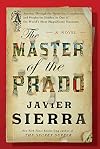
I didn't finish this book and that is why I bumped it up to two stars. Maybe something well-written or interesting happened in the 180 pages I did not read. I am a Spanish major who studied in Madrid and took classes at the Prado during my time at the Complutense (all discussed in this book) and it was still so boring to me, I couldn't finish it. This book is almost a miracle- how is it possible to have many characters and no story? Many places but no setting? Maybe this book is a true work show more of art- but it's not something I could see. I felt like I was watching a painting show on tv where the guy paints for hours and then they turn the canvas around to reveal the painting and it's a stick figure holding a stick ice cream cone. My adored Prado and my beloved Madrid deserve a better book than this! show less

This short read (around 130 pages) left me with mixed feelings.
First when the book starts with linking of coming end of the world and last year pandemic .... I truly want to puke. In situation where data provided looks like statisticians wet dream in which they drill in, out, all over the place without giving the total context of events (imagine software engineer showing you what you can do for-loop over and over again, because it is cool, heey you can go backward too but without the context show more for use), when author starts to use words like millions of deaths (like it was at least 50% and not 2.2% of 2.4% of world population - these number games only obfuscate actual numbers which are real tragedy in itself) I usually tend to close the book, shutdown TV and go for a walk. Because life is too short and mind to fragile to listen to panicky fear-mongers. I know, it is book, it tries to get readers interest. But this sounds like a very cheap shot. You want true horror related to pandemics - then write it as Crichton's "Andromeda Strain" or Cook's "Outbreak". But I am getting off topic.....
So that was my first reflex. But I was feeling kinda tired and due to warm weather could not sleep so I decided to give it a shot. After all it is short read.
And, melodrama aside ..... book was interesting and I actually learned quite a few things. Written as a birthday letter to a niece sometime in 2020, it is a story of human civilization and how it evolved. Through it various scientists and eminent names are mentioned and we are given a framework that shows how we on Earth (and Earth itself) are part of the much greater universe and how every outside effect like cosmic rays have enduring effect on Earth's flora and fauna.
Written in very crisp prose we are taken from the very beginnings to the modern era and shown how life is not to be looked as good or bad - life is .... life. It has its own path and motivations and any change that to us can look devastating plays a part in further evolution of life.
Only for these references and fact that story is told from the perspective of the eternal immortal (I am sucker for this type of story) this book was 4 stars.
But for melodramatic elements it is 3. Author finally manages to balance the oh-my-god-we-are-all-gonna-die with normal approach to life events (I like aunt's lectures on hysteria and fear). In my opinion this takes place too late in the book and causes entire book to feel too .... cheesy? I mean you end up in backwoods of France and you find people who seem to have read all major philosophical works and speak at least two classic languages - if this isn't weird I don't know what is, artistic freedom aside.
Interesting book. If you can go over the melodrama and the fact that book does not have standard structure and feels more like a [very] brief overview of human civilization (again, keep in mind this is single letter content after all) there is lot to learn here [which was very, very pleasant surprise]. show less
First when the book starts with linking of coming end of the world and last year pandemic .... I truly want to puke. In situation where data provided looks like statisticians wet dream in which they drill in, out, all over the place without giving the total context of events (imagine software engineer showing you what you can do for-loop over and over again, because it is cool, heey you can go backward too but without the context show more for use), when author starts to use words like millions of deaths (like it was at least 50% and not 2.2% of 2.4% of world population - these number games only obfuscate actual numbers which are real tragedy in itself) I usually tend to close the book, shutdown TV and go for a walk. Because life is too short and mind to fragile to listen to panicky fear-mongers. I know, it is book, it tries to get readers interest. But this sounds like a very cheap shot. You want true horror related to pandemics - then write it as Crichton's "Andromeda Strain" or Cook's "Outbreak". But I am getting off topic.....
So that was my first reflex. But I was feeling kinda tired and due to warm weather could not sleep so I decided to give it a shot. After all it is short read.
And, melodrama aside ..... book was interesting and I actually learned quite a few things. Written as a birthday letter to a niece sometime in 2020, it is a story of human civilization and how it evolved. Through it various scientists and eminent names are mentioned and we are given a framework that shows how we on Earth (and Earth itself) are part of the much greater universe and how every outside effect like cosmic rays have enduring effect on Earth's flora and fauna.
Written in very crisp prose we are taken from the very beginnings to the modern era and shown how life is not to be looked as good or bad - life is .... life. It has its own path and motivations and any change that to us can look devastating plays a part in further evolution of life.
Only for these references and fact that story is told from the perspective of the eternal immortal (I am sucker for this type of story) this book was 4 stars.
But for melodramatic elements it is 3. Author finally manages to balance the oh-my-god-we-are-all-gonna-die with normal approach to life events (I like aunt's lectures on hysteria and fear). In my opinion this takes place too late in the book and causes entire book to feel too .... cheesy? I mean you end up in backwoods of France and you find people who seem to have read all major philosophical works and speak at least two classic languages - if this isn't weird I don't know what is, artistic freedom aside.
Interesting book. If you can go over the melodrama and the fact that book does not have standard structure and feels more like a [very] brief overview of human civilization (again, keep in mind this is single letter content after all) there is lot to learn here [which was very, very pleasant surprise]. show less

A well written historical suspense book about the Cathars. The premises are believable, and the historical detail well researched.
I rather suspect that this would not have been published in English if it weren't for the Da Vinci Code. Which is about the first positive thing I've ever said about that book. Even if you have had an overdose of Leonardo Da Vinci and Mary Magdalene, you might want to give this one a chance.
I rather suspect that this would not have been published in English if it weren't for the Da Vinci Code. Which is about the first positive thing I've ever said about that book. Even if you have had an overdose of Leonardo Da Vinci and Mary Magdalene, you might want to give this one a chance.
An interesting and somewhat compelling tale of 15th-Century murder and mystery surrounding Leonardo Da Vinci's painting The Last Supper. It's a very interesting and informative narrative that takes in secrets, codes, symbology and 15th-Century culture and politics. It moves along reasonably well but seems to finish a little anti-climatically.
Lists
Awards


You May Also Like


Associated Authors
Statistics
- Works
- 36
- Also by
- 1
- Members
- 3,870
- Popularity
- #6,548
- Rating
- 3.3
- Reviews
- 154
- ISBNs
- 327
- Languages
- 29
- Favorited
- 2

