
Neal Gabler
Author of Walt Disney: The Triumph of the American Imagination
About the Author
Image credit: Laurel Gabler
Works by Neal Gabler
Barbra Streisand: Redefining Beauty, Femininity, and Power (Jewish Lives) (2016) 69 copies, 2 reviews
Disney: Povestea Jucariilor 1 copy
Disney: Compania Monstrilor 1 copy
Tagged
Common Knowledge
- Birthdate
- 1944
- Gender
- male
- Agent
- Joy Harris
- Nationality
- USA
- Associated Place (for map)
- USA
Members
Reviews
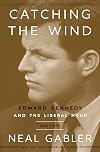
I don't know when I was more moved by a biography. I was inspired and I suffered and cried along with Ted Kennedy. I was informed and I understood how we got to 'here'.
The "Shakespearean tragedy" of the Kennedy family is experienced through this youngest son. The most affable Kennedy, the pleaser, the people person, the least son, inherited a heavy mantle.
When President Kennedy was assassinated, Bobby took up his cause and legacy, grew into the liberal leader role with a heightened moral show more awareness. And when Bobby was assassinated, it was up to Ted to finish their work, and he became the liberal lion of the Senate, the moral consciousness of America politics.
Neal Gabler's biography Catching the Wind reads like a epic poem, the flawed hero doing battle for the least and the lost. The story is a tragedy, the hero's fatal flaws bringing his downfall, but in this story, the hero gets up over and over to take up the sword once more.
This volume delves deeply into the Kennedy family character and history as the formation for the development of the children.
Finding his way to the Senate, Ted found his place in life, but the pressure to run for the presidency was both a siren call and a warning. Ted was sure he would be the target of one more assassin's bullet.
Ted was a workaholic, and a drinker, and he had girlfriends and a wife who felt lost and, like her parents, resorted to alcohol. Then there was the encounter with the bridge on an island that gave his enemies the weapon they needed.
Liberalism has been under attack for most of my adult life. I embraced it since mock voting in junior high; a classmate explained that Goldwater was a hawk and LBJ wanted to end poverty. My faith and my politics embraced the values of fighting for the meek and the weak and the downtrodden and the stranger and the impoverished.
Following Ted Kennedy's career, Garbler shows how racism and fear led to the rise of 'law and order' after the social unrest of the 1960s, the anti-war and black rebellions in the cities.
I lived through much of this history, my first awareness of politics coming with John Kennedy's presidential run, Ted's nightmare Chappaquiddick occuring when I was in college, the Watergate break-in carried out on my wedding night.
As a teenager I was resentful of these conflicts and the pressure to politicize my life when all I wanted was to 'grow up'. I was also sympathetic, for I had seen the inner city and the racism espoused by working class neighbors. I was too naive to understand the racist implications of 'law and order'. And as I entered young adulthood, I watched in dismay as liberalism was abandoned by Americans.
Joe McCarthy's fear-mongering populism, Nixon's deep hatred of all persons Kennedy leading to his dirty tricks, and the fact that America ultimately rejected them, brings some hope that we can and will do so again.
I can not wait for Garbler's second volume. I usually read several books at a time, but I was so immersed in Catching the Wind I could not read anything else.
I received a free ebook from the publisher through NetGalley. My review is fair and unbiased. show less
The "Shakespearean tragedy" of the Kennedy family is experienced through this youngest son. The most affable Kennedy, the pleaser, the people person, the least son, inherited a heavy mantle.
When President Kennedy was assassinated, Bobby took up his cause and legacy, grew into the liberal leader role with a heightened moral show more awareness. And when Bobby was assassinated, it was up to Ted to finish their work, and he became the liberal lion of the Senate, the moral consciousness of America politics.
Neal Gabler's biography Catching the Wind reads like a epic poem, the flawed hero doing battle for the least and the lost. The story is a tragedy, the hero's fatal flaws bringing his downfall, but in this story, the hero gets up over and over to take up the sword once more.
This volume delves deeply into the Kennedy family character and history as the formation for the development of the children.
Finding his way to the Senate, Ted found his place in life, but the pressure to run for the presidency was both a siren call and a warning. Ted was sure he would be the target of one more assassin's bullet.
Ted was a workaholic, and a drinker, and he had girlfriends and a wife who felt lost and, like her parents, resorted to alcohol. Then there was the encounter with the bridge on an island that gave his enemies the weapon they needed.
Liberalism has been under attack for most of my adult life. I embraced it since mock voting in junior high; a classmate explained that Goldwater was a hawk and LBJ wanted to end poverty. My faith and my politics embraced the values of fighting for the meek and the weak and the downtrodden and the stranger and the impoverished.
Following Ted Kennedy's career, Garbler shows how racism and fear led to the rise of 'law and order' after the social unrest of the 1960s, the anti-war and black rebellions in the cities.
I lived through much of this history, my first awareness of politics coming with John Kennedy's presidential run, Ted's nightmare Chappaquiddick occuring when I was in college, the Watergate break-in carried out on my wedding night.
As a teenager I was resentful of these conflicts and the pressure to politicize my life when all I wanted was to 'grow up'. I was also sympathetic, for I had seen the inner city and the racism espoused by working class neighbors. I was too naive to understand the racist implications of 'law and order'. And as I entered young adulthood, I watched in dismay as liberalism was abandoned by Americans.
Joe McCarthy's fear-mongering populism, Nixon's deep hatred of all persons Kennedy leading to his dirty tricks, and the fact that America ultimately rejected them, brings some hope that we can and will do so again.
I can not wait for Garbler's second volume. I usually read several books at a time, but I was so immersed in Catching the Wind I could not read anything else.
I received a free ebook from the publisher through NetGalley. My review is fair and unbiased. show less
Neal Gabler is an exemplary author who well-defined the context of Edward Kennedy. I read books on US history from the thirties to the seventies, but I am amazed at what I didn't know.
Not only did I learn about Edward Kennedy, I learned about the world I grew up in, a kid from the seventies.
Also, the political decisions made in the decades before--especially healthcare--have formed the buttress we are fighting now.
I grew up with a negative opinion of Senator Kennedy based on my parents' show more biases. I changed my mind in my fifties when I began to hear good things about him. I am glad I read this outstanding book. I hope I can get ahold of the second volume of this set. show less
Not only did I learn about Edward Kennedy, I learned about the world I grew up in, a kid from the seventies.
Also, the political decisions made in the decades before--especially healthcare--have formed the buttress we are fighting now.
I grew up with a negative opinion of Senator Kennedy based on my parents' show more biases. I changed my mind in my fifties when I began to hear good things about him. I am glad I read this outstanding book. I hope I can get ahold of the second volume of this set. show less
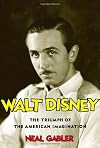
It was never really about the money... well, almost never. Walt Disney was always more interested in "the next thing," and making money on a venture was usually just a way to finance his projects. Initially drawn to drawing and animation but burned by dishonest partners, he created his own studio to produce animated "shorts" – short Mickey Mouse and Silly Symphony cartoons shown before regular feature movies. But he was always pushing for better animation and quality, eventually creating show more "Snow White," the first feature-length animated movie, with the best animation for the time. But even then he wasn't breaking-even financially and eventually had to cut corners just to pay the bills. Even as his fame soared, money was tight and some movies were made just to generate income (like "Dumbo" and some live-action films). As Walt became bogged down in the studio and trying to make too many movies at once and always striving to create something bigger or better (realism in "Bambi" and high-class art in "Fantasia"), plus with WWII forcing him to rely on government work just to keep going, he became discouraged. As a result, the animation that was once the top in the industry lost its edge and Walt turned to other interests like trains and eventually television and Disneyland. But in the end he left a legacy of memorable characters and family-friendly entertainment that still continues.
Neal Gabler'sbook was especially enjoyable to read because Walt Disney is especially familiar to most of us. But I was surprised to learn that Disney was always financially strapped and borrowing anywhere he could until after Disneyland. And it was fascinating while reading to go back and watch some of the movies, like "Three Little Pigs" and "Snow White" (which I never really liked before) and compare the styles, knowing what went into them and what made them great. And visiting Disneyland after reading the book makes you look at the place differently and notice more details. But I was also surprised to learn that the genius behind "the happiest place on earth" usually wasn't a very happy man himself. Mr. Gabler describes Walt's constant need to create "control" in his surroundings that drove his efforts at perfection. Animation, his trains, and Disneyland each in turn gave him an escape from reality into an environment where he had near-total control.
Books about Walt Disney either paint him as a saint or an evil tyrant, and I guess he could be both depending on the perspective. Gabler is careful to point out where the "legends" were embellished, and that "Walt Disney" became more of a brand than a man, but I thought he portrayed him fairly and honestly. Gabler tells Disney's faults, ego, and the complaints many of his employees had, but also why he did what he did and what motivated him. It sometimes bogs down in too much detail about finances, but it not only shows why he was so culturally influential but also that he was as human as all of us.
(This review is modified from my 5/26/12 blog review at bookworm-dad.blogspot.com) show less
Neal Gabler'sbook was especially enjoyable to read because Walt Disney is especially familiar to most of us. But I was surprised to learn that Disney was always financially strapped and borrowing anywhere he could until after Disneyland. And it was fascinating while reading to go back and watch some of the movies, like "Three Little Pigs" and "Snow White" (which I never really liked before) and compare the styles, knowing what went into them and what made them great. And visiting Disneyland after reading the book makes you look at the place differently and notice more details. But I was also surprised to learn that the genius behind "the happiest place on earth" usually wasn't a very happy man himself. Mr. Gabler describes Walt's constant need to create "control" in his surroundings that drove his efforts at perfection. Animation, his trains, and Disneyland each in turn gave him an escape from reality into an environment where he had near-total control.
Books about Walt Disney either paint him as a saint or an evil tyrant, and I guess he could be both depending on the perspective. Gabler is careful to point out where the "legends" were embellished, and that "Walt Disney" became more of a brand than a man, but I thought he portrayed him fairly and honestly. Gabler tells Disney's faults, ego, and the complaints many of his employees had, but also why he did what he did and what motivated him. It sometimes bogs down in too much detail about finances, but it not only shows why he was so culturally influential but also that he was as human as all of us.
(This review is modified from my 5/26/12 blog review at bookworm-dad.blogspot.com) show less
Good bio. Kind of.
I did have my problems with it. The author, whether for dramatic effect or disenchantment during his research, didn't seem to be on Walt Disney's side very often. In fact it seemed to have a kind of pro-leftist union feel to it. Gabler rarely came to Disney's defense on issues, branding him constantly dissatisfied and naive, especially when it came to politics. Walt was a conservative, not for naivete, but for certain convictions. The author subtly peppers his opinion show more throughout the more trying times in Walt's life, and more often than not he's a little unfair.
Also, despite Gabler's attempt to soften the issue, it is plainly apparent that the unions, more than once, ruined Disney's vision and were the source of much, if not all, of what went wrong with Walt Disney Productions. Disneyland was also plagued by union labor.
If you can look past the sympathies Gabler offers Walt's enemies and the grumpy asshole he paints Walt as at times, you do actually end up with a good idea of what this great man was like. It will take a careful reader to preen the facts from Gabler's misdirection though.
One more thing. The narrative was infected with if/then clauses and other devices that make long stretches of reading obnoxious. There were other constructions too that just made me cringe when I came to them.
OK. One more thing. The author did, in agreement with other reviews, make jumps in time that were a little confusing. You will read 50 or so pages and think you have a good idea about what was happening at the time, but then he goes back and, in effect, ruins or at least alters the perception you spent the last half-hour building. It's not bad, per se, it was just, well, fucking annoying.
It's a 4-star on account of the information, but on style and delivery a less than solid 2.5
I would have liked A LOT more information on Disneyland.But that's just me. show less
I did have my problems with it. The author, whether for dramatic effect or disenchantment during his research, didn't seem to be on Walt Disney's side very often. In fact it seemed to have a kind of pro-leftist union feel to it. Gabler rarely came to Disney's defense on issues, branding him constantly dissatisfied and naive, especially when it came to politics. Walt was a conservative, not for naivete, but for certain convictions. The author subtly peppers his opinion show more throughout the more trying times in Walt's life, and more often than not he's a little unfair.
Also, despite Gabler's attempt to soften the issue, it is plainly apparent that the unions, more than once, ruined Disney's vision and were the source of much, if not all, of what went wrong with Walt Disney Productions. Disneyland was also plagued by union labor.
If you can look past the sympathies Gabler offers Walt's enemies and the grumpy asshole he paints Walt as at times, you do actually end up with a good idea of what this great man was like. It will take a careful reader to preen the facts from Gabler's misdirection though.
One more thing. The narrative was infected with if/then clauses and other devices that make long stretches of reading obnoxious. There were other constructions too that just made me cringe when I came to them.
OK. One more thing. The author did, in agreement with other reviews, make jumps in time that were a little confusing. You will read 50 or so pages and think you have a good idea about what was happening at the time, but then he goes back and, in effect, ruins or at least alters the perception you spent the last half-hour building. It's not bad, per se, it was just, well, fucking annoying.
It's a 4-star on account of the information, but on style and delivery a less than solid 2.5
I would have liked A LOT more information on Disneyland.But that's just me. show less
Lists
Awards


You May Also Like


Statistics
- Works
- 13
- Members
- 2,264
- Popularity
- #11,338
- Rating
- 4.0
- Reviews
- 39
- ISBNs
- 52
- Languages
- 7