

Jeffrey Lent
Author of In the Fall
About the Author
Works by Jeffrey Lent
Associated Works
Tagged
Common Knowledge
- Legal name
- Lent, Jeffrey
- Birthdate
- ca 1960
- Gender
- male
- Education
- Franconia College (Literature ∙ Psychology)
State University of New York, Purchase (Literature ∙ Psychology) - Short biography
- Jeffrey Lent lives in Vermont with his wife and two daughters.
- Nationality
- USA
- Birthplace
- Vermont, USA
- Places of residence
- Vermont, USA (birth)
New York, USA
North Carolina, USA - Associated Place (for map)
- USA
Members
Discussions
AMERICAN AUTHORS CHALLENGE--AUGUST 2024--JEFFREY LENT in 75 Books Challenge for 2024 (August 2024)
Reviews
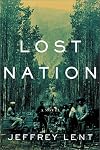
One begins to see a pattern in Jeffrey Lent. Prior to "Lost Nation," he brought out a masterpiece, "In the Fall." Each of these is an epic multi-generational drama ("Lost Nation" deals with subsequent generations only in a postlude), each concerns itself with violent men in warlike, bloody activity, and each portrays men who have eroded themselves, ruined themselves with ancient guilt.
"Lost Nation" refers not only to a territory in the far north of New Hampshire which is orphaned between the show more U.S. and Canada in the early 19th century, but more importantly to the life which our protaganist, named Blood, has lost, or rather, has avoided living. We find Blood, this fugitive from his own life, and the young and clever whore Sally, newly arriving in the Indian Streams area of New Hampshire. He is running from a version of himself with which he cannot live. It's tragic, in the strictest classical definition, what the delusional Blood believes of himself. His undying effort to leave his past behind is the energy behind the narrative. But in the thematic words of the untutored Sally, "It's the big lies that aren't worth it."
Lent informs his language deeply with the primitive country, the backwardness, the courage, and the brutality of the early backwoods trappers and settlers. The laconic speech of his characters, the unadorned descriptions of nature, livestock, and wild animals, the straightforward portayal of murder, betrayal, and butchery - this plain approach to the telling paradoxically elevates the narrative by just letting it do its monumental job. And it is a monumental job. I don't think Lent ever will want to write of small or subtle issues, or if he does, I'm sure his language will be adapted to the job. I think the world of this writer.
Something I found myself considering: what are the demands of blood? It requires vengeance where needed, loyalty of family always, an outlet when riled, and always a full reckoning. Blood the character insists on excoriating himself on the basis of his family history. When he discovers that his sons have found him, it's too late. He's too much at odds with the world - he has no route to reconciliation, even if he does imagine how it might be. It looks to me like Mr. Lent wanted to consider how blind and wasteful such an emotional approach to life can be. And since it's Jeffrey Lent, we get gorgeous language and unforgettable characters, acting on an epic stage.
Get ready for watershed events in lives that are a struggle. Men and women strive against nature, hostile natives, each other, but most notably themselves. Lent sees clearly into the nature of things, here as elsewhere. This is his great strength - that and the skill to set it down and take the lucky reader on very, very memorable journeys. Don't waste time; if you haven't taken this one up, don't delay! show less
"Lost Nation" refers not only to a territory in the far north of New Hampshire which is orphaned between the show more U.S. and Canada in the early 19th century, but more importantly to the life which our protaganist, named Blood, has lost, or rather, has avoided living. We find Blood, this fugitive from his own life, and the young and clever whore Sally, newly arriving in the Indian Streams area of New Hampshire. He is running from a version of himself with which he cannot live. It's tragic, in the strictest classical definition, what the delusional Blood believes of himself. His undying effort to leave his past behind is the energy behind the narrative. But in the thematic words of the untutored Sally, "It's the big lies that aren't worth it."
Lent informs his language deeply with the primitive country, the backwardness, the courage, and the brutality of the early backwoods trappers and settlers. The laconic speech of his characters, the unadorned descriptions of nature, livestock, and wild animals, the straightforward portayal of murder, betrayal, and butchery - this plain approach to the telling paradoxically elevates the narrative by just letting it do its monumental job. And it is a monumental job. I don't think Lent ever will want to write of small or subtle issues, or if he does, I'm sure his language will be adapted to the job. I think the world of this writer.
Something I found myself considering: what are the demands of blood? It requires vengeance where needed, loyalty of family always, an outlet when riled, and always a full reckoning. Blood the character insists on excoriating himself on the basis of his family history. When he discovers that his sons have found him, it's too late. He's too much at odds with the world - he has no route to reconciliation, even if he does imagine how it might be. It looks to me like Mr. Lent wanted to consider how blind and wasteful such an emotional approach to life can be. And since it's Jeffrey Lent, we get gorgeous language and unforgettable characters, acting on an epic stage.
Get ready for watershed events in lives that are a struggle. Men and women strive against nature, hostile natives, each other, but most notably themselves. Lent sees clearly into the nature of things, here as elsewhere. This is his great strength - that and the skill to set it down and take the lucky reader on very, very memorable journeys. Don't waste time; if you haven't taken this one up, don't delay! show less
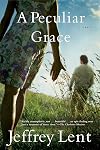
Jeffrey Lent’s heroes face challenges out of the run of the mill. Some of these, as in In the Fall and Lost Nation, face an onslaught of outside forces strong enough to bow or break even the strongest protagonist. In A Peculiar Grace, hero Hewitt Pearce’s toughest tests result instead from his own past and his not-always-healthy ways of coping with it. In this book, Mr. Lent has shrunk his canvas down from the sweeping, heroic backdrops he used in Fall and Nation, to the emotional life show more of one stubborn yet searching man, who trusts his emotions and views of life maybe a little too much. And he succeeds beautifully again, the author does. This book makes me feel many things; however, surprise at the author’s skill is not one of them.
Vermont blacksmith Hewitt Pearce was lucky enough as a teenager to feel the desperation and euphoria of deep love. When this affair ends unhappily for him, he lets it sink him into an alcohol-soaked despair which he survives only through the last-ditch efforts of his friend Walter. Twenty years later, he’s essentially a hermit with a good blacksmith’s practice, and a tractor for getting to the store. Suddenly twenty-something Jessica crashes onto his property and into his life. She’s a fugitive from life’s vagaries, somewhat in the mold of Hewitt himself. Their quirky exploration of each other’s boundaries, beliefs, and personality form - and charm - the bulk of the book. This is the “peculiar grace” of the title. Although Hewitt’s life and heart become torqued up again when his onetime great love is widowed, he cannot revert to form - to chase her and/or pine after her - because of the new presence in his life.
I did what I very seldom do after finishing a book. I went back to re-read scenes of especially well-done dialogue, because they are some of the great charms of this charming book. We sink neck-deep into Hewitt’s psyche, and watch him take his painful steps toward a more balanced emotional outlook. Mr. Lent grants his hero the capacity to give and also gives him the knack of communicating, through a forthright and laconic way - almost a shorthand - that captivates. His writing captures this perfectly.
I wasn’t sure what to expect from A Peculiar Grace, after the previous heroic entries I mentioned. What I got demonstrates Mr. Lent’s mastery. He remains one of the very best practicing the craft today, as his every book amply proves. Take this up. It’s also one of the few that I definitely plan on rereading, even with my reading time at such a premium.
http://bassoprofundo1.blogspot.com/2015/04/a-peculiar-grace-by-jeffrey-lent.html show less
Vermont blacksmith Hewitt Pearce was lucky enough as a teenager to feel the desperation and euphoria of deep love. When this affair ends unhappily for him, he lets it sink him into an alcohol-soaked despair which he survives only through the last-ditch efforts of his friend Walter. Twenty years later, he’s essentially a hermit with a good blacksmith’s practice, and a tractor for getting to the store. Suddenly twenty-something Jessica crashes onto his property and into his life. She’s a fugitive from life’s vagaries, somewhat in the mold of Hewitt himself. Their quirky exploration of each other’s boundaries, beliefs, and personality form - and charm - the bulk of the book. This is the “peculiar grace” of the title. Although Hewitt’s life and heart become torqued up again when his onetime great love is widowed, he cannot revert to form - to chase her and/or pine after her - because of the new presence in his life.
I did what I very seldom do after finishing a book. I went back to re-read scenes of especially well-done dialogue, because they are some of the great charms of this charming book. We sink neck-deep into Hewitt’s psyche, and watch him take his painful steps toward a more balanced emotional outlook. Mr. Lent grants his hero the capacity to give and also gives him the knack of communicating, through a forthright and laconic way - almost a shorthand - that captivates. His writing captures this perfectly.
I wasn’t sure what to expect from A Peculiar Grace, after the previous heroic entries I mentioned. What I got demonstrates Mr. Lent’s mastery. He remains one of the very best practicing the craft today, as his every book amply proves. Take this up. It’s also one of the few that I definitely plan on rereading, even with my reading time at such a premium.
http://bassoprofundo1.blogspot.com/2015/04/a-peculiar-grace-by-jeffrey-lent.html show less
A powerful, sometimes brutal, historical novel with a setting unlike any I've encountered before. In the early 19th century, the Republic of Indian Stream was an unrecognized state along the section of the border that divides the current Canadian province of Quebec from the U.S. State of New Hampshire. It existed for a mere 3 years, but had its own elected government and constitution. It resulted from an ambiguity in the 1783 Treaty of Paris, which left a chunk of territory in limbo, claimed show more by both New Hampshire and Lower Canada. The dispute was not fully resolved between the US and Canada until the signing of the Webster-Ashburton Treaty in 1842. An actual historical skirmish involving a British magistrate, a group of "Streamers", and eventually the New Hampshire militia, is recounted in Lent's truly excellent story-telling style. Lost Nation is, however, primarily a classic tale of one man's self-destruction, and one woman's triumph over circumstances seemingly beyond her control. It's an intense, violent, unsparingly realistic portrayal of life on the fringes of civilization, a tragedy somewhat reminiscent of Cormac McCarthy at his most graphic. Undoubtedly a great novel, but not for everyone. show less
I read Lent's earlier two superb historical fictions, but hadn't moved forward with his newer books which are contemporary stories — until the other day.
The premise of the novel is laid out practically on the first page - damaged, immature and solitary middle-aged man meets screwed-up, possibly crazy young woman and both their lives are changed because of it. It seemed a bit of a cliched theme. Well, I thought, there's nothing more to say about it, is there? I was wrong.
Hewitt Pearce lives show more the quiet life in rural Vermont. He's an artist of sorts, a blacksmith, pounding out iron on the old family homestead while he still lingers over thoughts of the girl he loved at 17 (the one who dumped him). His father was a painter, his mother an Irish immigrant. If Howard needs something in town, he takes the tractor, as he doesn't drive a car. Into his life one day comes Jessica Kearns, a twenty-something vagabond who hasn't had a bath in quite awhile, and who just might be a bit nuts. But that's just the first layer of a surprisingly multi-layered, beautifully written story about one middle-aged man's inner life (my husband assures me that this is a fantasy:-). The book is about processing, letting go, and growing up; about fathers & sons, inheritance, about rootedness and freedom, and about the healing powers of art and, yes, love. About the time you think you've seen everything in these people's lives, Lent peels off another layer, unveils another secret. There is a lot stuffed in this one book.
The book is beautifully written. Lent has a remarkable ability to describe things - it's genuinely arresting at times. Although I wouldn't call his prose lyrical, it is poetic. It has certain organic rhythms and dispenses a kind of compelling, simple wisdom that comes from insightful observation. show less
The premise of the novel is laid out practically on the first page - damaged, immature and solitary middle-aged man meets screwed-up, possibly crazy young woman and both their lives are changed because of it. It seemed a bit of a cliched theme. Well, I thought, there's nothing more to say about it, is there? I was wrong.
Hewitt Pearce lives show more the quiet life in rural Vermont. He's an artist of sorts, a blacksmith, pounding out iron on the old family homestead while he still lingers over thoughts of the girl he loved at 17 (the one who dumped him). His father was a painter, his mother an Irish immigrant. If Howard needs something in town, he takes the tractor, as he doesn't drive a car. Into his life one day comes Jessica Kearns, a twenty-something vagabond who hasn't had a bath in quite awhile, and who just might be a bit nuts. But that's just the first layer of a surprisingly multi-layered, beautifully written story about one middle-aged man's inner life (my husband assures me that this is a fantasy:-). The book is about processing, letting go, and growing up; about fathers & sons, inheritance, about rootedness and freedom, and about the healing powers of art and, yes, love. About the time you think you've seen everything in these people's lives, Lent peels off another layer, unveils another secret. There is a lot stuffed in this one book.
The book is beautifully written. Lent has a remarkable ability to describe things - it's genuinely arresting at times. Although I wouldn't call his prose lyrical, it is poetic. It has certain organic rhythms and dispenses a kind of compelling, simple wisdom that comes from insightful observation. show less
Lists
Awards


You May Also Like


Associated Authors
Statistics
- Works
- 8
- Also by
- 1
- Members
- 1,874
- Popularity
- #13,739
- Rating
- 3.8
- Reviews
- 67
- ISBNs
- 70
- Languages
- 5
- Favorited
- 5