

Deborah Johnson (4)
Author of The Secret of Magic
For other authors named Deborah Johnson, see the disambiguation page.
Works by Deborah Johnson
Tagged
Common Knowledge
- Other names
- Johns, Deborah
- Gender
- female
- Occupations
- writer
novelist
author - Nationality
- USA
- Places of residence
- Columbus, Mississippi, USA
San Francisco, California, USA
Rome, Italy - Associated Place (for map)
- USA
Members
Reviews

A letter sent to the NAACP in 1946, asking for help getting justice for a murdered, black war hero on his way back home to a small town in Mississippi, catches the attention of newly minted, black lawyer Regina Robichard, as much for the case as for the person who sent the letter: M. P. Calhoun, author of Regina's favorite book when she was growing up. That book was "The Secret of Magic," a story about black and white children playing together in a magical forest. Convincing her boss, show more Thurgood Marshall, to let her go investigate, Regina heads from New York City to the heart of the South, lugging her own baggage of injustice with her.
M. P. Calhoun, aka Mary Pickett, isn't anything she expected. An aristocratic, older white woman, Pickett makes it clear to Regina that she sent the letter purely to satisfy Willie Willie, the victim's father, someone she's fond of. But Regina is determined to get justice for Willie Willie's son Joe Howard. Her presence brings out distrust in the white community, and having lived a long time in New York City, Regina has a lot to learn about race relations in the South, where everyone knows everyone's business and only a few black people seem to want her to succeed.
There isn't much of a mystery here; in fact, about two-thirds through, Regina is told what happened by the killer. The book is more an examination of a changing environment where the way things were and are and always will be can no longer be sustained. For a book grounded in reality -- in the Author's Note, Johnson cites the real people who inspired the story -- it reads like a fairy tale at times, especially when quoting M. P. Calhoun's "The Secret of Magic." All the characters, white and black, are fully drawn. None feels like a stereotype. The feeling of satisfaction I got after reading the last page is lingering with me, something my favorite books do. show less
M. P. Calhoun, aka Mary Pickett, isn't anything she expected. An aristocratic, older white woman, Pickett makes it clear to Regina that she sent the letter purely to satisfy Willie Willie, the victim's father, someone she's fond of. But Regina is determined to get justice for Willie Willie's son Joe Howard. Her presence brings out distrust in the white community, and having lived a long time in New York City, Regina has a lot to learn about race relations in the South, where everyone knows everyone's business and only a few black people seem to want her to succeed.
There isn't much of a mystery here; in fact, about two-thirds through, Regina is told what happened by the killer. The book is more an examination of a changing environment where the way things were and are and always will be can no longer be sustained. For a book grounded in reality -- in the Author's Note, Johnson cites the real people who inspired the story -- it reads like a fairy tale at times, especially when quoting M. P. Calhoun's "The Secret of Magic." All the characters, white and black, are fully drawn. None feels like a stereotype. The feeling of satisfaction I got after reading the last page is lingering with me, something my favorite books do. show less
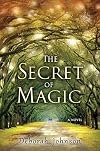
The Secret of Magic is a thoroughly enjoyable read. Inspired by a true case of a WWII serviceman who was singled out and arrested on a bus in the North Carolina, then brutally abused while in custody for insisting on his most basic civil rights, Deborah Johnson weaves a magical realist tale combined with realities of the the early Civil Rights era. Thurgood Marshall and the NAACP's Legal Defense Fund figure in the novel, and 1940's Columbus, MS, provides much of the backdrop for the show more fictional town of Rever). Invented characters and events, as well as a novel within the novel, provide Johnson the magical elements needed to weave an important statement on race relations in the past, present, and future South. show less

THE SECRET OF MAGIC has one of the strongest opening chapters I’ve read in a long time. Set in 1946 it depicts the attempted homecoming of a decorated Lieutenant who has a head full of nightmares from the battlefields of WWII. Joe Howard Wilson is desperate to see his father, to retreat to the familiar, to heal. But Joe Howard is black and when he is told he must give up his seat on the bus that is meant to take him home in favour of German prisoners of war – they’re white after all show more – he baulks at the injustice. And is subsequently murdered.
The opening made me cry. Not just because it is heart-wrenching itself or because I read it during a time when I could be forgiven for thinking the world hasn’t moved on much at all in 70 years. But because it is so well written. Only a few pages but they pack a punch; offering striking imagery, engaging character establishment and managing to set a powerful expectation for what is to come.
The rest of the book was something of a disappointment.
I’ve debated whether or not to write this review. I have found that it is usually better to say nothing than be drawn into the kind of unwinnable argument such sentiments often create. Perhaps it’s the way I do it but more often than not people think I’m siding with the “baddies” when I express a negative sentiment about a book (or movie or whatever) that explores a deeply traumatising event or element of history. For example when I remarked that I didn’t think 12 Years a Slave was as good a movie as all its hype had suggested someone I know asked how I could be supportive of slavery. The same person would undoubtedly think I support the killing of random black people if he knew I think THE SECRET OF MAGIC flawed too. I feel like it’s possible to separate my position on the real-world themes and history being depicted from the elements that make up a book. But maybe not? Or maybe I’m doing it wrong.
In support of my premise I’ll have ago. At talking about what I found disappointing about the book rather than what I do or don’t think about systemic racism.
The book felt like a bunch of set pieces, each one with the aim of reinforcing the notion that racism was rampant in Mississippi in the 40’s and racism is bad. Just to be clear I’m not arguing with any of that and am in no doubt that many horrendous things were done to black people in Mississippi in the 40’s for no other reason than white people could get away with doing them. But a work of fiction has to offer more than reportage. Doesn’t it? Surely it is meant to engage on another level too. Even if it has a really, really important message. As a reader I want to be kept interested in a story and its characters not just browbeaten or transported back to school.
Part of the reason the book didn’t work for me was its inclusion of a story within the story. One of the central characters – a white woman called M.P. Calhoun – is famous for having written a book many years ago in which black and white characters share adventures. Obviously that was a subversive concept for its time and so the book has a lot of importance for some of the characters. So this story, with magical realism overtones, is incorporated across the scope of the book via extract after extract. All of which completely failed to grab me. I found these passages repetitive and rambly and thought they contributed heavily to the slow pace of the narrative while not adding anything much to my understanding of the wider issues the author was addressing.
For me too the balance of historical fact and fiction was not right; too much of the former and too little of the latter. I think for example it’s difficult to use big, important names from history in this kind of fiction such as Johnson’s inclusion of Thurgood Marshall, founder of the NAACP Legal Defense and Educational Fund, here. The man is legendary (even down here at the bottom of the world) and revered so there are great limitations on what you can do with such a character within a work of fiction. Authors who I think more successfully deploy real people in their fictional worlds either use lesser known names or place a more famous person in a time or place at which they weren’t yet known. Using Thurgood during the early years of the Legal Defense Fund did not provide much scope for creativity.
I did enjoy the depiction of Mary Pickett Calhoun: white and privileged yet the one who invites the NAACP to Revere Mississippi to investigate Joe Howard’s death. Her reasons for doing so are complex and the way the question of whether she really wants Regina Robichard – the black, female lawyer sent from New York – to find answers or only appear to be doing something is teased out across the novels offers a genuinely grey element to the novel. Everything and everyone else is, pardon the pun, too black and white for me.
I’m not suggesting THE SECRET OF MAGIC is a terrible book. But nor is it one that I will remember with fondness (or anger or any other strong emotion) as I imagined I would after that opening chapter. Nor do I mean to make light of the real world events on which it is based or the obvious personal connection the author has to many of its elements. But if it is permissible to set all that aside and just talk about whether or not the book ‘worked’ for me then it didn’t. I found its predictability and its focus on facts and teaching rather than engagement of the reader (at least this reader) on a creative level a struggle. It took me nearly three weeks to read and then it was only the promise of a glass of red when I finished that made me plough through the last 60 or so pages. Reading shouldn’t feel like taking medicine. show less
The opening made me cry. Not just because it is heart-wrenching itself or because I read it during a time when I could be forgiven for thinking the world hasn’t moved on much at all in 70 years. But because it is so well written. Only a few pages but they pack a punch; offering striking imagery, engaging character establishment and managing to set a powerful expectation for what is to come.
The rest of the book was something of a disappointment.
I’ve debated whether or not to write this review. I have found that it is usually better to say nothing than be drawn into the kind of unwinnable argument such sentiments often create. Perhaps it’s the way I do it but more often than not people think I’m siding with the “baddies” when I express a negative sentiment about a book (or movie or whatever) that explores a deeply traumatising event or element of history. For example when I remarked that I didn’t think 12 Years a Slave was as good a movie as all its hype had suggested someone I know asked how I could be supportive of slavery. The same person would undoubtedly think I support the killing of random black people if he knew I think THE SECRET OF MAGIC flawed too. I feel like it’s possible to separate my position on the real-world themes and history being depicted from the elements that make up a book. But maybe not? Or maybe I’m doing it wrong.
In support of my premise I’ll have ago. At talking about what I found disappointing about the book rather than what I do or don’t think about systemic racism.
The book felt like a bunch of set pieces, each one with the aim of reinforcing the notion that racism was rampant in Mississippi in the 40’s and racism is bad. Just to be clear I’m not arguing with any of that and am in no doubt that many horrendous things were done to black people in Mississippi in the 40’s for no other reason than white people could get away with doing them. But a work of fiction has to offer more than reportage. Doesn’t it? Surely it is meant to engage on another level too. Even if it has a really, really important message. As a reader I want to be kept interested in a story and its characters not just browbeaten or transported back to school.
Part of the reason the book didn’t work for me was its inclusion of a story within the story. One of the central characters – a white woman called M.P. Calhoun – is famous for having written a book many years ago in which black and white characters share adventures. Obviously that was a subversive concept for its time and so the book has a lot of importance for some of the characters. So this story, with magical realism overtones, is incorporated across the scope of the book via extract after extract. All of which completely failed to grab me. I found these passages repetitive and rambly and thought they contributed heavily to the slow pace of the narrative while not adding anything much to my understanding of the wider issues the author was addressing.
For me too the balance of historical fact and fiction was not right; too much of the former and too little of the latter. I think for example it’s difficult to use big, important names from history in this kind of fiction such as Johnson’s inclusion of Thurgood Marshall, founder of the NAACP Legal Defense and Educational Fund, here. The man is legendary (even down here at the bottom of the world) and revered so there are great limitations on what you can do with such a character within a work of fiction. Authors who I think more successfully deploy real people in their fictional worlds either use lesser known names or place a more famous person in a time or place at which they weren’t yet known. Using Thurgood during the early years of the Legal Defense Fund did not provide much scope for creativity.
I did enjoy the depiction of Mary Pickett Calhoun: white and privileged yet the one who invites the NAACP to Revere Mississippi to investigate Joe Howard’s death. Her reasons for doing so are complex and the way the question of whether she really wants Regina Robichard – the black, female lawyer sent from New York – to find answers or only appear to be doing something is teased out across the novels offers a genuinely grey element to the novel. Everything and everyone else is, pardon the pun, too black and white for me.
I’m not suggesting THE SECRET OF MAGIC is a terrible book. But nor is it one that I will remember with fondness (or anger or any other strong emotion) as I imagined I would after that opening chapter. Nor do I mean to make light of the real world events on which it is based or the obvious personal connection the author has to many of its elements. But if it is permissible to set all that aside and just talk about whether or not the book ‘worked’ for me then it didn’t. I found its predictability and its focus on facts and teaching rather than engagement of the reader (at least this reader) on a creative level a struggle. It took me nearly three weeks to read and then it was only the promise of a glass of red when I finished that made me plough through the last 60 or so pages. Reading shouldn’t feel like taking medicine. show less
The Secret of Magic is profoundly sad. Reggie’s first-time experiences in the Jim Crow South are just as upsetting for readers as they are for Reggie. What makes it worse is that none of hatred and deliberate separate-and-unequal treatment should be as surprising as it is, even to a black girl raised solely in the North. For those raised in this era, or those who grew up learning about it from their parents’ knees, the hardships incurred by blacks at the hands of their white show more “neighbors” are stories with which most people are familiar. Ms. Johnson takes these stories, however, and makes them personal. Through Reggie, readers experience what she experiences, feel her pain and indignation, understand her frustrations, and celebrate her minor victories. Through Ms. Johnson’s appealing narration, the reader simply becomes Reggie. It is its own version of magic very few authors can manage.
There is a futility to Reggie’s trip to Mississippi that lingers over the entire story. One instinctively knows that she is not going to obtain the justice she so desperately hopes to seek for her client. She cannot change the Deep South as much as she hopes to do so. However, Reggie’s indomitable will prevents the story from bogging down into deep melancholy. Her goal might be futile, but she refuses to give into pressure to let go of the case. Her determination to stick to her plan and the methods by which she does so are heroic in their audacity and bravery. She is a woman who knows who she is and who is not afraid to show that self-satisfaction to the world. She may not be able to change the Jim Crow laws, but she definitely leaves her mark on that little Mississippi town.
While The Secret of Magic is all about the power of stories – Reggie’s fascination with her childhood version of The Secret of Magic, Willie Willie’s amusing narratives, M. P. Calhoun’s lessons on life in the Deep South – it is also about the power of one person willing to take a stand and make a difference. Each of the characters makes a statement in their own way, whether it is a story about a racially mixed group of friends or demands for justice for a lynched black man. These small statements coalesce into an environment in which change is not only possible but inevitable. Reggie is merely the catalyst.
There is much to love about The Secret of Magic. Its story is both familiar and yet shocking in its abruptness. The characters are true Southern stars – each vibrant and alive with a dimensionality to them that makes it easy to forget that it is a work of fiction. Combine that with the most excellent historical details and descriptions, and the entire story becomes something more than the sum of its parts. It is a story meant to entertain and educate as well as provide hope that even the smallest of little revolts can have major consequences. It is a fitting tribute to those who really did work with Thurgood Marshall in the NAACP and those black soldiers who not only fought in the war but fought for the equality they so richly deserved when they came home. show less
There is a futility to Reggie’s trip to Mississippi that lingers over the entire story. One instinctively knows that she is not going to obtain the justice she so desperately hopes to seek for her client. She cannot change the Deep South as much as she hopes to do so. However, Reggie’s indomitable will prevents the story from bogging down into deep melancholy. Her goal might be futile, but she refuses to give into pressure to let go of the case. Her determination to stick to her plan and the methods by which she does so are heroic in their audacity and bravery. She is a woman who knows who she is and who is not afraid to show that self-satisfaction to the world. She may not be able to change the Jim Crow laws, but she definitely leaves her mark on that little Mississippi town.
While The Secret of Magic is all about the power of stories – Reggie’s fascination with her childhood version of The Secret of Magic, Willie Willie’s amusing narratives, M. P. Calhoun’s lessons on life in the Deep South – it is also about the power of one person willing to take a stand and make a difference. Each of the characters makes a statement in their own way, whether it is a story about a racially mixed group of friends or demands for justice for a lynched black man. These small statements coalesce into an environment in which change is not only possible but inevitable. Reggie is merely the catalyst.
There is much to love about The Secret of Magic. Its story is both familiar and yet shocking in its abruptness. The characters are true Southern stars – each vibrant and alive with a dimensionality to them that makes it easy to forget that it is a work of fiction. Combine that with the most excellent historical details and descriptions, and the entire story becomes something more than the sum of its parts. It is a story meant to entertain and educate as well as provide hope that even the smallest of little revolts can have major consequences. It is a fitting tribute to those who really did work with Thurgood Marshall in the NAACP and those black soldiers who not only fought in the war but fought for the equality they so richly deserved when they came home. show less
Lists
Awards


You May Also Like


Statistics
- Works
- 2
- Members
- 494
- Popularity
- #50,037
- Rating
- 3.8
- Reviews
- 44
- ISBNs
- 30
