
Richard A. Lupoff (1935–2020)
Author of Philip Jose Farmer's The Dungeon: The Black Tower
About the Author
Richard Allen Lupoff was born on February 21, 1935 in Brooklyn, New York. He studied at the University of Miami. His main work was in science fiction and mystery, but he also wrote humor and satire, nonfiction and reviews. He also edited science-fantasy anthologies. He was best known for co-editing show more fanzine XERO, which won a Hugo Award in 1963, with his wife Pat Lupoff and Bhob Stewart. In his early career he worked as a technical writer. His first book was a biography published in 1965, Edgar Rice Burroughs: Master of Adventure. In 1967, he began publishing fiction works, One Million Centuries was the first. Some of his other works include Sacred Locomotive Flies (1971), Sword of the Demon (1977), The Triune Man (1976), Space War Blues (1978), Into the Aether (1974), the Twin Planet series, Circumpolar! (1987), and the Sun's End series, Sun's End (1984), and Galaxy's End (1988). He sometimes wrote under the pseudonyms, using Addison E. Steele for Buck Rogers tie-ins, and Ova Hamlet for parodies of famous science fiction authors. Richard Lupoff died on October 22, 2020 in California. He was 85. (Bowker Author Biography) show less
Series
Works by Richard A. Lupoff
The great American paperback : an illustrated tribute to legends of the book (2001) 90 copies, 1 review
The Adventures of Professor Thintwhistle and His Incredible Aether Flyer (1997) — Author, Script Writer — 15 copies
Benning’s School for Boys 3 copies
Black Mist 3 copies
12:01 P. M. 2 copies
Simeon Dimsby's Workshop 2 copies
After the Dreamtime [novelette] 2 copies
The House On Rue Chartres 2 copies
Jubilee 2 copies
The Adventure of the Voorish Sign 2 copies
Fourth Avenue Interlude 1 copy
Cairo Good-bye 1 copy
Zirkumpolar. 1 copy
The Second Drug 1 copy
The American Monarchy 1 copy
War Of The Doom Zombies 1 copy
Nothing Personal 1 copy
12:02 P.m. 1 copy
Easy Living 1 copy
12:03 P.m. 1 copy
Crack in the Sky 1 copy
Associated Works
The Mammoth Book of Perfect Crimes & Impossible Mysteries (2006) — Contributor — 160 copies, 4 reviews
The Mammoth Book of Locked-Room Mysteries and Impossible Crimes (2000) — Contributor — 134 copies, 1 review
My Sherlock Holmes: Untold Stories of the Great Detective (2003) — Contributor — 99 copies, 1 review
The Resurrected Holmes: New Cases from the Notes of John H. Watson, M.D. (1996) — Contributor — 91 copies, 1 review
Hardboiled Cthulhu: Two-Fisted Tales of Tentacled Terror (2006) — Contributor — 89 copies, 4 reviews
By Hook or By Crook and 30 More of the Best Crime and Mystery Stories of the Year (2010) — Contributor — 87 copies
Kong Unbound: The Cultural Impact, Pop Mythos, and Scientific Plausibility of a Cinematic Legend (2005) — Contributor — 21 copies
That Is Not Dead: Tales of the Cthulhu Mythos Through the Centuries (2015) — Contributor — 19 copies
The Magazine of Fantasy and Science Fiction September/October 2012, Vol. 123, Nos. 3 & 4 (2012) — Contributor — 18 copies, 1 review
The Magazine of Fantasy and Science Fiction June 1974, Vol. 46, No. 6 (1974) — Contributor, some editions — 17 copies
The Magazine of Fantasy and Science Fiction April 1989, Vol. 76, No. 4 (1989) — Contributor — 11 copies
Space Ships! Ray Guns! Martian Octopods!: Interviews with Science Fiction Legends (2025) — Interviewer — 9 copies, 1 review
The Magazine of Fantasy and Science Fiction 68. Mythen der nahen Zukunft. (1984) — Contributor — 7 copies
Away from the here and now : stories in pseudo-science (1947) — Introduction, some editions — 7 copies
Left Coast Crimes: A Collection of Short Stories — Contributor — 2 copies
Tagged
Common Knowledge
- Legal name
- Lupoff, Richard Allen
- Other names
- Hamlet, Ova
Steele, Addison E. (pseudonym) - Birthdate
- 1935-02-21
- Date of death
- 2020-10-22
- Gender
- male
- Occupations
- science fiction writer
mystery writer
fanzine editor - Organizations
- (Second) Futurian Society of New York
Fanoclasts - Relationships
- Lupoff, Pat (spouse)
- Nationality
- USA
- Birthplace
- Brooklyn, New York, USA
- Associated Place (for map)
- New York, USA
Members
Discussions
Title of a science fiction book (probably 60's era) in Name that Book (July 2010)
Reviews
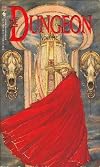
The Black Tower (1988) is full of forced action and lost opportunity. In any event, I thank the Goodreads Sword & Sorcery groupread that enabled me to revisit a series I thought I missed out on. If you like to be constantly bait-n-switched without reason, then this book is for you. Since it is the anchor for the series, I don't plan on reading more.
The Concept: Set ~1870, the aristocratic Englishman Major Clive Folliot goes exploring across the world for his missing brother Neville. The show more premise has a "lost world" pulp vibe (i.e., an alien world in which the protagonist is teleported/transported to and cannot return to earth) and that world is essentially a hostile prison for beings across time & space. A few instances, the book evoked emotions I last felt while watching the 1967 TV series The Prisoner or the 2004-2010 TV series The Lost. As the introduction explains, Byron Preiss had asked Philip José Farmer to edit and oversee the Dungeon series. Richard A. Lupoff was chosen to lead this (but it is unclear if Farmer selected him) with Volume 1: The Black Tower (1988).
What worked:
-Farmer's introduction to the series & the concept of the "Dungeon"
-The pull of the mysterious disappearance of Neville; this premise kept me in the book the duration.
-Bonus sketches/illustrations ostensibly drawn by the protagonist
-Occasional, brief scenes that deserved more than a paragraph (i.e., the plight of enthralled giants, and the impregnation of spider eggs into human bodies)
-User Annie's futuristic (~1999) language (which mention motherboards, and downloading); for a 1988 novel, this take on future vocabulary was entertaining and fairly accurate.
What did not work:
(1) The promise behind the cover and title: The cover by Robert Gould is awesome. It has stuck in my head for 30+ yrs. However, it promises a Heroic Fantasy or Sword & Sorcery story, and the book is Sci-Fi adventure. My initial, ignorant impression was that the book may be like the 1984 Deathtrap Dungeon experience in which a hero is trapped a grim prison and must fight his way out (at least that cover matched the milieu).I don't think Major Clive Folliot ever wears a cape while wielding a sword either. The first third of this book is set in ~1870; then it's a mix of modern and futuristic elements. "The Black Tower" title seems off too; there is a black tower which is termed the City of Q'oorna, run by a khalif who spares the explorer's crew and puts them into a dungeon of sexy women! (an exclamation used to mirror the author's style) ... but we do not return to this tower or khalif, so...whatever.
(2) Embarrassing Sexism: Clive's constant desire to have sex with every woman undermines his deep feelings for Annabella Leighton, his love interest (stuck on earth as he explores the Dungeon). It is laughable to read chapter after chapter with him observing women as sex objects; expect descriptions of boobs, hips, and lips. Clive even has carnal desires for his relatives stuck in the dungeon! Cripes. Here's my favorite as Clive meets an alien lady with alabaster white skin:
"The magnificent woman touched the emerald that lay against her bosom, and Clive found himself wondering at the likely color of the areolae of her breasts." (p310)
(3) The conflict is "Clive vs.... ??? ". Maybe the conflict is against the Q'oornans (which are labels for people/things that might be ruling the strange Dungeon) but Clive fights people/things that are not Q'oornan constantly. Several prisons and military outpost exist, but they are all run by other prisoners. The final climax is not at the original Black Tower (i.e., the center of Q'oorna, the first outpost we experience in The Dungeon proper, and the title of the book) but features some other random tower with other random antagonists.
(4) The cool stuff relating to the main mystery is sidelined. Beyond the Black Tower bait-n-switch, the few links to a real story are sparse. For example, Clive's brother's notebook appears abruptly (mysteriously providing communications), then disappears for a long time; when it eventually reappears, it is given scant attention. On the other hand, the book is full of random conflicts that don't matter from chapter-to-chapter. In short, the pretense of "mystery" allows Clive to randomly explore, attack, befriend, and wander without reason.
(5) The author seemed lost: The formula was clear for each chapter: introduce new ideas then toss them. Many times the main story arc was disregarded and we are treated to campy, fireside discussions amongst the characters echoing the author's lack of direction. Here is my own distillation of these silly discussions:
"Why are we banding together?"
[no answer since no ones knows why]
"What should we do now that we are stuck again?"
"Let me tell you, the plot calls for us to do something, dammit sah (~sir)!"
When first stumbling into the Dungeon, and climbing a mountain, the characters find themselves stuck (they can't descend). But wait, there is a mysterious coffin here...and it seems tall. Yes it is. In fact, there is a trap bottom under the body and inside are ropes to climb down. Perfect, let's take them and go! (That is actually a true spoiler of a minor scene) and it represents the constant pseudo-action. Essentially, the action has to keep going, and every few pages when the group is in a bind, a meaningless solution presents itself.
Conversely, in the middle of action sequences we are treated with forced sides, i.e., when Shriek is introduced and spearman threatens the group, Clive decides to calmly experiment with telepathy to someone back "home" (for a few pages of dialogue).
Instead of closing the loop on the key story arcs, the final chapter (named "Chang Guafe") even springs a new character on us. In Farmer's intro, he actually calls out Chang as being a great element (maybe, but it is poorly placed in the story, and poorly utilized). show less
The Concept: Set ~1870, the aristocratic Englishman Major Clive Folliot goes exploring across the world for his missing brother Neville. The show more premise has a "lost world" pulp vibe (i.e., an alien world in which the protagonist is teleported/transported to and cannot return to earth) and that world is essentially a hostile prison for beings across time & space. A few instances, the book evoked emotions I last felt while watching the 1967 TV series The Prisoner or the 2004-2010 TV series The Lost. As the introduction explains, Byron Preiss had asked Philip José Farmer to edit and oversee the Dungeon series. Richard A. Lupoff was chosen to lead this (but it is unclear if Farmer selected him) with Volume 1: The Black Tower (1988).
What worked:
-Farmer's introduction to the series & the concept of the "Dungeon"
-The pull of the mysterious disappearance of Neville; this premise kept me in the book the duration.
-Bonus sketches/illustrations ostensibly drawn by the protagonist
-Occasional, brief scenes that deserved more than a paragraph (i.e., the plight of enthralled giants, and the impregnation of spider eggs into human bodies)
-User Annie's futuristic (~1999) language (which mention motherboards, and downloading); for a 1988 novel, this take on future vocabulary was entertaining and fairly accurate.
What did not work:
(1) The promise behind the cover and title: The cover by Robert Gould is awesome. It has stuck in my head for 30+ yrs. However, it promises a Heroic Fantasy or Sword & Sorcery story, and the book is Sci-Fi adventure. My initial, ignorant impression was that the book may be like the 1984 Deathtrap Dungeon experience in which a hero is trapped a grim prison and must fight his way out (at least that cover matched the milieu).I don't think Major Clive Folliot ever wears a cape while wielding a sword either. The first third of this book is set in ~1870; then it's a mix of modern and futuristic elements. "The Black Tower" title seems off too; there is a black tower which is termed the City of Q'oorna, run by a khalif who spares the explorer's crew and puts them into a dungeon of sexy women! (an exclamation used to mirror the author's style) ... but we do not return to this tower or khalif, so...whatever.
(2) Embarrassing Sexism: Clive's constant desire to have sex with every woman undermines his deep feelings for Annabella Leighton, his love interest (stuck on earth as he explores the Dungeon). It is laughable to read chapter after chapter with him observing women as sex objects; expect descriptions of boobs, hips, and lips. Clive even has carnal desires for his relatives stuck in the dungeon! Cripes. Here's my favorite as Clive meets an alien lady with alabaster white skin:
"The magnificent woman touched the emerald that lay against her bosom, and Clive found himself wondering at the likely color of the areolae of her breasts." (p310)
(3) The conflict is "Clive vs.... ??? ". Maybe the conflict is against the Q'oornans (which are labels for people/things that might be ruling the strange Dungeon) but Clive fights people/things that are not Q'oornan constantly. Several prisons and military outpost exist, but they are all run by other prisoners. The final climax is not at the original Black Tower (i.e., the center of Q'oorna, the first outpost we experience in The Dungeon proper, and the title of the book) but features some other random tower with other random antagonists.
(4) The cool stuff relating to the main mystery is sidelined. Beyond the Black Tower bait-n-switch, the few links to a real story are sparse. For example, Clive's brother's notebook appears abruptly (mysteriously providing communications), then disappears for a long time; when it eventually reappears, it is given scant attention. On the other hand, the book is full of random conflicts that don't matter from chapter-to-chapter. In short, the pretense of "mystery" allows Clive to randomly explore, attack, befriend, and wander without reason.
(5) The author seemed lost: The formula was clear for each chapter: introduce new ideas then toss them. Many times the main story arc was disregarded and we are treated to campy, fireside discussions amongst the characters echoing the author's lack of direction. Here is my own distillation of these silly discussions:
"Why are we banding together?"
[no answer since no ones knows why]
"What should we do now that we are stuck again?"
"Let me tell you, the plot calls for us to do something, dammit sah (~sir)!"
When first stumbling into the Dungeon, and climbing a mountain, the characters find themselves stuck (they can't descend). But wait, there is a mysterious coffin here...and it seems tall. Yes it is. In fact, there is a trap bottom under the body and inside are ropes to climb down. Perfect, let's take them and go! (That is actually a true spoiler of a minor scene) and it represents the constant pseudo-action. Essentially, the action has to keep going, and every few pages when the group is in a bind, a meaningless solution presents itself.
Conversely, in the middle of action sequences we are treated with forced sides, i.e., when Shriek is introduced and spearman threatens the group, Clive decides to calmly experiment with telepathy to someone back "home" (for a few pages of dialogue).
Instead of closing the loop on the key story arcs, the final chapter (named "Chang Guafe") even springs a new character on us. In Farmer's intro, he actually calls out Chang as being a great element (maybe, but it is poorly placed in the story, and poorly utilized). show less

This is my first book by Lupoff and I was pleasantly surprised. He uses Edgar Rice Burroughs style "hand waving" to get his protagonist into the future but the rest of the story is plausible adventure. This makes perfect sense as he is a Burroughs expert. I believe this was his first SF novel.
Is it SF? Not really but, what started as an average 3 star adventure seemed to get better as I read. I really enjoyed this imaginative tale.
Is it SF? Not really but, what started as an average 3 star adventure seemed to get better as I read. I really enjoyed this imaginative tale.

A wonderful guide to American paperbacks, with an emphasis on pulp fiction of all types. The book has chapters that cover the main publishers--Fawcett, Ace, Bantam, etc. Lupoff provides a narrative history of paperbacks from 1939, but the real reason for owning this book is the collection of full color paperback covers it presents, together with Lupoff's usually interesting capsule descriptions. Occasionally (for a book I have read), the description would seem to indicate that Lupoff doesn't show more really know what it is about (John McPartland's RIPE FRUIT, for instance), but overall this is a very compelling volume that you won't be able to put down until you have finished. show less
It seems each book in the series is written by a different author with Farmer overseeing the vision.
I gave up on this about a third of the way through. The writing was probably trying to mimic the style of H. Ryder Haggard and Robert E. Howard, but it feels old fashioned and stilted. I loved the Riverworld series by Farmer, but this didn't compare. It took awhile to get the characters to "the Dungeon" and by then I didn't care about them or wanted to see how things turned out.
Add to this the show more fact that there are six books in the series ... This was not something I want to send my time reading. show less
I gave up on this about a third of the way through. The writing was probably trying to mimic the style of H. Ryder Haggard and Robert E. Howard, but it feels old fashioned and stilted. I loved the Riverworld series by Farmer, but this didn't compare. It took awhile to get the characters to "the Dungeon" and by then I didn't care about them or wanted to see how things turned out.
Add to this the show more fact that there are six books in the series ... This was not something I want to send my time reading. show less
Lists
Awards


You May Also Like


Associated Authors
Statistics
- Works
- 103
- Also by
- 74
- Members
- 3,240
- Popularity
- #7,892
- Rating
- 3.6
- Reviews
- 38
- ISBNs
- 186
- Languages
- 3
- Favorited
- 2