
David Vann
Author of Caribou Island: A Novel
About the Author
David Vann is a U.S. author who will be featured at the Byron bay Writers' Festival 2015. (Bowker Author Biography)
Image credit: Photograph taken during the 25th edition of the Comédie du Livre of Montpellier in France.
Works by David Vann
Associated Works
Tagged
Common Knowledge
- Birthdate
- 1966-10-19
- Gender
- male
- Occupations
- novelist
professor - Organizations
- University of Warwick
- Awards and honors
- Guggenheim Fellowship
National Endowment for the Arts Fellowship - Nationality
- USA
- Birthplace
- Adak Island, Alaska, USA
- Places of residence
- England, UK
- Associated Place (for map)
- USA
Members
Reviews
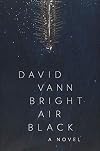
David Vann has made a name for himself writing brutal, stark, and yet poignant stories that capture human nature. With Bright Air Black, he continues in that same tradition by putting his spin on the Medea legend. What follows among its pages is a story of love and revenge, as befits the subject, but also one of fierce pride and loss. Mr. Vann humanizes Medea in a way previously unseen and reminds readers that behind every powerful man there is almost always an equally powerful woman, in show more spite of what the history books may say.
Mr. Vann stays true to his penchant for not sugarcoating human brutality, and there are plenty of scenes that are not for the squeamish. The climax of Medea’s story is one of the goriest scenes I have ever read. Yet he manages to repel and still attract readers with his downright gorgeous prose. In fact, his prose is bordering on the poetic, which would normally have me running for the hills. Instead, I was entranced by the skill with which he uses a few words to convey so much so vividly. It is a feat few can master. While his previous novels allowed readers to glimpse this talent, in Bright Air Black he settles into it with ease to create a novel that is breathtaking.
Bright Air Black is not the story of Medea you read in high school. Mr. Vann provides myriad reasons for Medea’s actions, making her sympathetic in spite of her later viciousness. Moreover, his portrait of the local customs and general harshness of the times allows you to experience Medea’s fall from grace in intimate terms. Between his lyrical prose and the historical details, Medea becomes yet another woman brutally used by the men in her life, forced to make impossible decisions on her men’s behalf, and left alone to deal with the consequences. Medea is the ultimate tragic figure, and Mr. Vann tells her story with beauty and care. show less
Mr. Vann stays true to his penchant for not sugarcoating human brutality, and there are plenty of scenes that are not for the squeamish. The climax of Medea’s story is one of the goriest scenes I have ever read. Yet he manages to repel and still attract readers with his downright gorgeous prose. In fact, his prose is bordering on the poetic, which would normally have me running for the hills. Instead, I was entranced by the skill with which he uses a few words to convey so much so vividly. It is a feat few can master. While his previous novels allowed readers to glimpse this talent, in Bright Air Black he settles into it with ease to create a novel that is breathtaking.
Bright Air Black is not the story of Medea you read in high school. Mr. Vann provides myriad reasons for Medea’s actions, making her sympathetic in spite of her later viciousness. Moreover, his portrait of the local customs and general harshness of the times allows you to experience Medea’s fall from grace in intimate terms. Between his lyrical prose and the historical details, Medea becomes yet another woman brutally used by the men in her life, forced to make impossible decisions on her men’s behalf, and left alone to deal with the consequences. Medea is the ultimate tragic figure, and Mr. Vann tells her story with beauty and care. show less
Thanks to Netgalley for this ARC!
I knew I was going to get a retelling of Medea from her point of view during the quest of The Golden Fleece and after, with Jason, but I wasn't quite prepared for just how beautiful the lines of the text were. I mean, getting it all from the PoV of Medea was a pretty awesome treat, all by itself, and found myself fully in her camp despite all the awful things she does, but what really caught my attention, even more, was the prose.
This is some true show more mythopoetical realism, yo.
I will admit that there were some parts during the first half of the text that could have been improved, at least making the text more accessible those who haven't studied up on the old legends and the plays, for so much of the action has already happened right when the prose opens up. I'm not going to complain too much, however, because even though it assumes the audience is conversant with the legend, it doesn't really matter after a certain amount of time.
Yes, we know Medea is a bad-ass, willing to tear the world down to prevent her slide into slavery. She's a beast willing to rend to keep herself out of chains.
I particularly love how the author managed to turn someone like this into a heroic figure even more than half the time, and even when she's doing her most evil deeds, I feel for her and want to cheer her on.
That's a real feat.
Is this niche? Or does this have all the feel of Big Magical Realism for Mainstream? I don't know, but it could certainly go either way. :) I enjoyed it very much, too.
Update 2/3/17:
After some deep reflection, I had to change the rating from a four to a five star. The language keeps with me after all this time and the shape of the story keeps getting better. The aftertaste, so to speak. :)
It has NOTHING (much) to do with complaints from other reviewers (Trish). I do this on my own (mostly). show less
I knew I was going to get a retelling of Medea from her point of view during the quest of The Golden Fleece and after, with Jason, but I wasn't quite prepared for just how beautiful the lines of the text were. I mean, getting it all from the PoV of Medea was a pretty awesome treat, all by itself, and found myself fully in her camp despite all the awful things she does, but what really caught my attention, even more, was the prose.
This is some true show more mythopoetical realism, yo.
I will admit that there were some parts during the first half of the text that could have been improved, at least making the text more accessible those who haven't studied up on the old legends and the plays, for so much of the action has already happened right when the prose opens up. I'm not going to complain too much, however, because even though it assumes the audience is conversant with the legend, it doesn't really matter after a certain amount of time.
Yes, we know Medea is a bad-ass, willing to tear the world down to prevent her slide into slavery. She's a beast willing to rend to keep herself out of chains.
I particularly love how the author managed to turn someone like this into a heroic figure even more than half the time, and even when she's doing her most evil deeds, I feel for her and want to cheer her on.
That's a real feat.
Is this niche? Or does this have all the feel of Big Magical Realism for Mainstream? I don't know, but it could certainly go either way. :) I enjoyed it very much, too.
Update 2/3/17:
After some deep reflection, I had to change the rating from a four to a five star. The language keeps with me after all this time and the shape of the story keeps getting better. The aftertaste, so to speak. :)
It has NOTHING (much) to do with complaints from other reviewers (Trish). I do this on my own (mostly). show less
Last Day on Earth: A Portrait of the NIU School Shooter (Association of Writers and Writing Programs Award for Creative Nonfiction) by David Vann
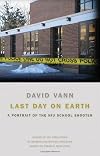
If I feel the need to compose a brutally honest review, I prefer to start with the good, wherever possible. To that end, I rarely broke stride while reading David Vann's “Last Day On Earth”. It was genuinely captivating, and Vann's rather unique – if presumptuous – approach to the narrative made the life and death of Steven Kazmierczak feel very personal to me. I think this is an achievement worth noting, given that there are absolutely no images to accompany the interior text – show more something readers have come to expect and possibly depend upon in this genre, often to their detriment.
That said, this subset of non-fiction (i.e., true crime, and not the lurid, tabloid variety) requires a rigor and a restraint that Vann does not possess, even in tiny amounts. Writing about real events – and more importantly, real people – carries an enormous weight of responsibility. Vann's writing makes it simultaneously clear that he feels more than confident he is up to the task, when in actuality, he is anything but.
This could stem from the fact that this is an Esquire article that grew into a slim book. The narrative required to capture the fleeting interest of a magazine reader lends itself to conjecture, gossip, distortions and sweeping generalizations, all for the sake of keeping the reader from tossing the disposable periodical aside.
Vann was apparently tapped to write the article by Esquire due to the critical success of his (mostly) autobiographical novel on his father's suicide, entitled “Legend Of A Suicide: Stories”. (I read this just prior to “Last Day On Earth”, and after a short respite, I'll soon read Vann's novel, “Dirt”.) This book is described by the publisher as “the most complete portrait we have of any school shooter”, which is a distant cry from the truth.
As a reader, I found the book to be at least as revealing about Vann himself, and in ways he almost certainly did not intend. Vann does intend for the reader to come to know him, as he injects himself and his personal history into the text frequently and awkwardly. It's not that his own history has no place of merit in the decision to write the story of Steven Kazmierczak; it does. But that place would've been much more appropriately relegated to observations and sentiments confined to an introduction and an epilogue. However, to do so would've limited Vann's deep desire to 'riff' on his subjects, his perceptions of people who were interviewed and people who were not, his opinions on things with which he admittedly hasn't an iota of experience...but won't hesitate to present himself as an authority, both in text and in tone.
I can't count the number of times I laughed aloud in incredulousness over the arrogance, the cheek! - of this author. Vann truly believes – based on nothing more than his own opinion – that he correctly deduced the day Kazmierczak decided to commit the mass shooting at NIU! (I'll bet the FBI would be able to put that superlative mind of Mr. Vann's to excellent use – imagine the advantages a team of crime-solvers would have with him in their arsenal!) He has robust feelings on the subject of medication for depression (which he's never taken), speculations that multiple ATF reports were illegally altered based solely on his opinions about a 'more likely' rifle Kazmierczak would've surely carried, racism and racists, violence as a predictable result of first-person shooter video games, the U.S. military, popular music and a deep and obvious antipathy for religion.
The use of the phrase “only God knows” and the word “immaculate” in two separate communications – both utterly unrelated to religion or matters of faith - Kazmierczak had with two separate people over time is, in Vann's opinion, evidence that Kazmierczak is unwittingly returning to the guilt-ridden Catholic roots of his mother. In addition, we learn that his (horrible, in Vann's opinion) mother was on the fleshy side and liked horror movies, and she struggled and (gasp!) made mistakes in trying to cope with her son's mental illness over the years. For this and little else, Vann happily indicts a woman who can't possibly defend herself – she died approximately 16 months before the NIU shooting took place. Multiple other people are admonished roundly with nothing more than the author's say-so.
The author obviously takes the words of certain interviewees as Gospel (Whoops! Sorry, Mr. Vann proclaims his atheism pointedly in the book and might bristle at my choice of words!) while discounting and denigrating the statements of others. The author notes the wide discrepancies in the survivors' witness accounts over certain details, but it doesn't seem to occur to him that the memories of every person Kazmierczak knew will, inevitably, be inaccurate and incomplete in one way or another. He reserves a special vitriol for Jessica Baty, without ever fully explaining why - or better yet, not allowing his personal impression of an interviewee to come into play, at all.
I also question many of the statements presented by the author as facts: how, for instance, does Vann know that Kazmierczak slammed his childhood pet into the wall of the shed when (according to the book) no one was there to witness it that day? This is but one example of sloppy writing - when it comes to an account of real-life events, the reader should know the sources for documenting events of note. My guess is that he conjectured that it happened that day because an interviewee said he'd seen Kazmierczak abuse the dog in the past, but does that give the author license to create scenarios and present them as plain fact? How does the author know about supposed sexual encounters with men - did it come from police reports? Medical files? Interviews with a specific person? We don't know. We are told early on that Vann had unprecedented access to the complete, 1,500 page case file and thereafter given absolutely NO background about the wellspring of all kinds of pertinent information. Without that, how can any responsible reader not question the veracity of many of these claims? Telling me you had access to the case file and leaving it at that is simply not good enough. It is my opinion that Vann chose to avoid writing the story in a substantiated, disciplined fashion so as to allow for his personal feelings and invective to take center stage.
Vann weaves outrageous statements throughout the narrative, including doozies like these:
"In the Army, Steve's not supposed to question anything. If you think about right or wrong, if you worry about morality or ethics or who you are or who they are, this could slow your trigger finger. It could break the chain of command. It could get your buddies killed, and it's mutiny, treason, traitorous. Don't think. Just kill when you're ordered to kill."
"Cho killed thirty-two people, wounded another twenty-three, then killed himself before police arrived. The deadliest rampage by a single gunman in U. S. history, and the whole thing was just stupid. There's nothing cool or interesting about Cho's 'methodology.' Buy a Glock 19, buy some extra clips, walk up to a classroom and shoot people. We still have nothing in place to stop anyone from doing this. It's an American right."
"The reference to God is interesting, too. It's less than five months now until his shooting, and Steve is reverting back to who he was in junior high, his mother and her Catholicism a part of that." (This, in reference to an apology note Kazmierczak wrote wherein he writes near the end of the note, "I am ashamed that this happened, but only God knows why it happened.")
"The word immaculate must reach back somehow to his mother, to that Catholic upbringing." (This, in reference to Kazmierczak pondering in an e-mail, "What is the perfect, most immaculate life attainable by someone?" As if non-Catholics don't use the word 'immaculate', too?)
"Like many other racists, Steve and Kelly don't know they're racist, don't realize how often they threaten violence, and are distracted by sex."
"As idiotic as it sounds, this is the real basis for the pro-gun lobby in America: right-wing libertarian paranoia that the federal government wants to enslave all its citizens and needs to take their guns away first before enacting the evil plan. I would just laugh and shrug it off, but this is a major force in mainstream American politics. How can that be? Who are we?"
This small book is more of a personal diatribe than a well-researched look into the life of someone who did the unspeakable. That's not to say it isn't an engrossing read, especially once Vann finally abandons his own paltry history in favor of Steven Kazmierczak in the weeks and days leading up to February 14, 2008. What I find more fascinating, however, was seeing the author's own prejudices, presumptions, apriorisms, suspicions, biases and affinities on full-frontal display. But beware the near-omniscient tone and obvious liberties the author has taken in providing detail to events he could not possibly have known to be fact.
This book does not meet even basic standards for non-fiction, much less one that purports to tell an important story in which real people were wounded beyond repair. The author should stick to fiction and memoirs if he wants to insert himself into the narrative and twist it to his liking. show less
That said, this subset of non-fiction (i.e., true crime, and not the lurid, tabloid variety) requires a rigor and a restraint that Vann does not possess, even in tiny amounts. Writing about real events – and more importantly, real people – carries an enormous weight of responsibility. Vann's writing makes it simultaneously clear that he feels more than confident he is up to the task, when in actuality, he is anything but.
This could stem from the fact that this is an Esquire article that grew into a slim book. The narrative required to capture the fleeting interest of a magazine reader lends itself to conjecture, gossip, distortions and sweeping generalizations, all for the sake of keeping the reader from tossing the disposable periodical aside.
Vann was apparently tapped to write the article by Esquire due to the critical success of his (mostly) autobiographical novel on his father's suicide, entitled “Legend Of A Suicide: Stories”. (I read this just prior to “Last Day On Earth”, and after a short respite, I'll soon read Vann's novel, “Dirt”.) This book is described by the publisher as “the most complete portrait we have of any school shooter”, which is a distant cry from the truth.
As a reader, I found the book to be at least as revealing about Vann himself, and in ways he almost certainly did not intend. Vann does intend for the reader to come to know him, as he injects himself and his personal history into the text frequently and awkwardly. It's not that his own history has no place of merit in the decision to write the story of Steven Kazmierczak; it does. But that place would've been much more appropriately relegated to observations and sentiments confined to an introduction and an epilogue. However, to do so would've limited Vann's deep desire to 'riff' on his subjects, his perceptions of people who were interviewed and people who were not, his opinions on things with which he admittedly hasn't an iota of experience...but won't hesitate to present himself as an authority, both in text and in tone.
I can't count the number of times I laughed aloud in incredulousness over the arrogance, the cheek! - of this author. Vann truly believes – based on nothing more than his own opinion – that he correctly deduced the day Kazmierczak decided to commit the mass shooting at NIU! (I'll bet the FBI would be able to put that superlative mind of Mr. Vann's to excellent use – imagine the advantages a team of crime-solvers would have with him in their arsenal!) He has robust feelings on the subject of medication for depression (which he's never taken), speculations that multiple ATF reports were illegally altered based solely on his opinions about a 'more likely' rifle Kazmierczak would've surely carried, racism and racists, violence as a predictable result of first-person shooter video games, the U.S. military, popular music and a deep and obvious antipathy for religion.
The use of the phrase “only God knows” and the word “immaculate” in two separate communications – both utterly unrelated to religion or matters of faith - Kazmierczak had with two separate people over time is, in Vann's opinion, evidence that Kazmierczak is unwittingly returning to the guilt-ridden Catholic roots of his mother. In addition, we learn that his (horrible, in Vann's opinion) mother was on the fleshy side and liked horror movies, and she struggled and (gasp!) made mistakes in trying to cope with her son's mental illness over the years. For this and little else, Vann happily indicts a woman who can't possibly defend herself – she died approximately 16 months before the NIU shooting took place. Multiple other people are admonished roundly with nothing more than the author's say-so.
The author obviously takes the words of certain interviewees as Gospel (Whoops! Sorry, Mr. Vann proclaims his atheism pointedly in the book and might bristle at my choice of words!) while discounting and denigrating the statements of others. The author notes the wide discrepancies in the survivors' witness accounts over certain details, but it doesn't seem to occur to him that the memories of every person Kazmierczak knew will, inevitably, be inaccurate and incomplete in one way or another. He reserves a special vitriol for Jessica Baty, without ever fully explaining why - or better yet, not allowing his personal impression of an interviewee to come into play, at all.
I also question many of the statements presented by the author as facts: how, for instance, does Vann know that Kazmierczak slammed his childhood pet into the wall of the shed when (according to the book) no one was there to witness it that day? This is but one example of sloppy writing - when it comes to an account of real-life events, the reader should know the sources for documenting events of note. My guess is that he conjectured that it happened that day because an interviewee said he'd seen Kazmierczak abuse the dog in the past, but does that give the author license to create scenarios and present them as plain fact? How does the author know about supposed sexual encounters with men - did it come from police reports? Medical files? Interviews with a specific person? We don't know. We are told early on that Vann had unprecedented access to the complete, 1,500 page case file and thereafter given absolutely NO background about the wellspring of all kinds of pertinent information. Without that, how can any responsible reader not question the veracity of many of these claims? Telling me you had access to the case file and leaving it at that is simply not good enough. It is my opinion that Vann chose to avoid writing the story in a substantiated, disciplined fashion so as to allow for his personal feelings and invective to take center stage.
Vann weaves outrageous statements throughout the narrative, including doozies like these:
"In the Army, Steve's not supposed to question anything. If you think about right or wrong, if you worry about morality or ethics or who you are or who they are, this could slow your trigger finger. It could break the chain of command. It could get your buddies killed, and it's mutiny, treason, traitorous. Don't think. Just kill when you're ordered to kill."
"Cho killed thirty-two people, wounded another twenty-three, then killed himself before police arrived. The deadliest rampage by a single gunman in U. S. history, and the whole thing was just stupid. There's nothing cool or interesting about Cho's 'methodology.' Buy a Glock 19, buy some extra clips, walk up to a classroom and shoot people. We still have nothing in place to stop anyone from doing this. It's an American right."
"The reference to God is interesting, too. It's less than five months now until his shooting, and Steve is reverting back to who he was in junior high, his mother and her Catholicism a part of that." (This, in reference to an apology note Kazmierczak wrote wherein he writes near the end of the note, "I am ashamed that this happened, but only God knows why it happened.")
"The word immaculate must reach back somehow to his mother, to that Catholic upbringing." (This, in reference to Kazmierczak pondering in an e-mail, "What is the perfect, most immaculate life attainable by someone?" As if non-Catholics don't use the word 'immaculate', too?)
"Like many other racists, Steve and Kelly don't know they're racist, don't realize how often they threaten violence, and are distracted by sex."
"As idiotic as it sounds, this is the real basis for the pro-gun lobby in America: right-wing libertarian paranoia that the federal government wants to enslave all its citizens and needs to take their guns away first before enacting the evil plan. I would just laugh and shrug it off, but this is a major force in mainstream American politics. How can that be? Who are we?"
This small book is more of a personal diatribe than a well-researched look into the life of someone who did the unspeakable. That's not to say it isn't an engrossing read, especially once Vann finally abandons his own paltry history in favor of Steven Kazmierczak in the weeks and days leading up to February 14, 2008. What I find more fascinating, however, was seeing the author's own prejudices, presumptions, apriorisms, suspicions, biases and affinities on full-frontal display. But beware the near-omniscient tone and obvious liberties the author has taken in providing detail to events he could not possibly have known to be fact.
This book does not meet even basic standards for non-fiction, much less one that purports to tell an important story in which real people were wounded beyond repair. The author should stick to fiction and memoirs if he wants to insert himself into the narrative and twist it to his liking. show less
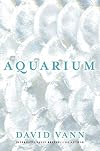
David Vann is a master of family dysfunction. Hidden within his beautiful writing lurk some of the cruelest and manipulative characters you will ever meet. His newest novel, AQUARIUM, is no exception. This one, however, allows for some hope which isn’t always the case with Vann.
Twelve year old Caitlin lives with her single mother, Sheri, in Seattle. Sheri is struggling as a single mother, working full time while trying to build a good life for herself and her daughter. Since, according to show more Sheri, they are all alone in the world, Caitlin is left alone for long periods while Sheri is at work. Caitlin is dropped off at school early in the morning and heads to the local aquarium after to school to wait for her ride home. It is at the aquarium that she meets a very kind elderly man who takes an interest in Caitlin and keeps her company while she waits for Sheri to pick her up. When Sheri learns of this friendship, she is consumed with an uncontrollable rage and her haunted past comes roaring back with a vengeance.
Sometimes there’s just no way to tell how damaged a person really is until they are forced to confront the demons from their past. show less
Twelve year old Caitlin lives with her single mother, Sheri, in Seattle. Sheri is struggling as a single mother, working full time while trying to build a good life for herself and her daughter. Since, according to show more Sheri, they are all alone in the world, Caitlin is left alone for long periods while Sheri is at work. Caitlin is dropped off at school early in the morning and heads to the local aquarium after to school to wait for her ride home. It is at the aquarium that she meets a very kind elderly man who takes an interest in Caitlin and keeps her company while she waits for Sheri to pick her up. When Sheri learns of this friendship, she is consumed with an uncontrollable rage and her haunted past comes roaring back with a vengeance.
Sometimes there’s just no way to tell how damaged a person really is until they are forced to confront the demons from their past. show less
Lists
A Novel Cure (2)
Awards


You May Also Like


Associated Authors
Statistics
- Works
- 26
- Also by
- 1
- Members
- 2,535
- Popularity
- #10,127
- Rating
- 3.6
- Reviews
- 170
- ISBNs
- 208
- Languages
- 16
- Favorited
- 7