
David Whitehouse (3) (1981–)
Author of Bed
For other authors named David Whitehouse, see the disambiguation page.
Works by David Whitehouse
Tagged
Common Knowledge
- Other names
- WHITEHOUSE, David
- Birthdate
- 1981-04-23
- Gender
- male
- Education
- London College of Communication (BA, Journalism)
- Occupations
- novelist
journalist - Nationality
- England
UK - Birthplace
- Nuneaton, Warwickshire, England, UK
- Associated Place (for map)
- England, UK
Members
Reviews
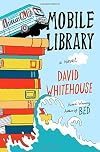
Bobby Nusku is nearly alone in the world. He spends his nights meticulously archiving the traces his long-absent mother left behind. He spends his days plotting with his only friend, Sunny, trying to contrive ways to protect himself from neighborhood bullies and an abusive father. But the stories they tell and the realities they live are painfully far apart, and when Sunny is forced to move away, Bobby fears he has no one else to turn to.
Then Bobby encounters two outcasts like himself: Rosa, show more a girl with a red tricycle who collects names in her notebook and whose disability invites the scorn of the same bullies that haunt Bobby; and Val, her mother, a lonely divorcee who cleans the town's mobile library for work. They connect deeply, filling the gaps in each other's lives, but the bond between the older woman and young boy also draws the town's suspicion and outrage, as rumors begin to fly about the nature of their relationship. Val loses her job, Bobby is beaten severely by his father, and, with worse sure to follow, they abscond with Rosa in their sixteen-wheel bookmobile, embarking on a picaresque adventure that comes to rival those in the classic books that fill their library on wheels. show less
Then Bobby encounters two outcasts like himself: Rosa, show more a girl with a red tricycle who collects names in her notebook and whose disability invites the scorn of the same bullies that haunt Bobby; and Val, her mother, a lonely divorcee who cleans the town's mobile library for work. They connect deeply, filling the gaps in each other's lives, but the bond between the older woman and young boy also draws the town's suspicion and outrage, as rumors begin to fly about the nature of their relationship. Val loses her job, Bobby is beaten severely by his father, and, with worse sure to follow, they abscond with Rosa in their sixteen-wheel bookmobile, embarking on a picaresque adventure that comes to rival those in the classic books that fill their library on wheels. show less

[This is a review I wrote in 2016]
I’m not sure what I was expecting when I chose Mobile Library as my next read; something cute and fluffy about books and reading perhaps. The story is about a 12 year old boy and I think I was expecting a children’s book. What I got was something quite different. Mobile Library is something of a contemporary fairy tale, complete with all the dark and dismal parts that usually crop up in fairy tales, as well as the redeeming show more fairy-godmother.
Twelve-year-old Bobby lives a bleak and lonely life, devoid of affection since his mother died. His father and girlfriend appear to care little for Bobby and show little interest in the boy, except for when they are venting their anger. When he’s at home Bobby spends his time neatly arranging and rearranging memories of his mother into files, or boxes, so that she can pick up her life where she left off when she returns… Bobby is also bullied at school but has a best friend, Sunny, who is his greatest protector. Bobby and Sunny are on a mission to turn Sunny into a cyborg so that he can protect Bobby from bad things forever.
Then Bobby meets Rosa when he’s passing by her house on his way home from school. She is 13 and she asks Bobby if he’d like to play. She has a disability of some sort, has a loving and trusting nature and immediately takes to Bobby as a friend. Rosa is attacked by the same bullies picking on Bobby (while Bobby, through fear hides in the bushes) and through this situation Bobby comes to meet Val, Rosa’s mum. Val and Rosa both warm to Bobby very quickly and take him into their hearts. Bobby spends more and more time with them, learning better how to communicate (after the silence he endures at home), taking baths (another forbidden thing at home), reading books, playing, eating proper meals and indulging in treats like ice cream (not allowed, his father says). Val enjoys Bobby’s company – for many years she has had little company other than her daughter – and Bobby feels love and a sense of belonging for the first time since his mother’s death. The little trio start to become like a functional family unit, although Bobby still has to go home to his father at the end of the day.
" ‘In every book is a clue about life,’ Val said. ‘That’s how stories are connected. You bring them to life when you read them, so that the things that happen in them will happen to you.’
‘I don’t think the things that happen in books will happen in my life,’ he said.
‘That’s where you’re wrong,’ she said. ‘You just don’t recognise them yet.’ "
Then events occur which put their surrogate son-mother relationship in danger and Val decides to take off across the country with Bobby and Rosa in the mobile library which she cleans once a week. In their time together this library has become like a dreamworld to Bobby – full of stories, adventures and escapism:
"Morning hours vanished somewhere inside the books. Bobby read The Little Prince by Antoine de Saint-Exupery, amazed that a man whose name he couldn’t pronounce might write a story that seemed like it was written just for him. Like the young prince, he too found the adult world strange. He too saw very few certainties in it."
They encounter quite a number of adventures while travelling and trying to evade detection, including picking up a fellow traveller-on-the-run who leads them all the way up to Scotland, from middle England, and back down and Bobby, Rosa and Val are all having the times of their lives when reality strikes. Will they be able to stay together in their new-found family unit…?
The novel starts at the end, which I didn’t particularly mind; it’s usually a device that annoys me as I like the novel to tell the story but in this case it is the ending told from a slightly different narrative perspective to the actual ending which is narrated in more detail and with Val’s voice, so the story isn’t fully revealed at the beginning. I didn’t get into the book right away, perhaps because it was so different to what I was expecting. I found the characters all a bit extreme and therefore not very believable and the plot a bit far-fetched. But. Then I settled into the fairy-tale-type style and it no longer mattered to me if the characterisation was over-the-top and the accumulation of events unbelievable; the characters were living out their own story and that’s when it started to work for me and fall into place. There’s no doubt that child abuse on this level does take place, disability discrimination, and so on. And there’s no doubt that reading stories, along with love and nurture, can really help unlock a child’s potential. The author also explores the theme of imagination and how far one can go with imagination before harm is done, i.e. is it always good to be imaginative, or should the self or another inflict boundaries to protect you from harm? A number of deep themes are explored.
There is some interesting philosophising in the novel, some great snippets about books, reading and the influences of literature, and some deeply disturbing aspects regarding child abuse and abusive relationships. It is not a novel for children, that much is clear but it doesn’t otherwise fit into a neatly arranged category. It is a good, thoughtful read. I often find it easy to forget a book almost as soon as I’ve read it but I won’t forget this one. The book isn’t perfect and can feel overdone and blatant but I would recommend it, particularly for the universal message about the power of stories to change, heal and transform.
About the Author
David Whitehouse was born in 1981 and lives in London. His first novel, Bed, won the inaugural 2010 To Hell With Prizes Award for unpublished work, the 2012 Betty Trask Prize and has been published in eighteen countries. His journalism has appeared in the national press and he has undertaken TV and film projects as well. show less
I’m not sure what I was expecting when I chose Mobile Library as my next read; something cute and fluffy about books and reading perhaps. The story is about a 12 year old boy and I think I was expecting a children’s book. What I got was something quite different. Mobile Library is something of a contemporary fairy tale, complete with all the dark and dismal parts that usually crop up in fairy tales, as well as the redeeming show more fairy-godmother.
Twelve-year-old Bobby lives a bleak and lonely life, devoid of affection since his mother died. His father and girlfriend appear to care little for Bobby and show little interest in the boy, except for when they are venting their anger. When he’s at home Bobby spends his time neatly arranging and rearranging memories of his mother into files, or boxes, so that she can pick up her life where she left off when she returns… Bobby is also bullied at school but has a best friend, Sunny, who is his greatest protector. Bobby and Sunny are on a mission to turn Sunny into a cyborg so that he can protect Bobby from bad things forever.
Then Bobby meets Rosa when he’s passing by her house on his way home from school. She is 13 and she asks Bobby if he’d like to play. She has a disability of some sort, has a loving and trusting nature and immediately takes to Bobby as a friend. Rosa is attacked by the same bullies picking on Bobby (while Bobby, through fear hides in the bushes) and through this situation Bobby comes to meet Val, Rosa’s mum. Val and Rosa both warm to Bobby very quickly and take him into their hearts. Bobby spends more and more time with them, learning better how to communicate (after the silence he endures at home), taking baths (another forbidden thing at home), reading books, playing, eating proper meals and indulging in treats like ice cream (not allowed, his father says). Val enjoys Bobby’s company – for many years she has had little company other than her daughter – and Bobby feels love and a sense of belonging for the first time since his mother’s death. The little trio start to become like a functional family unit, although Bobby still has to go home to his father at the end of the day.
" ‘In every book is a clue about life,’ Val said. ‘That’s how stories are connected. You bring them to life when you read them, so that the things that happen in them will happen to you.’
‘I don’t think the things that happen in books will happen in my life,’ he said.
‘That’s where you’re wrong,’ she said. ‘You just don’t recognise them yet.’ "
Then events occur which put their surrogate son-mother relationship in danger and Val decides to take off across the country with Bobby and Rosa in the mobile library which she cleans once a week. In their time together this library has become like a dreamworld to Bobby – full of stories, adventures and escapism:
"Morning hours vanished somewhere inside the books. Bobby read The Little Prince by Antoine de Saint-Exupery, amazed that a man whose name he couldn’t pronounce might write a story that seemed like it was written just for him. Like the young prince, he too found the adult world strange. He too saw very few certainties in it."
They encounter quite a number of adventures while travelling and trying to evade detection, including picking up a fellow traveller-on-the-run who leads them all the way up to Scotland, from middle England, and back down and Bobby, Rosa and Val are all having the times of their lives when reality strikes. Will they be able to stay together in their new-found family unit…?
The novel starts at the end, which I didn’t particularly mind; it’s usually a device that annoys me as I like the novel to tell the story but in this case it is the ending told from a slightly different narrative perspective to the actual ending which is narrated in more detail and with Val’s voice, so the story isn’t fully revealed at the beginning. I didn’t get into the book right away, perhaps because it was so different to what I was expecting. I found the characters all a bit extreme and therefore not very believable and the plot a bit far-fetched. But. Then I settled into the fairy-tale-type style and it no longer mattered to me if the characterisation was over-the-top and the accumulation of events unbelievable; the characters were living out their own story and that’s when it started to work for me and fall into place. There’s no doubt that child abuse on this level does take place, disability discrimination, and so on. And there’s no doubt that reading stories, along with love and nurture, can really help unlock a child’s potential. The author also explores the theme of imagination and how far one can go with imagination before harm is done, i.e. is it always good to be imaginative, or should the self or another inflict boundaries to protect you from harm? A number of deep themes are explored.
There is some interesting philosophising in the novel, some great snippets about books, reading and the influences of literature, and some deeply disturbing aspects regarding child abuse and abusive relationships. It is not a novel for children, that much is clear but it doesn’t otherwise fit into a neatly arranged category. It is a good, thoughtful read. I often find it easy to forget a book almost as soon as I’ve read it but I won’t forget this one. The book isn’t perfect and can feel overdone and blatant but I would recommend it, particularly for the universal message about the power of stories to change, heal and transform.
About the Author
David Whitehouse was born in 1981 and lives in London. His first novel, Bed, won the inaugural 2010 To Hell With Prizes Award for unpublished work, the 2012 Betty Trask Prize and has been published in eighteen countries. His journalism has appeared in the national press and he has undertaken TV and film projects as well. show less

The narrator is Malcolm Ede’s younger brother, the closest the reader gets to a name for him. His brother has been acting out in strange ways all of their lives. When they were young, Malcolm would disrobe in public, embarrassing and shaming his family. Malcolm was never comfortable with convention and bristled against normal life.
While in school, a young girl named Lou becomes infatuated with Malcolm, and they began a relationship. Malcolm’s brother is secretly and painfully in love show more with Lou. As they all age, Malcolm and Lou begin a life together, starting jobs and living together. The younger brother also dates but not seriously and finds work though he does not move out.
On Malcolm’s 25th birthday, after Lou tells him she wants a baby, Malcolm visits his parent’s house where he decides to get into bed and never gets out of it again. He grows larger and fatter until he outgrows the room. He refuses to see Lou, and she camps out on their lawn in desperation, only leaving when her father is in need of her attention.
As the days tick by, Malcolm gets so large that he attracts the attention of the media, and they clamor to get an interview with him. The walls of the room must be knocked down to accommodate his size, and their mother moves into a mobile trailer in the yard where she continues to cook and feed him in humungous proportions. When she is not feeding Malcolm, she is tending to his expanding skin with washes and lotions.
It is really a story about caretaking and suffering. The mother and Lou will forsake their relationships and their own happiness in the service of another person. It is caretaking to its most selfish degree. Their form of altruism can actually hurt those around them. The rest of family sees the insanity in it yet do nothing to stop it or confront it, choosing to hide their own suffering and run away rather than make the healthy changes.
I truly enjoyed the language of the book. Whitehouse uses metaphors expertly and poetically. While I found the ending a bit flat and disappointing, the rest of the book had me hooked. I love the short chapters and the interwoven timelines. The reader is taken on a journey that slowly reveals the answer to the question of why Malcolm Ede got into bed and refused to get back out. show less
While in school, a young girl named Lou becomes infatuated with Malcolm, and they began a relationship. Malcolm’s brother is secretly and painfully in love show more with Lou. As they all age, Malcolm and Lou begin a life together, starting jobs and living together. The younger brother also dates but not seriously and finds work though he does not move out.
On Malcolm’s 25th birthday, after Lou tells him she wants a baby, Malcolm visits his parent’s house where he decides to get into bed and never gets out of it again. He grows larger and fatter until he outgrows the room. He refuses to see Lou, and she camps out on their lawn in desperation, only leaving when her father is in need of her attention.
As the days tick by, Malcolm gets so large that he attracts the attention of the media, and they clamor to get an interview with him. The walls of the room must be knocked down to accommodate his size, and their mother moves into a mobile trailer in the yard where she continues to cook and feed him in humungous proportions. When she is not feeding Malcolm, she is tending to his expanding skin with washes and lotions.
It is really a story about caretaking and suffering. The mother and Lou will forsake their relationships and their own happiness in the service of another person. It is caretaking to its most selfish degree. Their form of altruism can actually hurt those around them. The rest of family sees the insanity in it yet do nothing to stop it or confront it, choosing to hide their own suffering and run away rather than make the healthy changes.
I truly enjoyed the language of the book. Whitehouse uses metaphors expertly and poetically. While I found the ending a bit flat and disappointing, the rest of the book had me hooked. I love the short chapters and the interwoven timelines. The reader is taken on a journey that slowly reveals the answer to the question of why Malcolm Ede got into bed and refused to get back out. show less
David Whitehouse’s Mobile Library is a hard book to categorize—both painful and funny, absurd and wise.
Young Bobby has become an archivist of his own home and life, compulsively recording every minor event and fact so he can share them with his mother, who has disappeared, but who he’s sure will return. Bullied at school and ignored (at best) by his father, Bobby builds his own family among people he meets who share, each in her or his own way, his sense of isolation.
There’s Sunny, show more who is determined to become a cyborg in order to protect his friend—breaking one bone at a time, so that they can be repaired with steel plates. There’s Rosa, who is developmentally disabled and who has a fascination with names, and her mother Val. When Sunny disappears and Bobby’s father grows violent, the remaining three—Bobby, Rosa, and Val—take to the road in a mobile library.
I’d expected this book to be a lighter read than it is. In fact, it is at times distressing. Nonetheless, the characters compel the reader to keep going—and the solution, though unexpected, is quite satisfactory. show less
Young Bobby has become an archivist of his own home and life, compulsively recording every minor event and fact so he can share them with his mother, who has disappeared, but who he’s sure will return. Bullied at school and ignored (at best) by his father, Bobby builds his own family among people he meets who share, each in her or his own way, his sense of isolation.
There’s Sunny, show more who is determined to become a cyborg in order to protect his friend—breaking one bone at a time, so that they can be repaired with steel plates. There’s Rosa, who is developmentally disabled and who has a fascination with names, and her mother Val. When Sunny disappears and Bobby’s father grows violent, the remaining three—Bobby, Rosa, and Val—take to the road in a mobile library.
I’d expected this book to be a lighter read than it is. In fact, it is at times distressing. Nonetheless, the characters compel the reader to keep going—and the solution, though unexpected, is quite satisfactory. show less
Lists
Awards


You May Also Like


Associated Authors
Statistics
- Works
- 6
- Members
- 474
- Popularity
- #52,000
- Rating
- 3.5
- Reviews
- 36
- ISBNs
- 130
- Languages
- 8
- Favorited
- 1
