
About the Author
Disambiguation Notice:
Please do NOT combine this page with individual local television stations. Thank you.
Series
Works by PBS
The Great American Read: The Book of Books: Explore America's 100 Best-Loved Novels (2018) 243 copies, 5 reviews
NOVA: Einstein's Big Idea : understanding the equation that changed the world [2005 TV episode] (2005) 25 copies
Eyes on the Prize : America's Civil Rights Movement, 1954-1985; a Study Guide to the Television Series (2006) 11 copies, 1 review
They Came for Good: A History of the Jews in the US: Taking Root 1820-1880 [1997 film] (1997) 7 copies
American Experience: Into the Deep: American Whaling and the World [2010 TV episode] (2010) 6 copies
Urban Rez 4 copies
Frontline: Fat [1998 TV episode] 4 copies
They Came for Good: A History of the Jews in the US: Present at the Creation 1654-1820 [1997 film] (1997) 4 copies
Goin to Chicago [1994 TV movie] 3 copies
Over California [2009 film] 3 copies
American Experience: Roots of Resistance: The Story of the Underground Railroad [1990 TV episode] (2008) 3 copies
Visions of Europe 3 copies
The Inside Passage: Alaska 3 copies
Nature: The World of Nature Set 3 copies
Secrets of the Dead; Killer Flu 2 copies
Images of the Armenian Spirit - The Award Winning PBS Documentary by Emmy Award Winner Andrew Goldberg (2007) 2 copies
Visions of Austria [2009 film] 2 copies
Juvenile Justice [2001 film] 2 copies
Jim Crow- Part 2 2 copies
NOVA: Kaboom! [1997 TV episode] 2 copies
Elusive Peace: Israel and the Arabs 2 copies
Domestic violence: faces of fear 2 copies
The Hidden Child 2 copies
The Great American Recipe [DVD] 2 copies
American Experience: The President's Collection Set 3: Carter, Reagan, G HW Bush, Clinton (6 DVDs) (2014) 2 copies
NOVA: Hidden Volcano Abyss 2 copies
The Human Footprint 2 copies
Super Why! : 'Twas the Night Before Christmas and Other Fairytale Adventures (2010) 2 copies, 1 review
Frontline: Dot Con [2002 TV episode] 2 copies
PBS The forgetting (NIP) 2 copies
Man with a Mission 1 copy
Man of Destiny 1 copy
The Suicide Terrorist [DVD] 1 copy
The Great Fisherman 1 copy
Jim Crow Part 3 4 1 copy
Accordion Dreams [2001 film] 1 copy
Sun Records 1 copy
Nancy Reagan 1 copy
When Kids Get Life 1 copy
Prophet of Fire Comicbook 1 copy
U.S.-Mexican War 1 copy
Nova: Building Wonders 1 copy
Day The Dinosaurs Died 1 copy
KVIE Interview 1 copy
Victory in the Pacific 1 copy
Nature Horses 1 copy
Over Florida [2008 film] 1 copy
These Amazing Shadows (DVD) 1 copy
Bakersfield Country 1 copy
Untangling the Web 1 copy
The life a house built [DVD] 1 copy
Lodz Ghetto (The) 1 copy
Confederacy Theory 1 copy
Sword of Islam [1988 film] 1 copy
The Pill [DVD] 1 copy
Castro's Challenge VHS 1 copy
Feedom: A History of Us 1 copy
Discounted Dreams: High Hopes And Harsh Realities at Americas Community Colleges [2007 TV episode] 1 copy
Over Arizona [2012 film] 1 copy
Soul of the Game 1 copy
The Italian Americans 1 copy
She Says: Women in News 1 copy
Big Tim Losers 1 copy
The Economic Meltdown 1 copy
Vienna Blood, season 4 [DVD] 1 copy
Visionary or Madman? TESLA 1 copy
Mariachi High 1 copy
Rise of the Superstorms 1 copy
Beyond our Differences 1 copy
Secrets of the Dead 1 copy
Craft In America 1 copy
WordWorld Castles in the Sea 1 copy
Caillou: Ready For School 1 copy
Inspector Lewis Discs 7-12 1 copy
Rivers Of Life 1 copy
Dream Window 1 copy
Filmmaker: Ken Burns 1 copy
Making Sense of the Sixties 1 copy
Inspector Lewis Discs 1-6 1 copy
Toronto's houses of worship 1 copy
Green For All 1 copy
Kruger Park: A Visual Safari 1 copy
America At A Crossroads: Struggle for the Soul of Islam: Inside Indonesia [2007 TV episode] (2007) 1 copy
Maryland Vietnam War Stories 1 copy
sovereigns for sarah 1 copy
Hoover Dam 1 copy
Krakatoa [2005 film] 1 copy
The Choice 2016 1 copy
Sex Slaves 1 copy
The Nazi Games Berlin 1936 1 copy
Ringside Shelby 1 copy
Eggs 101 1 copy
NOVA: Addiction DVD 1 copy
Mister Rogers Neighborhood 1 copy
Treasures of New York 1 copy
Islam: Empire of Faith (DVD) 1 copy
Story of the Jews 1 copy
America's Untold Story 1 copy
Green Creatures 1 copy
Streetcar Stories DVD 1 copy
Chasing Shakelton 1 copy
Pasta Rustica 1 copy
Tagged
Common Knowledge
- Legal name
- Public Broadcasting Service
- Gender
- n/a
- Nationality
- USA
- Disambiguation notice
- Please do NOT combine this page with individual local television stations. Thank you.
- Associated Place (for map)
- USA
Members
Reviews
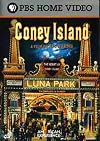
Any documentary that includes Grandpa Al Lewis has to be worth watching. For someone who didn't grow up in New York, Coney Island didn't have too much reality until watching this program. Looking at the wonders of Luna Park, Dreamland, and Steeplechase Park, this is clearly the origin for the super amusement parks of today--Disney (including Epcot) and Universal Studios. The structures were massive and impressive, probably even more so than the great Columbian Exposition in Chicago in 1892, show more but they were flimsy and not built to last, as a series of fires demonstrated. Their developers were visionaries, however.
The crowds at the parks and on the beaches of Coney Island are staggering. Like the busiest day at Disney--only worse. But the parks started closing. Dreamland never recovered from a fire. Luna Park shut down around 1947, and Steeplechase in the 1960s. Wars, the Depression, television, and the increasing lure of Manhattan all took their toll. But it was marvelous while it lasted, and you can at least get a hint of what it was all about by watching this. show less
The crowds at the parks and on the beaches of Coney Island are staggering. Like the busiest day at Disney--only worse. But the parks started closing. Dreamland never recovered from a fire. Luna Park shut down around 1947, and Steeplechase in the 1960s. Wars, the Depression, television, and the increasing lure of Manhattan all took their toll. But it was marvelous while it lasted, and you can at least get a hint of what it was all about by watching this. show less

Patty Hearst called herself an "urban guerrilla" — hardly the occupation her parents and billionaire grandfather, media mogul William Randolph Hearst, envisioned for her. But Hearst's story was more sensational than anything her grandpa's editors could have dreamed up. Kidnapped in 1974 by radical militants, held in captivity for months and then converted to the cause, Hearst became an emblem for a country mired in severe political turmoil. Robert Stone's vivid, stylish and painstakingly show more researched document examines the Hearst kidnapping from a variety of angles, documenting the militant group's success in using the mass media as a mouthpiece and the unruly feed-the-hungry programs it forced the Hearst family to create. It even includes surveillance footage of Patty wielding a gun in a bank robbery. Guerrilla: The Taking of Patty Hearst isn't just the tale of a freakish crime; it's the story of a country forced to watch dissent, radicalism and class warfare on the nightly news. Death to the fascist insect! show less

During the Great Depression, between 1936 and 1940, one sports figure captivated fans unlike any other has in such a way since. Whether on newspaper columnist Walter Winchell’s top ten newsmakers of 1938 list, as the subject of newsreels, radio programs and a film, or the image on scores of licensed advertising products, one athlete surpassed his contemporaries. And he wasn’t even human. The racehorse Seabiscuit offered racing fans and the general public a hero to root for with whom they show more could identify—overworked, ungainly, plain, with a hard-luck life who fought to prove he was the best at what he could do.
Inspired by Laura Hillenbrand’s best-selling book, Seabiscuit: An American Legend, this PBS documentary captures visually the story she has so richly told in print. Director Stephen Ives tells the quintessentially American story of triumph over adversity through archival film footage, black-and-white photographs, newspaper clippings, advertisements, radio broadcasts, and color home movies. He covers automotive magnate Charles Howard’s purchase of Seabiscuit for $8000, laconic trainer Tom Smith’s unorthodox training style, and journeyman jockey Red Pollard’s personal disasters and affinity for Seabiscuit. Ives includes on-camera interviews with and comments by Hillenbrand (senior creative consultant), former jockey Farrell Jones, writer Gene Smith, sportscaster Jack Whitaker, trainer Leonard Dorfman, jockey agent Gelo Hall, Red Pollard’s friend Helen Luther, and Pollard’s daughter Norah Christianson.
Seabiscuit had an unfashionable pedigree and an undistinguished racing career at ages two and three. With Howard, Smith, and Pollard the horse began to win races at age four, improving with each race. The west coast press lauded him as the “hard luck hero for a troubled nation” while the east coast racing establishment dismissed him as unworthy of notice. Because Howard raced Seabiscuit almost every week across the country, racing fans got to see him in action at the racetracks in addition to the newsreels shown in movie theaters and the weekly radio broadcasts of races. The newspapers played up his connections’ two biggest goals—winning the prestigious Santa Anita Handicap and competing in a match race with Triple Crown winner War Admiral. Seabiscuit lost his first Santa Anita Handicap because Pollard did not see an approaching horse; unknown until Hillenbrand revealed it in her book, Pollard was blind in his right eye. Had the racing commission known, he would have lost his license and livelihood. Unable to explain why he lost, Pollard quietly accepted the accusations of incompetence and vowed not to make the same mistake again. Pollard, anxious to ride additional horses, unfortunately chose the wrong times and mounts to race and was badly injured just before the Santa Anita Handicap and again before the match race. While Pollard recovered, his friend George Woolf replaced him as Seabiscuit’s jockey and trounced War Admiral at their match race in November 1938; Seabiscuit was finally named 1938 Horse of the Year. Failing to capture the Santa Anita Handicap in several attempts, the seven-year-old Seabiscuit eventually won the 1940 race after a year’s rest and recuperation from which most turfmen did not think he would return to the races.
The PBS documentary conveys the excitement of the races, and with well-chosen interviewees captures the flavor of the times, particularly the personalities of Pollard and Seabiscuit, with less attention focused on Charles Howard and taciturn Tom Smith. Strongly covered is the subcontext of the Depression and how Seabiscuit galvanized the hopes and dreams of the downtrodden. The interviewees add personal information about Pollard and a first-hand account of the match race. Rather than this documentary being about the interrelations among the owner, trainer, jockey, and horse, it focuses on the main actors on the stage—Pollard and Seabiscuit.
There is no story without drama, tension, and adversity overcome, and the story of Seabiscuit has it all. This is a good biopic of a great horse but in fifty-four minutes it only hits the highlights. It is a good visual introduction to this racing star; for a more in-depth analysis viewers will want to read Hillenbrand’s book. show less
Inspired by Laura Hillenbrand’s best-selling book, Seabiscuit: An American Legend, this PBS documentary captures visually the story she has so richly told in print. Director Stephen Ives tells the quintessentially American story of triumph over adversity through archival film footage, black-and-white photographs, newspaper clippings, advertisements, radio broadcasts, and color home movies. He covers automotive magnate Charles Howard’s purchase of Seabiscuit for $8000, laconic trainer Tom Smith’s unorthodox training style, and journeyman jockey Red Pollard’s personal disasters and affinity for Seabiscuit. Ives includes on-camera interviews with and comments by Hillenbrand (senior creative consultant), former jockey Farrell Jones, writer Gene Smith, sportscaster Jack Whitaker, trainer Leonard Dorfman, jockey agent Gelo Hall, Red Pollard’s friend Helen Luther, and Pollard’s daughter Norah Christianson.
Seabiscuit had an unfashionable pedigree and an undistinguished racing career at ages two and three. With Howard, Smith, and Pollard the horse began to win races at age four, improving with each race. The west coast press lauded him as the “hard luck hero for a troubled nation” while the east coast racing establishment dismissed him as unworthy of notice. Because Howard raced Seabiscuit almost every week across the country, racing fans got to see him in action at the racetracks in addition to the newsreels shown in movie theaters and the weekly radio broadcasts of races. The newspapers played up his connections’ two biggest goals—winning the prestigious Santa Anita Handicap and competing in a match race with Triple Crown winner War Admiral. Seabiscuit lost his first Santa Anita Handicap because Pollard did not see an approaching horse; unknown until Hillenbrand revealed it in her book, Pollard was blind in his right eye. Had the racing commission known, he would have lost his license and livelihood. Unable to explain why he lost, Pollard quietly accepted the accusations of incompetence and vowed not to make the same mistake again. Pollard, anxious to ride additional horses, unfortunately chose the wrong times and mounts to race and was badly injured just before the Santa Anita Handicap and again before the match race. While Pollard recovered, his friend George Woolf replaced him as Seabiscuit’s jockey and trounced War Admiral at their match race in November 1938; Seabiscuit was finally named 1938 Horse of the Year. Failing to capture the Santa Anita Handicap in several attempts, the seven-year-old Seabiscuit eventually won the 1940 race after a year’s rest and recuperation from which most turfmen did not think he would return to the races.
The PBS documentary conveys the excitement of the races, and with well-chosen interviewees captures the flavor of the times, particularly the personalities of Pollard and Seabiscuit, with less attention focused on Charles Howard and taciturn Tom Smith. Strongly covered is the subcontext of the Depression and how Seabiscuit galvanized the hopes and dreams of the downtrodden. The interviewees add personal information about Pollard and a first-hand account of the match race. Rather than this documentary being about the interrelations among the owner, trainer, jockey, and horse, it focuses on the main actors on the stage—Pollard and Seabiscuit.
There is no story without drama, tension, and adversity overcome, and the story of Seabiscuit has it all. This is a good biopic of a great horse but in fifty-four minutes it only hits the highlights. It is a good visual introduction to this racing star; for a more in-depth analysis viewers will want to read Hillenbrand’s book. show less

This is a thoroughly enjoyable, but greatly simplified overview of Greene's book on string theory. The book includes a great introduction to both Einstein's theories and to Quantum Mechanics before launching into its history and future forecast for string theory, whereas the TV series spends more time on the preliminaries and only touches on string theory, which makes sense. Greene is a great host--his abilities clearly extend beyond writing and teaching. The graphics used to illustrate show more things are very good--although a bit over the top at times. Highly, highly recommended, as is the follow-up PBS series. show less
Lists
Awards
You May Also Like


Associated Authors
Statistics
- Works
- 866
- Members
- 4,079
- Popularity
- #6,169
- Rating
- 4.0
- Reviews
- 132
- ISBNs
- 791
- Languages
- 5
