
Shulamith Shahar (1928–2025)
Author of The Fourth Estate: A History of Women in the Middle Ages
About the Author
Shulamith Shahar is Associate Professor and Head of Medieval Studies at the University of Tel Aviv.
Image credit: Shulamith Shahar By en:User:Tzahy - he:שולמית שחר, Attribution, https://commons.wikimedia.org/w/index.php?curid=9531513
Works by Shulamith Shahar
החורף העוטה אותנו : זקנה בימי הבינים 2 copies
מכתבי אבלר ואלואיז 1 copy
מכתבי אבלר ואלואיז 1 copy
קבוצות שוליים בימי-הביניים 1 copy
Associated Works
Tagged
Common Knowledge
- Birthdate
- 1928
- Date of death
- 2025-01-09
- Gender
- female
- Organizations
- University of Tel Aviv
Members
Reviews
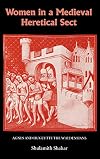
Shahar's Women in a Medieval Heretical Sect focuses on the testimony produced in a 1320-1 trial against 4 Waldensians in order to examine the role of women within that heretical sect. Agnes Franco and Huguette de la Cote were, after two years of questioning by the Inquisition, burnt at the stake for heresy. The information Shahar gathered from the Inquisition records is interesting, and her observations about the problems of using such records as historical sources are well observed.
Yet I show more found myself completely unengaged by this book—I'm not entirely sure if Shahar intended it to be an examination of the Waldensian women (in which case it could usefully have been trimmed down to article length) or as a general undergraduate textbook on religion, heresy and gender in medieval Europe (in which case it would need a substantial reorganisation and slight shift in focus). Some of her gender analysis also left me frowning—I have no idea what she means by a 'feminine voice' as opposed to a 'Waldensian voice' not being evident in the records. Identities are not mutually exclusive; not to mention the fact that, as Shahar herself writes, using Inquisition records as a means of identifying Waldensian views on gender is very dangerous. Useful for the translated primary sources included as an appendix, but I won't be coming back to this one. show less
Yet I show more found myself completely unengaged by this book—I'm not entirely sure if Shahar intended it to be an examination of the Waldensian women (in which case it could usefully have been trimmed down to article length) or as a general undergraduate textbook on religion, heresy and gender in medieval Europe (in which case it would need a substantial reorganisation and slight shift in focus). Some of her gender analysis also left me frowning—I have no idea what she means by a 'feminine voice' as opposed to a 'Waldensian voice' not being evident in the records. Identities are not mutually exclusive; not to mention the fact that, as Shahar herself writes, using Inquisition records as a means of identifying Waldensian views on gender is very dangerous. Useful for the translated primary sources included as an appendix, but I won't be coming back to this one. show less
You May Also Like


Associated Authors
Statistics
- Works
- 10
- Also by
- 1
- Members
- 255
- Popularity
- #89,876
- Rating
- 3.5
- Reviews
- 1
- ISBNs
- 32
- Languages
- 4