
Philippe Besson
Author of Lie With Me
About the Author
Image credit: Philippe Besson (né en 1967), lors de la présentation de son roman Retour parmi les hommes, le 22 janvier 2011 à la FNAC Montparnasse (Paris) by Siren-Com.
Works by Philippe Besson
Les amants — Author — 7 copies
Associated Works
La bibliothèque des écrivains: Le livre qui a changé leur vie (2021) — Contributor — 4 copies, 1 review
Tagged
Common Knowledge
- Canonical name
- Besson, Philippe
- Birthdate
- 1967-01-29
- Gender
- male
- Occupations
- writer
- Nationality
- France
- Birthplace
- Barbezieux-Saint-Hilaire, Charente, France
- Places of residence
- France
- Associated Place (for map)
- Charente, France
Members
Reviews
Rating: 4.5* of five
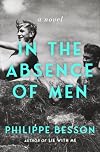
The Publisher Says: From the author of the international bestseller Lie with Me comes the tale of an affair between an aristocratic teenager and a soldier, as they discover the possibilities and perils of first love.
Summer, 1916. With German Zeppelins on the skyline, the men of Paris are off at war. For Vincent, sixteen and still too young to fight, this moment of dread is also a moment of possibility. An electrifying encounter with Marcel, an enigmatic middle-aged show more writer, draws Vincent’s desires out into the light. As he’s taken under Marcel’s wing, Vincent begins a dangerous affair with Arthur, the son of his governess and a young soldier on leave. Together, they share a secret that everyone seems to know and yet everyone remains silent about.
In this stunning portrait of young love, Philippe Besson depicts a young man who plays by his own rules and is not afraid of who he is. In the afternoons, Vincent is mentored by Marcel, the great novelist, in the city’s opulent cafés as they draw the judgment of society. And at night, he hides Arthur in his bedroom as the two risk everything to be together. Their affair initiates them into a world of pleasure and shields them from the encroaching war. During this magical week away from the trenches, Vincent shelters Arthur with happiness, reassuring him, “Nothing will happen to you.”
Tender and harrowing, In the Absence of Men captures how exhilarating and heart-crushing it is to fall in love for the first time.
I RECEIVED A DRC FROM THE PUBLISHER VIA EDELWEISS+. THANK YOU.
My Review: Tragedies hardest to endure, that produce the most emotional stress in me, are stories whose endings we know are coming while the characters do not, and we can do nothing to stop their devastation. This is that story writ tight and tart.
I'll say now that it takes a giant pair to use Marcel Proust...In Search of Lost Time Marcel Proust!...as a character guiding and mentoring, in a platonic way, your PoV character. It could, you know from the off, go horribly wrong, end up derailing your story, cause the beau ideal of a reader for your story to scoff, nitpick, judge, and tut his way through it because—well—hubris much?
That was me as I approached the read. I left it without the tutting, but with reservations.
I loved the setting, Paris during the Great War as they knew it, and will always resonate favorably with first gay love stories. I'm glad Author Besson did not make Proust more than a controlling mentor, I think that would've overpowered any positive feelings anyone could've developed for the story. As it was, Marcel's controlling side wasn't foregrounded, but was there in story-appropriate places. It's up to you how you feel about an older man leading a teen through the terrifying, obscure, all-consuming first experience of Love by a man for a man. I know I wish to gawd he'd been there for me to consult and be guided by!
I think most of what takes place in the under two hundred pages of the story is defined by brokenness, by change that can't be slowed or processed therefore controlled, by the absolute certainty of war: nothing survives unscathed. Arthur, Vincent's governess's son, is the love of Vincent's young life. He is sexually attracted to Vincent, he is just enough older...and rougher...to make their love passionate and fulfilling, and he is away to war amid all the changes accumulating in their lives.
Herein my half-star off's origin. The wartime separation means a good deal of what's happening is epistolary. I'm sad to say that, despite the words being lovely and the device being central to the story's core of reality, this shift in mode brought the momentum of the read too far down. It is undeniable that this is a feature not a bug...how could a war-set love story not separate its lovers?...and represents the most natural and logical evolution of this pair's inevitable trajectory, but it still just stopped me in my tracks. Recalibrating my pace cost me some emotional investment in the men's love story.
The twist did not surprise me, but did affect me profoundly. Some sniffling and a modest dampening of my pillow might have occurred. I'll never tell.
I'm very, very glad I read the story; I think Translator Wynne rendered the French he found into seamlessly readable English that feels almost as though it's not translated; but there's that botched downshift from fifth to second that juddered me a hair too much, caused a bit of excessive mental transmission wear, for me to get all the way to five stars.
Definitely a read I recommend all the same. show less
The Publisher Says: From the author of the international bestseller Lie with Me comes the tale of an affair between an aristocratic teenager and a soldier, as they discover the possibilities and perils of first love.
Summer, 1916. With German Zeppelins on the skyline, the men of Paris are off at war. For Vincent, sixteen and still too young to fight, this moment of dread is also a moment of possibility. An electrifying encounter with Marcel, an enigmatic middle-aged show more writer, draws Vincent’s desires out into the light. As he’s taken under Marcel’s wing, Vincent begins a dangerous affair with Arthur, the son of his governess and a young soldier on leave. Together, they share a secret that everyone seems to know and yet everyone remains silent about.
In this stunning portrait of young love, Philippe Besson depicts a young man who plays by his own rules and is not afraid of who he is. In the afternoons, Vincent is mentored by Marcel, the great novelist, in the city’s opulent cafés as they draw the judgment of society. And at night, he hides Arthur in his bedroom as the two risk everything to be together. Their affair initiates them into a world of pleasure and shields them from the encroaching war. During this magical week away from the trenches, Vincent shelters Arthur with happiness, reassuring him, “Nothing will happen to you.”
Tender and harrowing, In the Absence of Men captures how exhilarating and heart-crushing it is to fall in love for the first time.
I RECEIVED A DRC FROM THE PUBLISHER VIA EDELWEISS+. THANK YOU.
My Review: Tragedies hardest to endure, that produce the most emotional stress in me, are stories whose endings we know are coming while the characters do not, and we can do nothing to stop their devastation. This is that story writ tight and tart.
I'll say now that it takes a giant pair to use Marcel Proust...In Search of Lost Time Marcel Proust!...as a character guiding and mentoring, in a platonic way, your PoV character. It could, you know from the off, go horribly wrong, end up derailing your story, cause the beau ideal of a reader for your story to scoff, nitpick, judge, and tut his way through it because—well—hubris much?
That was me as I approached the read. I left it without the tutting, but with reservations.
I loved the setting, Paris during the Great War as they knew it, and will always resonate favorably with first gay love stories. I'm glad Author Besson did not make Proust more than a controlling mentor, I think that would've overpowered any positive feelings anyone could've developed for the story. As it was, Marcel's controlling side wasn't foregrounded, but was there in story-appropriate places. It's up to you how you feel about an older man leading a teen through the terrifying, obscure, all-consuming first experience of Love by a man for a man. I know I wish to gawd he'd been there for me to consult and be guided by!
I think most of what takes place in the under two hundred pages of the story is defined by brokenness, by change that can't be slowed or processed therefore controlled, by the absolute certainty of war: nothing survives unscathed. Arthur, Vincent's governess's son, is the love of Vincent's young life. He is sexually attracted to Vincent, he is just enough older...and rougher...to make their love passionate and fulfilling, and he is away to war amid all the changes accumulating in their lives.
Herein my half-star off's origin. The wartime separation means a good deal of what's happening is epistolary. I'm sad to say that, despite the words being lovely and the device being central to the story's core of reality, this shift in mode brought the momentum of the read too far down. It is undeniable that this is a feature not a bug...how could a war-set love story not separate its lovers?...and represents the most natural and logical evolution of this pair's inevitable trajectory, but it still just stopped me in my tracks. Recalibrating my pace cost me some emotional investment in the men's love story.
The twist did not surprise me, but did affect me profoundly. Some sniffling and a modest dampening of my pillow might have occurred. I'll never tell.
I'm very, very glad I read the story; I think Translator Wynne rendered the French he found into seamlessly readable English that feels almost as though it's not translated; but there's that botched downshift from fifth to second that juddered me a hair too much, caused a bit of excessive mental transmission wear, for me to get all the way to five stars.
Definitely a read I recommend all the same. show less

This is kind of “Brokeback Vineyard” — a love story between two country lads who are in their final year of school in a small town in the Charente region in 1984. But it’s really framed more as a discussion about truth and different kinds of lying: the narrator has gone off to the big city and grown up to be a very out gay novelist, but his fiction all circles around one key event in his life without ever quite touching it, whilst his first love, farmer’s son Thomas, stuck in the show more country, has never quite been able to admit publicly that he loves men, and finds himself pushed into obligations of heterosexual marriage and parenthood that he isn’t comfortable with.
Whilst this is clearly a personal settling of accounts with the past for the narrator (and implicitly for Besson himself), it is also a kind of experience that a lot of readers of Besson’s generation and before will be able to identify with, and I found the description of the teenage love affair very evocative, without ever getting sentimental. show less
Whilst this is clearly a personal settling of accounts with the past for the narrator (and implicitly for Besson himself), it is also a kind of experience that a lot of readers of Besson’s generation and before will be able to identify with, and I found the description of the teenage love affair very evocative, without ever getting sentimental. show less
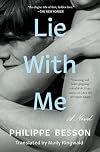
A beautiful novella/memoir. Besson insists it is fiction, but the novella itself is replete with references to the main character denying his novels are actually memoir and each time he is totally lying. If this is fiction, Besson is a master. He created a beautiful and utterly believable story.
The book covers the first love of our narrator who is named, like the "novelist", Philippe, and his reintroduction to that lover's story 20+ years after he left. Besson magically captures the show more ephemeral beauty of first love, which in spite of that ephemerality, remains with us forever because it is the only love we ever have before heartbreak makes us too cautious to be fully vulnerable. The story's end, many years later reached by coincidence or fate breaks the heart into smaller bits. There is nothing surprising or revolutionary here. Rather it is a relatable tale, filled with feelings most of us have had, told in the simplest yet most lyrical way. It is simply lovely. I listened to the audio, and thought the narrator, Jacques Roy, was excellent. show less
The book covers the first love of our narrator who is named, like the "novelist", Philippe, and his reintroduction to that lover's story 20+ years after he left. Besson magically captures the show more ephemeral beauty of first love, which in spite of that ephemerality, remains with us forever because it is the only love we ever have before heartbreak makes us too cautious to be fully vulnerable. The story's end, many years later reached by coincidence or fate breaks the heart into smaller bits. There is nothing surprising or revolutionary here. Rather it is a relatable tale, filled with feelings most of us have had, told in the simplest yet most lyrical way. It is simply lovely. I listened to the audio, and thought the narrator, Jacques Roy, was excellent. show less
Rating: 4.5* of five
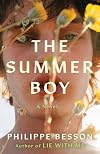
The Publisher Says: On an island off the coast of France, six teenagers come together for a summer of desire and discovery until one of them vanishes forever, leaving the rest with an enduring mystery.
Tell me, do you know why the most beautiful love stories must always end badly?
In the summer of 1985, on a scruffy resort island off the coast of France, six teenagers—five boys and one girl—band together for a final golden season before adulthood. Their days are show more drenched in sun and freedom, and their nights simmer with secrets, jealousy, and longing. Philippe is drawn to Nicolas, the quiet new boy who sees him in a way that no one else does. As their bond deepens, part of Nicolas remains unreachable—until a sudden tragedy brings their summer to a brutal end.
The Summer Boy is a lush and unforgettable autobiographical tale, capturing the ineffable summers of youth in amber. Celebrated novelist Philippe Besson has shaped his memories into an aching meditation on how one summer night—and one fierce connection—can echo across a lifetime.
I RECEIVED A DRC FROM THE PUBLISHER VIA NETGALLEY. THANK YOU.
My Review: Author Besson, a mere stripling of fifty-nine, recalls That One Summer. We've all had it: the moment when all the boundaries and all the relationships change, whether at eighteen or forty-two or in winter, in Louisville, Kentucky, on vacation, or waiting for your bus to come. Falling in love often does the trick. Getting a crush can, too, but so can the ordinary murkiness of passing time in good company. It's a defining moment. It can, usually does in my own lived experience, change you and your thinking about the whole rest of your life.
Where Lie With Me was a récit about Philippe's very first true love, this is a récit about how love is not plot armor and no matter how it ends, love is always going to wind bonds and webs and fetters around among between the people in your life. Philippe, as in Lie With Me, is both author and character in equal measure. Here he is eighteen and having that magical last summer of childhood freedom before adulthood tightens around him. François is a close friend whom Philippe is a rival of without being in any way deliberate about it; Alice, a new friend of both boys, is enamored of Phillipe and by François, in that eternal tangle that (depressingly enough) persists in happening over and over during one's lifetime. Nicolas, a friend of François', is fascinating to Philippe, but he's sexually interested by Alice's brother Marc. And that soap opera is where we stay all story long as events unfold.
That sounds more kinetic than this story is. Events are, in this context, mostly off-screen/page; we're here for the feels or else we're in the wrong book. As it's Philippe's récit the feelings are all his but he's astute so he reports on others' lives and feelings with acuity and compassion. Of course Author Philippe is discussing the past so it's the adult who evokes those feelings for his long-ago companions, but I felt as though character-Philippe was empathetic enough to have experienced his friends' feelings with interest and compassion.
Regret for things ill-done or, worse, un-done is one of the most maturing experiences in a person's life. It's truly a before-and-after moment to realize you have seen signs of a looming disaster but done nothing to affect its outcome. Philippe did not understand that he *could* impact Nicolas' fate. He, as Author Philippe, is coming to terms with the emotional scars and the unbearably sad realization that we possess the power to alter history...if we choose to.
It sobers a person up to know for certain that another person has their life altered because of our own in/action. No wonder Author Philippe is working this seam in the story-mine of gay coming-of-age stories. He does it beautifully and with palpable emotional honesty. In under two hundred pages he brings we-the-reader into full contact with the summer everything changed for him. It was a wrenching thing that changed his life. It's not sensationalized but it's not like there was room to do that in this page count...yet I got the impression there was little self-protecting editing of his personal memories. He was honest, our author, and gave us true biz about his life.
It made for a very good story to start my #PrideMonth reviewing with. show less
The Publisher Says: On an island off the coast of France, six teenagers come together for a summer of desire and discovery until one of them vanishes forever, leaving the rest with an enduring mystery.
Tell me, do you know why the most beautiful love stories must always end badly?
In the summer of 1985, on a scruffy resort island off the coast of France, six teenagers—five boys and one girl—band together for a final golden season before adulthood. Their days are show more drenched in sun and freedom, and their nights simmer with secrets, jealousy, and longing. Philippe is drawn to Nicolas, the quiet new boy who sees him in a way that no one else does. As their bond deepens, part of Nicolas remains unreachable—until a sudden tragedy brings their summer to a brutal end.
The Summer Boy is a lush and unforgettable autobiographical tale, capturing the ineffable summers of youth in amber. Celebrated novelist Philippe Besson has shaped his memories into an aching meditation on how one summer night—and one fierce connection—can echo across a lifetime.
I RECEIVED A DRC FROM THE PUBLISHER VIA NETGALLEY. THANK YOU.
My Review: Author Besson, a mere stripling of fifty-nine, recalls That One Summer. We've all had it: the moment when all the boundaries and all the relationships change, whether at eighteen or forty-two or in winter, in Louisville, Kentucky, on vacation, or waiting for your bus to come. Falling in love often does the trick. Getting a crush can, too, but so can the ordinary murkiness of passing time in good company. It's a defining moment. It can, usually does in my own lived experience, change you and your thinking about the whole rest of your life.
Where Lie With Me was a récit about Philippe's very first true love, this is a récit about how love is not plot armor and no matter how it ends, love is always going to wind bonds and webs and fetters around among between the people in your life. Philippe, as in Lie With Me, is both author and character in equal measure. Here he is eighteen and having that magical last summer of childhood freedom before adulthood tightens around him. François is a close friend whom Philippe is a rival of without being in any way deliberate about it; Alice, a new friend of both boys, is enamored of Phillipe and by François, in that eternal tangle that (depressingly enough) persists in happening over and over during one's lifetime. Nicolas, a friend of François', is fascinating to Philippe, but he's sexually interested by Alice's brother Marc. And that soap opera is where we stay all story long as events unfold.
That sounds more kinetic than this story is. Events are, in this context, mostly off-screen/page; we're here for the feels or else we're in the wrong book. As it's Philippe's récit the feelings are all his but he's astute so he reports on others' lives and feelings with acuity and compassion. Of course Author Philippe is discussing the past so it's the adult who evokes those feelings for his long-ago companions, but I felt as though character-Philippe was empathetic enough to have experienced his friends' feelings with interest and compassion.
Regret for things ill-done or, worse, un-done is one of the most maturing experiences in a person's life. It's truly a before-and-after moment to realize you have seen signs of a looming disaster but done nothing to affect its outcome. Philippe did not understand that he *could* impact Nicolas' fate. He, as Author Philippe, is coming to terms with the emotional scars and the unbearably sad realization that we possess the power to alter history...if we choose to.
It sobers a person up to know for certain that another person has their life altered because of our own in/action. No wonder Author Philippe is working this seam in the story-mine of gay coming-of-age stories. He does it beautifully and with palpable emotional honesty. In under two hundred pages he brings we-the-reader into full contact with the summer everything changed for him. It was a wrenching thing that changed his life. It's not sensationalized but it's not like there was room to do that in this page count...yet I got the impression there was little self-protecting editing of his personal memories. He was honest, our author, and gave us true biz about his life.
It made for a very good story to start my #PrideMonth reviewing with. show less
Lists
Awards


You May Also Like


Associated Authors
Statistics
- Works
- 35
- Also by
- 1
- Members
- 1,998
- Popularity
- #12,889
- Rating
- 3.8
- Reviews
- 75
- ISBNs
- 183
- Languages
- 9
- Favorited
- 3